New York Telehealth Law Raises Hopes for Access, Targets Concerns about Billing

Screen Shot 2015-01-20 at 9.11.32 AMBy Alex Boguniewicz

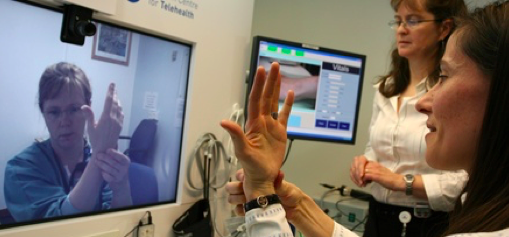
A new year, new legislation, new legal issues. New York rang in 2015 by becoming the 22nd state to enact a telehealth parity law. The law requires that deductibles, co-insurance, and other coverage conditions for telemedicine be treated the same as payments for typical in-person hospital visits. As such, commercial insurers will be required to cover telehealth and telemedicine services, starting at the end of this year. The new law is an exciting development for patients, especially in rural areas, who have previously had limited options in health services. For payers and providers, however, questions remain about the feasibility of this law and how it could impact the entire healthcare reimbursement landscape.

Telehealth and telemedicine have been among the most significant developments in healthcare delivery in decades. Though the terms telehealth and telemedicine are often mistakenly used interchangeably in everyday conversation, they in fact refer to separate modes of delivery, as made explicit by the New York law. Under the statute, “telehealth” means healthcare delivery services through “communications technologies consisting of telephones, remote patient monitoring devices or other electronic means.” The electronic communications facilitate the assessment, diagnosis, consultation, treatment, education, and management and self-management of care while the patient is at the “originating site”—the place where the patient is located when services are provided—and the healthcare provider is at a “distant site.” Telehealth also encompasses non-real-time means of “communicating” health data, and includes devices that transmit a patient’s vital signs to the health care provider. “Telemedicine,” on the other hand, refers to real-time two-way audio-visual communication aimed at assessment, diagnosis, consultation, etc. Thus, telemedicine is more akin to a typical doctor’s visit, with the patient interacting with the healthcare provider as if in the examination room. Continue reading


Skipplagged.com and the New Frontier of Aggregation Software Liability

Screen Shot 2015-01-14 at 7.37.46 PMBy Robin Hammond

What does Skipplagged software accomplish?

Skipplagged.com—created by Aktarer Zaman—allows consumers to book cheaper airline tickets to major hub cities by buying tickets to non-hub cities, and only completing one portion of the trip. For example, a passenger wishing to fly from New York to San Francisco might purchase a cheaper ticket to Seattle with a stopover in San Francisco, and simply get off the plane in San Francisco. Although the practice, called ‘hidden city ticketing’, has existed for years, Mr. Zaman has created an efficient and accessible method for travelers to utilize this technique.

United Airlines and Orbitz filed suit against Skipplagged for breaching an affiliate contract with Orbitz, and helping customers to enter into contracts (by buying a plane ticket) that they intend to break. Most airlines’ ticket contracts, as well as Orbitz’s terms of use, prohibit hidden city ticketing. And recently, American Airlines, a non-party to the suit, stated the practice “is tantamount to switching price tags to obtain a lower price on goods sold at department stores.” Continue reading

Looking For Drones In All The Wrong Places

Screen Shot 2015-01-12 at 2.36.26 PMBy Christian Kaiser

As the prices for drones fall and their availability to the average consumer increases, drones are becoming more common place in our society. However, this increasing availability also increases the chance for injury and raises questions about the wisdom in using drones in nonessential business functions. There are increasing reports of individuals flying drones in airport airspace, sparking fears of terrorism, and instances where drones have been flown close to skyscrapers in large cities. Amazon even wants to start using drones to deliver products. Therefore, it at least seems reasonable that a person could see a drone while out in public; I myself have seen one flying around the Seattle waterfront.

Despite their growing ubiquity, drones can still be a surprising sight – like hovering above their table at a TGI Friday’s. That’s right, this Christmas Season a TGI Friday’s in New York City used drones to fly their “Mobile Mistletoe” over unsuspecting patrons to entice them to kiss each other. Continue reading

A Bad Football Call Leads to Litigation

Screen Shot 2015-01-09 at 11.21.37 AMBy Stephen Anson

Oklahoma City Public School District sought relief in state court after Frederick A. Douglass High School lost an Oklahoma Class 3A football quarterfinal game due to a botched call by a referee. The trial court judge indicated that he was “skeptical” of the claim, but nonetheless enjoined the winning team from proceeding with its playoff game. All of this begs the question, are high school referee decisions even correctable in court?

On November 28, 2014, with approximately 1 minute remaining in the game, Douglass High School, of the Oklahoma City School District, scored on a long touchdown pass and appeared to take a 25-20 lead over undefeated Locust Grove High School. However, during the excitement of the touchdown, one of the Douglass coaches accidently bumped into a referee who threw a flag for a five-yard penalty. Although the rules required the penalty be assessed on the ensuing kickoff, the referees wrongly negated the touchdown. Locust Grove hung on to their 20-19 lead and was declared the winner. Continue reading

Will FCC Bend Rules for Marijuana Internet Advertising?

Screen Shot 2015-01-07 at 2.06.02 PMBy Cheryl Lee

Marijuana has been legalized for recreational use in Alaska, Colorado, District of Columbia, Oregon, and Washington, while medical marijuana has been legalized in 23 states and the District of Columbia. About a dozen more states are expected to legalize marijuana in some form in the coming years. Industry experts expect annual marijuana sales revenues in Washington and Colorado to hit $2.5 billion by 2015. To help capture this revenue opportunity, many marijuana business owners are exploring Internet advertising. Indeed, the home delivery of marijuana is currently advertised on the Internet through various websites.

But marijuana is still illegal under federal law, and current federal laws make it illegal to advertise the sale of illegal drugs. Violations of those laws can be expensive. In 2011, Google agreed to pay a $500 million settlement to avoid federal prosecution for accepting illegal advertisements from Canadian online pharmacies. Due to these legal restrictions, online giants like Facebook, Google, Yahoo and Twitter have internal policy strictly banning marijuana ads. Continue reading