Silicon’s New Signature: The Shift from Patentable Circuits to Sonic Trademarks

By: Francis Yoon

For decades, the intellectual property of the hardware world has been defined by physical chips and their structural protection rather than by the experience they produce. However, in 2026, the value of a device is shifting from how it is built to how its performance feels. As Gallium Nitride (GaN) pushes the physics of the possible into the mainstream, the hardware industry is discovering that while a patent protects the circuit, it can no longer protect the soul of the machine.

The GaN Inflection and the Pursuit of Analog Warmth

GaN is a material that allows electrons to move with significantly more energy and speed than traditional silicon. In the high-stakes world of the 2026 power electronics market, this distinguishes a sterile digital signal and a rich linear resonance.

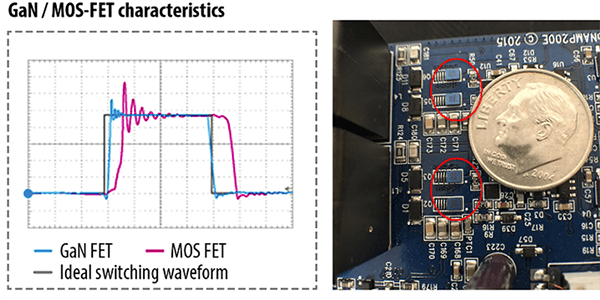
In the audio sector, this is a tonal revolution. Because GaN switches up to four times faster than silicon, reaching slew rates of 150 V/ns, it virtually eliminates the inevitable distortion from switching devices that has plagued digital amplifiers for years. The result is what audiophiles describe as “shockingly good sound” and “crisper treble” from GaN systems, noting that the tech finally provides the “analog warmth” the digital age lacked.

Image taken from: GaN Talk Blog

As seen in the waveform comparison above, the GaN Field-Effect Transistor (GaN FET) eliminates the high-frequency “ringing” (the purple oscillations) found in traditional Metal-Oxide-Semiconductor Field-Effect Transistors (MOSFETs), resulting in a significantly smoother and more linear output.

The Double Wall of Modern Patentability

As GaN matures into a $3.32 billion market this year, the path to protecting these innovations through patents is becoming increasingly fraught. Inventors are hitting two distinct legal hurdles when dealing with the United States Patent and Trademark Office (USPTO). First, as GaN becomes an industry standard, inventors frequently face “obviousness” rejections, where the transition from silicon to GaN is characterized as a predictable substitution of materials rather than a patentable breakthrough.

Second, innovators often face a hurdle in which the Patent Office labels their specific hardware designs as simply a “natural phenomenon” of the material itself rather than a unique, human-made invention. This creates a significant identity problem: there is no legal safe zone for protecting the aesthetic output of hardware through patent law alone.

The Category 30 Strategic Exit

If the internal circuit is becoming harder to patent, the solution lies in protecting the external output. On February 10, 2026, the USPTO provided the industry with a quiet but massive strategic exit through the modernization of the Trademark Design Search Code Manual. The introduction of Category 30, specifically 30.02.06, which provides specific search codes for non-traditional marks like machine-generated tones and musical sounds, allows hardware firms to plant a different kind of flag.

While a patent on a GaN heterostructure will eventually expire in 20 years, a trademark on the unique startup chime or the specific tonal texture enabled by that hardware can last indefinitely. By shifting the IP focus from the atom to the audio, companies can secure long-term brand equity that survives the commodity cycle of the semiconductor market. This pivot allows engineers to turn a functional byproduct into a registrable asset.

Suggestions for the Next Era of Intellectual Property

As hardware identity becomes as valuable as hardware functionality, we risk a future where trademark law prevents innovation. A viable resolution to this gridlock requires a clear path forward for regulators and practitioners. The adoption of a Technical De Minimis safe harbor for hardware output would allow the USPTO and the courts to protect brand identity without granting a monopoly over the natural music of innovation. Just as copyright law protects transformative use, trademark law should distinguish between a branding-heavy sonic logo and the functional, incidental sounds inherent to a material’s physics. A GaN-based hum or a mechanical click should remain a shared resource.

If you are a hardware developer, the 2026 playbook seems to require a hybrid approach: use patents for the truly non-obvious structural leaps, but use Category 30 to tether the sensory experience of your engineering to your brand. In 2026, the goal of IP should be ensuring that the resulting sound remains free for the next generation of creators to build upon.

#Hardware-IP #GaN #Trademarks #USPTO #WJLTA

Is the SEC Ready for the AI IPO Era?

By: Joyce Jia

As explored in The LLM Public Offering: Why One S-1 Filing Will Reshape AI’s Governance, the anticipated IPOs of Anthropic or OpenAI will mark a constitutional moment for AI governance, the first time a frontier AI company must submit its business model to the full discipline of SEC disclosure. The natural question that follows is whether the SEC is institutionally prepared for that moment. On balance, the answer is yes, though with important qualifications. The agency enters the AI IPO era with a well-tested disclosure architecture, a clear institutional commitment to extending it to AI, and a track record of adapting to new technology sectors over time. What remains is the more difficult task of translating that commitment into sector-specific guidance.

A Framework Built to Adapt

The SEC’s core disclosure architecture rests on durable, technology-neutral foundations. Materiality doctrine articulated in TSC Industries v. Northway compels disclosure of information a reasonable investor would consider important in making an investment decision. That principle is broad enough to reach the material risks posed by frontier AI companies: accumulated deficits and timelines to profitability, training data legal exposure, critical dependencies on cloud and semiconductor infrastructure, and arguably the most consequential, the systemic risk that a failure or material change in a foundational LLM could propagate downstream across the ecosystem of agent companies and enterprise applications built upon it.

The SEC’s Commitment: A Path Forward

The SEC has signaled its intention to extend its disclosure framework to AI through sustained institutional engagement. The agency’s Investor Advisory Committee (IAC) has kept AI disclosure on its agenda since the Biden Administration, most recently issuing a recommendation on December 4, 2025, for the Commission to develop “comprehensive guidance” establishing an AI-related disclosure framework for issuers (“IAC’s Recommendation”). That recommendation drew on a panel discussion held on March 6, 2025, convening asset managers, governance experts, and AI practitioners. 

The IAC’s Recommendation centers on three pillars: requiring issuers to define “artificial intelligence,” disclose board oversight of AI deployment, and report separately on AI’s material effects on internal operations and consumer-facing products. Notably, the IAC recommended integrating these requirements into existing Regulation S-K items rather than creating a standalone AI disclosure chapter, recognizing that the existing framework is flexible enough to accommodate AI-specific risks without a full rulemaking cycle. As the cybersecurity disclosure precedent discussed below illustrates, that choice underscores the SEC’s proven capacity to extend its framework incrementally to emerging technology risks.

The Cybersecurity Rule Shows the Way

The SEC’s 2023 cybersecurity disclosure rule, which created Form 8-K Item 1.05 for material cyber incidents and Regulation S-K Item 106 for annual governance and risk management disclosure, built on over a decade of iterative, non-binding guidance: the Division of Corporate Finance’s 2011 Disclosure Guidance on cybersecurity, followed by the SEC’s 2018 Interpretative Guidance on Public Company Cybersecurity Disclosures. That progression, from staff guidance to Commission statement to final rulemaking, produced a disclosure architecture that companies were able to absorb with minimal friction and that investors found decision-useful. 

The AI disclosure gap calls for the same iterative approach: beginning with staff guidance clarifying how existing Regulation S-K items 101, 103, 106, and 303 apply to AI-specific risks, then evolving toward more targeted requirements as the technology and its disclosure challenges become better understood. Initiated now, that sequence could yield formal guidance well ahead of the next generation of frontier AI IPOs. 

A Strong Framework with Key Uncertainties

Research by the AI Disclosures Project at the Social Science Research Council, analyzing more than 7,800 Form 8-K filings by public companies on AI between 2022 and 2025, found that roughly two-thirds of all AI-related disclosures are positive in nature, while risk disclosures, model failures, and safety guardrail changes are systematically underrepresented. Most of these filings appear under Item 8.01, a voluntary catch-all category, suggesting companies are genuinely uncertain both where to report AI events and when they cross the materiality threshold. That uncertainty is precisely what targeted SEC guidance is designed to resolve, and it underscores why the IAC’s Recommendation for issuer-facing clarity is a necessary next step.

The SEC enters the AI IPO era better prepared than the headlines suggest. Its governing principles are sound, its institutional commitment is evident, and the path forward is well-lit by the cybersecurity precedent. The remaining question is one of timing: whether the guidance arrives before the first S-1 does, or after.

# SEC Disclosure # IAC’s Recommendation #AI Governance

When Worship Goes Online: The Hidden Copyright Risks for Churches

By: Daniel Eum

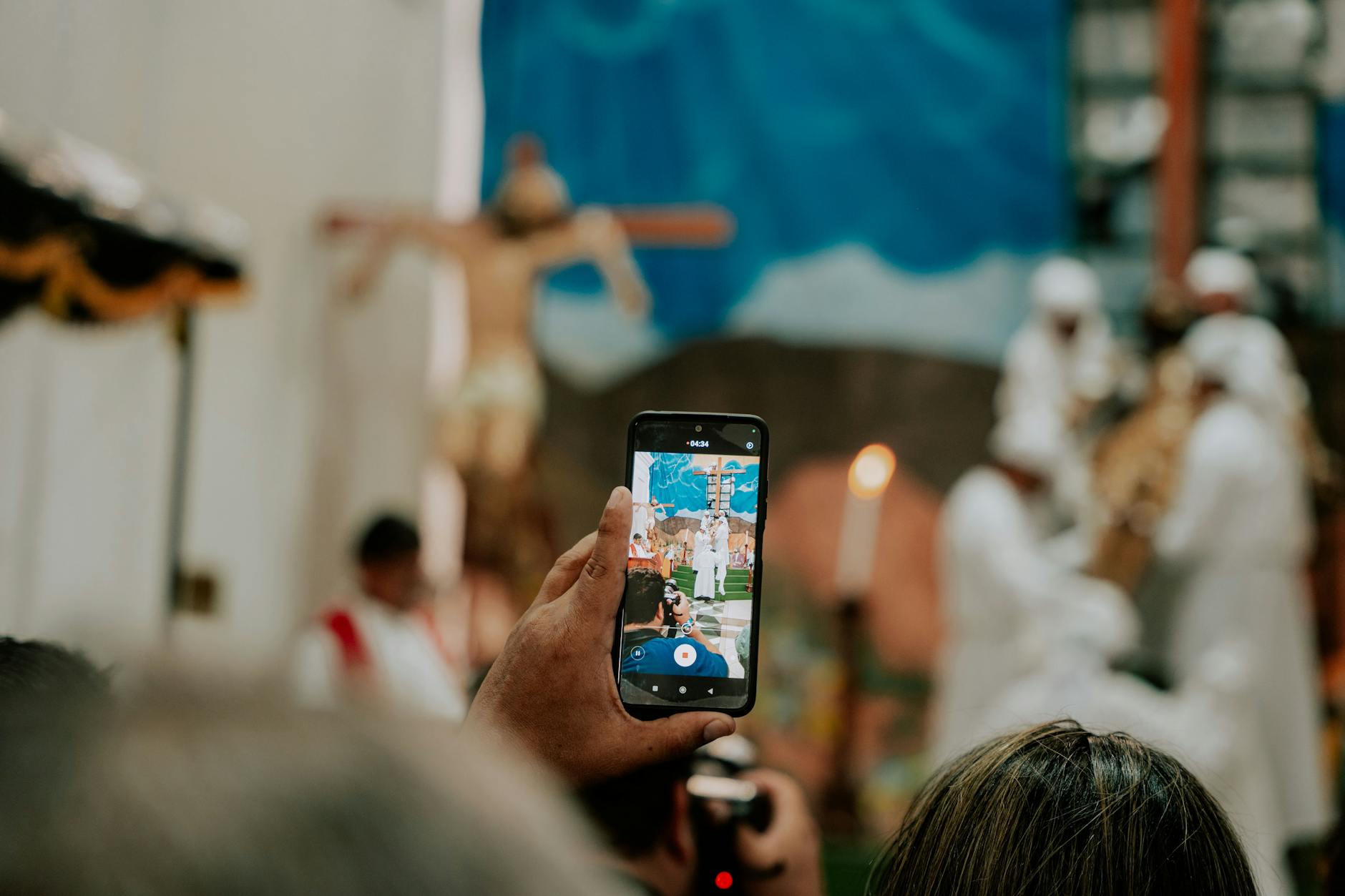
The COVID-19 pandemic, lasting from roughly late 2019 to mid 2022, caused institutions and governments to make changes to combat the spread of the virus, such as mandating that residents remain in their homes. Religious institution gatherings, including church gatherings, were not exempt from stay-at-home orders. As a result, many churches resorted to livestreaming their services rather than having in-person services. Even when the chaos of the pandemic began to settle, and restrictions on in-person gatherings eased, churches continued to provide online services. By mid-2021, 80% of churches offered hybrid services, combining in-person and remote options. One study shows that 91% of churches were livestreaming their services by 2024. In other words, livestreaming services became a common practice for churches post-COVID. However, churches that livestream services, including copyrighted music, likely engage in unlicensed public performances and reproductions, exposing themselves to copyright liability absent proper licensing.

Copyright Protection for Religious Works and the § 110(3) Exemption

Services include a variety of content, including songs commonly referred to as “praise” or “worship.” Religious works, including songs, are fully eligible for copyright protection under federal law. In United Christian Scientists v. Christian Science Bd. of Directors, First Church of Christ, Scientist, a 1987 case from the U.S. Court of Appeals for the D.C. Circuit, the court held that “a grant of a copyright on a religious work poses no constitutional difficulty” and “[r]eligious works are eligible for protection under general copyright laws.” Despite this, narrow exemptions for religious services exist under 17 U.S.C. § 110(3), which provides that “performance of a nondramatic literary or musical work or of a dramatico-musical work of a religious nature, or display of a work, in the course of services at a place of worship or other religious assembly” does not infringe copyright. In other words, while religious works are entitled to copyright protection, religious institutions may perform such works without infringement during services.

The Limits of § 110(3)

However, this statutory exemption for religious services was drafted with in-person worship in mind and provides limited guidance for modern online practices. The exemption critically lacks any language authorizing transmissions, such as livestreaming or broadcasting services online to remote viewers, unlike the educational exemptions in § 110(2), which extensively cover digital transmissions with detailed technological safeguards. This omission strongly suggests that Congress did not intend the religious exemption to extend to online broadcasting. In other words, this exemption is strictly limited to performances and displays occurring during actual worship services at places of worship. In Worldwide Church of God v. Philadelphia Church of God, Inc., the Ninth Circuit emphasized that this privilege is “narrowly limited” to performance or display “in the course of services at a place of worship or other religious assembly.” As such, livestreaming services do not fall within the statutory exemption, and churches may face potential liability for reproduction, distribution, and digital performance of copyrighted materials.

In Simpleville Music v. Mizell, a federal district court in Alabama held that when a radio station broadcasts a church service containing copyrighted music, the broadcast constitutes a separate performance not occurring at a place of worship, requiring royalty payments. Although there are very few, if any, reported post-COVID cases specifically addressing livestreaming church services, these cases indicate that churches expose themselves to copyright liability by livestreaming copyrighted “praise” or “worship” songs.

How Churches Might Mitigate Copyright Risk Today

Nonetheless, a large majority of modern worship songs are covered by Christian Copyright Licensing International (CCLI), which simplifies copyright compliance by providing comprehensive and cost-effective licenses that empower churches and organizations to legally stream a wealth of creative works. As a result, many churches rely on such licensing regimes when livestreaming services to mitigate potential liability. Unless Congress updates § 110(3) to account for digital worship, churches that livestream services will remain dependent on licensing regimes to avoid copyright liability—despite engaging in what many view as a modern extension of traditional religious practice.

#WJLTA #CopyrightLaw #DigitalWorship

The Rise of Fractional General Counsel in the Modern Legal Industry

By Thomas Oatridge

What Is a Fractional General Counsel?

The concept of fractional general counsel has emerged as a response to the rising costs of legal services and the evolving needs of modern businesses. A fractional general counsel is a senior lawyer who works with a company on a part-time, temporary, or project basis, rather than as a full-time employee. Unlike traditional general counsel, who are employed in-house, fractional general counsel operate as independent contractors and provide legal support on an as-needed basis. Despite this difference in employment structure, fractional general counsel perform many of the same functions as full-time general counsel. They advise corporate leadership, including boards of directors and executives, on legal and strategic issues. Their role often includes identifying risks, addressing emerging legal challenges, and determining when additional legal support is necessary.

Fractional general counsel typically handle a wide range of responsibilities. These include drafting and negotiating contracts, advising on employment law matters, ensuring regulatory compliance, and managing corporate governance. They may also oversee outside counsel, assist with mergers and acquisitions, and provide guidance on intellectual property, data privacy, and litigation strategy. Importantly, fractional general counsel are not limited to routine legal tasks. They act as strategic partners within the business, combining legal knowledge with an understanding of business operations. Many have prior experience in Big Law firms or as in-house counsel, which allows them to bring both technical expertise and practical judgment to their role. In short, fractional general counsel function like traditional general counsel, but on a more flexible, part-time basis. This allows companies to access high-level legal advice without committing to a full-time hire.

Why the Fractional Model Is Gaining Traction?

The fractional general counsel model is growing largely because it offers a practical solution to a common problem: many businesses need consistent legal guidance but cannot justify the cost of a full-time general counsel. Hiring an in-house attorney often involves a significant salary, benefits, and long-term commitment. At the same time, relying solely on outside law firms can be expensive and inefficient. Fractional general counsel provide a middle ground between these two options. One of the most significant benefits of this model is cost efficiency. Companies can access experienced legal professionals at a predictable cost, often through fixed fees or retainers, without the overhead associated with a full-time employee.

Flexibility is another key advantage. Businesses can scale legal support up or down depending on their needs. For example, a company may require more legal guidance during a period of growth, such as a merger or expansion, and less support during more stable periods. In addition, fractional general counsel offer a more proactive approach to legal issues. Instead of addressing problems only after they arise, they help identify risks early and implement systems to prevent future legal challenges. This can reduce the likelihood of costly disputes or regulatory violations.

Another benefit is that fractional general counsel become integrated members of a company’s leadership team. Unlike outside counsel, who may only engage on specific matters, fractional general counsel develop a deeper understanding of the business and align legal strategies with business goals. Overall, this model aligns cost, flexibility, and strategic legal support, making it an attractive option for many organizations.

Who Uses Fractional General Counsel?

Fractional general counsel are most commonly used by companies that need high-level legal expertise but are not in a position to hire a full-time general counsel. This often includes small and mid-sized businesses, startups, and companies in periods of transition or growth. Startups are a primary example. As these companies scale, they face increasingly complex legal issues, such as contract negotiations, employment matters, and regulatory compliance. However, they may not yet have the financial resources to support a full-time legal department. In these situations, a fractional general counsel can provide essential guidance while allowing the company to manage costs.

Similarly, small and mid-sized businesses benefit from having ongoing legal support without the expense of a permanent hire. These companies often require more than occasional legal advice but do not need a full-time attorney. A fractional general counsel can fill this gap by offering consistent, strategic input. Companies undergoing major changes, such as mergers, acquisitions, or fundraising efforts, also frequently turn to fractional general counsel. These events create complex legal challenges that require experienced oversight. A fractional general counsel can provide this expertise on a temporary basis without long-term commitment. More broadly, the model is appealing to businesses seeking an alternative to traditional law firms. Fractional general counsel offer similar expertise but with faster response times and greater integration into the company’s operations. As a result, the use of fractional general counsel is expanding across industries and stages of business development.

Industry Impact and Future Trends

The rise of fractional general counsel reflects a broader shift in how legal services are delivered. Traditionally, companies relied on either in-house counsel or outside law firms. However, both options can be costly and may not provide the flexibility that modern businesses require. The fractional model offers an alternative that addresses these limitations.

One major impact of this model is the increased focus on cost efficiency. The compensation for full-time general counsel can be extremely high, making it inaccessible for many companies. Fractional general counsel allow businesses to access similar expertise without incurring these significant costs. The model also changes the relationship between businesses and legal professionals. Instead of engaging lawyers only when issues arise, companies can integrate legal advice into their daily operations. This leads to more proactive decision-making and better risk management. Additionally, the growth of fractional general counsel reflects changing work patterns in the legal profession. Many experienced attorneys are seeking more flexible work arrangements, and the fractional model allows them to work with multiple clients while maintaining autonomy.

Looking ahead, the demand for fractional general counsel is likely to continue growing. As businesses face increasing legal complexity, particularly in areas such as compliance, employment, and data privacy, the need for accessible and strategic legal guidance will only increase. At the same time, companies will continue to prioritize cost-effective and flexible solutions. In conclusion, fractional general counsel represent a significant development in the legal industry. By providing high-level legal expertise in a flexible and cost-effective format, they are reshaping how businesses access legal services and are likely to play an increasingly important role in the future of legal practice.

#FractionalGC #LegalInnovation #WJLTA


Art as a Tool to Process Trauma: A Framework for Repair and Reflection

By: Claire Kenneally

What Is Trauma? 

During trauma, rational processing systems like the hippocampus shut down, causing the emotional and survival-focused amygdala to go into overdrive.

As a result, traumatic experiences are stored differently than ordinary memories. Coded by the somatic nervous system rather than the brain, emotional and traumatic memories are held and recalled through bodily sensations rather than conscious thought. As a result, recollections of trauma tend to fragment into images, physical sensations, and emotions that don’t directly translate to words or cognizable narratives. 

Blog Post: Understanding How Traumatic Memory is Stored in the Brain by Sally Edwards, 2/4/2024.

Art Therapy as an Effective Intervention 

Art therapy is a therapeutic approach that helps individuals heal from trauma by expressing memories and emotions through creative processing. Drawing, painting, and sculpture allow survivors to communicate what they feel without relying solely on verbal expression, which can be especially helpful for those struggling to discern or articulate what happened to them and what they are feeling in response. 

Art therapy provides patients with three primary benefits:  

(1) it engages the physical body through the manipulation of art materials. The physicality of drawing, painting, sculpting, or otherwise manipulating physical materials can serve as a grounding technique, a self-soothing tool that reorients the nervous system to the here-and-now, helping a survivor feel rooted in the present instead of pulled back into the traumatic memory. One veteran suffering from PTSD described “when I feel so overwhelmed by feelings I cannot control, I just start painting. I pour everything I am feeling in what I am creating.” 

(2) Art therapy allows the patient to engage in a personalized introspective exercise in which the process and finished product become the “symbolic container of traumatic memories.” Trauma can symbolically live on the page or in the art, separating it from the artist’s brain and body. 

(3) it allows for cognitive reflection through discussion of the artwork, giving therapists and family a greater understanding of the artist, and serves as a noninvasive conversation-starter between patient and provider. 

Source: Combat Veteran’s art therapy response to PTSD; from collection of C. Malchiodi, PhD, ©2016

Source: Sculptural masks created by Iraq and Afghanistan war veterans hang in the Southwestern University art gallery. (Photo Credit: U.S. Army)

Art Therapy and the Legal Field 

Art therapy appears to be an effective approach for supporting people who have experienced trauma. One meta-analysis published in 2018 found that art therapy significantly reduced trauma-related symptoms in survivors of sexual abuse, war, and domestic violence. 

But importantly, art therapy can improve outcomes not just for the victims and survivors of violent crimes, but also the vast majority of people incarcerated. According to some estimates, more than 90% of incarcerated people have suffered from traumatic experiences, often starting in childhood. Because trauma is so deeply intertwined with the carceral system, art therapy has become increasingly relevant across multiple points of contact with that system. 

Prevention

Art therapy and arts‑based programs have shown promising outcomes for youth in under‑resourced communities, cultivating supportive relationships and opportunities for teens to build skills such as self‑expression and confidence. Group art has also been proven to foster a sense of community, which research has shown can reduce isolation and generate a sense of belonging and acceptance while also building an adolescent’s social support network.

Photo from Artistic Noise’s 2025 “Symphony” Show.

Art Therapy for Those Currently Detained 

In a 2020 research article, Danielle Maude Littman and Shannon M. Silva published a review of 25 research studies regarding the effectiveness of the arts to those who are incarcerated, finding “statistically significant improvements in self-confidence, self-esteem, task completion, social competence, emotional stability and control and well-being, and decreased hopelessness and anger.”

There are multiple examples of successful programs that bring arts-based projects and art therapy interventions into prisons and detention centers. Artistic Noise, a Harlem-based nonprofit offers programming for system-involved youth. The program includes licensed art therapists, artists, and educators, who use art as a tool for self-expression, guiding incarcerated youth through projects designed to explore their emotions, experiences, and identities, while also developing better methods to regulate their emotions. Another successful program is the Art Therapy in Prisons Program, funded through the Individuals with Disabilities Education Act and implemented in partnership between the Department of Corrections and various State Universities. . 

Scott McKinstry, currently incarcerated at San Quentin, described the process of painting a 16-panel mural through California’s Arts in Corrections program. Scott shared that along with anger management classes, his project has helped him understand “why things bug me and why I ended up here. . . “

Incarcerated people in a mural class at Salinas Valley State Prison in Soledad, Calif. The class is part of an initiative to bring the arts to all 35 California state prisons for adults. Credit: Jim Wilson/The New York Times

Art Therapy to Reduce Recidivism 

The 2023 prison-drama Sing Sing highlights the real-life Rehabilitation Through the Arts (RTA) program at Sing Sing Maximum Security Prison. Grounded in values of dignity, creativity, commitment, and collaboration, RTA offers incarcerated participants opportunities to build life skills through the performing arts that support them both during their sentence and as they reenter their communities. The program also reports a remarkable recidivism rate of under 3%, in contrast to the national average of roughly 60% as participants leave prison to reconnect with their families and strengthen their communities, breaking the cycle of incarceration.

Photo from Rehabilitation Through the Arts’ website

RTA believes that the arts serve as an important pathway for personal growth, particularly for individuals who enter prison with limited formal education—as over 40% of incarcerated people in New York State lack a high school diploma. RTA helps participants build foundational skills such as communication, goal-setting, problem-solving, and collaboration, which support both educational advancement and future workplace success. Through its Skill Wheel framework, RTA illustrates how different art forms cultivate abilities and how they translate into stronger community, employment, and family outcomes.

Rehabilitation Through the Arts’ “Skills Wheel” connecting different art forms to skills that reduce recidivism

Conclusion

Art therapy offers a powerful framework for repair, reflection, and reconnection. Its impact extends far beyond clinical settings, and more research is being dedicated to studying its impact on supporting individuals at every stage of involvement with the legal system. As this research continues to affirm its effectiveness, integrating art-based interventions into legal and carceral environments represents not only a therapeutic opportunity for anyone who has experienced trauma, but a broader commitment to dignity, humanity, and the transformation of community.

#ArtTherapy #TraumaInformedCare #WJLTA