Behind the Scenes: A Patent Infringement Claim Against Disney

By: Teagan Raffenbeul

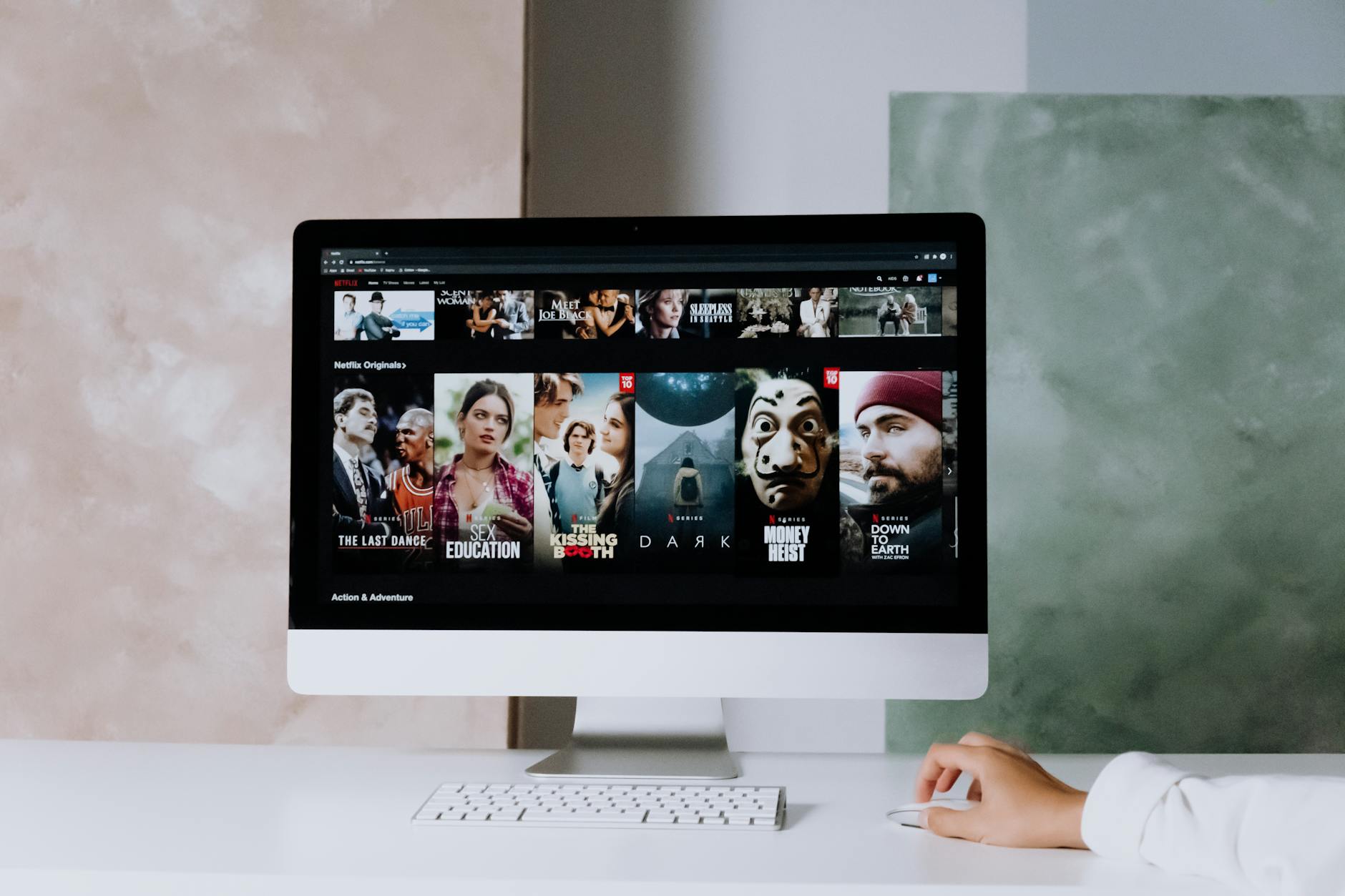
The entertainment industry has experienced a significant shift with the rise in streaming platforms. While streaming platforms date back to the early 2000s when Netflix first offered services for users to stream movies and TV shows on their computers, the streaming industry has surged in popularity in recent years. With convenience and accessibility top priorities for many consumers, companies have evolved to facilitate the “new era of on-demand content consumption.” It is estimated that 65% of media consumption comes from streaming platforms for individuals under 35. Numerous companies including Paramount, Max, Peacock, and Apple TV have launched their own streaming platforms, with Walt Disney Company (“Disney”) being no exception. In 2019, Disney launched its own streaming service, Disney+. Disney also owns a variety of other entertainment brands, including Fox, FX, Star+, ABC Television Network, Freeform, National Geographic, and other popular streaming platforms like Hulu and ESPN+.

While streaming film is effortless for consumers, a lot of advanced technology operates behind the scenes. Various innovations enable key methods and processes to power streaming platforms, with video encoding technology being particularly crucial. Video encoding technology allows for a reduction in the size of video files. This technology compresses data to allow for fast and efficient on-demand video streaming. Many of these video encoding technologies are patented, requiring companies wishing to use them in their streaming platforms to negotiate licensing agreements. Under 35 U.S.C., a patent grants the patent holder the exclusive rights to exclude others from making, using, and selling the patented innovation for a limited period. When licenses are not granted and companies use the technology without authorization, they are committing patent infringement. This is exactly what InterDigital, a global research and development company based in the U.S., has alleged Disney of engaging in. 

InterDigital’s Patent Infringement Lawsuit

On February 2nd, 2025, InterDigital filed a patent infringement claim against Disney and its streaming platforms Disney+, Hulu, and ESPN+. InterDigital not only filed a lawsuit in the Federal District Court in the Central District of California, but also in Brazil, Germany, and at the Unified Patent Court. The Unified Patent Court consists of members from all European Union states and is designed to create a more simplistic and efficient process and results in decisions taking effect in all member states.

The complaint filed in the U.S. identifies five patents InterDigital claims Disney has infringed upon. Three of these patents relate to data compression, covering encoding systems, block pixel predictions, and continuity procedures. The fourth patent focuses on a process to correct color discrepancies, while the fifth pertains to a method of improving user interfaces. InterDigital has highlighted the significance of their technology to the streaming industry, noting that without their patented technology, downloading a 130-minute movie would take over 4 ½ days. However, with their patented technology that same movie can be downloaded in just a few minutes. According to InterDigital, Disney has been able to create a profitable business, generating approximately $25 billion in revenue through its streaming platforms, due to their use of InterDigital’s patented methods and processes.

Licensing Agreements

A patent license grants another party the right to use the patented invention, typically in exchange for a fee. By participating in such exchanges, companies are able to access and use valuable inventions that could significantly benefit their business, while inventors generate revenue and that can be invested in further research and development. While InterDigital expressed a preference for amicable negotiations leading to licensing agreements, they have stated that enforcement is sometimes necessary to ensure fair compensation for their “groundbreaking research,” which also supports funding of future research to develop new technological innovations.  

InterDigital wants companies to use their innovations, as they believe their technological advancements have fueled industry growth. However, they expect those who benefit from their intellectual property, especially entities who benefit as substantially as Disney has, to pay for a license to use the patented technology. The complaint states that InterDigital reached out to Disney in 2022 to request licensing of their patents. However, no licenses were ultimately issued, and Disney has allegedly continued to use InterDigital’s patents without authorization. 

Other Intellectual Property Claims Disney Has Faced

Unfortunately for Disney, this is not their first intellectual property infringement lawsuit. In 2024, Adeia Inc., a research and development company that creates technology for the media industry, filed patent infringement lawsuits in the United States, Europe, and the Unified Patent Court. These patents are related to content delivery technology and various aspects of media streaming. Additionally, a lawsuit was filed under U.S. copyright law alleging Disney’s Moana 2 “ripped off” the work of another animator and writer. 
While Disney has won several intellectual property lawsuits, including numerous Mickey Mouse copyright infringement claims and a trademark infringement dispute against a Canadian animated film entitled Frozen Land,  they have also experienced some losses. Among their more notable losses was an order to pay over $600,000 in damages due for using motion-capture technology without permission in the live-action remake of Beauty and the Beast. This should indicate to InterDigital that taking on an entertainment giant as resourceful and powerful as Disney is not an automatic defeat, especially considering InterDigital has had success in similar cases against companies around the world.

#PatentInfringement #Disney #WJLTA

Spotify vs The Mechanical Licensing Collective: A “Unambiguous” Royalties Battle

By: William Kronblat

Few would disagree that streaming has transformed the music industry’s application and creation of copyrights. Streaming has now allowed apps like Spotify to provide an immense library of music and audiobooks at users’ fingertips. However, not everyone is a fan of Spotify. The publishing industry, in particular, has often found itself at odds with the music and audiobook streaming giant.

The MLC Lawsuit: 

Spotify has recently found itself in the courtroom battling the Mechanical Licensing Collective (MLC), a non-profit organization that issues blanket mechanical licenses to streaming services like Spotify. MLC collects royalties on those licenses and  distributes those royalties to copyright holders in the songs such as publishers, composers, and lyricists. 

In 2024,  the MLC filed its lawsuit alleging that Spotify was underpaying royalties owed to songwriters by tactfully including access to audiobooks in its “Premium” subscription. According to Spotify, this addition qualified the Premium subscription as a “bundle” and allowed Spotify to pay a “lower mechanical royalty rate under Phonorecords IV, a 2022 settlement between music publishers and streaming services.” While the MLC was the group that formally filed a lawsuit against Spotify, they were not the only ones critical of the change. Other music entities like the National Music Publishers Association called the change a “cynical and potentially unlawful move,” and the Nashville Songwriters Association International claimed that the move “counters every statement Spotify has ever made of claiming the company is friendly to creators.

A Legal and Economic Victory for Spotify:

At least for the foreseeable future, it seems as if Spotify will continue to cash in on these big-time “bundle” savings because on Wednesday, January 29th, 2025,  United States District Judge Analisa Torress granted Spotify’s Motion to Dismiss. In her order, Judge Torres noted that the definition of a “Bundled Subscription Offering” under the Code of Federal Regulations (§ 385.2 Definitions) and the language of  §115 of the Copyright Act states qualifying digital music is to be granted compulsory blanket licenses, and its implementing regulations, are unambiguous. Torres went on to say, “the only plausible application of the law supports Spotify’s position” and “Premium is … properly categorized as a Bundle, and the allegations of [the MLC’s] complaint do not plausibly suggest otherwise.”

The MLC acknowledged Judge Torres’ decision, but noted that it is “concerned that Spotify’s actions are not consistent with the law … [and] is reviewing the decision and evaluating all available options, including [their] right to appeal.” On the other hand, Spotify welcomed the ruling and described it as a validation of its business model

This decision not only presents a substantial legal victory for Spotify, but it also presents a very profitable opportunity for Spotify and similar streaming services they may want to file suit. Billboard estimated that this move would result in Spotify saving over $150 million over the next year, and the MLC argued that Spotify’s move would reduce its “payments to songwriters by as much as 50%.” Notably, Spotify did report its first-ever net profit in its 2024 year-end results after implementing this change. 

The Future  of Streaming Royalties: 

While Judge Torres’ interpretation of the law favors Spotify for now, the MLC may still appeal this decision and continue to challenge the streaming giant in the courtroom. Additionally, the Phonorecords IV agreement that was cited in Judge Torres’ opinion is only set to last till December 31, 2027. The agreement was made between the National Music Publishers’ Association, Inc., Nashville Songwriters Association International, Sony Music Entertainment, Universal Music Group Recordings, Inc., and Warner Music Group Corp. The agreement is filled with parties likely to fall on both sides of this lawsuit. The National Music Publishers’ Association, Inc. and Nashville Songwriters Association International have already expressed their disdain over Spotify’s bundling practices, while UMG recently signed a new deal with Spotify.  

Thus, when the Phonorecords IV deal expires, the various stakeholders for the new agreement will likely have their fair share of opinions on Spotify and its bundling practices related to license royalties. We can expect the new deal to impact how royalties are set from 2028 onward. This may result in Spotify having to change its practices if a new agreement or policy drastically changes how a bundle is defined or how royalties are set. 

Concert Night or Courtroom Fight? The Legal Fallout of Venue Negligence

By: Jacqueline Purmort-LaBue

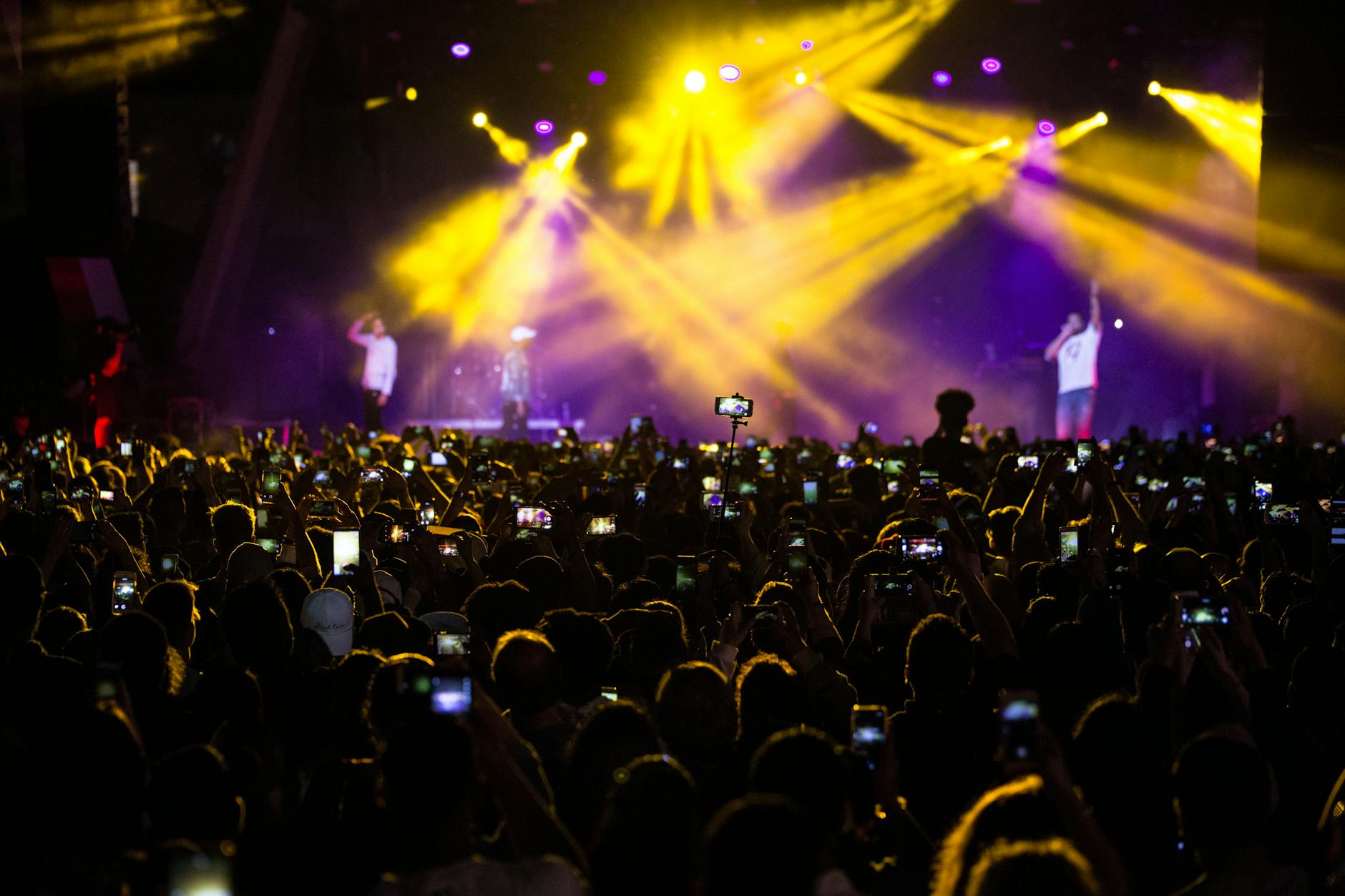
During my two years living in Chicago, there was a live music venue that I returned to time and time again. Radius is a large, multi-room warehouse-style venue that hosts acts ranging from the dark, pumping techno of I Hate Models, to the indie-psychedelic rock beats of Unknown Mortal Orchestra, and the wrist-flicking tech house sets of Chicago native, John Summit. Located in Chicago’s East Pilsen neighborhood, Radius was previously an old steel factory and has since been transformed into a pillar of the electronic music scene. 

The Incident

Earlier this month, during dubstep trio Levity’s set at Radius, a non-structural wood ledger that was attached to a steel frame fell from the venue’s ceiling, striking attendees. The two individuals affected were a 29-year-old man who reported shoulder and neck pain and a 26-year-old woman who sustained a laceration to the back of the head. Both were taken to Stroger Hospital in good condition. 

Chicago’s History of Venue Negligence 

Suing and slugging it out in court is the American way, so we can definitely expect a lawsuit (or two). This is not the first time the Chicago electronic music scene has faced structural tragedy and legal scrutiny. In 2014, four people attending a DJ Datsik concert at Concord Music Hall, located in Chicago’s Logan Square neighborhood, were injured when part of the ceiling came crashing down on their heads. Tina Somic, one of the victims who had suffered multiple head injuries, including a concussion, filed a premises liability suit naming Concord Music Hall, LLC and Club 2047, LLC as defendants. The complaint claimed that the venue’s owners were negligent for failing to keep the ceiling in a structurally safe condition or warn concertgoers about the hazard it posed, and that the venue negligently allowed performers to perform at dangerously high volumes, which increased the risk for a collapse. The demand for damages was $50,000. The suit never went to trial and the parties settled the matter (Agreed Order at 1, Somic v. Club 2047, LLC, 2015 Ill. Cir. LEXIS 9909 (2015) (2014-L-002082). 

Legal Implications

Premises liability law is a theory of negligence that holds a property owner responsible for any damages arising out of an injury on that person or entity’s property. The justification is that owners that occupy a property must make a reasonable effort to maintain a safe environment for visitors to it. Different states follow different criteria to determine who may recover under premises liability theory and under what circumstances, and usually fall into one of two camps: (1) focusing on the status of the person visiting the property or (2) focusing on the state of the property and the owner’s and visitor’s actions. 

Who Can Recover? Two Schools of Thought

Under the first camp, a visitor can be considered an invitee, licensee, or trespasser. An invitee is somebody invited onto a property for a commercial purpose, whereas a licensee is present on the property at the invitation or by permission of the property owner or occupant. The invitation creates an implied promise of safety. Some states draw differentiations between the standard of care between invitees and licensees while others hold them to the same standard. In many states, trespassers (visitors with no right to be there) cannot recover at all under premises liability, and only under strict conditions may have a pathway to recovery, such as increased likelihood of trespassers or in the case of a child trespasser. 

Under the second camp, different factors are considered when making a judgement, such as the circumstances in which the visitor came to be on the property, the reasonableness of the owner’s actions to repair and maintain the property or warn visitors, and the foreseeability of the injury. Generally speaking, owners or occupants have the duty to keep a property reasonably safe by regularly inspecting it, making repairs, and warning visitors of any hazardous conditions. 

Bars to Recovery

Most states, including Illinois, follow a comparative negligence regime in which an injured person who is partially or fully responsible for what happened cannot recover in full for damages arising out of a dangerous property condition. The justification for this is that visitors have a duty of care to themselves to prevent their own injury. Under a comparative negligence regime, a plaintiff who was found to be 20% responsible for the injury would only receive $80,000 of a $100,000 damages award. 

While it remains to be seen whether the injured concertgoers from the Radius incident will file a lawsuit, the venue could face legal scrutiny over its maintenance and safety protocols. Given the history of structural issues at music venues in Chicago, this incident serves as a stark reminder of the responsibilities that venue owners bear in ensuring the safety of their patrons.

As the Chicago electronic music scene continues to thrive, the balance between immersive, high-energy experiences and fundamental safety precautions remains crucial. Whether through stricter building inspections, enhanced venue regulations, or changes in how liability is determined in cases like these, one thing is certain: when the bass drops, the ceiling should not. 

#WJLTA #personalinjury #premisesliability #Chicago #music

Are Robots Really Running the Job Market?

By: Penny Pathanaporn

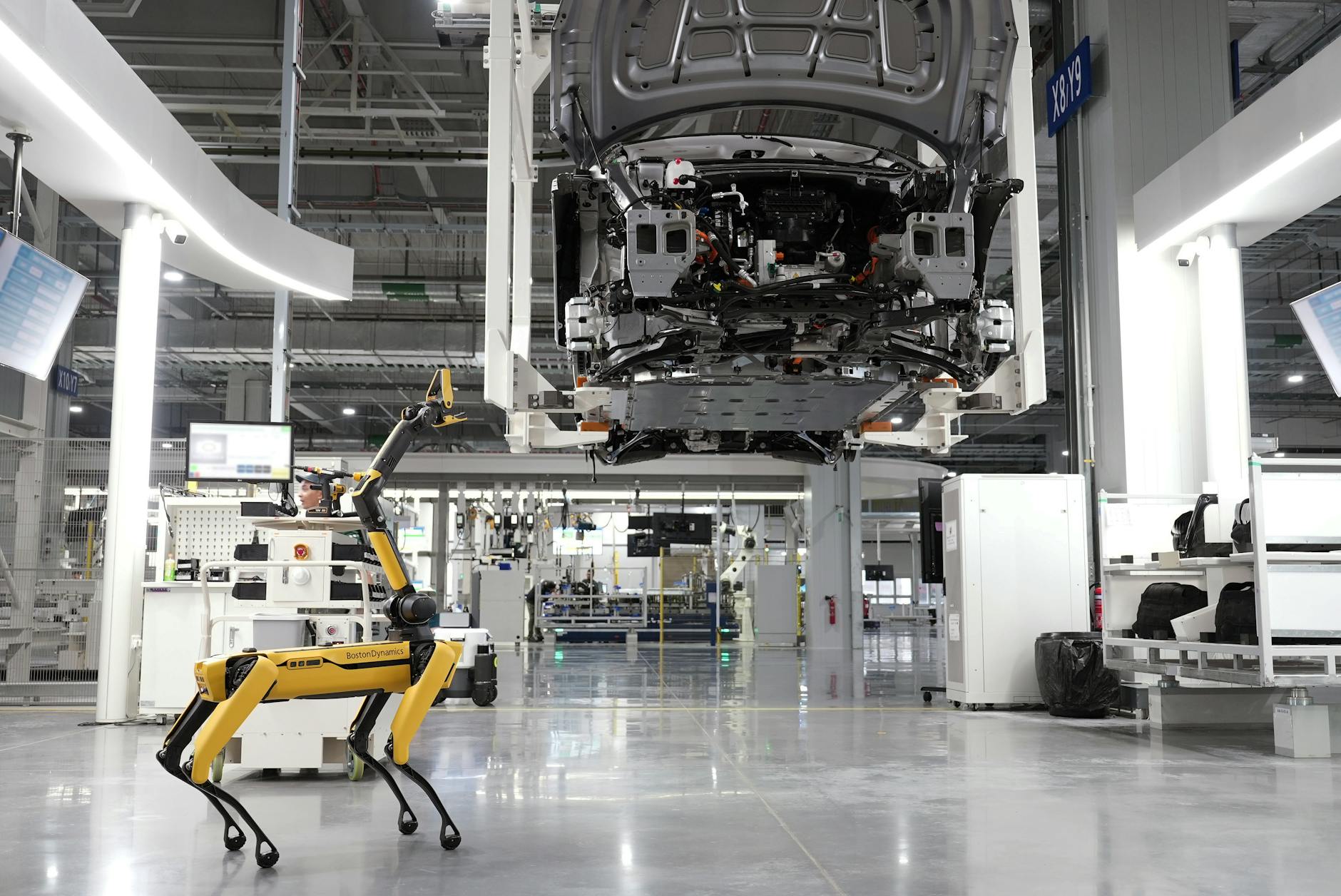
Today, artificial intelligence (AI) has pervaded nearly every aspect of our daily life. Residents and visitors alike in California, Phoenix, and now Texas can experience what it feels like to ride in a self-driving taxi. Over the past few years, internet users have flocked to ChatGPT for assistance on both serious and trivial matters, from creating a travel itinerary to drafting a work email. And, more recently, Elon Musk announced the highly anticipated development of Tesla Optimus, a humanoid robot that can perform everyday tasks such as grocery shopping. Considering the role that AI plays in making our lives more convenient, it is no surprise that AI has been integrated into the employment sector to increase the efficiency of the hiring process. 

How is AI used in the employment sector?

Artificial intelligence has been used to supplement several workplace procedures. For example, AI can be used to help employers screen potential candidates by filtering application materials for specific experiences or buzzwords. Employers have also used AI to review recorded interviews throughout the hiring process,  monitor employees’ computer activity,  track employees’ locations, and determine who gets promoted or laid off.

The problem with AI: furthering institutional biases 

Despite its ability to streamline employment processes, AI is far from perfect and its use can lead to harmful outcomes. The successful performance of AI models is dependent on factors such as the type of data that it has been fed and AI training techniques. Unfortunately, data that has been entered into AI models typically reflect institutional biases that exist in our society today. For instance, an AI hiring model formerly developed by Amazon was trained by a dataset that mostly consisted of men. Consequently, the AI algorithm demonstrated a preference for applications that include buzzwords mostly used amongst men. Once the bias had been discovered in the development process, Amazon ceased all work on their AI project. 

Additionally, AI models that have been trained to prioritize key traits such as optimism, outgoingness, or the ability to work well under pressure may inadvertently put candidates with disabilities (or even candidates from cultural demographics that do not value those traits) at a disadvantage. Accordingly, employers using AI tools in their hiring practices run the risk of committing employment discrimination based on sex, race, nationality, age, disability and other protected demographics.

Legal Implications of AI Usage in the Employment Sector

Under both federal and state laws, disparate treatment discrimination and disparate impact discrimination are not permitted. Disparate treatment discrimination entails intentional discrimination against protected groups, while disparate impact discrimination entails the use of facially neutral policies that disproportionately impact protected demographics.

Although actions taken by employers who use AI tools in good faith may not fall under disparate treatment discrimination, their actions are still at risk of falling under disparate impact discrimination. For example, as seen by the AI model formerly developed by Amazon, AI hiring tools trained on biased datasets are likely to prefer traits that do not correspond with certain protected groups, leading to a disproportionate impact on minorities. 

When determining whether hiring practices may disproportionately impact protected demographics, the EEOC recommends that employers utilize the “four-fifths” rule. Based on the “four-fifths” rule, if the proportion of candidates selected from one demographic is “substantially” different from the proportion of candidates selected from another demographic, then the hiring practices employed may be discriminatory. A ratio that is less than 80% between the two different proportions selected is considered to be the benchmark for “substantial” difference. 

Nevertheless, employers may be permitted to use hiring practices that disproportionately impact certain protected groups if they can demonstrate that the use of those practices is (1) related to the employment and (2) necessary for business purposes. For instance, if the job the candidates have applied for, along with the employer’s business, necessitates a fitness exam, the fact that more men than women pass the exam may not trigger disparate impact discrimination. Either way, employers should still adhere to the least discriminatory practice available in all circumstances. Lastly, employers should be very cautious of AI usage because they can still be held liable for discrimination even if the AI tools were owned or managed by third parties.  

The Crackdown on AI Use in Employment Practices 

The rapid developments in AI technology has undoubtedly led to the rise in AI-related lawsuits in the employment sector. In May 2022, the Equal Employment Opportunity Commission (“EEOC”) filed a lawsuit against “iTutorGroup” (a tutoring company). The EEOC claimed that iTutorGroup violated the Age Discrimination in Employment Act of 1967 (“ADEA”) through their use of AI in hiring practices. In August 2023, the EEOC and “iTutorGroup” settled the case, which marked the very first AI-discrimination lawsuit to be settled.

Currently, there is also an ongoing AI-discrimination class action lawsuit against a company named “Workday” in federal court. The plaintiff, Derek Mobley, alleged that Workday’s use of an AI software in screening applicants had resulted in discrimination based on age, race, and disability status. Although the federal court has not issued a final judgment on the case, the fact that the court has enabled the case to proceed as a class action lawsuit should signal to employers that they must remain vigilant when it comes to AI use. 

Looking Towards the Future 

Today, employers are highly advised to utilize third parties or external experts to assess their AI tools for any possible discrimination. Additionally, both Congress and state legislatures have begun taking legislative action to minimize the discriminatory impact of AI, such as introducing bills that require employers to notify candidates of AI usage. 

Ultimately, the functions of AI platforms are merely a reflection of the biases and prejudices that already exist in our society today. Laws, policies, and legislation can help detect and minimize the enforcement of these biases through AI. But perhaps grassroots advocacy can also provide an alternative avenue for promoting just AI usage.

#EEOC #AI #employmentlaw 

Behind the Romance: The Legal Status of Love is Blind Contestants

By: Hannah Gracedel

Do you have your snacks ready and your cozy PJs on? It’s time to binge-watch Netflix’s hit dating show Love is Blind. You start the show, but instead of discussing what they’re looking for in their life partner, contestants kick things off with a union meeting to discuss unsafe working conditions and low wages. Just kidding! However, this might not be as far-fetched as it sounds. A recent complaint filed by the National Labor Relations Board (NLRB) challenges how the show’s contestants are classified and treated. Depending on the outcome, Love is Blind, and reality TV in general, might look different to viewers at home. 

What Is Love is Blind?

Love is Blind is an unscripted reality show where singles from the same city meet to speed date in the “pods.” The pods are a set of 20 soundproof rooms, each approximately 12 by 12 feet. The contestants speak through a wall and meet face-to-face for the first time after they have accepted a proposal. The unique twist with this show is that the contestants never actually see each other on their dates. The idea is that the couples foster emotional connections without the influence of physical appearance. After the proposal, they go on a honeymoon, move in together, meet the families, and plan a wedding, all while on camera.

Contestants receive a $1,000 stipend per week during filming and up to $8,000 for appearing in all episodes. Wedding and vacation expenses are funded by production. However, contestants are responsible for many out-of-pocket expenses like hair, makeup, wardrobe, and any travel expenses not including the honeymoon phase of filming. 

The Complaint

In 2024, the NLRB issued a complaint alleging that the producers of Love is Blind misclassified contestants as independent contractors rather than employees. In determining whether someone is an independent contractor, the Board considers factors that reflect the employer’s level of control over the individual’s working conditions and work product. In addition, the complaint alleged the employer maintained unlawful contract provisions.

Why does misclassification matter?

The National Labor Relations Act (NLRA) defines an employee as any individual working for an employer. This definition is incredibly vague, making it ripe for confusion. The statute goes on to exclude individuals classified as independent contractors, supervisors, agricultural laborers, domestic workers, or those employed by their spouse or parent. Because of these exclusions, these workers are not covered by the NLRA and are not subject to its protections.

If you are considered an employee protected by the NLRA, your employer cannot fire, discipline, or threaten you for engaging in concerted activities. Examples of concerted activities are unionization, striking, and discussing wages or working conditions. Employees need not be unionized to exercise these rights. 

Therefore, being misclassified as an independent contractor means that you can be fired or penalized for activities that are fully protected for employees, leaving you without crucial safeguards to advocate for better working conditions.

What are the alleged unlawful contract provisions?

The National Labor Relation Board’s complaint alleges that the producers are enforcing unlawful contract provisions, including, among other things, a nondisclosure agreement (NDA) and an overly broad non-compete provision.

A NDA is a legally enforceable contract that creates a confidential relationship between two parties—one possessing sensitive information and the other receiving it. The recipient agrees not to disclose the information to others. NDAs are also known as confidentiality agreements. This NDA could be unlawful if the contestants are found to be classified as employees. Remember, the NLRA protects employees from engaging in concerted activities, which includes discussing wages, benefits, and working conditions. 

Additionally, the non-compete clause bans contestants from giving interviews or making public appearances for a full year after their last episode airs, even on their own behalf. While some non-compete agreements are lawful, others are not. A non-compete may be unlawful if it imposes overly broad restrictions; limits work in a large geographic area or across many industries, lasts for an unreasonably long time after employment ends, or is enforced on low-level employees without access to sensitive information. In addition, many states have laws governing non-compete agreements. For example, in Washington state, a non-compete agreement is considered void and unenforceable if an employee has earnings less than $123,394.17 in 2025.

Effects of the Complaint

The NLRB complaint is still in its early stages. The NLRB has currently scheduled a hearing for April 2025, during which an administrative law judge will answer the question of whether or not the producers violated labor laws. If the producers lose, they could appeal the decision, which would be reviewed by a five-member board appointed by the U.S. president. The board’s decision can be brought before a federal appeals court, and the entire process can take years. What could this mean for Love is Blind and other reality TV shows?

For starters, unionization is a possibility. However, it’s unclear how effective this would be. Shows like Love is Blind, The Bachelor, and RuPaul’s Drag Race replace their entire cast every season, making it difficult to establish long-term collective bargaining efforts. On the other hand, unionization could benefit those with recurring roles, such as those in franchises like The Real Housewives.

The outcome of this complaint could send shockwaves through the entire reality TV industry. If the complaint succeeds, it could embolden contestants from other shows to file similar claims, forcing production companies to reevaluate their labor practices. 

#WJLTA #LoveIsBlind #EmployeeRights #RealityTV