The Cellphone: Our Best Helper or an Illegal Recorder? 

By: Lauren Liu

We have all experienced that shocking moment when we realized that the advertisement or post appearing on our screen happens to be the exact topic that we talked about in a very private conversation. Although we did not Google or browse that topic on the internet, somehow, that idea of upgrading our laptop or buying that new pair of shoes slipped into our browser and started waving at us from across the screen. We are in awe, and can even feel violated.

Such an experience has become so common that we forget how much our browser or the apps that we use are tracking us, and how much our cellphones are listening in on our every conversation. Especially after the revelations from Thomas le Bonniec, a former contract consultant for Apple, such an issue has raised more concerns for customers. According to Bonniec, Apple created a quagmire for itself involving many ethical and legal issues, including Siri’s eavesdropping. In many instances, iPhones record users’ private conversations without their awareness of it, and without any activation of Siri, which listens to users’ vocal commands and assists with their needs. The problem stems from the fact that every smartphone, including iPhone and Android devices, is a sophisticated tracking device with very sensitive microphones that can capture audio by the users, or even anyone within the vicinity. Furthermore, with 4G LTE and its bandwidth, these recordings can be stored and uploaded into the seller’s database without the knowledge or consent of the owner. Bonniec mentioned Apple’s explanation that these recordings were gathered into Apple’s database for analytics and transcription improvements. However, Bonniec’s revelation of Apple’s internal operation still caused many privacy concerns from customers and raised potential legal issues. 

In response to such concerns, companies created long consent forms for customers to sign before purchasing the product. The legal definition of consent is that a person with sufficient mental capacity and understanding of the situation voluntarily and willfully agrees to a proposition. Based on such a definition, a majority of customers could not have validly consented, because when most of them sign these consent forms, they do not read or fully understand the content in these forms. More specifically, regarding the problem of Siri, customers often do not clearly understand what Siri listens to or how their iPhones record their conversations. Most ordinary iPhone users often assume that Apple only evaluates voice commands and questions after they activate Siri for specific commands. 

Federal law (18 U.S.C. § 2511) requires one-party consent, which means that a person can record a phone call or conversation, so long as that person is a party to the conversation. If a person is not a party to the conversation, he or she can only record if at least one party consents and has full knowledge that the communication is being recorded. Most state laws follow such federal laws. It remains a question whether or not Apple or Siri should be legally considered a party to a conversation, but based on common sense, most consumers would likely think that it is not. Furthermore, it remains unclear whether or not the signing of a consent form without a comprehensive understanding of the form’s content is considered valid consent. Thus, even if a customer signs such a consent form, it remains possible that he or she still does not consent to be recorded.

In addition to learning about the law, consumers should also ask questions regarding potentially illegal recordings by electronic devices. How much private information is obtained? What confidentiality agreements were in place, and what oversight was implemented? Are actual audio recordings retained, and if so, for how long? With so much ambiguity still remaining, these questions can at least begin the process of addressing consumers’ concerns and reducing potential legal disputes for sellers.

Should the Police Be Able To Arrest You For Your Face?

By: Kyle Kennedy

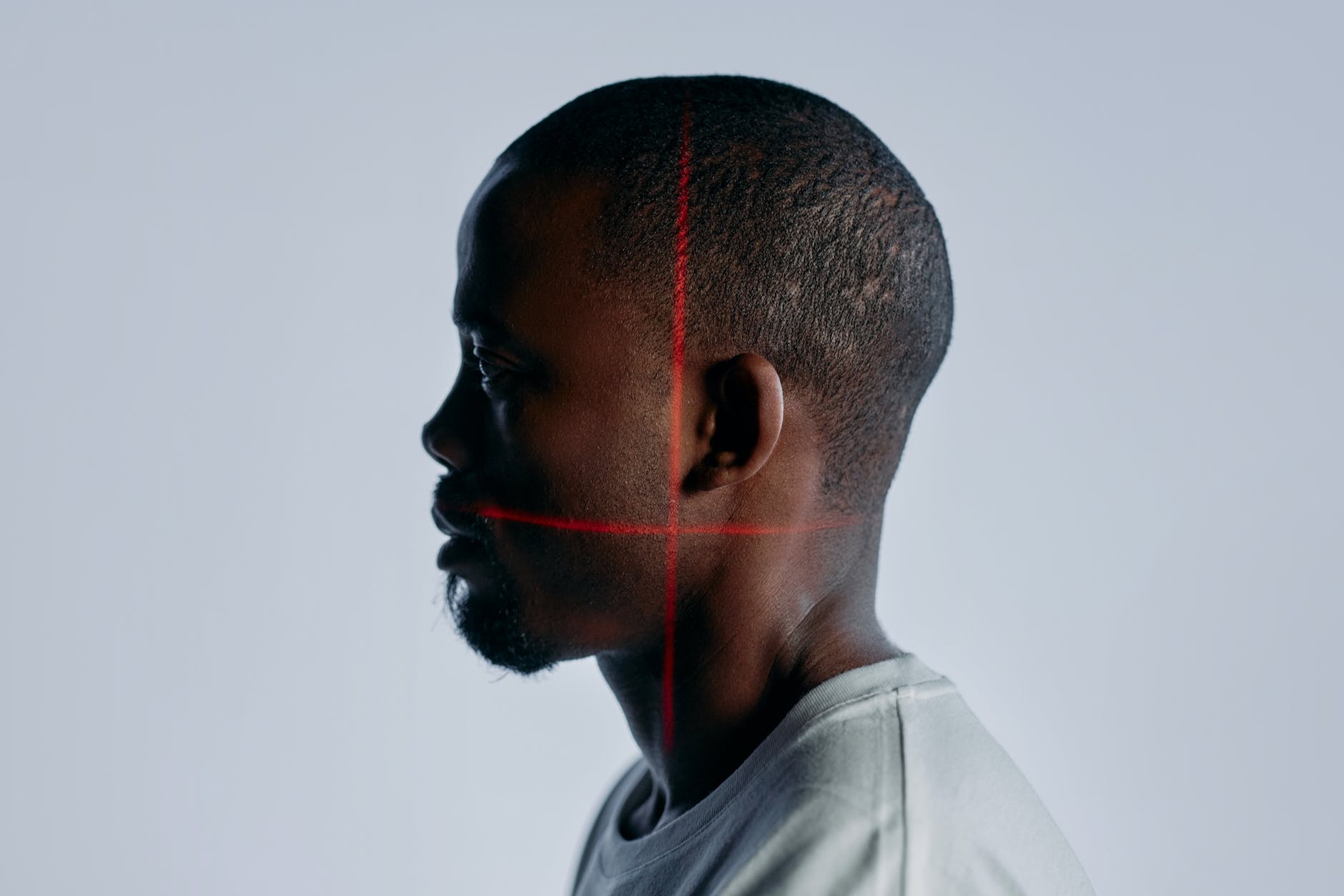
As technology has continued to evolve, law enforcement has begun to employ technological advances like facial recognition in their everyday pursuits. This has included issuing arrest warrants exclusively based on facial recognition matches.

Randall Reid was on his way to Thanksgiving dinner at his mother’s house in Georgia when he was arrested and jailed for stealing $10,000 of Chanel and Louis Vuitton handbags from a New Orleans suburb. The only problem was, Reid had never even been to Louisiana. This didn’t stop Reid from spending nearly a week in prison because a facial recognition tool had matched him to surveillance footage of the suspect in the case. Reid was arrested and held despite being about 40 pounds lighter than the suspect on the tape. 

This is not the first case of facial recognition technology leading to a wrongful arrest. Nijeer Parks spent 10 days in prison after an incorrect facial match and began to feel pressure to accept a plea deal because of his prior criminal record. Faced with the pressure of battling the court system and often the weight of prior charges, “[d]efense attorneys and legal experts say some people wrongly accused by facial recognition agree to plea deals”. Robert Williams has had multiple strokes since he was released from a 30 hour stint in jail after he was incorrectly matched to video of a suspect robbing a watch store. These are far from the only instances of inaccurate facial recognition leading to wrongful arrest. These arrests raise two important questions: can a facial recognition match be the basis of probable cause to substantiate a warrant? And if so, should it be? 

Facial recognition is broadly used to accomplish two tasks: verification and identification. Verification, also called one-to-one matching, is used to confirm a person’s identity like when logging into their smartphone or a banking app. Identification, or one-to-many matching, is when software compares an unknown face to a large database of known faces. Identification can be used on cooperative subjects who consent to having their faces scanned or uncooperative subjects whose faces are not scanned. The accuracy of these identification measures is much lower for uncooperative subjects whose facial images were captured in the real world. One algorithm had a 0.1% error rate when matching to high-quality mugshots, but this rate climbed to 9.3% when matching to images captured ‘in the wild’. The accuracy rates of facial recognition technology also vary by vendor; one top algorithm achieved an identification accuracy of 87% at a sporting venue while the accuracy rate of another vendor’s software was a dismal 40%. In addition to variation by vendor, even the most accurate algorithms tended to have “higher false positive rates in women, African-Americans, and particularly African-American women.” 

Probable cause differs for arrest warrants and search warrants. For an arrest warrant, probable cause is interpreted according to a flexible reasonableness standard based on a totality of the circumstances. For search warrants, there is probable cause when there is a fair probability there is evidence of a crime in the place to be searched. Based on the issues with accuracy and the frequency of inaccurate facial matches leading to wrongful arrests, a one-to-many match acquired through use of a facial-recognition algorithm cannot substantiate probable cause for a warrant without further evidence. This is especially true where the algorithm is used on images or video captured from uncooperative individuals ‘in the wild’, which would be the case when officers are trying to find unknown suspects with surveillance footage. A facial match with corroborating evidence linking a location to the individual matched might be able to substantiate a search warrant. On its face this might be less concerning due to the lower risk of wrongful arrests, but wrongfully or erroneously substantiated search warrants lead to many issues of their own.

The greatest danger posed by facial recognition inaccuracies are false positives because they lead to false accusations against otherwise innocent individuals. In response, some scholars have attempted to impose confidence thresholds on facial recognition algorithms to reduce the rate of false positives. One study found that a set of algorithms failed to return a match 4.7% of the time when no threshold was imposed, but that the rate jumped to 35% when a 99% threshold was imposed.  This means that 30% of the time the algorithm identified an individual, it was at a confidence level of below 99%. Many law enforcement departments that use facial recognition technology do not impose confidence thresholds on potential matches. While these confidence thresholds reduce the risk of false accusations, they still leave the door open for problematic uses of technology by law enforcement. Confidence thresholds are a band-aid solution which are difficult to enforce externally and allow the continued use of invasive surveillance technology.

Overall, one-to-many matches of uncooperative faces acquired through facial recognition algorithms are neither accurate nor reliable enough to be the sole basis of probable cause substantiating a warrant. These algorithms are susceptible to high error rates which vary unpredictably based on many factors, including the race and gender of the target individual. Additionally, the use of facial matching as the sole basis for arrest warrants has led to many wrongful arrests with long-term consequences for arrestees, like those mentioned above. The surrounding evidence of inaccuracy and history of wrongful arrests stemming from inaccurate facial matches make it clear that facial recognition matching shouldn’t be the legal basis for probable cause absent corroborating evidence. The remaining questions are to what degree a facial recognition match must be corroborated to substantiate a search warrant, whether police should be liable for harms stemming from inaccurate facial matches, and if so, what duty of care the police have in determining whether a given facial recognition match is accurate. Beyond further inquiry, the need for regulation surrounding the use of facial recognition and other surveillance technologies by law enforcement has never been more apparent.

It’s Going Down for Real: The Highs and Lows of Celebrity Endorsements

By: Enny Olaleye

On January 18, 2023, prominent rapper Flo Rida, known for hits like, “Right Round,” “GDFR (Going Down for Real),” and “Low,” emerged victorious in his $82.6 million breach of contract lawsuit against the popular energy drink company Celsius Holdings Inc. Flo Rida, whose real name is Tramar Dillard, and his production company, Strong Arm Productions brought suit against Celsius Holdings Inc. In the suit, he claims the company had violated the terms of their 2014 endorsement deal and fraudulently hid information from Dillard during the time of partnership, which ended in 2018, and the court ultimately agreed. 

In the complaint, Dillard’s legal team stated that, “as a music industry superstar and international icon with millions of digital followers, Flo Rida played an instrumental role as the worldwide brand ambassador and launched a new era for Celsius brand development, growth, and expansion.” This statement raises questions about celebrity endorsements and the level of involvement celebrities actually undertake in these deals with multi-billion-dollar companies. 

Thus, the question arises: “What actually is an endorsement deal?” 

An endorsement deal is a contract between a company and a (typically well-known) celebrity who grants the company permission to use his or her name and reputation to advertise a product or service. After the contract is signed, the company compensates the endorser (celebrity) to promote the company’s product or services.  The contract lists the explicit terms and conditions of the endorsement for the celebrity, such as how or where the celebrity should advertise the product, or restrictions on how the celebrity uses the product or service in public. For the period of time defined in the contract, the company commits to providing the endorser with the product at their request free of charge as part of the compensation. 

From the company-standpoint, the primary goal of an endorsement agreement is to increase brand awareness and product revenue. Companies are able to increase brand awareness and product sales without associating their product with a particular celebrity, but by taking advantage of the popularity of their own spokesperson. On the other hand, companies are sometimes able to solidify their brand awareness with unknown individuals who later become popular from the brand awareness. For example, popular brand figures such as “Jake from State Farm,” and “Flo from Progressive,” have led to successful brand campaigns for their respective companies by becoming nationally recognized over time and gaining their own fame—even leading to celebrities dressing up as them for Halloween. 

However, from a celebrity standpoint, considering whether to endorse a product is a bit more complicated.   How involved a celebrity wants to be in the endorsement depends on a variety of factors like their level of desire to increase personal brand exposure, their desire to increase net worth, or their genuine personal  interest in cultivating and investing in the product itself. Today,  the prevalence of influencers and celebrities featured in television commercials and posting products on their social media pages is ubiquitous, whether it’s to increase their brand exposure or simply cut a check is less obvious. Further, it’s becoming more common to see celebrity-company combinations, such as Ryan Reynolds and Mint Mobile  or Flo Rida and Celsius, who enter into endorsement deals as co-owners or stakeholders, permitting them to retain a portion of the product revenue, while simultaneously using their celebrity to endorse the product. 

Although celebrity endorsements have been proven to increase product revenue and awareness, as well as build product credibility, there are still drawbacks companies must consider. First and foremost, celebrities do not work for free. Securing a celebrity endorsement is expensive for companies. Additionally, as product revenue increases celebrities often expect to be paid more, reasoning that the increase in profit directly correlates with their endorsement. In fact, most celebrities ensure companies expressly include this provision in the endorsement agreement before proceeding with the partnership. 

With respect to Dillard’s suit against Celsius, his team claimed such a provision was “specifically contemplated in terms of the agreement, that ‘as Celsius profited in the future, additional compensation would be paid to Dillard by Celsius in the form of shares of company stock and ongoing royalties.’” Further, his legal team claimed that “from ‘a financial perspective,’ Celsius ‘exponentially increased product revenues and sales, attracted key investors, and upgraded its financial status upon partnering with Dillard starting in 2014—all of which ultimately led to the important transition into the Nasdaq market in mid-2017.’” In response, Celsius’ legal team claimed that they did not owe Dillard any additional financial compensation, provided that “the amount of royalties he [Dillard] was entitled to on the products did not exceed the stock revenue he had already been paid. In addition, any increase in Celsius’ stock value occurred after Dillard’s contract expired and therefore Celsius does not owe him any additional compensation.”  

Ultimately, when cultivating celebrity endorsement agreements or simply contracts of any kind, it’s important to complete due diligence, where both parties must undertake all precautions while drafting and reviewing the contract, in hopes of avoiding litigation, drawing bad publicity to the client and ensure the nature and use of the product is not breaching any legal provisions. 

Are 3D printed human organs a possibility in the near future?

By: Aminat Sanusi

Medically 3D printed human organs have the possibility to save many lives. The United Network for Organ Sharing controls the American transplant system and lists patients in need of an organ transplant. Procedures such as kidney and liver transplants are possible with living donors. But patients on the list for transplants of the heart and lungs are not so lucky. Imagine the infinite possibilities of being able to print a human organ to save a life, instead of waiting until someone died to use theirs? With constant innovation in medicine and the legal field trying to keep up, maybe in this decade or the next, medical trials of 3D printed organs will be a success.

In 2020, the average kidney transplant cost $442,500 and 3D printers cost up to $100,000. The expensive costs of organ transplant surgery come from the transport costs and the actual surgery of implanting the organ. Affordability and insurance coverage issues may arise from time to time but nothing extremely unusual from a normal organ transplant. Nevertheless, accessibility wouldn’t be a huge issue because the organ is created with the patient’s own cells versus a living or non-living organ donor.

What are the current regulations of 3D printed medical devices?

Medical 3D printing has already enhanced treatment for certain medical conditions such as joint replacements and prosthetic limbs. The Food and Drug Administration (FDA) is currently in charge of the regulation of products made and used in the medical field by a 3D printer. The FDA regulates 3D medical devices by categorizing them into groups based on their levels of risk. Regulatory control increases from Class I to Class III, with Class I devices posing the lowest risk to patients. Some requirements apply to the medical devices before they are marketed (premarket requirements), and others apply to the medical devices after they are marketed (postmarket requirements). 

The FDA also regulates the information and application process that the 3D printed medical device seeking acceptance should include. In 2016, the FDA issued a draft guidance to assist manufacturers who are producing medical devices through 3D printing with design, manufacturing, and testing considerations. The guidance categorizes two major topic areas: design and manufacturing considerations which addresses the quality sy draft guidance tstem of the device, and device testing considerations which addresses the type of information that should be included in premarket notification submissions. The FDA continues to evaluate submissions of new 3D printed medical devices to determine its safety and effectiveness.

How are 3D printed organs made?

The possibility of printing 3D human organs is in the near future with organ bioprinting. According to a 2019 medical study, organ bioprinting is the use of 3D printing technologies to assemble multiple cell types, growth factors and biomaterial in a layer-by-layer fashion to produce bioartificial organs that ideally imitate their natural counterparts. The ability to recreate organs with the patient’s own cells is key to avoiding the risk of the patient rejecting the organ or dying before they could be matched with a healthy organ.

Dr. Anthony Atala, the director of the Wake Forest Institute for Regenerative Medicine, and Dr. Jennifer Lewis, a professor at Harvard University’s Wyss Institute for Biologically Inspired Engineering, discuss and explain the process of bioprinting. To begin the process of bioprinting an organ, the doctors need the patient’s cells, so they either choose to do a biopsy of an organ or surgically remove a piece of tissue from the patient’s body. Now the cells need to grow outside of the body, so it’s placed into an incubator that way it’s constantly fed nutrients. Next the cells are mixed with a gel which is similar to glue to create a printable mixture of living cells. Typically the gel is made out of collagen or gelatin. 

For the printing process, the 3D printer is programmed with the patient’s imaging data from X-rays or scans and then loaded with the bioink, which is the gel mixed with the patient’s cells, into the printing chamber to print the organ. Much similar to a regular printer that has cartridges filled with different colored ink, the 3D printer fills up its cartridges with cells. The printing process could take hours to weeks depending on the type of organ that is being printed.

As technological innovation becomes more successful and precise, 3D-printed organ transplants will likely become reality. However, there are current challenges involved with 3D bioprinted organ transplants. The first issue is the functioning of the 3D bioprinted organ is still undergoing testing and trials. The second issue is the uncertainty of how FDA regulations will control the manufacturing and testing of the 3D bioprinted organs. Lastly, the accessibility and affordability of the 3D printed organs is currently limited. 

3D bioprinted organs are created to be complex like a human organ and there are still many challenges to overcome with getting the printed organ to properly function alongside the other human organs in the body. It is still unclear how FDA regulations will be able to control the usage and safety of the product versus the manufacturing and engineering of the product. While there are already procedures in place for 3D printed medical devices like prosthetic limbs which could potentially be applied to bioprinted organs, the regulation of device testing may change because of the use of human cells to print the organs. 

So what comes next?

3D printed medical devices already exist. But why stop there? Why not 3D print human organs? In the award-winning American medical drama television series Grey’s Anatomy, the surgeon 3D printed a part of a human heart and surgically implanted it into the patient. Although the idea of it seems plausible on TV, the reality is a 3D printed human organ has yet to be implanted into a human body. However, that does not mean that 3D printing has not been utilized in the medical field.

How FTC’s Proposed Rule Could Eliminate NFL’s Exclusive Franchise Tags

By: Annalyse Harris

FTC’s Proposed Rule 

In January 2023, the United States Federal Trade Commission (“FTC”) released a proposed rule that, if enacted into law, would ban companies from the use of non-compete clauses in employment agreements. Additionally, the rule will require companies to fully rescind all non-competes with current and former employees. 

The rule defines “non-compete clause” as a “contractual term between an employer and a worker that prevents the worker from seeking or accepting employment with a person, or operating a business, after the conclusion of the worker’s employment with the employer.” 

Importantly, the rule clarifies that whether or not a contractual term is considered a “non-compete clause” does not depend on its express terms, but rather on how the term functions. Therefore, if a contractual term has the effect of preventing a worker from seeking or accepting employment subsequent to the worker’s employment with the employer, it will be prohibited. Jackson Lewis, one of the nation’s most prominent labor and employment law firms, effectively labels such term as a “de facto” non-compete

NFL Franchise Tags 

The National Football League (“NFL”) gives each team the right to “franchise tag” one player a year. This means a team can restrict an otherwise unrestricted free agent–a player with at least four seasons accrued whose contract has expired and is free to negotiate and sign with any team—for a year longer than his contract. 

Teams can choose between a non-exclusive and exclusive franchise tag. The former allows a player to further negotiate with other teams, while the latter does not. Additionally, players generally have little to no control over the tagging, and as a result this is not usually a player-friendly practice, as it blocks players from becoming unrestricted free agents. 

NFL Exclusive Franchise Tags as Non-Competes

An exclusive tag gives the team exclusive negotiating rights. This tag comes with a salary of either 120% of the player’s current year’s salary or an average of the top five salaries of players at his position, whichever is greater. While on its face, this may not seem like a bad deal, it is only a one-year contract and eliminates players’ ability to obtain long-term contracts with any other team. Not only are the players barred from negotiating and signing with other teams, but they do not have the option to refuse the tag. If a player refuses the tag, he is then barred from signing with any other team for the entire season. In short, these tags act as an ultimatum with no security.

It should also be noted that the NFL, the most profitable sports league in the world, is the only league that has such restriction. Further, in industries outside of the scope of sports, such restriction would never be enforceable. Indeed, the exclusive tag has been called the “prison tag” by many players in the league, as they maintain other leagues do not have such tags and the tags unfairly control their free agency, earning potential, and ability to be employed by a team of their own choosing. 

Therefore, because the exclusive tag restricts a player’s actions by banning negotiations and employment with other teams, it has the effect of a non-compete clause and will likely be prohibited by the FTC’s proposed rule. 

While it can be argued that the tags are defined and governed by the NFL Players Association (“NFLPA”) Collective Bargaining Agreement (“CBA”) and are therefore organized labor, which has been exempted as non-statutory labor, the FTC’s rule as written does not include any non-statutory labor exemptions. This being said, if the FTC’s proposed rule becomes law and does not exempt the NFL in said capacity, the NFL’s almost three decades of exclusive franchise tagging will come to an end. 

When Could this Happen?

Because the FTC’s proposal is left open for public comment until at least March 10, 2023, and the window teams can tag players for the upcoming season is from February 21 through March 7, 2023, it is likely there will not be any changes for this year/season. Members of the public have the right to ask the FTC be granted additional time to amend the proposal to add and/or omit comments and changes. After this window is closed, the FTC can change, terminate, or make a final rule that must be published by the Federal Register. Then, upon Congressional approval, the rule will become law at least 60 days after the Federal Register’s publication. Accordingly, it could be months before any movement is made in regard to the FTC’s proposed rule on banning non-competes.