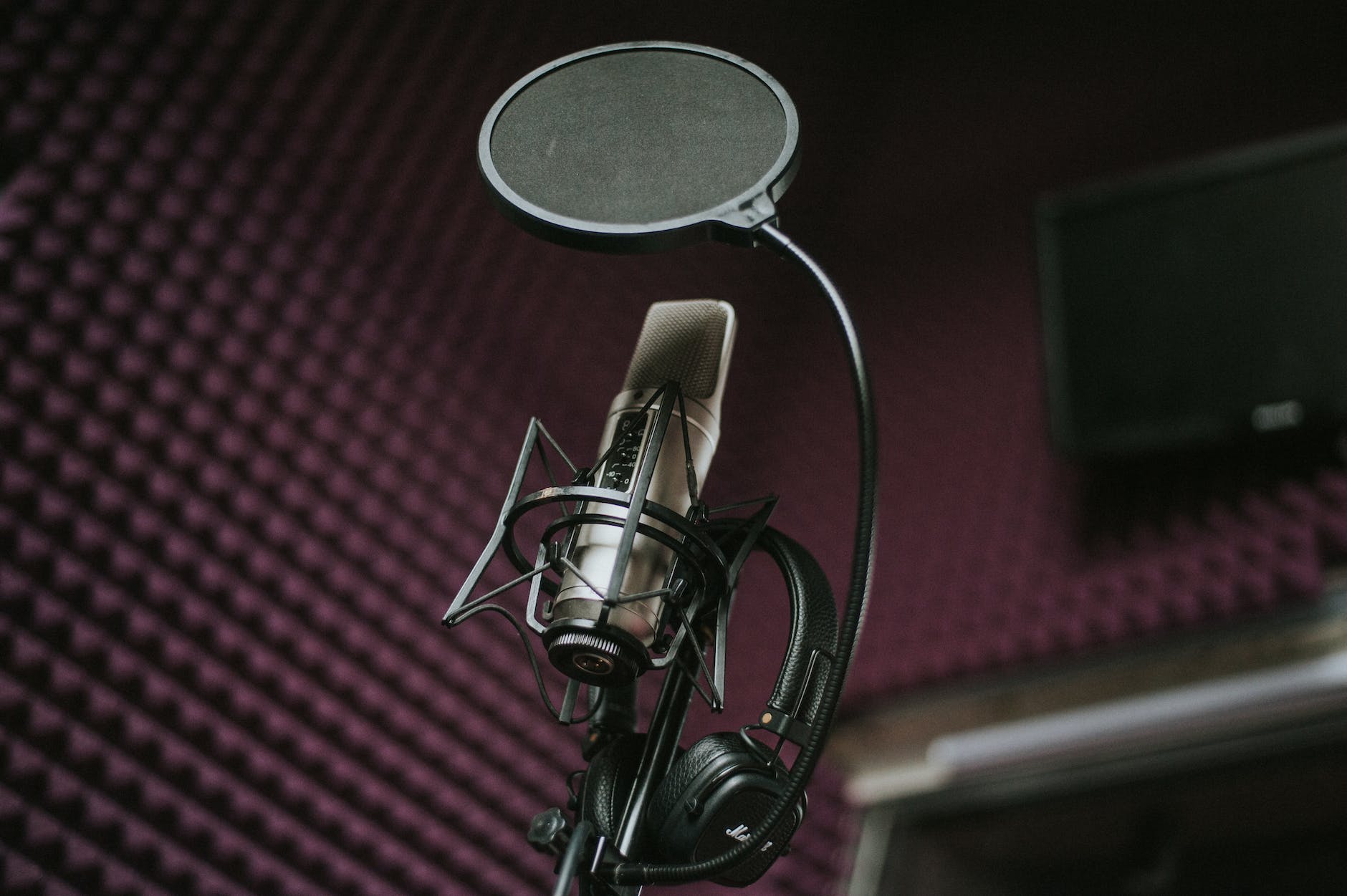
“Mob” Mentality: The Push for Unionization of Anime Voice Actors

By: Nicholas Neathamer

Whether you’re just hearing about it or are already a raving fan, the popularity of anime continues to skyrocket. Anime is a style of Japanese film and television animation that has garnered worldwide fans for decades, but the emergence of streaming platforms and their willingness to embrace the medium has given rise to booming demand for anime content in recent years. The market size of the anime industry has steadily risen over time and is expected to generate revenue of over $47 billion by 2028. Despite the overwhelming success of the industry, one often overlooked factor of an anime’s popularity is its cast of voice actors, who bring animated characters to life through dialogue. Existing in further obscurity are the voice actors who “dub” shows and movies, providing voiceover work in various languages to attract viewers around the world. These ‘dubbing’ voice actors often provide services for streaming platforms such as Netflix, Hulu, and anime-exclusive platform Crunchyroll. One of Crunchyroll’s most popular shows is currently Mob Psycho 100, and the platform recently began airing the anime’s third and final season. 

Despite Mob Psycho 100’s popularity, one of the most incendiary issues in the anime world recently has been Crunchyroll’s recasting of the show’s English voice for the protagonist. Kyle McCarley, the original English dubbing voice actor for the titular Shigeo “Mob” Kageyama, was informed by Crunchyroll that he would not be returning as the English voice of Mob. According to McCarley, the fallout was due to the actor’s request that after this final season of Mob Psycho 100, Crunchyroll would meet with union representatives to negotiate a potential contract for future productions. McCarley is part of the Screen Actors Guild – American Federation of Television and Radio Artists (SAG-AFTRA), an American labor union representing actors, voiceover artists, journalists, singers, radio personalities, and other media professionals. Crunchyroll currently chooses to not work with any SAG-AFTRA contracts, and McCarley’s proposal for a future union contract was allegedly enough for the streaming platform to look for a new lead voice for Mob Psycho 100. 

It’s no mystery as to why a company like Crunchyroll wouldn’t want to work with unionized voice actors. Unions like SAG-AFTRA are often able to secure more favorable terms for union members through the use of collective bargaining and standard contracts, such as SAG-AFTRA’s Dubbing Agreement. Entering into union contracts would bind Crunchyroll to pay voice actors at scheduled minimum payment rates, contribute to pension and health plans, and follow additional rules set forth by the union. Unionized labor forces are also able to more effectively go on strike against employers to push for higher compensation or new terms to their contracts. In particular, SAG-AFTRA voice actors went on strike against large video game publishers in 2016, arguing for residuals, transparency in roles, higher safety precautions, and better safety assurances for actors while on set. Rather than submit itself to such terms and the increased possibility of a strike, Crunchyroll has eschewed even the possibility of utilizing SAG-AFTRA talent. Instead, Crunchyroll hired non-union Ernesto Jason Liebrecht to voice the character of Mob.  

Some fans of Mob Psycho 100 have wondered whether McCarley can seek legal recourse after the recasting, including whether McCarley may have copyright protections over his portrayal of Mob. However, this is almost certainly not the case. In Garcia v. Google, Inc., a case from 2015, the United States Court of Appeals for the Ninth Circuit examined whether an individual actor or actress may claim copyright in his or her performance in a motion picture. The court looked to the Copyright Act, which states that “[c]opyright protection subsists…in original works of authorship fixed in any tangible medium of expression…[including] motion pictures.” 17 U.S.C. § 102(a). The Act also states that such a fixation must be done “by or under the authority of the author.” 17 U.S.C. § 101. The court ultimately agreed with the Copyright Office, who explained that its “longstanding practices do not allow a copyright claim by an individual actor or actress in his or her performance contained within a motion picture” and that for copyright registration purposes, “a motion picture is a single integrated work” and an acting performance cannot be registered apart from the motion picture. Therefore, McCarley, also solely an actor, would not be able to claim copyright over his role.

Another question posed is whether Liebrecht’s portrayal of Mob violates McCarley’s rights under California’s statutory scheme or common law (as the company operates primarily out of that state), including whether Liebrecht is able to imitate McCarley’s voice for Mob. California Civil Code section 3344 provides that anyone who knowingly and without prior consent uses another’s voice or likeness in any manner, on or in products or goods, shall be liable for any damages sustained by those injured. However, this statute only explicitly covers the actual voice and not vocal sound-alikes. Meanwhile, under California’s common law, imitating another person’s voice can violate that person’s right of publicity, as seen in the decision of the United States Court of Appeals for the Ninth Circuit in Midler v. Ford Motor Co. In that case, the court alluded to protections against imitations of a performer’s voice. The court held that “when a distinctive voice of a professional singer is widely known and deliberately imitated in order to sell a product, the sellers have appropriated what is not theirs” and have therefore committed a tort under California law. That said, such a narrow holding is unlikely to be applied to a performer such as McCarley, whose voice is not nearly as “widely known.” There also remains the issue that many may claim Liebrecht’s performance, while similar, is not an imitation of McCarley’s portrayal of Mob. 

While McCarley likely has no options to pursue legal recourse against Crunchyroll in this situation, there remains a silver lining for those who wish to see their favorite English dub actors be able to unionize more effectively. In 2019, Netflix reached out to SAG-AFTRA to negotiate a direct union agreement, leading to a 2019 agreement that included a Netflix-specific Dubbing Agreement. And on August 31, 2022, SAG-AFTRA members voted to ratify the successor contract, the 2022 SAG-AFTRA Netflix Agreement. This has further solidified the relationship between the streaming platform and union for dubbing contracts going forward, and has bolstered voice actors who work on dubs to continue a push for unionization. Looking down the road, the goodwill acquired by Netflix and push towards increased unionization may lead to a lack of dubbing talent—and a need to change policies—at Crunchyroll. 


The Fourth Amendment’s Third-Party Exposure Doctrine in the New Age of Data

By: Kyle Kennedy

The Fourth Amendment protects US citizens from unreasonable searches and seizures by creating an administrative barrier between citizens and investigating authorities. In addition to the Fourth Amendment, the lack of government resources also serves to protect individual privacy because investigative authorities can neither afford nor validate surveillance of citizens past a certain cost-benefit tradeoff. Together, the intended effect of these protections is to sufficiently guard against invasions of citizen’s privacy by government authorities in pursuit of evidence. However, the interaction of modern-day technology and the increased availability of data as a result of the Third-Party Exposure Doctrine leaves US citizen’s personal information exposed to the government in unprecedented ways.

The Supreme Court has held that the Fourth Amendment provides protections to citizens based on a reasonable expectation of privacy. However, the Third-Party Exposure Doctrine states that information willingly revealed to third parties is not subject to Fourth Amendment protections. As an example, in U.S. v. Miller, the Supreme Court held that there is no reasonable expectation of privacy for information shared in bank records. However, in the landmark case of Carpenter v. United States, the Supreme Court limited the Third-Party Exposure Doctrine by holding that collecting seven days worth of cell phone location information was a violation of the Fourth Amendment. However, it is worth noting that the holding in Carpenter was cabined to its facts, therefore leaving significant questions about the application of the Third-Party Exposure Doctrine to consumer data and electronic records unanswered.  

In addition to the privacy protections afforded by the Fourth Amendment, the Stored Communications Act (SCA) protects against searches of electronically stored information. Under the SCA, the government can access content information of emails that have been unopened and in storage for over 180 days or of email that have been opened and undeleted with a mere administrative subpoena or 2703(d) court order. The SCA provides even less protection to non-content data like account information or metadata. The weak protections this statute provides for electronically stored information demonstrates that the statute does not fit the modern state of technology and data privacy and is clearly outdated.

Given the exponential increase in internet use and data creation in recent years, consumer data has never been as plentifully available as it is today. According to Forbes, Americans send 188 million emails, 18.1 million texts, and 4.5 million Google searches every minute. Further, Americans download 390,030 third-party apps every minute, all of which seek consent from the user to collect their data. Under the landmark Carpenter case, the Fourth Amendment protects against the unwarranted collection of seven days of cell phone records. This precedent could ostensibly be extended to consumer data shared on third-party apps. However, the Supreme Court has so far declined to determine whether a shorter period of data collection would be permissible or whether data consensually shared with third-party apps triggers a lower expectation of privacy than automatically collected cell phone records. 

The SCA does not provide any better answers than the current body of case law. Overall, the SCA tends to create a relatively low administrative hurdle for searches of electronic data.  The SCA categorizing of digital records based on content, whether the records are opened, and the time in storage is an ineffective approach to balancing privacy protections against the government’s investigative need. A wide variety of individual data is not cleanly divided by the SCA’s categories of the content or whether it has been opened or deleted.  Furthermore, the efficacy of providing lower protections to older records is reduced by the government’s need for timely investigative data as well as individual’s continued privacy interest in that older data.

The lack of clear Fourth Amendment (or other statutory) protections for electronic data weakens the barrier of privacy between individuals and the government. This barrier is further weakened by the relatively low cost of investigation through the searching of electronic data and records. For example, advanced saliency algorithms and deep learning techniques allow authorities to process visual data and access information at quicker speeds and lower costs than ever before. These same algorithms and techniques are easily applied to non-visual user data generated by third-party applications. Individuals using third-party applications on their personal devices store messages, locational data, and other consumer data on these platforms which potentially exposes this data to the government under the Third-Party Exposure Doctrine.  Although the majority in Carpenter limited the Third-Party Exposure Doctrine as it relates to cell phone data, it remains unclear what level of privacy the Fourth Amendment provides to data shared with third-party applications. Although Carpenter discussed the pervasive nature of cell phones in everyday life, the Court also specifically mentioned that the cell phone data in that case was tracked and recorded without any affirmative action by the user. Data shared through third-party apps often requires the user’s consent to data collection. It could be argued that the user’s consent is a voluntary exposure to a third party, thus leaving room for a distinguishing argument by the government. While the precise nature of the privacy protections provided by the Fourth Amendment to electronic data are unclear, there is a clear tension between the modern state of technological surveillance and the current rule of law protecting US citizens’ individual information. 

The implications of insufficient protection of consumer data are wide-reaching.  For example, there is serious concern that data from third-party apps tracking menstrual cycles or location data could be used in criminal prosecution in states that have recently instituted abortion bans or restrictions. Given the current political climate, the relative powers of the branches of the federal government, and the slow-moving and unpredictable nature of the Supreme Court, the most ideal path forward would be for Congress to pass new nation-wide privacy protection legislation. There are many advantages to a clearcut, nation-wide framework of law which balances the need for privacy with the need for government investigation while providing technologically relevant protection to personal data. A question for future research would be whether Congress’s scope of power would allow it to regulate the use of consumer data by investigative authorities, specifically at the state level. Assuming the power is within their scope, an act of Congress would provide the most effective solution to closing the gap between modern technology and current law. Absent such congressional action, US citizens will be forced to rely upon the legislating bodies of their individual states to provide increased personal data privacy protections.

Why we should pay attention to standard essential patents

By: Han Xue

Standard essential patents, or “SEPs,” are patents that protect technology essential to an industry’s standard use. The name is self-descriptive, in that such patents set the standard that an industry must use in order to innovate effectively. One example of this is WiFi. So long as a router is available, it doesn’t matter what phone or computer one has, because, generally speaking, any phone or computer, regardless of brand, will be able to connect to it. So, the ability to connect to WiFi is an industry-standard, and WiFi itself falls under the umbrella of standard essential patents. Other examples include USBs and JPEG, as well as LTE and 5G technology for phones. These industry-specific standard-setting organizations (SSOs), or standard development organizations (SDOs), composed of industry leaders determine which patents are essential for the entire industry’s success, and thus, qualify to be SEPs. Once recognized, an SEP can then be licensed to entities in the relevant industry.

The ubiquity of SEPs and the roles they play in many of the technologies in common use today make them immensely valuable. The ability to monetize them through licensing can serve as a strong incentive for research and development in many industries, especially those involved in complex technologies that require significant investment to develop, and the mirroring loss of financial compensation that occurs when an SEP is infringed upon gives companies good reason to maintain a tight grip over the ownership of their SEPs. Furthermore, the development and spread of the standards that such patents protect can enable smaller businesses to more easily access the market, creating competitive conditions that drive down prices for consumers and incentivize innovation.

Given the above, it’s unsurprising that a 2021 announcement by the Antitrust Division of the Department of Justice (DOJ), the U.S. Patent and Trademark Office (USPTO), and the National Institute of Standards and Technology (NIST) regarding a draft policy statement on the 2019 Policy Statement on Remedies for Standards-Essential Patents Subject to Voluntary F/RAND Commitments drew some attention. The original 2019 policy statement, among other things, examined remedies for infringement of SEPs subject to certain licensing agreements, and the draft, which contained language limiting the use of injunctions in the enforcement of SEPs drew strong scrutiny from those in the intellectual property (IP) field.

One negative reaction to the anti-injunction portion of the draft policy was provided by the Center for Strategic & International Studies (CSIS), which published an article decrying the policy as one that would effectively reduce the value of SEPs, discourage innovation, and undermine the reliability of the intellectual property system in the United States. Specifically, the CSIS focused on the concern that, without the threat of injunctions, infringers would face fewer risks by refusing certain fair licensing agreements and gain terms skewed in their favor. This would, among other things, harm SEP owners acting in good faith, ultimately leading to a decrease in SEP value and a subsequent decrease in competition at the standard-setting level. Another article was published by IPWatchdog, which criticized its language and unsupported statements. In the end, after receiving substantial criticism, the draft policy statement revealed in 2021 was not implemented.

More recently, policy related to SEPs has continued to evolve. This last summer, the DOJ, USPTO, and NIST announced a complete withdrawal from the 2019 policy statement, with the stated goal of creating “incentives to generate more innovation.” The three agencies also noted concerns about anti-competitive actions surrounding the implementation of SEPs, and explicitly claimed that this move would “strengthen the ability of U.S. companies to engage and influence international standards that are essential to our nation’s technological leadership.” More specifically, this withdrawal signals the DOJ’s attempt to use a case-by-case approach when analyzing opportunistic behavior that may lead to anticompetitive behavior in the context of certain licenses for SEPs. This move has been met with less disdain than the 2021 draft policy statement. Save Our Standards, a group centered around certain patent licensing commitments, applauded it as a step towards a fair and transparent licensing system for SEPs. Others have adopted more of a wait-and-see approach, watching for further guidance from the DOJ and pending litigation.

Right now, the stakes for the implementation of such policies are higher than ever. In 2021, the United States ranked 3rd on the Global Innovation Index (GII). However, over the last decade or so, and in the last few years, in particular, there has been a growing media focus on the perception of a blanket decrease in American innovation, and a corresponding decrease in American competitiveness in the global context. This has contributed to a flood of publications centered around current policy and America’s decline in innovation, especially in areas related to technological innovation. Given the state of intra- and international competition in technological fields, as well as increasing international tensions over technological supremacy, it is more important than ever to keep a close eye on legal developments that influence innovation, such as policy decisions affecting the protection of SEPs.

Fair Use at the U.S. Supreme Court? The Andy Warhol Case

By: Lauren Liu

In our modern society where information is exchanged at lightspeed and entertainment choices are abundant, copyright infringement has become a more widespread issue than ever. The 1976 Copyright Act harmonized copyright law with free-expression principles, and for the first time, incorporated the concept of “fair use.” If the use of a copyrighted work is “fair use,” then it does not infringe on the original author’s copyright. However, the Fair Use Doctrine, and even copyright as a whole, can seem very conflicting in terms of its purposes. On one hand, copyright offers exclusive rights to copyright owners to protect their work and profitability. On the other hand, the exception of fair use allows others to use and alter the original work without permission from the copyright owner. In 2022, the case alleging the Andy Warhol Foundation of copyright infringement was the center of copyright law. The case raises questions surrounding copyright law and the Fair Use Doctrine. How are we supposed to define the line between fair use and copyright infringement? How can we protect copyright without jeopardizing freedom of expression?

The Copyright Act of 1976 provides that “the fair use of a copyrighted work is not an infringement of copyright.” 17 U.S.C.A. § 107. To determine whether an allegedly infringing use is “fair use,” courts need to consider four factors: (1) the purpose and character of the use, including whether such use is of a commercial or for nonprofit educational purposes; (2) the nature of the copyrighted work; (3) the amount and substantiality of the portion used; and (4) the effect of the use upon the potential market for or value of the copyrighted work. The case of Andy Warhol Foundation for the Visual Arts, INC., v. Lynn Goldsmith involves the commercial licensing of a silkscreen image that Andy Warhol had created based on respondent Lynn Goldsmith’s copyrighted photograph. The Supreme Court of the United States recently granted this case certiorari. The question mainly focuses on the first element of fair use, and examines whether or not the petitioner, Andy Warhol Foundation (the Foundation), has established that its licensing of the silkscreen image was a “transformative” use, and that this factor should weigh in its favor. The Court will likely look closely at whether or not the transformative use can be established simply by showing that the image conveys a meaning or message different from that of respondent’s original photograph.

The Appellate Court’s decision focused on the first and most important statutory factor: the purpose and character of the use. The purpose of this factor is to distinguish the original creator’s use and the second author’s use of the original work. Although some copying of the original will often be necessary or at least useful in making the second author’s expression clearer and more effective, the second author has to demonstrate that the second work is unlikely to supersede the original. In this case, the Supreme Court will possibly find that the Foundation’s allegedly infringing use served the same purpose—depicting Prince in an article published by a popular magazine—for which Goldsmith’s photographs have frequently been used. Furthermore, although the Foundation argued that the Prince Series was intended for communicating a message about celebrity, the Foundation has not attempted to establish that it needed to reproduce the creative elements of the Goldsmith Photograph in order to communicate that message. The Supreme Court might find that when examining this factor and all other factors, the Foundation’s use of the original work does not meet the requirements for “fair use”, and will likely rule in favor of Goldsmith.

As the legal and artistic worlds wait for a final judgment from the Supreme Court, it is worth noting that the Appellate Court’s ruling and many other “fair use” cases have already created a balance between protecting copyrighted works and allowing other creative expressions. As one of the most popular and well-regarded modern artists, Andy Warhol’s works not only bring aesthetic values to the art world, but also inspire so much creativity. However, it is obvious that many of his works contain elements drawn from public figures and other existing works. Thus, his works can become quite controversial in terms of copyright law. More broadly speaking, in the artistic world, permitting secondary users to copy protected works to a certain degree will facilitate new and creative artistic expressions. However, when such copying becomes unnecessary for the secondary user’s work, the use risks jeopardizing the original author’s rights over the original art. Such unnecessary copying also risks diminishing artists’ incentive to create future original works. Although the fair use of copyrighted works has to be determined on a case-by-case basis, the doctrine helps avoid extreme exclusions or permissions in copyright infringement cases. Creative endeavors should not be deterred by a system that categorically precludes all unauthorized uses of copyrighted works, nor should they be protected by allowing indiscriminate copying.

Adventures in Antitrust: Evaluating the Probability of Regulatory Action Related to Adobe’s Acquisition of Figma

By: Cooper Cuene

Since early this year, both public and private markets have endured a considerable slowdown as interest rates rose and the economy slowed. Despite this turbulence, one super-sized acquisition has demonstrated that not all companies are deterred from making big moves in the current market. In September, Adobe announced a plan to acquire Figma, a fast-growing tech company known for its cloud-based collaborative graphic design software. At a staggering $20 billion, the deal is set to break the record for the largest acquisition of a private tech startup, making Figma’s founder a billionaire in the process. That is, of course, assuming the deal goes through. 

That assumption looms large. Because Figma is Adobe’s largest competitor in the market for cloud-based design software, news of the acquisition immediately triggered antitrust concerns. The unease was palpable throughout Figma’s user base, many of whom had been disappointed by Adobe’s mishandling of other design tools acquired in the past. However, while many observers have opined that FTC intervention is forthcoming, regulatory agencies are yet to take any meaningful action to block the acquisition. 

The legality of corporate acquisitions, such as this one, is governed by section 7 of the Clayton Act. The act forbids one company from acquiring another when the result would be the creation of a monopoly. The act’s language is expansive, stating that “[n]o person . . . shall acquire, directly or indirectly, the whole or any part of the stock or other share capital . . . where . . . the effect of such acquisition may be substantially to lessen competition, or tend to create a monopoly.” 15 USC §18. 

Naturally, such broad language has led to the development of expansive case law defining when the results of an acquisition will “lessen competition” or “tend to create a monopoly.” The Supreme Court has not ruled on the interpretation of these provisions since the 1960s. In the 1963 decision U.S. v. Philadelphia Nat. Bank, the Supreme Court ruled that any acquisition that results in a “significant increase” in market concentration would be viewed as “presumptively illegal.” 

Over the years, the circuit courts have refined these broad principles. In addition to the standards set forth by the Supreme Court, many circuits have adopted a forward-looking analysis of the merger’s effects. For example, the Seventh Circuit noted in its 1986 decision Hospital Corp. of America v. F.T.C. that all that is required to show the formation of a monopoly is that “the merger create[s] an appreciable danger of such [monopolistic] consequences in the future.” This principle has continued to be applied to more recent cases. For example, when the Ninth Circuit granted an injunction to stop the acquisition of a seafood processing company in the 2016 case Boardman v. Pacific Seafood Group, the court noted that “a prima facie case [under section 7] can be established simply by showing a high market share would result from the proposed merger.” 

Alternatively, we can consider the FTC’s own guidelines used to determine whether the agency will take action on a merger or acquisition. According to Section 1 of those guidelines, the “unifying theme” is the idea that mergers should not be permitted to “create, enhance, or entrench market power or to facilitate its exercise.” To this end, the guidelines state that important types of evidence to consider include: whether the firms are, or absent the merger are likely to become, head-to-head competitors; the sizes of the merging parties’ market shares; and direct historical comparisons to the potential merger. In addition to these considerations, the guidelines also consider the principle that the acquisition of one company by another should not serve to “diminish innovation.” 

Drawing from both the applicable case law and the guidance published by the regulatory agencies, it seems overwhelmingly likely that Adobe will face antitrust action in its attempted acquisition. Adobe and Figma are the two largest competitors with the market for collaborative graphic design tools, a market which is projected to near $17.7 billion globally by 2027. If the acquisition were to be completed, combining Figma and Adobe’s pre-existing suite of graphic design tools would lead Adobe to possess a market share of nearly 70%. 

The probability of FTC action is only increased by the fact that Figma and Adobe are direct head-to-head competitors. Figma’s website speaks for itself: it has an entire page dedicated to directly comparing its product to Adobe XD. By acquiring its largest competitor, Adobe could have the freedom to raise prices for all of its graphic design products. Speculation is already widespread that Figma’s free tier will be eliminated soon after a merger is completed. Finally, as mentioned previously, Adobe has a history of acquiring innovative graphic design upstarts before eventually allowing the products to stagnate and die. A direct historical comparison can be found in Adobe’s own acquisition of Macromedia and their well-loved design software, Firework, which stopped receiving development support soon after the acquisition completed. Between price hikes, direct competition, and Adobe’s acquisition track record, the likelihood of FTC action to block this deal is nearly certain. 

Judicial precedent, FTC guidelines, and the circumstances of the acquisition support the conclusion that the FTC will take action to block the Adobe and Figma merger. The timing of the FTC suit and its exact allegations remain to be seen, but in all likelihood, the only question remaining is not if, but when.