The Simpsons’ Cautionary Tale about Mandatory Reporting and the Trauma of Short Stays in the Child Welfare System

By: Stephanie Turcios

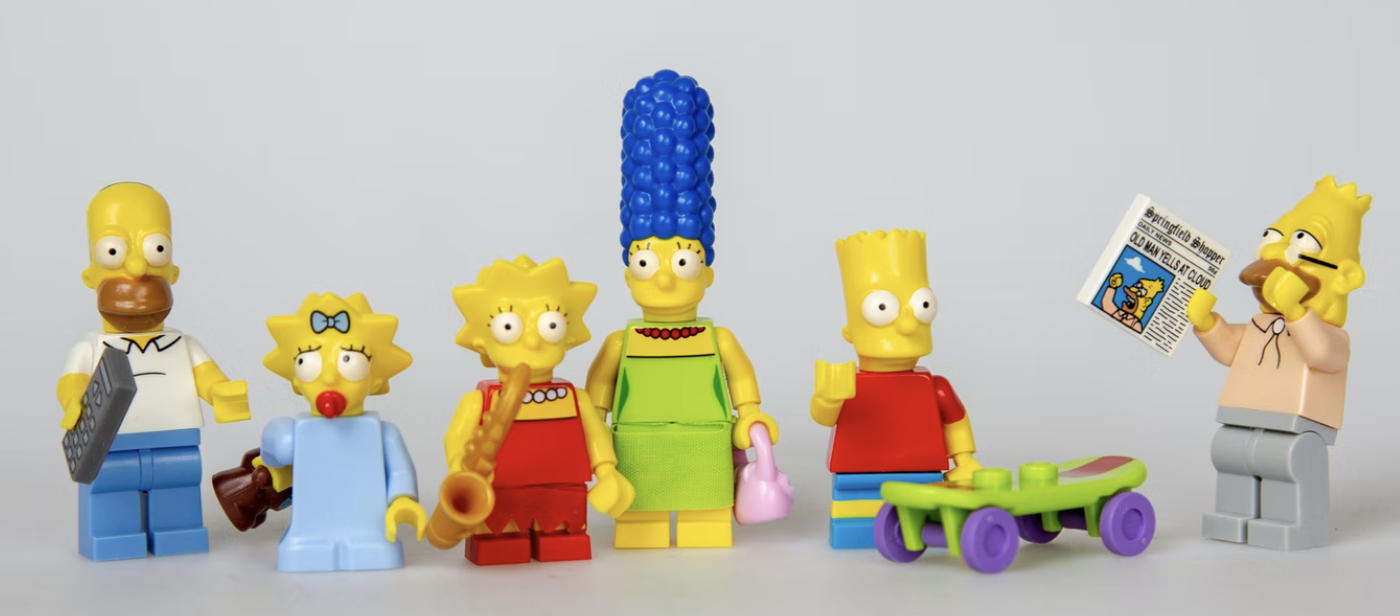
The creators of the animated series, The Simpsons, depicted the unintended consequences of our child welfare system in its 1995 episode titled, Home Sweet Homediddly-Dum-Doodily. In this episode, the Simpson children are sent to live with their neighbors, the Flanders, who serve as foster parents, while Homer and Marge complete a parenting class to get their children back. Sadly, the problems depicted in this episode still exist today. 

The Simpsons’ involvement in the child welfare system.

The Simpsons became involved in the child welfare system through a series of unfortunate misunderstandings. First, Bart went to school with head lice after playing with his best friend’s  pet monkey. Second, Lisa reported to the principal’s office without shoes after an altercation with bullies on the playground and her baby tooth fell out. Consequently, Bart and Lisa’s principal reported the children’s condition to Child Protective Services (“CPS”) out of concern for the children’s wellbeing. When the CPS agents arrived at the Simpson’s home, Marge and Homer were away for an afternoon getaway at the spa, but CPS found their home to be a “squalid hellhole.” Newspapers from 20 years ago were sitting on the kitchen table for Lisa’s school project, the dishes were not done, and the trash had not been taken out. The final straw for the CPS agents was the fact that Grandpa had fallen asleep while watching Maggie. Given the totality of the circumstances, the CPS agents believed Homer and Marge were negligent parents and immediately removed Bart, Lisa, and Maggie from their parents’ care. 

The episode continues by depicting how much the children miss their parents, and the hurdles Homer and Marge must overcome to regain custody of their children. Although this episode is comical and has a happy ending, this is not the case for many families impacted by the child welfare system. The Home Sweet Homediddly-Dum-Doodily episode provides an impetus for a deeper conversation about the problematic nature of mandatory reporting and the trauma children experience as a result of short stays in foster care.  

The problematic nature of mandatory reporting.

Principal Skinner was required to report the conditions of Bart and Lisa to CPS under the Child Abuse Prevention and Treatment Act (CAPTA). See 42 U.S.C. § 5106a(b)(2)(B)(i).  Like in The Simpsons episode, the unfortunate road to the child welfare system almost always begins with a report to CPS for suspected neglect via a mandatory reporter. According to the Children’s Bureau, in 2019, more than two-thirds (68.6 %) of all reports of alleged child neglect were made by mandatory reporters. 

Mandatory reporters are likely to overreport because of the financial and legal consequences built into our federal statute. First, to receive federal funding, states must require certain professionals to be mandatory reporters. Most states impose the mandatory reporting requirement on a lengthy list of professionals, including teachers, principals, and school administrators. Second, a mandatory reporter must report any suspected child neglect or abuse or risk possible incarceration and losing their license. Hence, mandatory reporting is a double edged sword because these are professionals that are able to help meet a child’s needs but are simultaneously instrumental in removing children from their parents’ care.

Unfortunately, research shows that mandatory reporting fails to protect children. According to an international qualitative study of mandatory reporters, most of whom were in the U.S., 73% of mandatory reporters reported negative experiences with the process. Mandatory reporters described experiences where children were revictimized by the process, their abuse intensified after the report, and children were placed in foster care environments that were worse than the family of origin.

The trauma of short stays.

Most Americans are unaware that the experience of the Simpson children depicted in the episode is common in real life. Children are removed temporarily (either for a few days or a few weeks) without a court order while their parents sort out the allegations against them. On average, approximately 17,000 children are removed from their families’ custody per year and placed in foster care only to be reunited within days. Child welfare experts refer to these removals as “short stays.” 

Remarkably, Washington’s King, Pierce, and Snohomish counties are amongst the counties with the highest percentage of short stays in the U.S. This is because in Washington, a child can be removed by law enforcement and placed in protective custody without a court order for up to 72 hours if law enforcement believes a child is being abused or neglected and will be hurt if not removed immediately. (emphasis added). Like in the episode when Bart had lice and Lisa lost her shoes and baby tooth, indicators of neglect in Washington may include the child being dirty, lacking needed medical or dental care, or lacking sufficient clothing for the weather.  These indicators are enough to remove children from their parents’ care for up to 72 hours. 

Studies on child development show that when children are separated from their parents, it is the source of a lifelong trauma, regardless of how long the separation lasts. Some children who were removed from their home described the experience as “being kidnapped,” even if it only lasted for a few days. Further, children who experience even brief separation from their families release a higher level of cortisol-stress hormones that damage unrenewable brain cells. Dr. Charles Nelson, professor of Pediatrics at Harvard Medical School, said “There’s so much research on this that if people paid attention at all to the science, they would never do this.”  

Should we reconsider mandatory reporting?

Many people wondered how the U.S. government could unnecessarily traumatize children by separating them from their parents at the U.S.-Mexico border. But the reality is the U.S. government has been doing this to its own citizens for decades via short stays in the foster care system, and consequently, causing irreversible harm to children. Animated cartoons like The Simpsons create a safe space for people to reflect on the issues depicted in the episode and critically evaluate the impact our current system is having on people’s lives. A system that perpetuates harm requires a reimagined approach. Instead of requiring mandatory reporting, professionals should have the discretion to report without fear of losing their license or facing criminal penalties. Perhaps reimagining mandatory reporting will free community spaces from harmful practices and give social service professionals the liberty to work with families to get children’s needs met rather than subjecting them to unnecessary trauma.

Vaccine Patent Waivers: A Major Step Towards Ending the Covid-19 Pandemic?

By: Xiang Li

It has been two years now since the World Health Organization (WHO) declared the existence of the COVID-19 global pandemic on March 11, 2020. Through the concerted efforts of healthcare systems, vaccine manufacturers, governments, and members of the public, the world finally has the upper hand in the uphill battle against the COVID-19 pandemic. However, given how infectious the virus is and the speed at which it evolves to escape sufficient human immune response, it is not yet the time to let our guard down and it is critical to redouble efforts to increase global vaccination rates

Importantly, the inequality in vaccination rates seen between low-income countries and the rest of the world remains a prominent problem. As of March 31, 2022, 79.0% of the populations of “high-income” countries have received at least one dose of the COVID-19 vaccine, and so have 81.2% of the populations of upper middle income countries. Approximately 59.2% of the populations of lower middle income countries have received at least one dose. On the other end of the spectrum, only 14.5% of the population of low-income countries have received at least one dose of the vaccine. The disparity is largely caused by the unaffordability of vaccines to people in low-income countries.

To solve this disparity, the national governments of India and South Africa submitted on October 2, 2020 a communication (IP/C/W/669) to the TRIPS (Trade-Related Aspects of Intellectual Property Rights) Council of the WTO, proposing that the obligation of TRIPS members to recognize and enforce patent rights should be temporarily waived with respect to patents relating to COVID-19 vaccines, medicines, and equipment necessary for treating and preventing COVID-19. The patent waiver as proposed is not mandatory, it simply allows TRIPS members to waive patent protection in their own countries, if they choose to do so.

The legal basis of adopting a patent waiver lies in Article IX.3 of the Marrakesh Agreement, which establishes the WTO. Specifically, Article IX.3 provides that the Ministerial Conference of the WTO, with the support of three-quarters of WTO members, may waive an obligation imposed by the TRIPS Agreement.

The waiver proposal has gained support from more than 100 low-income countries, but has encountered obstructions from many high-income countries, including European Union countries, the United Kingdom, and Switzerland. On May 5, 2021, the Biden administration announced support for a patent waiver; however, it was not until recently that major parties of the WTO made progress towards the negotiation of the terms of the waiver. 

Specifically, a news report published on March 16, 2022 indicated that the European Union, the United States, India and South Africa have reached a compromise on the terms of the waiver. Notably, only countries that have exported less than 10% of the total global exports of COVID-19 vaccine doses in 2021 are entitled to invoke the waiver to use the patented materials. These criteria effectively exclude the European Union, China, and the United States from invoking the waiver, since these countries account for 39.3%, 33.7%, and 14.2% of global vaccine exports respectively. 

The United States could have taken a stronger stance on waiving intellectual property protections, but it has not — possibly because a waiver suspending domestic patent protection might violate the Takings Clause of the Fifth Amendment of the United States Constitution. The Supreme Court of the United States has recognized that patent rights are subject to the protection of the Takings Clause, just as property rights in a piece of land. At the same time, the United States has a strong interest in preventing China from obtaining the right to invoke the patent waiver, to make sure China cannot use United States’ proprietary technologies to gain an advantage in vaccine development and other related biotechnology.

This recent compromise on the terms of the waiver might be a significant step towards passing the waiver at the WTO, since the European Union (composed of 28 countries, each having a vote) has been the strongest opponent of the waiver, as indicated by its statements made at several WTO meetings. Many scholars and policy makers believe that passing the waiver is a necessary step to provide equal and affordable access to vaccines to people in low-income countries. If the entire world community is vaccinated before the coronavirus can evolve into other highly contagious and potentially even more deadly variants, the world may be able to finally declare victory over the pandemic.

Telemedicine to the Rescue? Mail Order Abortion in Times of Crisis

By: H.R. Fitzmorris

Since the time of the Comstock Act, reproductive healthcare seekers have turned to networks outside of the traditional doctor’s office to circumvent legal and social obstacles. Almost 60 years after the restriction of mail-order contraception was abandoned, Americans have once again—with the aid of the internet— found themselves relying on the post office to meet reproductive healthcare needs through telehealth. And once again, they face the familiar struggle of navigating complex webs of overlapping regulations and political hostility limiting their access to vital resources and information. However, the healthcare crisis spurred by the COVID-19 pandemic, and the resulting regulatory and legal changes, have helped abortion and reproductive healthcare seekers circumvent some of the most burdensome barriers to access. The question now is whether, together, technological advancement in online telehealth and the relaxation of state and federal regulations will be enough to address the “access crisis” that will ensue if the current onslaught of draconian abortion laws survives legal challenges.

The History of Telehealth and How It Works

The concept of telehealth has existed in some form or another for decades. Telehealth, according to the Mayo Clinic, “is the use of digital information and communication technologies, such as computers and mobile devices, to access health care services remotely and manage your health care.” Some clear advantages of telehealth are the ability to access care without the additional cost and burden of traveling to a doctor’s office, increased access to information and records, and increased speed of communication with healthcare providers.

There are, however, drawbacks. The regulatory system managing telehealth providers is fragmented between state and federal requirements, and insurance coverage of telehealth appointments varies according to location and provider. Licensure requirements currently depend on the location of the patient, so some specialist services or medical providers may not be licensed to provide care to patients in certain locations. Additionally, access to telehealth can be impeded by restrictive interpretations of existing state statutes and regulations. For example, state requirements that clinicians conduct an in-person physical exam of a patient before providing telehealth or issuing a prescription can dramatically impede the utility of telehealth for certain patients.

Currently telehealth makes up a small portion of the health industry as a whole. A study conducted from March 1, 2020 through November 30, 2021 revealed that the vast majority of Americans prefer in-person healthcare, “and the total addressable market for telehealth is less than 1% of the health economy.” However, the lessons learned throughout the COVID-19 pandemic may spur further expansion and increased interest in telehealth.

Covid-19 Changes

The COVID-19 pandemic upended the normal operation of innumerable day-to-day activities for most Americans. Once simple tasks became onerous, if not impossible. Notably, routine healthcare became extremely difficult to schedule when COVID exposure risks closed doctors’ offices, and the industry as a whole buckled under extreme demand. Faced with restricted access to in-person office visits due to lockdown orders and overwhelmed providers, patients turned to telemedicine just as quarantined workers turned to Zoom.

In order to facilitate patient access to healthcare, Congress introduced a myriad of temporary regulatory relaxations and measures such as increased Medicare and Medicaid coverage of telehealth services, HIPAA flexibility, and notably, allowed authorized providers to prescribe controlled substances via telehealth, without the need for an in-person medical evaluation.

This affected not just those with pulled muscles, allergic reactions, or people with other routine but time-sensitive ailments that a quick 15-minute chat with a doctor and a quick prescription would clear up. Those experiencing unwanted pregnancies, who faced the daunting prospect of delayed access to care in understandably time-sensitive situations, also were faced with lockdown and quarantine orders in the most abortion-friendly states. In hostile states, the harm of existing restrictive abortion regulations increased under COVID-19 (such as those requiring multiple in-person clinic visits like mandatory waiting periods and ultra-sound requirements). Additionally, some states that were hostile to abortion seized the opportunity to label abortion care as “non-essential,” thereby entirely restricting abortion access.

These restrictions made early access to safe, reliable, and self-administrable abortion care all the more vital. Medical abortion, which is achieved through the simple administration of a single or multi-dose pill, is available up to 10 weeks from conception. Prior to the COVID-19 pandemic, the reach of medical abortion through telemedicine was limited by “specific restrictions on mifepristone in the United States as well as laws that specifically prohibit telemedicine for abortion.” Specifically, the FDA required that either of the two abortion pills be dispensed in a medical clinic, in-person.

However, with the relaxation of the restrictions placed on telemedicine providers that came with the governmental response to COVID, the FDA relaxed the in-person requirement and allowed abortion pills to be obtained by mail, eliminating the need for a doctor visit and the resulting delay in access. Initially this relaxation was temporary, but in December, 2021, the FDA announced that the change will be permanent. Though a welcome reduction in barriers to safe and effective abortion access, states are still free to place their own restrictions on telemedicine providers that offer their services in their jurisdictions. Currently, 19 states prohibit telemedicine facilitated abortions.

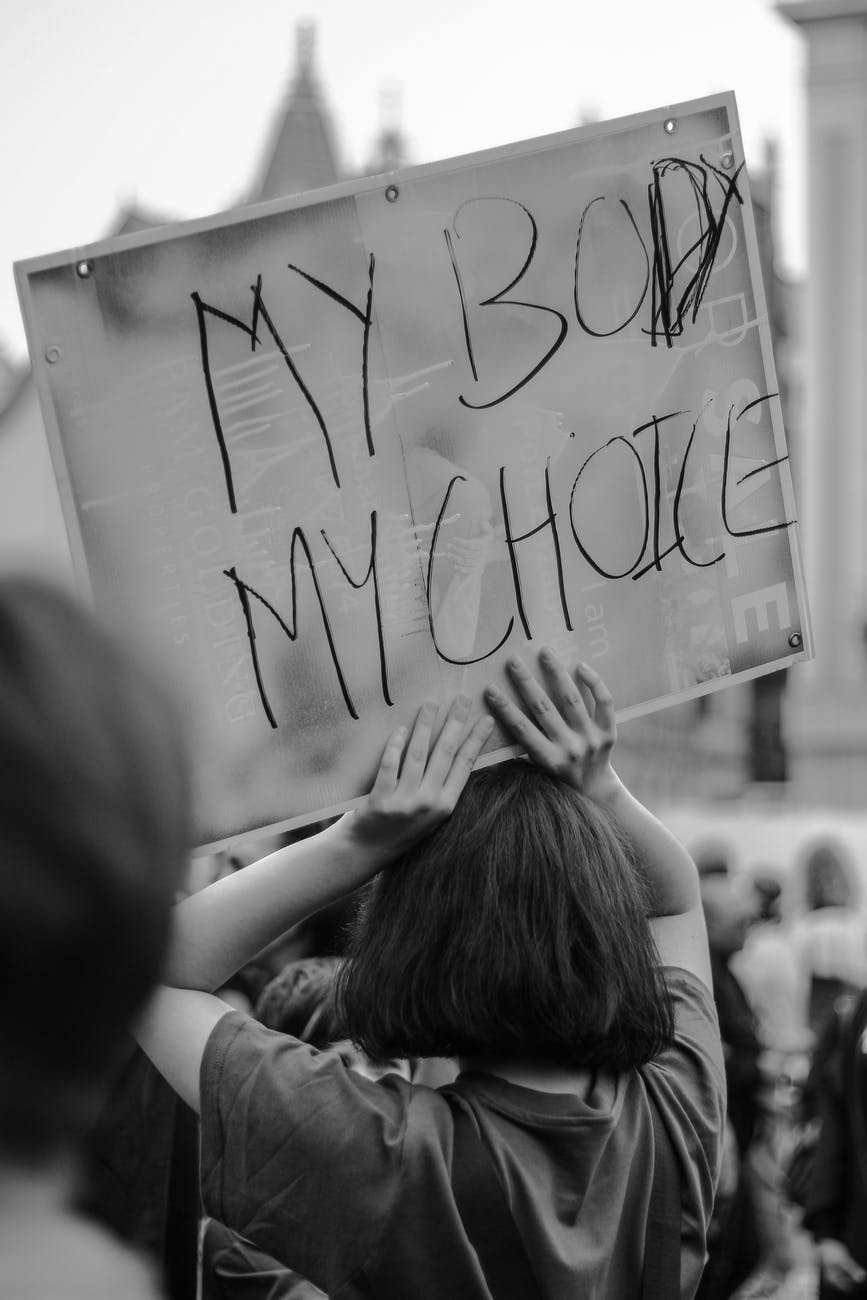
Without these barriers, telemedicine can potentially increase abortion access to abortion seekers in underserved, isolated communities. Telemedicine was, in a limited way, able to address severe need in a crisis that strongly necessitated these services. For abortion seekers in the United States, the crisis is far from over. Current restrictive state statutes and attempts to overturn Roe v. Wade continually threaten access to the constitutional right to choose to terminate a pregnancy. In many states, local access to abortion care could disappear entirely in the coming years. What remains unclear is whether further expansion of access to telemedicine will be able to help fill these gaps and what policy changes will be necessary in order to do so. 

More NFTs Waiting in the Wings Could (Eventually) Mean Less Artist Kept in the Shadows

By: Riley Grace Borden

What are NFT’s and Why Should the Art World Care?

NFTs are rapidly altering the digital art marketplace, as well as the arts marketplace at large. NFTs, or “nonfungible tokens,” are bits of code which are not interchangeable with each other (unlike bitcoin and Ethereum.) There can only be a single, non-divisible NFT per use, and they are traded and recorded on a blockchain, which is a digital public ledger that exists across a network. NFTs can include music, poetry, comics, digital art, and even tweets. NFTs do not actually include artwork, but only a link to artwork. However, platforms auctioning NFTs do display the artwork tied to the token, opening those sites up to copyright claims. Some NFTs contain a link to an interest address with a copy of an image, while others include a “hash” or short crypto code of an image. The NFT may contain the seller’s wallet address, and it may also contain a smart contract that manages its future transactions.

In 2016 and 2017, NFT art became increasingly mainstream, beginning with digital cartoon frogs and cats, specifically “Rare Pepes,” the first digital art to have intrinsic value, and CryptoKitties, which fans spent more than 32 million dollars trading. By 2021, NFTs grew from a sub-billion-dollar industry to a multi-decabillion industry.

In March 2021, a digital work of art by the artist Beeple entitled The First 5000 Days sold for 69.3 million dollars at Christie’s, in the first sale of its kind at the auction house. Later in the year, Sotheby’s recorded $7.3 billion in sales for 2021, a 46% jump from 2020 and the highest sales figure ever in its 277-year history. It credited NFTs stored on the Ethereum blockchain. Around 44% of all Sotheby’s bidders were new, and 80% of all NFT bidders were newcomers. Sotheby’s has since partnered with NFT artist, Pak, and NFT marketplace, Nifty Gateway, a partnership with brought in $16,825,999 in two days for Pak’s NFT collection, The Fungible. These early sales and increased acceptance of NFTs in establishments of the arts world, indicate that “even if art powerhouses might not [yet] understand the genre, they understand its financial potential.”

Acceptance of NFTs in the art industry varies. Some hold a cynical view of the growing industry, crediting its rise to decades of billions invested into cryptocurrencies and people with nothing to do with their crypto wealth other than buy digital art. This, of course, means fickle investment, as well as no obligation to exercise any judgment about the art itself. Some have summarized art NFTs as little more than commercially exploitable hype.

Those who are hopeful about NFTs in the art world foresee a flexible, more accessible, metaverse where art is more easily shared and disseminated. Former Christie’s co-chairman Loïc Gouzer stated, “The NFT sphere will be a catalyst that will give a voice to a new generation of artists and expand the palette of expressions for established artists that are not afraid to embrace paradigm shifts.”

NFTs and Copyright Law Gray Areas

The world is suddenly rife with NFT-based art cases, and courts are scrambling to keep up. Near the end of 2021, in Tarantino vs. Miramax, Miramax Studio, which produced the 1994 Pulp Fiction film, filed suit against Quentin Tarantino when he announced a planned sale of NFT’s based on original handwritten script of Pulp Fiction. Given the recent windfalls from NFT arts sales, Miramax preferred to benefit from any NFT sale, and accused Tarantino of breach of contract and copyright and trademark infringement. The case’s core question: Does Tarantino’s reserved right to screenplay publications cover the planned NFT sale? The still unresolved dispute raises more issues as to what happens if someone mints an NFT connected to the work of another filmmaker or musician without their consent, particularly because, with an NFT, a copy is not technically being made or distributed.

NFTs have been dubbed as solving digital art’s authenticity problem. However, NFTs, with their link and/or hash, identify a particular digital artwork only in the most general way, and they make distinguishing the actual original of a piece of work nearly impossible.

NFT marketplaces like HitPiece, SuperRare, and OpenMarket, among multiple others, face increased pressure to protect artists on their platforms. What exactly constitutes theft remains unclear, with some arguing that to right-click and save an NFT is “no more theft than taking a photograph of the Mona Lisa would be.” Regardless, multiple artists have come forward with complaints of their images being appropriated and monetarily exploited for the purpose of  NFTs.

Some people from the art world counter the law’s confusion over NFTs and their regulation with optimism, harkening back to a time when “information imbalance was aided by the patronizing misconception that thinking too much about the market compromised an artist’s creative output.” Changing the means of financial transactions in the art world once seemed impossible, but now lawyers like Amanda Rottermund see being on the blockchain as a way to have control and prevent market fraud. Jeff Gluck, an attorney specializing in art and intellectual property issues, launched a beta version of CXIP, a platform that encourages artists to turn their copyright registrations into NFTs. Through such a platform, artists can “effortlessly control, monetize, and manage their IP.” Leading the way for artists to ensure royalties for themselves, artist Sarah Ludy at Bitforms has already used smart contracts to distribute percentages of sales to lower-paid workers at her gallery.

The enforceability of smart contracts in court remains an open question, no cases on whether NFTs constitute fair use or violate 1990 Visual Artists Rights Act have been decided, and it is likely to take much more trial and error before the arts world can equate the rise of NFT’s with comparably fewer “starving” (and properly credited) artists.

“Adpocalypse”

By: Carl Rustad

Youtube Hate Preachers Share Screen With Household Names.” “Google’s Youtube has Continued Showing Brands’ Ads With Racist and Other Objectionable Videos.” These are the headlines Google faced in March 2017, as ads for Google’s advertising partners allegedly appeared alongside hateful or inappropriate Youtube videos. Within days, high-profile advertisers including Wal-mart, Pepsico, General Motors, AT&T, Dish, and Starbucks all pulled their ads from the platform

Google responded to these allegations by “implementing broader demonetization policies around videos that are perceived to be hateful or inflammatory” and “strengthen[ing] advertiser controls for video and display ads.” Using algorithms, Youtube “automatically weed[s] out inappropriate content,” sorting each uploaded video into categories purportedly reflecting their desirability to advertisers. Advertisers can exclude videos from categories like “tragedy and conflict,” “sensitive social issues,” “sexually suggestive content,” “sensational and shocking,” and “profanity and rough language.” Clearly these options reach far more content than the originally-complained-of hate speech. Videos determined inappropriate for advertisers are “demonetized,” meaning ads will not appear on them, they are deprioritized in search, and content creators will not receive any ad revenue from the video. The resulting drop in ad revenue is referred to as “Adpocalypse.”

As a result of these efforts, Youtube claimed “many advertisers have resumed their media campaigns on Youtube,” but also acknowledged that content creators faced “revenue fluctuations” due to demonetization and promised to provide “more detail around advertiser-friendly guidelines.”  Meanwhile, some content creators on the platform claimed to see an initial 80 percent drop in ad revenue due to demonetization, leveling off to a “40, 50, 60 percent drop” as videos were deemed not suitable for all advertisers. Prominent vlogger Vlogbrothers opined “[demonetization] has really squeezed creators who are making content that’s maybe good, but not, like, super-happy-family-fun-time stuff.”

Private Platforms Provide Strong Extralegal IP Protections

Adpocalypse demonstrates both the interest and the power that companies have in protecting their brands on private platforms. Brands are already entitled to certain legal protections. A trademark holder is protected against damaging associations in several scenarios, including when unauthorized use of their trademark causes confusion as to the source or sponsorship of a product, or tarnishes the brand by association with “unsavory” ideas. See AMF, Inc. v. Sleekcraft Boats; Louis Vuitton Malletier S.A. v. Haute Diggity Dog, LLC. On the other hand, there is no trademark infringement when the trademark is being used to describe a product or talk about a competitor’s product. See KP Permanent Make-Up Inc. v. Lasting Impression I, Inc. These are considered “fair uses” of a trademark.

But the companies on Youtube, of course, do not have to point to their carefully balanced intellectual property rights in order to control their representation on the platform. They can simply refuse to advertise on a platform if it tends to associate their brand with any less-than-ideal content. This is not a new phenomenon. Media has long catered to advertisers, with media scholar C. Edwin Baker claiming “the greatest threat of censorship in this country comes not from the government, but from advertisers . . . .” As online platforms mediate a steadily increasing amount of our time, advertiser censorship may become correspondingly more pervasive and omnipresent. With algorithmic and computing advances, such censorship can be systematically extended to hosted individual speech as seen in Adpocalypse.  

Real Time Content Moderation: The Future of Advertising? 

Adpocalypse concerned advertisers’ association with undesirable uploaded videos, which are scanned for content and demonetized and search deprioritized if they are deemed unsuitable for advertisers. This hawkish breed of moderation is enabled by advances in automated decision making. Over 500 hours of content are uploaded to Youtube every minute; each video must be scanned and categorized as safe or unsafe for advertisers. 

Platforms are now facing pressure to provide real time moderation to prevent violations of their terms of service by censoring disinformation, incitations of violence, and other abuses. Facebook Horizons already includes real time moderation features  allowing it to instantly deplatform or censor abusive–as determined by Facebook alone–virtual reality users. The advantages of such a system are obvious. Hate speech, harassment, and other universally-condemned behavior can be taken offline before it happens. Unfortunately, the concerns real time moderation raises are just as obvious. 

Platforms will continue to compete for ad revenue. As Adpocalypse demonstrates, online platforms are not simply censoring hate speech; they are beginning to censor anything not “advertiser-friendly”. Allowing fine control over the spaces in which advertisers’ products appear, not just how their ads appear, is a profitable course of action. One easily foreseeable use of real time moderation is to limit the visibility of advertiser-unfriendly speech in VR chat. But there is no reason to believe the technology will be confined to such transparent and simplistic uses. Facebook already sells sophisticated and hyper-targeted ads. Plus, US advertisers are willing to pay about $250 billion a year to control what consumers associate with their products. The market is there.

Given the impending capability and incentives for online platforms to moderate speech and the environment of speech in real time, it is time to take a hard look at the role of advertisers in platform censorship. While the First Amendment does not apply to private platforms, consumers should demand transparency from platforms about how speech is moderated and hold them accountable when moderation technology is abused to accommodate advertisers.