By Danielle Ollero
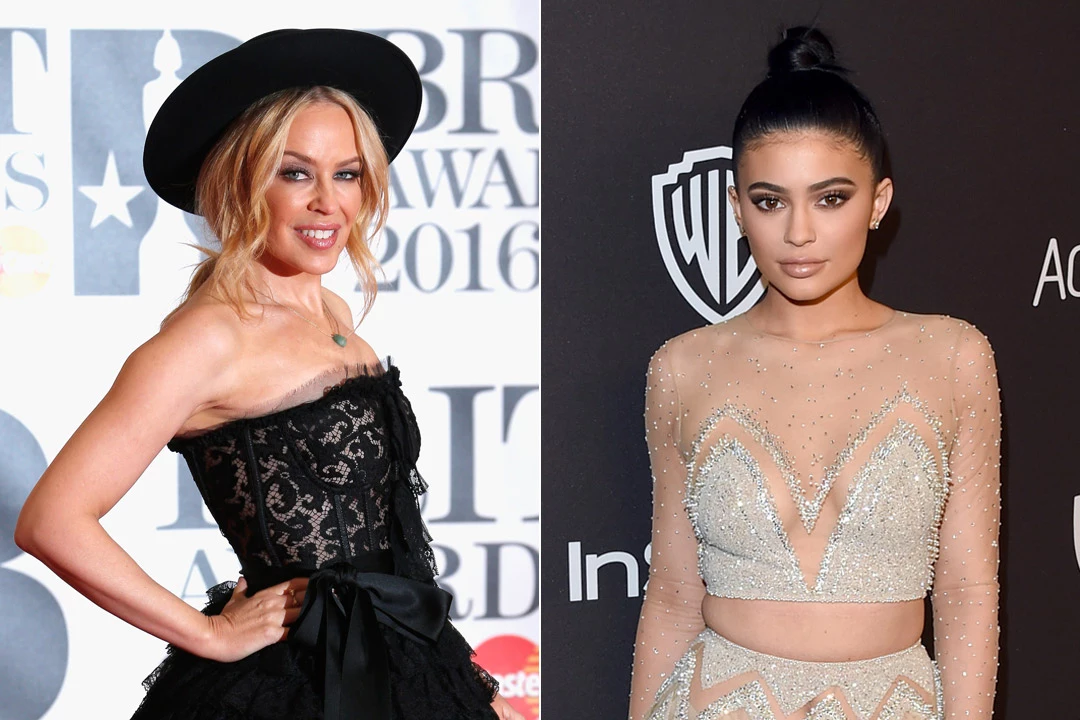
Although many think of Kim, Kourtney, and Khloe when hearing the name Kardashian, younger sister Kylie Jenner is now making a name for herself, quite literally. In April and November of 2015, Kylie Jenner, Inc. filed several trademark applications for Jenner’s full name, along with just her first name “Kylie.”
Of Jenner’s two applications for “Kylie,”one covers “[e]ntertainment in the nature of providing information by means of a global computer network in the fields of entertainment and pop culture; entertainment services, namely, personal appearances by a celebrity, actress and model,” and “[p]roviding information by means of a global computer network in the field of fashion.” The other extends to “[a]dvertising services, namely, promoting the brands, goods and services of others; endorsement services, namely, promoting the goods and services of others.” There were no issues until KDB Pty Ltd. filed a Notice of Opposition (Notice) on behalf of Australian pop star Kylie Minogue on February 22, 2016.
The Notice cited an existing trademark registration for the name “Kylie” that covers entertainment services and music recordings. Although not precisely the same categories that Jenner is using in her application, the similarities still may pose a threat to Jenner’s application.
Trademark law has a purpose that is two-fold. First, to prevent confusion of the consumer when identifying the source of a particular mark. Second, to protect the trademark owner’s reputation. KDB asserts that if Jenner’s application were granted, then it would undermine both of these purposes for Minogue’s existing trademark.
KDB further argues that Jenner’s trademark would cause confusion amongst Minogue’s fans, and would dilute her brand. KDB cites that Minogue owns the domain “www.kylie.com” and that as a survivor of breast cancer, a movement called “The Kylie Effect” was started for support of breast cancer research. These are an attempt to prove that Minogue’s fans know her as simply “Kylie,” so Jenner’s application will cause her fans to become confused. As a result, this confusion would dilute Minogue’s brand by associating her with Jenner’s controversial statements. However, this argument may still fall flat, as it is unclear whether Minogue will be able to prove that she is known simply by her first name unlike Madonna, Cher, Adele, or Prince, whose first names are their sole identities.
Minogue points to the longevity of her career, that she has been in the entertainment industry since 1979, and the she has participated in events in the United States and around the world. She argues that even if her fans do not solely know her as “Kylie,” the name is more closely associated with her than with Jenner. Although Jenner’s millions of social media followers may disagree with KDB. It is impossible to deny that she is one of the most followed stars on social media, and is consistently featured in the tabloids.
The remainder of the Notice further lambasts Jenner as a “secondary reality television personality” who was a “supporting character” on the television series Keeping up With the Kardashians. KDB also claims that Jenner’s social media presence has been subject to criticism from organizations such as the Disability Rights and African-American communities. Although these appear to be jabs worthy of a social media war, these arguments will likely be affective in court as they go toward the protection of Minogue’s reputation.
Since the initial Notice was filed, KDB requested an extension to oppose the trademark, which was granted on April 4, 2016. KDB believes that it has “good cause” to oppose Jenner’s additional trademarks. Although these two starlets may be more comfortable settling disputes within the confines of their Twitter accounts, this will be one battle that will be fought in court.
Images Source: PopCrush
 By Julie Liu
 By Chike Eze

 Washington Journal of Law, Technology & Arts