‘Beamer’ For a Buck

BMW and MINI Enter the Sharing Economy as Seattle Proves Itself a Leader in Legislation

BEAMERBy Grady Hepworth

This month, Seattle drivers were treated to a new transportation option that will allow hundreds of citizens to ditch their old clunkers for fresh, new, German-engineered wheels. On April 8th BMW officially announced that it would be starting its own car sharing service, ReachNow, with the pilot program and headquarters to launch in Seattle. BMW, and its subsidiary MINI, have hopes to expand ReachNow to cities across North America in order to compete with established sharing services like Car2Go or Zip Car, and even chauffer services like Uber and Lyft.
Continue reading

Justices Split on the First Patent Trial & Appeal Board Case

PTO IconBy Don Wang

In 2011 Congress enacted the Leahy-Smith American Invents Act (AIA), which established a new Patent Trial & Appeal Board (PTAB) within the Patent & Trademark Office (PTO) and instituted several new administrative proceedings to review certain issues of patentability. Ever since, patents before the Board have been perishing like Game of Throne wedding guests (or as Judge Rader puts it: PTAB are the “death squads killing property rights”). Unsurprisingly, unhappy patent owners seized their first possible opportunity to challenge various aspects of PTAB proceedings. This led to the Supreme Court hearing of Cuozzo Speed Technologies, LLC v. Lee, No. 15-446. The oral argument was conducted on April 25, 2016, and the transcript can be found here.

There are two questions on appeal, but the Court focuses almost exclusively on the first question: which claim construction standard should be used in a PTAB proceeding, the “broadest reasonable interpretation” standard (BRI) or the “plain and ordinary meaning” standard? The BRI is the claim construction standard applied by PTO during a patent examination.

Continue reading

Where Will the Purple Rain Fall?

Prince 2

By Kelsey O’Neal

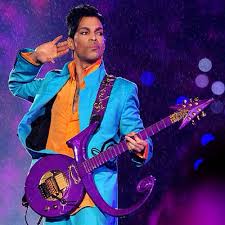
Prince will remain one of the greatest musicians in American history; he prolifically produced music since 1978 and sold approximately 36 million albums. He was also one of a few musicians who owned his own master recordings. This ownership did not come easily, but resulted from a copyright war he engaged in with Warner Bros in the 1990’s. As a form of protest against the recording company and to gain control of his masters from the recording studio, the artist changed his name to an unpronounceable “Love Symbol” and even appeared on stage with the word “slave” emblazoned on his forehead. His battle with Warner stemmed, mostly, from his desire to release more music than the label was willing to sponsor.

More recently, Prince struggled with how easily consumers could access his music in the digital era. Many recall that he sued a woman for posting a video of her daughter dancing to “Let’s Go Crazy,” one of his iconic pop songs, on YouTube. Prince sent a Digital Millennium Copyright Act (DMCA) takedown notice to YouTube, which led the woman to sue, claiming her upload constituted fair use of the song. Continue reading

Sorry, that isn’t actually Scarlett Johansson.


By Beth St. Clair

 What would you do if someone built a robot version of you?

 It happened to Scarlett Johansson. A graphic designer from Hong Kong spent over a year, and $50,000, to build a robot in her likeness. While the robot’s abilities are limited, it can respond to compliments and questions, laugh, bow, and blink its eyes. Most notable, however, is the fact that the designer used 3D-printing technology and silicone to make the robot look exactly like Johansson.

For some, the coquettish machine represents an objectification of women, “an utterly disappointing reflection of the way women are portrayed in society.” For others, it is an extreme example of fandom.

But because the programming and machinery needed to make very advanced robots are now so widely available that a person can create one at her own house, we will see more celeb-bots in the future. Those robots, especially female celebrity-inspired robots equipped with realistic features and the ability to mimic life-like movement, will continue to be controversial.

Continue reading

The Apple v. FBI Saga Continues: The House Energy and Commerce Committee Hearing

Iphone

By Jason Liu

Despite the Department of Justice (DOJ) dropping its case against Apple, (as covered in this earlier post), the same legal arguments were salient before the House Energy and Commerce Committee (Committee).  On April 19th, the Committee heard testimony from the FBI, law enforcement heads, Apple and other technology experts about the use of encryption in technology and law enforcement action.

During the hearing, Rep. Tim Murphy (R-Penn.) asked the central question, “Should the government have the ability to lawfully access encrypted technology and communications?” Law enforcement officials insisted on “backdoor” access, while Apple countered that encryption protects people from cybercrime. Overall, the hearing continued to repeat prior arguments from the FBI that access was necessary to prevent criminal activity and Apple that encryption protects free speech and privacy made during the San Bernardino shooter case.

Continue reading