U.S. Making Changes to Support its Commercial Space Industry

AS11-40-5875HRedit.jpgBy Talia Loucks

Remember last year’s blog article about Asteroid Mining? Well, late last month, President Obama signed into law what was then titled the SPACE Act of 2015, which has since been renamed the U.S. Commercial Space Launch Competitiveness Act. This Act lays the groundwork for property rights in space, a big point of contention in international law. As a quick refresher: the Outer Space Treaty of 1967, to which the US is a signatory, provides in Article II that: “Outer space, including the moon and other celestial bodies, is not subject to national appropriation by claim of sovereignty, by means of use or occupation, or by any other means.” Some worry that the new Act is in opposition of this portion of the Treaty. Continue reading

Dangerous Fantasies and Everyday “Hacking”: The Second Circuit Decides on Criminal Liability for Employees’ Online Behaviors

handcuffs-computer-600x400.pngBy Julie Liu

It is generally understood that certain online behaviors can lead to trouble in the employer-employee context. Many of us are familiar with stories of people who were fired or denied jobs after posting incendiary selfies, offensive messages, or rants about work on social media. While risking one’s employment status is enough to worry about, being criminalized for online behaviors is an entirely different possibility. Up until last week, one case has led second circuit courts to wrestle with defining the criminal liability associated with two particular online behaviors: the violation of workplace policies on computer use, and “thoughtcrime,” specifically the online posting of fantastical statements. Continue reading

Revisiting the Definition of “Disruptive Innovation” and Why Uber and Tesla Don’t Meet it

UntitledBy Christian Kaiser

In 1995, Clayton M. Christensen, a professor at the Harvard Business School, coined the term and theory “disruptive innovation.” This term has since become so popular in the tech startup world that most entrepreneurs use it in their pitch or when describing their business. The phrase “tech startup” is almost synonymous with disruptive innovation. However, as Prof. Christensen and his coauthors explain in their new article, many people, including top executives, are not using this term correctly and are misidentifying “disruptive” businesses. In his new article, Prof. Christensen explains the necessary conditions of “disruptive innovation” and applies them to Uber and Tesla, ultimately finding that neither is disruptive. In this blog article, I briefly address why it is important for lawyers working with technology to understand the theory of “disruptive innovation.” Continue reading

A Step Toward Protecting Fair Use on YouTube

h13tuhz14ceqcmsazeb5By Juliya Ziskina

Since its beginning, YouTube has been involved in battles over copyright infringement, and over the years, YouTube has increased its policing of pirated material. The most common cases of copyright infringement involve using songs in a film or video without permission of the copyright holder, or placing segments of movies or music videos on websites where it is easy for the public to download them. Therefore, the giants of the entertainment industry have begun cracking down on websites such as YouTube.

YouTube, in response to these accusations, started to remove videos that may use segments of music or film without the copyright owner’s permission. Fan videos that incorporate a celebrity picture slideshow using a song as the primary audio track and videos of musicians playing covers of famous songs are common examples of videos that have been deleted from YouTube as a result of alleged copyright infringement. However, a widely known example of proper fair use is, for instance, a segment by the TV host Stephen Colbert that rebroadcasts cable news clips for the comedian to react to. Continue reading

Copyright Infringement: Background Music Embedded in Popular YouTube Videos

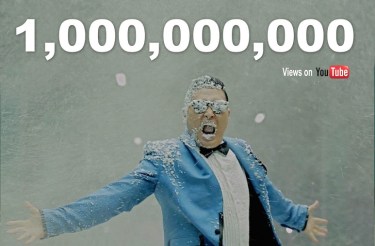
Psy-hits-1-billion-views-on-youtube-with-gangnam-styleBy Chike Eze

Gone are the days when only major studios had a monopoly on manufacturing “celebrities.” YouTube has ushered in a new category – the self-made “celebrity YouTuber.” Michelle Phan is an extremely popular YouTuber who is well known for her entertaining videos on how to put on different types of makeup. She currently has more than eight million subscribers, and her popular “Barbie Transformation Tutorial” video has over sixty million views. A far cry from Gangnam’s two billion views, but impressive nonetheless. Ms. Phan generates revenue by monetizing her videos and endorsing various products in her videos. And just like other famous YouTubers, she uses popular copyrighted songs as background music in her videos that are distributed to millions via YouTube.

In July 2014, Ultra Records, LLC (“Ultra”) brought a copyright infringement suit against Ms. Phan in the U.S. District Court, Central District of California. Ultra alleged that Ms. Phan had engaged in a “wholesale infringement” of Ultra’s musical compositions and recordings, citing 50 instances of Ms. Phan’s direct copyright infringement. Ultra further stated that Ms. Phan had profited from using its artists’ tracks and compilations. Consequently, Ultra sought $150,000 in statutory damages for each instance of copyright infringement, and demanded an injunction against Ms. Phan’s continued use of its copyrighted material. Continue reading