Happy Birthday to Everyone

happybdayBy Danielle Olero

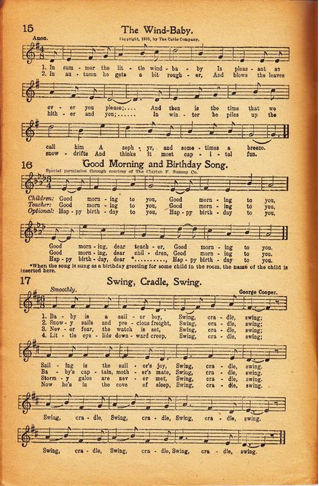
Cake, ice cream, presents, and a chorus of “Happy Birthday to You” has been a longstanding tradition for many to mark the passage of time in a person’s life. Although trivial to those who sing the song within their household, this eight note song has been the source of millions of dollars of revenue for the companies who have collected royalties from the song over the past eighty years.

In 2013 Jennifer Nelson, an independent filmmaker, intended to use the song in her documentary. She filed a putative class action against Warner/Chappell, who have claimed to hold the rights to the song since 1988. During the last two years, artists have been watching this case with great anticipation. Rights to the song could range from $1,500 to $5,000 or more for the use in films. Continue reading

Taking a Bite Out of the Big Apple: Law Enforcement and the Apple iPhone

iphoneBy Michael Huggins

On October 26, 2015, the United States government argued before a federal magistrate judge in New York that it should be able to force Apple to unlock an iPhone as part of a criminal investigation. The federal government filed a request for a court order to compel Apple to comply pursuant to the All Writs Act— an 18th Century law that allows federal courts to issue orders to effectuate otherwise valid court orders. The government argues that the federal courts can use the All Writs Act to force Apple to assist the government in investigating users of the software. Apple refuses to comply with the order.

Apple argues that the situation would not be any different than if the government used the All Writs Act to force a safe manufacturer to travel around the country, unlock safes, and give the contents of those safes to the government. Apple argues that the government wants Apple to do the investigative work for them. Judge James Orenstein, the federal magistrate judge in the United States District Court for the Eastern District of New York, agreed with Apple’s logic. Assistant U.S. Attorney Saritha Komatireddy believes that Apple’s refusal to unlock the phone represents a surprising reversal from Apple’s previous willingness to unlock phones for the government. When Judge Orenstein asked Apple why it did not challenge the previous search warrants, Apple’s attorney Marc Zwillinger replied that the company had only recently become more cognizant of the harms to high-profile data breaches and that the company has had a change of heart. But even if Apple was willing to unlock the phone, it cannot do so because each individual contains a very specific password/key to unlock the phone. Continue reading

If At First You Don’t Succeed (at passing a cybersecurity intelligence sharing law), Try, Try Again.

UntitledBy Brennen Johnson

Lawmakers in the U.S. Senate just passed CISA (the “Cybersecurity Information Sharing Act”) on Tuesday, October 27. If the White House does not veto it, CISA will allow tech companies to share internet traffic information with the government without fear of liability for the disclosure of private or sensitive data. Not only would the law potentially allow companies to violate their own privacy statements with users, but also it would allow them to hide the fact that they are sharing information with the government.

So what is CISA, where did it come from, and why does it matter? This is not the first time that lawmakers have brought this type of information-sharing scheme before Congress. Back in 2011, lawmakers introduced CISPA (the “Cyber Intelligence Sharing and Protection Act”) in an attempt to help prevent cyber attacks. The basic premise behind the bill was that quickly sharing information about threats and vulnerabilities could help prevent attacks. The House of Representatives passed CISPA, but it failed in the Senate, due to a lack of confidentiality and civil liberties safeguards. The White House even proclaimed that it would veto the bill should it be passed. CISPA was reintroduced by the House in 2013, where it again failed to pass the Senate. Continue reading

Exhibit A: Fresh from the 3D Printer

imagesBy Kelsey O’Neal

Everyone has heard the story about the man who used a 3D printer to make a gun that would make it past TSA. 3D printers have become a part of the modern world. They have been used in the medical field to create custom orthotics; they are an integral part of any modern design process; and some people even give them to their children as a fun toy. 3D printing manufacturers have experienced a great deal of litigation directed against them. But do 3D printers have a productive place in the courtroom?

Some attorneys think that 3D printers can do a great deal of good during litigation. Fennemore Craig, the second-largest firm in Arizona, has started to use 3D printers in their litigation practice. This firm, which has also used Google Glass in litigation to show the jury exactly what personal injury plaintiffs go through daily, says that using 3D printing has given them several distinct advantages. First, the use of the 3D printers has forced the firm’s attorneys to start thinking about overall trial strategy before litigation has even started, and thus have a considerable leg-up on the opposing party. Second, every writing instructor will tell you that it’s better to show rather than to tell. The ability to show a jury or an opposing attorney exactly what the widget was supposed to look like is much more powerful than just telling him or her that it was defective. Third, using a 3D printer has been shown to induce settlement, which saves clients time and money as well as enhances judicial economy. Continue reading

A Digital Library of Alexandria: Google Books Remains Fair Use

simple-design-cute-home-library-shelving-units-home-depot-shelving-home-library-shelving-highlights-790x592By Sam Hampton

In the latest development in a decade long case, the Second Circuit ruled on October 16th that Google Books was fair use and did not violate book copyrights. The service provides fully searchable digital versions of over 20 million books. This tally includes copyrighted work; additionally, the full text of many books in the public domain that have been digitized. The service works with the Google Books Library Project, which partners with major libraries to digitize the volumes; the project’s goal is “to create a comprehensive, searchable, virtual card catalog of all books in all languages.”

The lawsuit was initiated in September 2005 by a number of copyright owners, as well as the Authors Guild, a nonprofit that supports authors. Google defended its service under the fair use doctrine. The District Court granted summary judgment in Google’s favor in November 2013, from which the appeal followed. Continue reading