The Supreme Court May Widen its Stance on Standing in Spokeo, Inc. v. Robins

spokeo

By Kelsey O’Neal

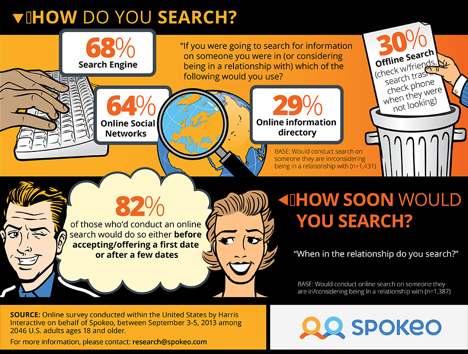
Admit it. You’ve Googled yourself at least once; though you probably did not do it just to stroke your ego. It’s important to know if your personal information is on the Internet so that you can control your message and personal brand. Social media, from LinkedIn to Facebook to Twitter, can truly define an individual. Your Facebook page or LinkedIn profile can offer an accurate or inaccurate impression of you. For one man, Thomas Robins, his online presence did not accurately reflect him. When Robins checked his online footprint on Spokeo.com, he discovered that the website had promulgated false information about him. The search engine stated that Robins, a single man, was married; it claimed he had received a degree that he had not gained; and it claimed he was worth more than his actual net worth. Robins believes that the false information made his job search more difficult.

Robins filed a class action suit against Spokeo.com under the 1970 Fair Credit Reporting Act (FCRA) alleging that the online database had published false personal information about him. Even though Spokeo.com published more positive information about him, Robins claims that the website caused him actual harm. The FCRA provides statutory damages from $100 – $1000, even if the plaintiff cannot show actual harm. As a general rule courts will only hear a case if the plaintiff alleges actual harm. In other words, a court must first ensure that the plaintiff has standing to allege an Article III injury-in-fact. But, The FCRA gives plaintiffs a cause of action without a showing actual harm. In choosing to hear Spokeo, the Supreme Court will decide if statutory damages provisions give plaintiffs Article III standing. In a reconsideration of the case, the District Court for the Central District of California ruled that Robins could not show that the false information was actually harmful, and so it dismissed his case. Robins appealed. The Ninth Circuit, siding with the Sixth Circuit in its decision in Beaudry v. TeleCheck Services, Inc and with the support of President Obama’s Administration, held that Robins did have standing to sue because Congress’ creation of a private cause of action created a statutory right, and the violation of a statutory right is a sufficient injury-in-fact to create standing. Spokeo.com appealed, and on April 27th, 2015, the Supreme Court decided that it should hear Robins’ case in its next session.  Continue reading

Return the Empty Cartridges! — Federal Circuit to Hear Patent Exhaustion Case En Banc

toner_image1

By Don Wang

All you patent law nerds out there, grab your popcorn! The next blockbuster case you have been waiting for is about to hit the courts. On April 14, 2015, the Federal Circuit, on its own motion, ordered an en banc hearing of Lexmark International v. Impression Products, Inc.. In this patent infringement case, the Federal Circuit will decide whether it will overturn two of its own precedents on the patent exhaustion doctrine.

The plaintiff-patentee in this case is the printer manufacturer Lexmark, and the products-in-suit are Lexmark’s patent-protected toner cartridges. Lexmark offers the same cartridges through two separate programs: “Regular Program” cartridges at full price and “Return Program” cartridges at a discount. Customers of the Return Program must agree to use the cartridges only once and return them after use. Lexmark contractually imposes such restrictions on both the end-user consumers and the authorized resellers. In the current suit, Lexmark alleged that Impression Products, among other cartridges resellers, infringed its patents by acquiring, refilling, and selling refurbished cartridges under Lexmark’s Return Program. Continue reading

Despite Statute of Limitations Issues, Cosby’s Accusers are Finding Ways to Litigate

gavelBy Joe Davison

In November 2014, allegations that Bill Cosby had sexually assaulted women several decades ago were widespread. Barbara Bowman wrote a first-person article in The Washington Post, claiming that Cosby had drugged and raped her in the mid-1980s. These allegations came years after Andrea Constand, another alleged victim, filed a civil suit against Mr. Cosby in 2005. In total, more than two dozen women have come forth claiming that they were sexually abused by Cosby. Bill Cosby’s fallout has been swift; Netflix pulled his comedy special, NBC dropped plans for a new Cosby sitcom, and TV Land pulled their reruns of The Cosby Show. No criminal charges have been brought against Cosby, though various investigations have been reopened.

Cosby’s actions since the allegations became public have lead to a variety of civil lawsuits, including one for defamation. In 2005, Tamara Green told the Today Show that Bill Cosby drugged and sexually assaulted her in the early 1970s. Cosby’s lawyers vehemently denied the allegations and allegedly approached a newspaper with “damaging information” about her. Tamara Green, and two others have since filed suit against Cosby for defamation.  In response, Cosby has claimed he has a right to make “privileged utterances of self defense.” Continue reading

Wireless Trumps Television: FCC Incentive Auctions of the TV Spectrum

radio-tower-2

By Sam Hampton

Responding to novel technological needs and market forces, the FCC has developed a program of incentive auctions. The agency is working to allocate more spectrum to wireless broadband services. The 2010 National Broadband Plan introduced the incentive auction as a voluntary, market-driven system to efficiently allocate the spectrum in a new technological climate; the plan was given congressional authorization in 2012. The FCC issued a notice of proposed rulemaking in September 2012, detailing proposed procedures for these incentive auctions; rules were adopted in May 2014.

The first auction under the new rule regime was Auction 97, which concluded in late January 2015. The auctioned licenses were for the Advanced Wireless Services (AWS-3) spectrum, covering the 1700MHz and 2100MHz blocks. Auction 97 set revenue records; gross bids for the auction totaled nearly $44.9 billion on over 1600 licenses. Furthermore, just 31 bidders purchased these licenses, principally wireless carriers such as AT&T, which alone bid nearly $18.2 billion. The resulting revenue was more than double the previous auction of the 700MHz auction, which took place in 2008. Continue reading

NFL Cheerleaders: restricted heavily and paid minimally

buffalo-bills-buffalo-jills-sports-illustrated

By Talia Loucks

Being a cheerleader for a winning football team like the Seattle Seahawks or the Denver Broncos sounds like a lot of fun: exciting games, screaming fans, and trips to the Super Bowl. But for the teams that are not winning any titles, the cheerleaders do not have much to cheer about. On top of cheering for a team with a losing record, many of these cheerleaders are barely even compensated for their time.

Minimum compensation may seem reasonable to the average fan: these cheerleaders get to be on the field at every game. Many want this position, and many are turned down. That should be enough for these women, right? Well, taking a closer look at the requirements shows that the NFL cheerleaders are restricted in a number of ways: the gaining of a couple pounds can result in suspension, many of the squads must pay for their own uniforms, and some are even encouraged to have plastic surgery. Additionally, cheerleaders must rehearse for long hours and participate in charity events and publicity events. All of this, plus any travel time for playoffs can make having a regular 9-5 job very difficult. Continue reading