FBI Created Fake Seattle Times News Story in Scheme to Implant Spyware on Bomb-Threat Suspect’s Computer

Screen Shot 2014-11-03 at 4.29.11 PMBy Juliya Ziskina

Should the FBI be permitted to impersonate the news media in order to nab criminals?

That is the question being raised after an American Civil Liberties Union analyst reviewed documents showing that the FBI created a fictitious online news story in 2007 under the guise of The Seattle Times. The FBI hoped that the story would entice a teen bomb-threat suspect to click on the link, and as a result implant spyware (known as CIPAV software) on his computer.

The tactic worked––the story appeared in the suspect’s MySpace feed, which lead to the arrest and conviction of a 15-year-old who had been sending bomb threats to Timberline High School in Lacey, Washington. However, The Seattle Times was unaware that the FBI created the counterfeit URL, or that it was using the Times’ brand to implant spyware on the suspect’s computer. Continue reading

Trying to Turn Lemons into Lemonade: Aereo Fails to Redefine Itself as a Cable System

Screen Shot 2014-10-31 at 9.14.40 AMBy Sam Hampton

This month, the streaming television service provider Aereo suffered a second major legal defeat. The first came last spring, when the Supreme Court held that the live streaming of television content over the Internet, Aereo’s core business model, violated the Copyright Act. (We previously covered that case here and here.) Now a federal district court has granted the broadcasters relief in that case: a nationwide preliminary injunction against Aereo’s live streaming of content. Does this pair of decisions effectively spell the end of the company? Or can Aereo redefine its business model and live on?

Aero operated by establishing a system of small antennas that capture broadcast television. A subscriber to the company would pay for the use of such an antenna, which would transmit the signal over the Internet to a device for viewing. The content streamed by Aereo was only slightly delayed, allowing for the near simultaneous viewing of live television broadcasts. Aereo did not pay fees to the broadcasters, and from its inception was the object of their ire. Aereo was initially successful in court battles, but the company’s luck ran out at the Supreme Court. Continue reading

Executive Action Against Privacy Breaches

Screen Shot 2014-10-30 at 4.10.53 PMBy Stephanie Olson

Credit card fraud and identity theft is America’s fastest growing crime, as evidenced by recent hacks into major corporate data banks. The major data breaches at Home Depot, Target and JP Morgan Chase last year alone affected more than 100 million Americans. In August, the New York Times reported that Russian hackers stole over a billion Internet passwords.

The White House responded on October 17th by launching a chip and pin system called “Buy Secure.” The Washington Post quoted the President as saying, “The idea that somebody halfway around the world could run up thousands of dollars in charges in your name just because they stole your number or because you swiped your card at the wrong place and the wrong time, that’s infuriating. For victims, it’s heartbreaking. And as a country, we’ve got to do more to stop it.” Continue reading

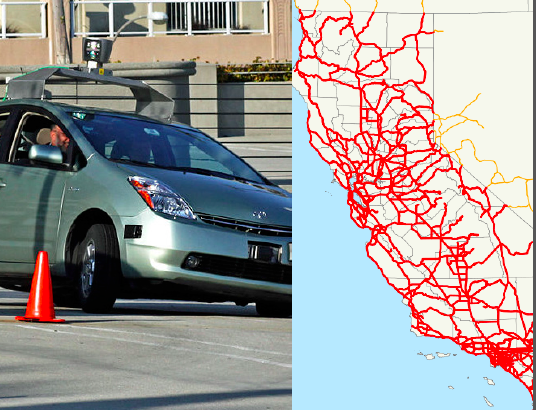
California Sets the Bar for State Regulation of Autonomous Vehicle Testing

Screen Shot 2014-10-29 at 1.28.28 PMBy Brooks Lindsay

Last month, a California law went into effect allowing autonomous vehicle testing on any California public road. The law, signed in May by Governor Jerry Brown, is the most important regulatory framework to date surrounding autonomous vehicle testing. The law deserves critical examination considering the societal changes that autonomous vehicles may bring and the likelihood that California’s law will be used as a legislative template by states around the nation.

California’s law purely regulates test-driving and does not attempt to regulate anything further—such as the commercial sale or consumer use of autonomous vehicles on California roads. Future legislation will have to include much broader provisions on the commercial sale and consumer use of these cars. In the meantime, testing requires here-and-now regulation, like that in California. Continue reading

Investing In Alibaba Group: Sure Payoff Or Legal Nightmare?

Screen Shot 2014-10-24 at 7.33.18 PMBy Yayi Ding

Last month, Chinese e-commerce giant Alibaba Group announced one of the biggest initial public offerings (IPOs) in US history, raising more than $21 billion USD. However, one could argue that the entire scheme might have been borderline illegal; of all the investors who “purchased” Alibaba’s stocks at IPO, none of them ended up actually owning a single share in Alibaba.

How could this be? Well, for starters, Chinese government regulations do not allow foreigners to own stock in Chinese Internet companies, Alibaba included. To circumvent these regulations and pursue an IPO on an American stock exchange, Alibaba had to adopt a complicated ownership structure known as a “Variable Interest Entity” (VIE). Through this structure, foreign shareholders do not buy into Alibaba, but rather buy into Alibaba Holdings, an offshore “holding company” that is registered in the Cayman Islands. Shareholders get a stake in the holding company and in Alibaba’s profits, but ultimately do not own shares in Alibaba and have no say in how the company is run. Continue reading