Fight for Your (Legal) Rights: The Beastie Boys Vindicate Their Copyright Interests, Again

Image

Photo Credit: Stereogum

By Jeffrey Echert

It’s smooth legal sailing again for the Beastie Boys. Just last week, a federal court in New York handed down a decision in an infringement suit against Monster Energy. Monster had used five Beastie Boys songs in a promotional video for a snowboarding competition, as well as “RIP MCA” in a font similar to the Monster logo (Beastie Boys’ member MCA, real name Adam Yauch, died in 2012). The Beastie Boys brought suit, claiming infringement of copyright and that Monster falsely implied an endorsement by the Beastie Boys. After hearing extensive testimony from Adam Horovitz and Michael Diamond, the jury awarded the Boys 1.7 million dollars in damages.

We’ve previously reported on legal issues surrounding the potential appropriation of the Beastie Boys’ catalogue before—last year, toy company GoldieBlox sued the Boys, hoping to receive a declaratory judgment in its favor for the use of the song “Girls” in an advertisement. The case settled in March of this year. As part of the settlement agreement, GoldieBlox made a public apology and donated a percentage of its revenues to charities that support STEM education for girls. Continue reading →

AF Holdings v. Does: Copyright Trolls Lose Battle to Porn Pirates and ISPs

Image

Photo Credit: Blogworld.com

By Max Burke

The D.C. Circuit dealt a blow to copyright trolls last Tuesday when it vacated the district court’s order for discovery in AF Holdings v. Does. The case, which was filed about two years ago, lists over 1,000 “Doe” defendants who are suspected of downloading AF Holdings’ pornographic films without permission. In an attempt to identify the unknown defendants, AF Holdings motioned the district court to compel Internet service providers (ISPs) to turn over the defendants’ personal information. The court granted the motion.

The ISPs, which include Comcast and Verizon, appealed the court’s order, arguing that the court lacked personal jurisdiction over the defendants, the venue was improper, and the defendants could not properly be joined together. The ISPs were mainly concerned that the order would allow AF Holdings to evade normal judicial procedures and unfairly leverage the defendants. Specifically, they believed the information sought would be used “to compile a contact list for Plaintiff to demand ‘settlement’ payments (typically ranging from $2,000-$4,000) from each subscriber . . . before any defendant is named or served in the lawsuits.” Continue reading →

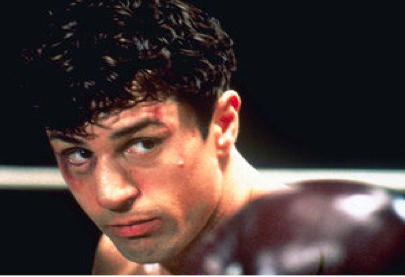
SCOTUS Removes Laches Protection Against Raging Bull

ImageBy Stephanie Olson

On May 19th, the Supreme Court resolved a circuit split in Petrella v. Metro-Goldwyn-Mayer. The Court ruled that the doctrine of laches does not bar copyright infringement suits if the suits are brought within the Copyright Act’s three-year rolling statute of limitations, absent extraordinary circumstances.

In reversing the Ninth Circuit, the Court held that laches serves a gap-filling function and should be applied only in the absence of a limitation period. Because the Copyright Act provides a three-year limitation period, laches does not apply to copyright suits, except in extraordinary circumstances. This was not such a case.

In this case, boxing champion Jake LaMotta and his friend Frank Petrella copyrighted a screenplay in 1963 about LaMotta’s boxing career. An MGM subsidiary later acquired the rights. In 1980, MGM released and copyrighted Raging Bull, a film based off of the screenplay. Petrella died in 1981, and his daughter eventually obtained sole ownership of his copyright. She renewed it in 1991 and, in 1998, informed MGM that its exploitation of Raging Bull infringed on her copyright. In 2009, she sued MGM for infringing acts since 2006 pursuant to the separate-accrual rule, which creates a new limitation period for each infringing act. Continue reading →

Can ‘Kill Switch’ Laws Put An End To Smartphone Thefts? Minnesota Enacts First-Of-Its-Kind Legislation

ImageBy Craig Henson

Despite industry opposition, Minnesota lawmakers passed a law that will soon require electronics manufacturers to install ‘kill switch’ antitheft technology in new smartphones, and more states appear ready to follow their lead.

On May 15, 2014, Minnesota Governor Mark Dayton signed the ‘kill switch’ bill into law. The bill, which is the first of its kind in the U.S., requires all smartphones sold or purchased in Minnesota and manufactured on or after July 15, 2015, to either come equipped with preloaded antitheft technology or else be capable of downloading such technology. The bill also establishes record keeping requirements for dealers acquiring used smartphones for resale, which include recording the seller’s name, address, and driver’s license number, as well as requiring the seller to sign a statement under penalty of perjury that the smartphone is not stolen and that the seller has the right to sell it. Minnesota lawmakers approved the legislation, in part, in response to a string of violent smartphone robberies on the University of Minnesota campus, hoping to thereby eliminate thieves’ incentives to steal the devices in the first place. Continue reading →

IP in Software: When is an API Protectable?

ImageBy Lydia Ansari

On May 9th, the Federal Circuit ruled in Oracle v. Google that some APIs, or software application programming interfaces, are subject to copyright. Unless Google can successfully assert a fair use defense on remand, Google will have to pay Oracle for its use of the Java API in Android. The ruling draws disapproval from IP advocates and software developers alike, who predict it will have a stifling impact on innovation.

If the ruling stands, software companies will be able to copyright some aspects of their APIs. The Electronic Frontier Foundation, warns that “allowing a party to assert control over APIs means that a party can determine who can make compatible and interoperable software, an idea that is anathema to those who create the software.” Many developers agree that making APIs subject to copyright law would significantly limit their ability to build compatible programs and build on top of APIs. Continue reading →