Congress’s Endgame: Why The Cat in the Hat and Peggy Sue Will Be On the Road to the Public Domain Until 2053

Center for the Study of Public DomainBy Chelsey Heindel

On January 1 every year, the Center for the Study of the Public Domain at Duke University commemorates what would have been a mass migration of works from the restricted world of copyright protection to the public domain. The works celebrated this year were all created in 1957: Samuel Beckett’s Endgame, Dr. Seuss’s The Cat in the Hat, Buddy Holly’s “Peggy Sue,” and Jack Kerouac’s On the Road, to name a few. Any celebration of their entry into the public domain is premature, though. Exactly 39 years premature.

Until 1978, entering the public domain took a maximum of 56 years; after that period, previously protected works could be redistributed, reproduced, and remixed without risking a copyright infringement lawsuit. Thus, books, movies, music, and scientific works created in 1957 were originally scheduled to become available for common use on January 1, 2014.

Continue reading

Will the 2014 Washington State Legislative Session Involve Biologics and Biosimilars?

Biologics

Photo Cred: Forbes.com

By Caitlin Forsyth

The Washington State Legislature convenes for its regular session next Monday, January 13. While our legislators will consider a multitude of issues important to the continued strength and health of the state, it will likely take up issues of special importance to Washington’s unique and fast-growing life sciences industry.

The Washington Biotechnology & Biomedical Association (WBBA) is a nonprofit trade association that serves Washington’s booming life sciences industry. Members of WBBA include organizations engaged in the research and development of life science technologies, including such well-known companies as BioRad and Amgen. WBBA’s mission is “to support and help to grow Washington State’s life science ecosystem.” One way WBBA accomplishes its mission is through legislative advocacy.

One of WBBA’s advocacy priorities for the upcoming legislative session is to convince state legislators to update Washington law to allow for the substitution of biosimilars for name-brand biologics, analogous to the common practice of substituting generics for name-brand chemical pharmaceuticals. Biologic drugs are large, complex molecules that pose unique patient safety issues that are not otherwise presented by chemical pharmaceuticals. The inherent complexity of biologics and their manufacture can create potential differences across biosimilar versions of the original product. Because of the differences in production as well as the unique cellular source of these drugs, it is nearly impossible to make truly identical copies of a protein using two different cell production lines. This makes both originator and biosimilar biologic drug production much more challenging than small molecular, generic chemical drug production.

Continue reading

Can Attorneys Win Big with Moneyball Lawyering? Some Tech Startups Are Banking on It.

moneyball06

Jonah Hill in “Moneyball”

By Shira Zucker

In the wake of more mass layoffs at top law firms, mounting calls to retire the billable hour, and freezes on associate hiring, an emerging subset of tech startups is attempting to transform the crisis of traditional law firm management into a lucrative business opportunity. These companies market big data services and software products to law firms for the purpose predicting legal outcomes and driving legal strategy, an approach that some commentators have dubbed “Moneyball lawyering.”

The term “Moneyball” references sabermetrics and the use of statistical data to analyze and recruit baseball players, as described in Michael Lewis’s 2003 book by the same name and popularized by a 2011 film adaptation. Billy Bean, maverick General Manager of the small-market Oakland Athletics, became a household name for creatively employing these techniques to compete against larger, more moneyed teams—to remarkable, if not sustained, success. Now several companies are utilizing computer-driven statistical comparisons to predict wins and losses in the context of litigation. Take, for example, Lex Machina, which utilizes legal stats to assess and predict patent litigation outcomes by party, venue, and judge. Parties could use this information to inform crucial tactical decisions, such as when to petition for venue transfer. Another company, Picture It Settled, applies similar algorithms to predict negotiation paces and outcomes. Negotiators could use this resource to ensure they are not leaving money on the table. The tools are designed to supplement rather than supplant the instincts of experienced attorneys.

Continue reading

Pandora’s Box: Conflicting Rulings Muddle the New Media Licensing Picture

Pandora-TipsBy Jeffrey Echert

The war between the old guard of the music industry and the digital Young Turks continues. The combatants: performing rights organizations ASCAP and BMI, pitted against online radio service Pandora. The battlefield: the Southern District of New York. The result? An uneasy stalemate, at least for the time being.

On December 18th, 2013, Judge Louis Stanton denied a summary judgment motion brought by online music service Pandora, ruling that BMI is free to withdraw interim licenses from “new media” companies. Interim licenses stem from a consent decree entered into by ASCAP in 1941 to settle an antitrust lawsuit, after allegations that it was discriminating against certain applicants and charging unreasonable fees (BMI entered into a similar decree the same year). Pandora, for example, is able to obtain a compulsory license for musical works under Section 115 of the Copyright Act, subject to a “reasonable rate.” While the companies negotiate over this royalty rate, the interim license allows the applicant to use the music during the negotiation period without infringing. If Stanton’s ruling stands, Pandora may find its music library shrinking in the future as PROs tighten their grip on their respective catalogues.

Continue reading

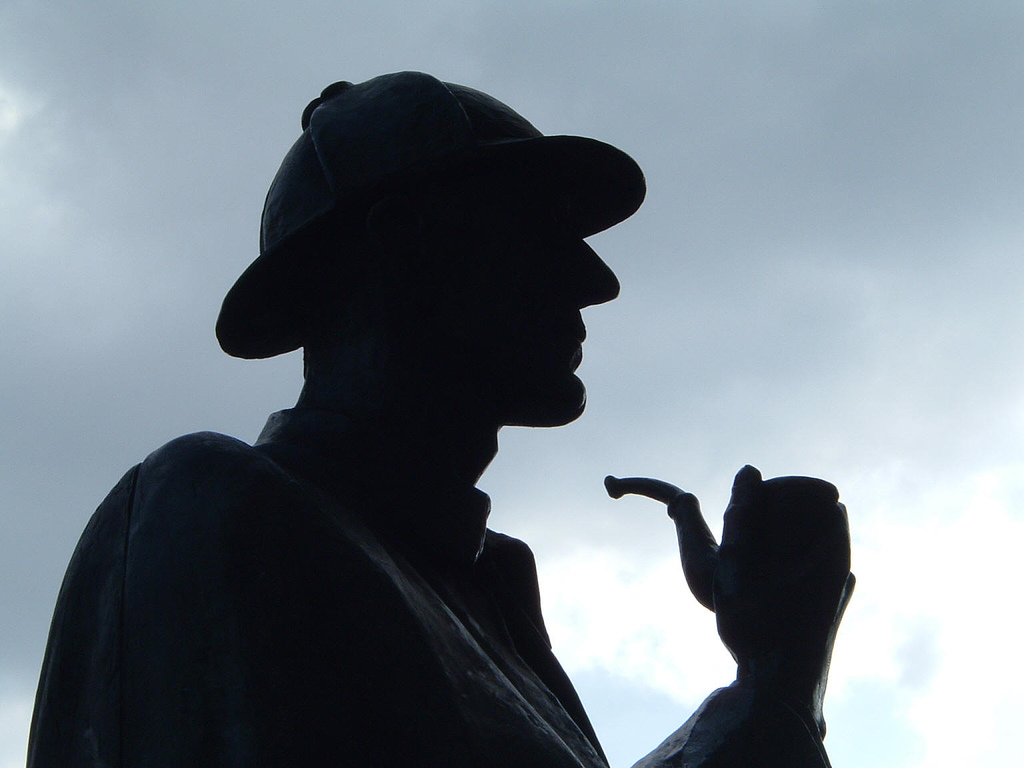
Sherlock Holmes Solves the Case of Public Domain

logoBy Peter Dang

In May of last year, we covered a lawsuit between Sherlock Holmes scholar Leslie S. Klinger and the estate of the original creator of Holmes, Sir Arthur Conan Doyle. Instead of paying licensing fees for the right to publish his own collection of original short Sherlock Holmes stories, Klinger brought a lawsuit seeking declaratory judgment to settle the copyright issue of whether or not elements of Sherlock Holmes had entered into the public domain. A week ago, the federal judge presiding over the case ruled that all elements of the Sherlock Holmes character and his sidekick, Dr. Watson, that were created by Doyle before 1923 are no longer protected by copyright.

Continue reading