Autonomous Vehicles: Are We Ready for the World of Tomorrow?

volvo_road_train-660By Eric Siebert

Autonomous vehicles—that is, cars that can operate themselves with little to no human interaction— once existed only in the world of science fiction. But they may soon be making an appearance on America’s roads. Manufacturers such as Google, pursuant to enacted legislation, are now allowed to test autonomous vehicles on the roads of Nevada, California and Florida. Many other states have similar pending or proposed legislation.

Public use of autonomous vehicles may have many benefits, from safer and more efficient driving to increased mobility for those that would otherwise be unable to operate a vehicle. However, the autonomous vehicle’s electronic nature and need to constantly connect with its surroundings suggest privacy and security concerns that are not immediately obvious.

Continue reading →

To Burden Fabulous: Intellectual Property and Censorship Laws May Limit Drag Expression

Blog Photo 2By Matthew Fredrickson

With the musical Priscilla Queen of the Desert’s 2013 national tour, Kinky Boots winning six Tony awards this past June, and the sixth season of RuPaul’s Drag Race scheduled for early 2014, the art of drag and, most notably, drag queens are becoming a fixture in popular culture. The San Francisco Chronicle quoted one drag performer as saying, “drag has never been more mainstream.” But what legal obstacles can this unique art form expect? Copyright and personality laws may present issues. And, as one gallery in Atlanta recently demonstrated, drag queens might also encounter censorship.

Merriam-Webster defines drag queens as simply men who dress as women to entertain others. But a drag queen is so much more—a drag queen is an artist. First, as Emily Moorhouse says in a recent Sun Sentinel article, “impersonating a female involves serious cosmetic stunts that are…not only practical but fabulous tricks and techniques.” She goes on to detail the challenges “of turning a male face into something fabulously female” and concludes, “[C]oating and manipulating your God-given mug into something more fabulous becomes an art.” However, the artist’s job is not finished when the illusion is created—he has to put together a performance. As drag performer Stevie Zar told Posture, to “stay visible” on the drag art scene requires constant inspiration, experimentation, and collaboration with others to construct a show. With the facial hair masked and the newest dance steps memorized, a drag queen is not just a man dressed as a woman but an artist who has created a work for stage or screen.

Continue reading →

Freedom to “Like”: Fourth Circuit Finds Facebook “Likes” are Protected Speech

Facebook-Like-ButtonBy Peter Montine

The Fourth Circuit Court of Appeals found this past September that using the “like” feature on Facebook is a form of protected speech that is guarded by the First Amendment. While running for reelection in 2009, the sheriff of Hampton, Virginia expected his employees to give him political support. He also told them that people who showed support for his opponent would not be reappointed to their positions and specifically warned his employees not to support his opponent on Facebook.

After the sheriff was reelected, eleven of his employees were not reappointed to their old jobs. Six of these employees claimed they were let go because they did not provide adequate political support for the sheriff during his reelection campaign; two of those six had even shown their support for the sheriff’s opponent on Facebook, despite the sheriff’s warnings. One of these employees had “liked” the opponent’s campaign page and wrote an encouraging message on the page. The other just posted a message on the campaign page showing his support for his boss’s opponent. When they were not rehired, the six employees brought suit against the sheriff for wrongful termination.

Continue reading →

Can an artist’s “moral rights” save the “United Nations of Graffiti”?

Chelsey Post

Photo credit: Greg Naeseth

By Chelsey Heindel

Amid dilapidated warehouses and bustling loading docks in Long Island City, Queens, stands an iconic, unabashedly informal graffiti museum called 5 Pointz. 5 Pointz, named in homage to New York City’s five boroughs, hosts over 350 individual works produced by artists willing to make the metropolitan pilgrimage from places like Kazakhstan, Japan, and Brazil. But 5 Pointz will soon become one of two 47-story luxury apartment towers, unless a rarely invoked federal law can preserve the street art landmark.

On October 9, 2013, the New York City Council unanimously approved a demolition plan that would eliminate the “Mecca of the Aerosol Art World,” thus jeopardizing the graffiti haven’s existence. Desperate for legal relief, 5 Pointz curator and director Jonathan Cohen responded to the Council’s decision by filing for a permanent injunction against G & M Realty LP, the private company that owns the abandoned 5 Pointz site.

Continue reading →

Fifth Circuit Backpedals on Jurisdictional Limits for Wiretapping, Maintains the Status Quo

Alex PostBy Alex Boguniewicz

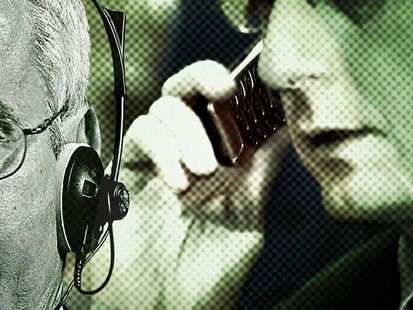
Only last week, this was going to be a very different article.  It was supposed to detail a bold holding and the creation of a circuit split that was likely to generate debate about the law’s response to mobile technology.  However, in an unexpected sua sponte rehearing of United States v. North, the Fifth Circuit withdrew its decision that a federal district court could not authorize a wiretap over a cell phone and a listening post outside of its jurisdiction.  The court ultimately determined that the evidence collected from the wiretap should be suppressed, but based on a completely different issue. The court ignored the jurisdictional question altogether.  So what happened?

The case involves standard drug-deal monitoring by the Drug Enforcement Administration (DEA).  The defendant, North, argued that evidence of a phone call he made while in Texas to another Texas resident, monitored from a Louisiana listening post, should be suppressed since the Mississippi district court that issued the wiretap order did not have jurisdiction in either Texas or Louisiana.  In August, the court held that a district court cannot authorize the wiretapping of a cell phone call when neither the cell phone nor the listening post was within the court’s territorial jurisdiction.

Continue reading →