On March 28th, Stuart P. Green ran an op-ed in the New York Times arguing that sometimes “stealing isn’t stealing.” Several blogs, including Gigaom, picked up the story but the argument has not yet been analyzed in light of the growing developments in the area of 3D printing. At present, intellectual property theft discussions circle around downloading of music, movies or—increasingly—books. However, Just as the use of personal computers and Internet access proliferated throughout the late 1990s and 2000s because hardware and subscription prices decreased steadily, 3D printers are becoming increasingly affordable for hobbyist consumers. Some parents are now buying them for their children (see e.g., Schuyler St. Leger’s “Why I Love My 3D Printer”). Continue reading
High Standards for Patentable Diagnostic Tests in the Era of Personalized Medicine
Staff Writer
On March 20, 2012, the U.S. Supreme Court unanimously held that Prometheus Laboratory Inc.’s (“Prometheus”) diagnostic process to determine the appropriate level of thiopurine drugs for a patient is not patentable. Thiopurine drugs are used to treat autoimmune diseases. Because each person metabolizes thiopurine at different rates, physicians struggle to determine an appropriate therapeutic dose for a particular patient. Doses that are too high will cause toxic side effects, while doses that are too low will not be therapeutically effective. Prometheus patented a test for determining the precise correlations between how a patient metabolizes thiopruine and what is the appropriate dose for that patient. Although Mayo Clinic Rochester and Mayo Collaborative Services (“Mayo”) had previously used Prometheus’ test, in 2004 it announced an intention to use and sell its own test, which would be similar to the Prometheus test, but with higher metabolite levels. Prometheus sued Mayo for patent infringement. Continue reading
The Bill of Rights, Version 2.0: White House Releases “Consumer Privacy Bill of Rights”
On February 23, 2012, the White House issued a press release on its plan to protect consumer privacy on the Internet through a “Consumer Privacy Bill of Rights.” This proposal is part of a larger goal to adopt comprehensive consumer data privacy in the Internet age, as well as bring the United States into conformity with similar privacy principles that are currently enforced throughout the world. This new “Bill of Rights” would increase the protection of individual privacy rights, give users more control over how their information is handled, and allow for new legal tools to protect against misuse of information.
The Consumer Privacy Bill of Rights would apply to all “personal data,” meaning “any data, including aggregations of data, that is linkable to a specific individual.” The newly developed rights include the right to control how personal data is used, the right to avoid having information collected in one context and then used for an unrelated purpose, the right to have information held securely, and the right to know who is accountable for the use or misuse of an individual’s personal data.
The Consumer Privacy Bill of Rights adopts seven general guiding principles for future rule-making and legislation: Continue reading
The Washington Journal of Law, Technology & Arts is pleased to announce Kerra J. Melvin as its 2012-13 editor in chief.
Kerra, Class of 2013, is a Butte, Montana native. After graduating from Montana Tech of The University of Montana with a degree in Accounting, Kerra moved to Washington, D.C., where she served first as an intern and a full-time staffer for the United States Senate Finance Committee. Kerra’s interest in law and policy and desire to live and practice in Seattle brought her to The University of Washington School of Law, where her studies focus primarily on corporate and tax law. She looks forward to working with the 2013 Editorial Board and Faculty Adviser Professor Robert Gomulkiewicz to build upon the LTA Journal’s strengths and to make it an even more accessible and useful resource for practitioners.
Kerra will begin her editor duties during Spring quarter.
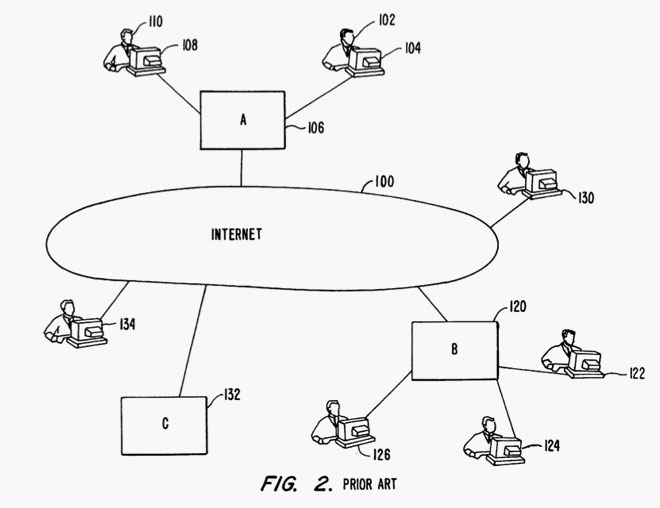
Texas Jury Finds that Eolas Technologies Does Not Own the World Wide Web
On February 8, 2012, an eight-member federal jury, comprised of laypersons from the Eastern District of Texas, invalidated two internet patents. In the suit filed by co-plaintiffs Eolas Technologies (“Eolas”) and the University of California (“UC”), the plaintiffs alleged that co-defendants, including some of the world’s largest internet-based companies, infringed the two patents in question. This decision has many parties that operate over internet-based technologies and public-domain advocates breathing a sigh of relief. The invalidation of the two patents mitigates potential future liability of infringement for parties that operate interactive websites.
Eolas, which biologist and company founder Michael Doyle named after the Gaelic term for knowledge, is a patent holding and licensing company that has successfully obtained royalty payments from large parties operating over the internet, including Microsoft in a famous 2007 case (for an undisclosed settlement amount reported to be in excess of $100 M USD). In recent years, Eolas relocated its headquarters from Chicago to the small town of Tyler, Texas, which houses the federal courthouse where many patent infringement cases are tried. Many plaintiffs choose the Eastern District of Texas for patent infringement cases because patent holders believe that the jury pool found in and around Tyler is extremely patentee friendly. Because of these actions, many commentators and parties participating in internet-based business transactions have characterized Eolas as a “Patent Troll.” Continue reading