Obama “Hope Poster” Case May Settle

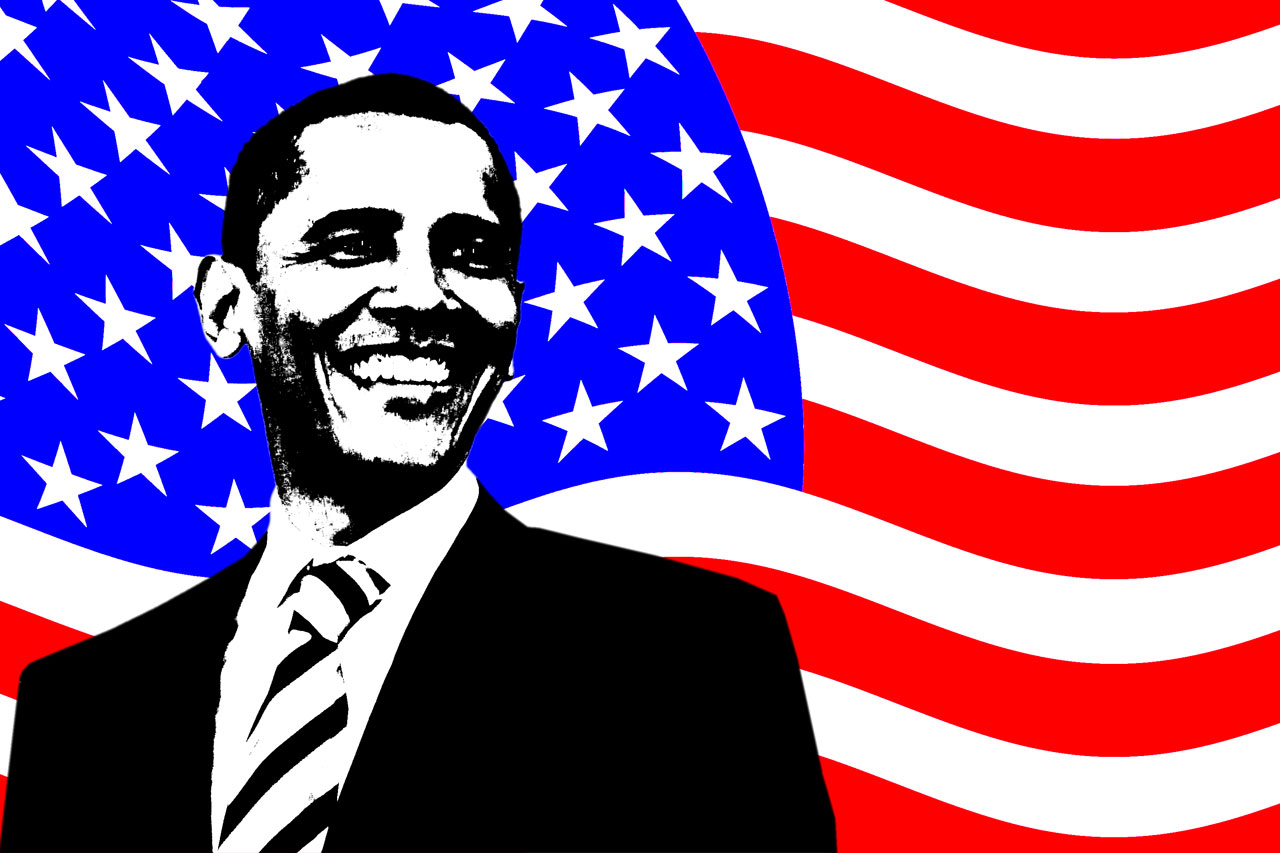
NEW YORK–The judge presiding over Shepard Fairey vs. Associated Press recently made statements suggested Associated Press would win the case if artist Shepard Fairey does not settle. AP News quotes Federal Judge Alvin Hellerstein as saying that “whether it’s sooner or later, The Associated Press is going to win.” The statements were allegedly made during a hearing on May 28, 2010. Huffington Post has more details on the hearing.

The litigation began February 2009 when Fairey sued for a declaratory judgement that his “Hope” poster did not infringe AP’s copyright of an Obama photograph taken by Mannnie Garcia.

California AG Seeks Return of Nazi-Stolen Artwork

California Attorney General Jerry Brown today filed an amicus brief in the U.S. Supreme Court supporting a Connecticut woman who seeks the return of two 500-year-old paintings stolen by the Nazis during World War II.  According to the brief, the paintings were kept for a time in the estate of Nazi leader Hermann Göring and then purchased 40 years ago by the Norton Simon Museum of Art in Pasadena, California.

The paintings at issue, two panels of “Adam and Eve,” were painted by 16th century German artist Lucas Cranach the Elder.   Last year the paintings were appraised at $24 million.  According to the attorney general’s press release, the works were confiscated by Nazi soldiers from an Amsterdam gallery owned by a relative of Marei Von Saher during the war.

Brown’s amicus brief, submitted in support of Von Saher’s petition for a hearing before the Supreme Court, argues California has the right to extend the statute of limitations for filing Nazi-era claims beyond the usual three-year limit.  Brown argues “California has a compelling interest in preserving its ability to regulate in areas of traditional state responsibility and in defending its lawfully enacted statutes where they do not conflict with federal law or foreign policy.”

At issue is whether the Ninth Circuit in Marei Von Saher v. Norton Simon Museum of Art improperly invalidated section 354.3 of the California civil procedure code, which extends the limitations period in which plaintiffs may seek recovery of artwork looted during the Nazi-era.  The Ninth Circuit said regulating stolen property within state museums was not a traditional state interest and was therefore subject to field preemption analysis.

Brown argues the statute should have been subject to conflicts-preemption analysis, not field preemption, because California was regulating within an area of traditional responsibility.  According to the amicus, the Ninth Circuit improperly expanded the doctrine of field preemption, as it relates to the foreign affairs doctrine, beyond the limits set by  American Ins. Assn. v. Garamendi.  Moreover, California did not inject itself into relations with foreign countries by extending the limitations period for claims to recover artwork from museums and galleries within the state.

The docketed case is Marei Von Saher v. Norton Simon Museum of Art at Pasadena, et al., No. 09-1254 (April 16, 2010).

# # #
Copyright Lawsuits Down 30 Percent

The Administrative Office of the Courts today released figures showing 2009 copyright litigation in federal district court fell 30 percent while overall litigation rose 3 percent.  Wired  reports the volume of copyright litigation may have dropped because the Recording Industry of America (RIAA) abandoned its litigation campaign against individual file sharers.

Between 2003 2003 and 2008 RIAA filed 35,000 copyright lawsuits against individuals, a litigation strategy designed to reduce the volume of illegally-downloaded music.  RIAA’s new strategy has focused on Internet Service Providers rather than individual Internet users.

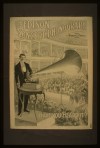
Edison Phonograph

In 2006 we analyzed the issue of copyright liability for those who provide means  of    infringement, an issue that’s still pressing despite RIAA’s new focus.

# # #

Washington Supreme Court Upholds Library Internet Filtering

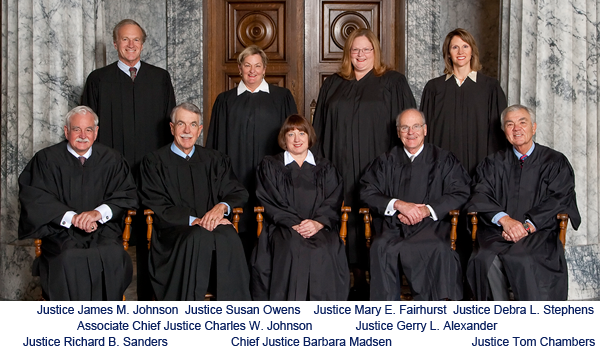
The Washington State Supreme Court today held public libraries can filter Internet access for all patrons without violating the state Constitution.  In a 5-1-3 decision the Court said filtering the Internet is not like removing books fromlibrary shelves, but rather more like selecting which books to purchase for the library’s collection.  Had the Court  found Internet filtering was more like removing books, the Court would have applied a stricter standard of scrutiny.  The dissent argued censoring material on the Internet is not the same as declining to purchase a book, but rather more like refusing to circulate a book in the collection based on content.

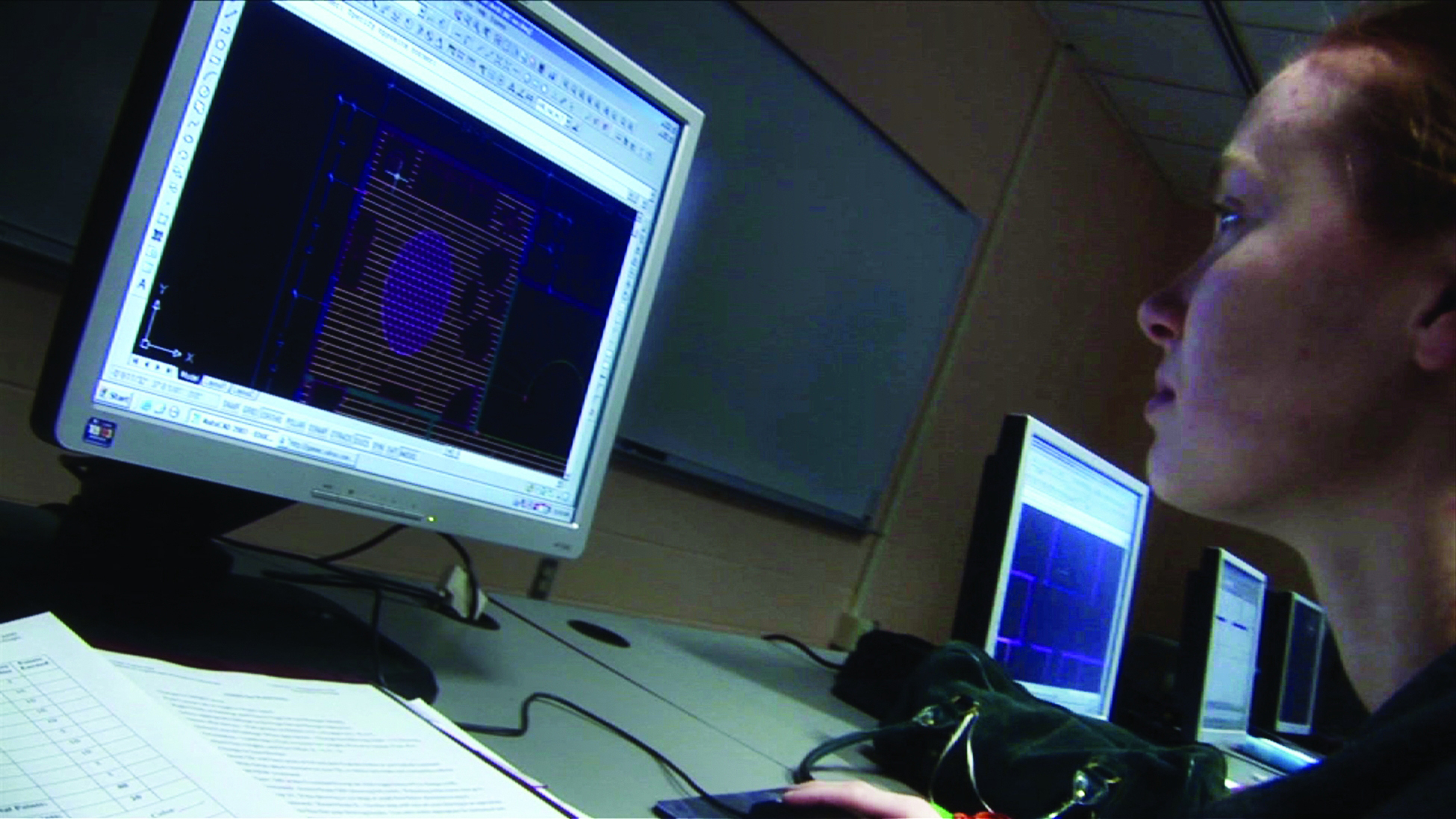
The public library’s Internet access was filtered by FortiGurad, which used algorithms and human review to block 76 categories of websites.  Some of the blocked content included Instant Messaging, “Adult Materials,” and “Nudity and Risque.”  The program also blocked Image Search, Video Search, and Craigslist.com.  Plaintiffs, who included library patrons and a nonprofit foundation sponsoring a website called womenandguns.com, alleged the library’s filtering policy was overbroad and therefore an unconstitutional prior restraint.  The Court disagreed because  the filtering did not prevent online speech before it occurred.  Instead the Court said the policy was a standard for making determinations about what would be included in the libary’s collection available to patrons.

Credit: Photo from ATE Centers Impact 2008-2010, http://www.atecenters.org

Article I, section 5 of the Washington State Constitution provides, “[e]very person may freely speak, write and publish on all subjects, being responsible for the abuse of that right.”  The Court noted the Washington Constitution offers more speech protections than the First Amendment.  For example, the Washington Constitution requires a “compelling government interest” to impose time, place, or manner restrictions on speech while the First Amendment only requires a “substantial government interest.”  Nevertheless the Court decided the case based primarily on U.S. Supreme Court precedent including United States v. American Library Ass’n, 539 U.S. 194 (2003).  In that decision the Court held public forum analysis (and therefore strict scrutiny) does not apply to public library decisions about Internet access.

The decision is Bradburn v. N. Cent. Reg’l Library Dist.

# # #

Final Issue: Shidler Journal of Law, Technology + Commerce

The Shidler Journal of Law, Technology + Commerce published its final issue today.  Starting June 2010, the Shidler Journal will become the Washington Journal of Law, Technology & Arts.

The University of Washington School of Law decided to change the Journal name after creating a new research program, Law, Technology & Arts Group (LTA).  LTA merged the Shidler Center for Law, Commerce + Technology, the Graduate Program in IP Law & Policy, and the Center for Advanced Study & Research on Intellectual Property (CASRIP) into a single research unit.

The new Journal will continue to publish the same succinct legal research that readers came to expect from the Shidler Journal of Law, Commerce + Technology.  The new partnership with LTA will simply allow the Journal to grow and publish more cutting-edge legal analysis.