Crashing Down: Boeing’s Legal Troubles

By: Patrick Paulsen

“Carelessness and overconfidence are usually more dangerous than deliberately accepted risks” – Wilbur Wright

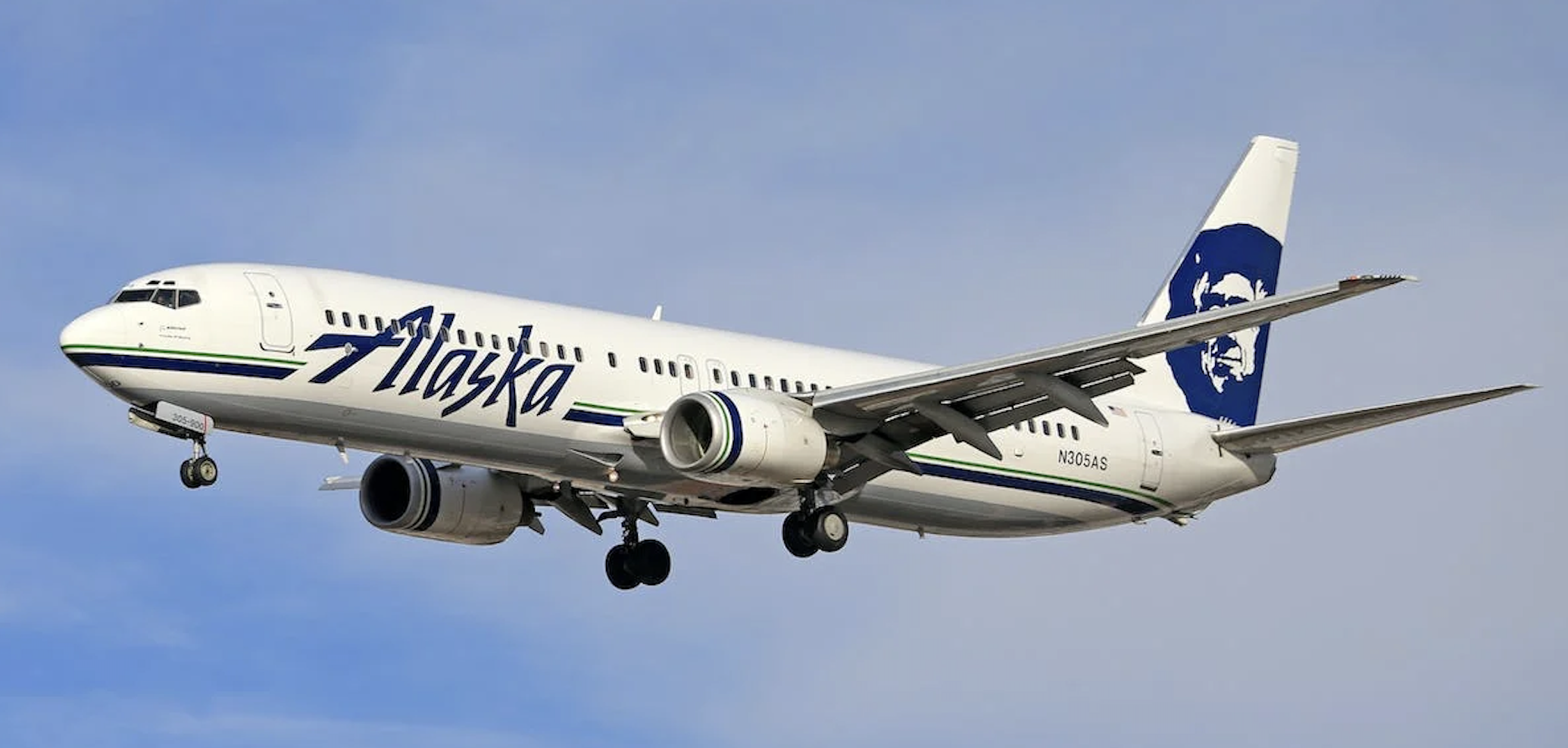
The risks of carelessness and overconfidence in air travel and manufacturing were on full display for on January 5th, when part of the fuselage of Alaska Airlines flight AS1282 fell off of the plane only seven minutes into the flight. While luckily no one was injured due to the accident (the two seats closest to the fuselage hole were empty), the event will have far reaching legal implications on Boeing and other relevant parties. This blog post will roadmap the variety of legal repercussions Boeing is facing because of the recent failures in its technology, including passenger suits, shareholder suits, and agency enforcements.

What happened?

On January 5th, a Boeing 737 Max 9, which had been deemed airworthy three months prior, left from Portland, Oregon, on its way to Ontario, California. Only minutes after taking off, a plug (a removable section of the fuselage where an emergency exit could have been installed) flew off the plane, which rapidly depressurized the cabin. Oxygen masks were deployed, and the plane immediately turned back and began preparations for landing.  All 171 passengers and 6 crew members survived the flight, which landed a mere 20 minutes after departure. This incident occurred less than a week after Boeing urged airlines to check for “loose bolts” in the rudder systems of its 737 Max models. 

Preliminary reports from the National Transportation Safety Board (NTSB) suggest that the door plug that flew off had been installed to the plane’s fuselage on August 20, 2023, with five damaged rivets. Boeing’s records showed that on September 1, 2023, the rivets were repaired on the door, which required the removal of four bolts. The NTSB’s findings suggest that the door then was reinstalled without the bolts on, and whistleblowers have suggested that Boeing has a “process failure” due to using two separate methods to record completed work. The findings suggest that a discrepancy between the two quality assurance methods caused the missing bolts to be unaccounted for.  This accident is just one in a series of incidents caused by technological and manufacturing problems with Boeing’s 737 model. 

Passenger suits

Less than a week after the “blowout incident,” passengers on board the plane filed a class action suit against Boeing in King County Superior Court on January 11th. The complaint contains causes of action for product liability under RCW 7.72.030(2)(a) and seeks class relief for Boeing’s collective breach of its duties to passengers. In addition, plaintiffs alleged damages including physical harms such as concussions, seizures, and difficulty breathing, as well as emotional distress with manifestations including “crying, impaired and/or abnormal breathing, seizure, and insomnia”. A second complaint was filed by other passengers, alleging negligence against both Boeing and Alaska Airlines on January 16th. The second suit alleged “one count of Negligence against both Boeing, one count of Strict Product Liability against Boeing under Washington’s Product Liability Act, and one count of Negligence against Alaska Airlines.” 

More lawsuits are expected, as there has been no class certification yet in the initial lawsuits. While the passenger lawsuits facing Boeing are certainly of the utmost significance, they represent only one theatre of legal problems facing Boeing in the wake of its most recent technical problem. 

Securities Suits.

Personal injury and product liability suits are only a few of the legal problems to befall Boeing in the Wake of the “blowout incident.” Boeing also is facing suits from its shareholders following the January 5th incident. The lawsuit, which was filed on January 30th in the Eastern District of Virginia (where Boeing’s corporate headquarters is located), was spearheaded by the Attorney General of Rhode Island, who argued the manufacturer “betrayed the trust of Rhode Island pensioners,” through misrepresentations in violation of securities laws. 

Specifically, the lawsuit alleges that Boeing’s executives violated sections 10(b) and 20(a) of the Exchange Act by making statements such as that they were “making steady progress” on their “top priority… the safe return to service of the 737 MAX.” The complaint alleges that “[u]nbeknownst to investors, statements such as those above were false and misleading because Boeing failed to disclose that it had been prioritizing its profits over safety, which led to poor quality control standards in the production of its commercial aircrafts” leading to a “heightened risk” of manufacturing flaws. 

With Boeing’s stock price plummeting just shy of 20% since the beginning of the year, it is easy  to see why investors have taken such swift action. Furthermore, there is reason to believe such suits can be successful. Boeing settled similar claims (stemming from technical errors with the 737 MAX flight systems that resulted in two plane crashes) with its shareholders for $237.5 million in 2022. As commentators noted at that time, the suit was expected to portend a trend in ESG-related litigation, which aims to hold directors accountable for corporate failures, and to incentivize corporate leadership to better identify and address oversight and reporting issue. With the recent lawsuit and continued critiques of its corporate culture, the future for Boeing presents uncertainty and far reaching effects.

Governmental Action and Greater Impact. 

Consumer and shareholder lawsuits may only be the beginning of the consequences facing Boeing after the January 5th incident. After crashes in 2018 and 2019 stemming from failures in Boeing 737 MAX’s flight systems, Boeing was estimated to have lost $20 billion in non-litigation costs. While no criminal action is currently pending for the January 5th incident, Boeing faced criminal charges in 2023 stemming from allegedly fraudulent statements concerning the 737 MAX’s safety. Furthermore, Boeing has become the focus of new regulatory action due to the events of January 5th. The Federal Aviation Administration (FAA) has sent about two dozen inspectors to Boeing’s Renton plant to perform audits and reviews. The FAA has also capped Boeing’s production of new 737s as part of increased oversight. Additionally, the FAA has adopted more stringent approval standards, which it has referred to as “audit plus.” The new standard includes on the ground inspections, an increased focus on surveillance, and double checking paperwork. These changes affect other manufacturers than Boeing, such as Gulfstream, and other domestic manufacturers. 

The fallout from Boeing’s most recent high profile manufacturing defect has had effects outside of the airline industry as well. As noted by some commentators, the January 5th incident has empowered critics of Diversity, Equity, and Inclusion (DEI). Despite other factors, such as technological and staffing problems, explaining recent safety issues, critics allege that Boeing’s and Alaska Airlines’ focus on DEI rather than safety have caused the issue. Elon Musk went so far as to ask “[d]o you want to fly in an airplane where they prioritized DEI hiring over your safety? That is actually happening.” Such accusations are misplaced, as Boeing’s DEI initiatives are designed to help transform the corporate culture of the company which has, as the recent securities lawsuit alleged, prioritized “profits over safety.”

In conclusion, when a door falls off of a place, the impact extends far beyond the ground where it lands. While there is a clear impact on consumer, shareholders, regulators, market competitors, and corporate governance at large, the final cost of Boeing’s carelessness and overconfidence remains to be seen. While Boeing may be prepared for the legal challenges ahead (after all, their chief legal officer makes $6.2 million a year), we, as flyers, shareholders, regulators, or just as members of the concerned public, must demand greater accountability and oversight in order to create a safer, better world.

Football is Back: the Renaissance of EA Sports College Football

By: Karina Paup Byrnes

What is it like waiting a decade to play a video game? Just ask fans of Electronic Arts (EA) Sports National Collegiate Athletic Association (NCAA) Football. Over ten years ago, what was thought to be the final iteration of EA Sports’ popular game was released in 2013, NCAA Football 2014. The NCAA Football series had been a profitable investment for EA, with NCAA Football 2014 selling over 1 million copies. However, no subsequent iteration of the game was released due to an antitrust class action lawsuit that was filed by then current and former NCAA athletes whose likenesses were portrayed in EA’s game without compensation. O’Bannon v. NCAA challenged the NCAA’s prohibition of athletes receiving compensation for their name, image, and likeness (NIL).

In July 2009, Ed O’Bannon, a former UCLA men’s basketball player, filed the lawsuit. In 2008, EA Sports published an NCAA basketball video game with a character depicting O’Bannon without his consent. O’Bannon sued the NCAA, the Collegiate Licensing Company (CLC), the entity responsible for licensing the NCAA’s brand, and EA. Numerous players joined the lawsuit as plaintiffs, representing over 24,000 college athletes who had been featured in various EA’s football and basketball video games between 2003-2014. Before the trial began, EA Sports and the CCL settled with the athletes for $40 million, leaving the NCAA as the sole defendant. The settlement was paid to tens of thousands of players, with each player eligible for up to $4,000. O’Bannon received roughly $15,000 for being a lead plaintiff.

With the NCAA proceeding as the defendant in the trial, in a major decision, the United States Court of Appeals for the Ninth Circuit ruled in favor of O’Bannon. The judges held that the NCAA refusing to allow college athletes to profit off of their name, image, and likeness, “constituted an anti-competitive conspiracy by the more than 1,200 member NCAA colleges, conferences and affiliate organizations.” The Court found that the NCAA conspired to deny men’s basketball and football players of the monetary value of their names, images, and likenesses  for commercial gain.”

The O’Bannon decision led to an influx of additional lawsuits against the NCAA, eventually forcing the NCAA to amend its rules to allow college athletes to profit off of their name, image, and likeness. This new provision has momentously impacted college sports, with student athletes collectively earning nearly  $1 billion in the first year of the rule change. These changes have also greatly benefited the companies that want to partner with athletes in using their name, image, and likeness.

In the wake of the O’Bannon decision and the NIL revolution in college sports, EA Sports has quickly seized the opportunity to revive the extremely profitable NCAA Football series with the consent of the athletes depicted in the game. However, this announcement was not without controversy, with athletes arguing that EA’s original offer of $500 payments to each athlete for their likeness is much too low.

Additionally, a lawsuit was brought against EA Sports over NCAA Football 2025 by the Brandr Group, a company representing dozens of colleges and universities, over a licensing dispute regarding their clients’ name, image and likeness rights. The complaint alleges that EA Sports did not negotiate with the Brander Group, despite the agency firm representing many NCAA Division 1 schools. Instead, EA Sports contracted with a different licensing representative company OneTeam Partners, cutting the Brandr Group out of the deal. The Brandr Group alleged that this practice hurt the college athletes wanting to be featured in the video game because the individual players have far less bargaining power if they are not able to be represented by their university’s licensing representative. Ultimately, the Brandr Group dropped its lawsuit and decided to “monitor the progress of NCAA Football before determining whether further legal action is needed to protect its clients.” Yet, the Brandr Group’s argument highlights the important question of who has the authority to represent college athletes in a group licensing contract when there is no players’ union?

As of February 15, 2024, the numerous legal roadblocks impeding the release of NCAA Football 2025 have now been resolved. Now with more clarity on the legal landscape, EA Sports has officially dropped a teaser for its video game, signaling the game’s impending release. The excitement is palpable, with rumors buzzing, predicting who will be featured on the cover and if the projected release date of Summer 2024 will hold true. EA Sports is equally as excited, cashing in on their investment of over a decade of labor to the joy of fans who have kept the interest of the game alive. It is hard not to view NCAA Football 2025 as a licensing feat. The sheer scale of coordination necessary to produce and license the properties for a project this large is no small task and demonstrates the power that athletes now hold over their name, image, and likeness. However, it is important to remember that a power imbalance nonetheless exists between college athletes and the billion-dollar companies they partner with. To preserve the Ninth Circuit’s reasons for allowing NIL deals in the first place, athletes should be supported in guiding the new landscape of licensing.

Musk on the Brain

By: Bella Hood

Unsurprisingly, inventing a novel brain implant requires navigating through a field of legal landmines. Elon Musk’s company, Neuralink, founded in 2016, continues to forge ahead in the development of a chip that the company is now calling Telepathy. Despite managing an abundance of legal hurdles and more guaranteed on the horizon, last month, Neuralink implanted the chip into a human for the first time.

Neuralink’s headlining product is the size of a quarter and designed to sit in the part of the brain that controls movement. Neuralink states that “the device is designed to interpret a person’s neural activity, so they can operate a computer or smartphone by simply intending to move – no wires or physical movement are required.” According to the company website, “the implant is powered by a small battery charged wirelessly from the outside via a compact, inductive charger that enables easy use from anywhere.” Musk, the owner and active user of X, posted on the social media site recently saying the first target users will be “those who have lost use of their limbs” and adding, “imagine if Stephen Hawking could communicate faster than a speed typist or auctioneer. That is the goal.” While Neuralink and Telepathy are getting a lot of attention, this is not the first time a brain-computer interface (BCI) has been implanted into a human. In fact, in the late 1990s, a scientist named Phil Kennedy developed a BCI that allowed a paralyzed patient to move a computer cursor using her brain.

One of the larger regulatory impediments has proven to be the U.S. Food and Drug Administration (FDA). The FDA is the federal agency responsible for ensuring the safety, efficacy, and security of medical devices, among other things. In 1976, Congress made FDA approval a requirement for medical devices to be sold in the U.S. The agency is led by the Commissioner of Food and Drugs, who is appointed by the President of the United States.

Neuralink announced in September 2023 that it received FDA approval to launch its first “in-human clinical study.”  The FDA previously denied permission in 2022 noting “major safety concerns” involving “the device’s lithium battery; the potential for the implant’s tiny wires to migrate to other areas of the brain; and questions over whether and how the device can be removed without damaging brain tissue.” The clinical trial will seek people ages 22 and older living with quadriplegia due to spinal cord injury or amyotrophic lateral sclerosis. Despite receiving approval to conduct the clinical study, Neuralink is only on step 3 of 5 on the FDA’s device development process.

Aside from FDA approval, the development of the chip has stoked anger amongst animal welfare groups and brought accusations of illegal conduct. In February 2023, the U.S. Department of Transportation conducted an investigation into alleged “unsafe transport of contaminated hardware.” Pete Buttegieg is the current Secretary of Transportation, appointed by President Biden in 2021. The Department oversees all national transportation policy. The investigation came after an animal welfare group claimed public records, including emails between Neuralink executives and the University of California, Davis, showed that Neuralink potentially violated federal hazmat law in 2019. Because UC Davis is a public institution, it is subject to public records requests. 

Neuralink’s run-ins with federal agencies do not stop there. The same animal welfare group filed a complaint with the U.S. Department of Agriculture in 2022 accusing Neuralink of violating the Animal Welfare Act which regulates the treatment of animals in research, transportation, sale, and handling.

Between 2018 and December 2022, the company killed roughly 1,500 animals, including pigs, sheep, and monkeys. Critics lament that while animal deaths are certainly not uncommon in scientific research, the process and speed of Neuralink’s research has exacerbated the mistreatment of these animals.

Yet another area of law Neuralink has exposed itself to is securities regulation. In November 2023, Four Democratic House Representatives sent a letter to the Securities Exchange Commission (SEC) demanding an investigation into Musk’s recent statements regarding the company’s handling of animals. The lawmakers are concerned that the billionaire’s statements “downplayed investor concerns about the results of its animal testing.” The Securities Act of 1933 was enacted after the stock market crash in 1929 and designed to protect investors by increasing transparency surrounding financial information and prevent misrepresentation by issuers of securities. By downplaying the animal abuse incidents, Musk may have painted a more stable picture of the private company than was accurate at the time, leading investors to increase their investments. It remains to be seen whether Musk will face further investigations over potential securities fraud.

Aside from concerns over animal welfare, transportation, and securities exchange compliance, new issues with data privacy will no doubt come to the forefront if Musk’s device continues to develop. Experts have already expressed concern over the ownership of personal data collected by the implant and who will have access to sensitive information about users. Seeing as the biggest hurdle by far, a human successfully living with and utilizing the implant, has yet to be surpassed, Neuralink’s legal team is sure to have no shortage of problems to tackle in the foreseeable future.

Whatever Happened to Trust Busting in Sports?

By: Mayel Tapia-Fregoso

Professional sports leagues in the United States (US) have existed since the first professional baseball league emerged in 1858. Since then, Major League Baseball (MLB), the National Football League (NFL), among other leagues, have dominated US sports with little competition from other independent leagues. These sports leagues have, in large part, escaped the comprehensive antitrust regulatory scheme laid out in the Sherman Antitrust Act. Despite the law’s enforcement, sports leagues have nonetheless enjoyed soaring profits because of their monopolies over broadcasting, labor, licensing, and media rights. Recent lawsuits against Major League Baseball and the National Football League are the latest in a series of cases designed to curb these professional leagues’ power and reveal the effects sports league monopolies can have on consumers.

A Brief History of Antitrust Regulation 

In 1890, Congress passed the Sherman Antitrust Act (Sherman Act), the first federal law outlawing monopolistic business practices. Congress designed the Act to combat previously unregulated industries, such as oil. Such industries were dominated by a single company and restricted interstate commerce. The Act empowered private parties to bring lawsuits against monopolist companies to enforce antitrust laws and seek damages for violations of the Sherman Act. Today, the Sherman Act “promotes consumer welfare by enhancing economic efficiency in commerce.”

Before the First Radio, There Was . . . Sports!

Professional sports have been a core part of American culture for more than one hundred years. The National Association of Base Ball Players was founded in 1858, eventually becoming Major League Baseball in 1903. Other major sports leagues, like the National Football League formed in 1920, were founded in the following decades of the twentieth century. These entities are the primary leagues within their respective sports, and have little competition from other leagues. 

How Do Professional Leagues Fit into Antitrust Laws’ Regulatory Scheme? 

Antitrust laws are designed to regulate national sports leagues, however some leagues are structured more like economic monopolies rather than single entities. In most sports leagues, along with its assets like land, player rights, media rights, and intellectual property. These teams collude with one another to control the supply of a product to increase profits, limit competition, and dominate the market.

Leagues with antitrust exemptions and those that have evaded the Sherman Act’s reach have monopolized their respective industry (labor, media rights, region exclusivity, licensing etc.). For example, if an athlete wants to play professional baseball, an MLB team must draft or sign the player, obtaining the rights to that player. Professional baseball athletes have few other options to play professional baseball besides MLB and MLB-affiliated minor league baseball teams (MILB). MILB teams or “farm teams” are teams affiliated with specific MLB clubs whose rosters are composed of players whose rights are owned by an MLB team. MLB teams have agreements with MILB teams to develop players they have signed or drafted, some of whom eventually feed that MLB team’s roster. MILB leagues and teams exist to develop players’ talent and provide MLB teams with a steady supply of players. MILB teams do not compete with any MLB teams—they are often located in small media markets. Currently, there are nine independent leagues composed of teams not affiliated with MLB teams. However, many of these leagues, like the American Association of Professional Baseball, have specific partnerships with MLB and, coincidentally or otherwise, do not have teams in any city where an MLB team plays. 

Other leagues have faced more direct competition. Over the years, a few independent football leagues have challenged the NFL’s foothold in the market. In 1986, the United States Football League (USFL), facing bankruptcy, challenged and defeated the NFL in an antitrust lawsuit. Despite finding that the NFL prevented the USFL from securing a television contract, the jury found the USFL was not damaged “except to the extent of $1.” In 2019, Charlie Ebersol and Bill Polian founded the Alliance of American Football (AAF), which held its season during the NFL’s offseason months. Even with the backing of a billionaire investor, the AAF could not stay afloat and ultimately failed because the NFL refused to partner with the league. In March 2024, a new United Football League will try its luck taking on the NFL this Spring.

The lack of competition from independent leagues has contributed to monumental revenues for these sports leagues. The NBA earns an estimated $12 billion annually, behind MLB’s $14 billion and the NFL’s astounding $25 billion.

Recent Challenges to Sports Leagues’ Anti-Competitive Behaviors

Recently, groups of plaintiffs are wielding antitrust laws to challenge leagues’ anti-competitive behaviors. In 2023, a group of plaintiffs filed a class action lawsuit against the NFL seeking $6.1 billion in damages, alleging that the NFL clubs conspired to suppress out-of-market telecasts of football games with the NFL’s broadcast partners. NFL games are distributed to broadcasters, like Fox and CBS, through regional coverage to only a specific region; for example, each team’s home market can view the games without blackout restrictions. In the NFL, a blackout restriction is when a team’s televised game is only available for viewership in that team’s media market.  To watch their team play, out-of-market fans must subscribe to NFL & DirecTV’s streaming platform called “NFL Sunday Ticket.” However, Sunday Ticket forces subscribers to choose between paying for every out of market game or not watching at all. The plaintiffs allege that the NFL and DirecTV collusion to suppress out-of-market telecasts violate the Sherman Antitrust Act. Judge Philip S. Gutierrez approved the plaintiff’s class-action status to two groups of Sunday Ticket subscribers and denied finding summary judgment for the NFL. In his order, Judge Gutierrez stated that a reasonable jury could find that the NFL conspired with its broadcasting partner to suppress telecasts in violation of the Sherman Act. The case is now heading for trial.

This is one of many lawsuits that has challenged the business model of professional sports leagues. MLB avoided a challenge to its antitrust exemption by settling a lawsuit filed by Tri-City ValleyCats and other non-MLB affiliated minor league teams. The plaintiffs alleged that MLB clubs colluded to cut ties with certain independently owned MILB teams, like the Tri-City ValleyCats, and their MLB affiliation. The aggrieved MILB teams argued that the MLB clubs replaced them with other MILB teams owned by MLB owners. The United States Court of Appeals for the Second affirmed the lower court’s decision to dismiss the case, citing MLB’s antitrust exemption. MLB settled with the plaintiffs before the US Supreme Court had a chance to consider the case.

Professional sports have become a multi-billion-dollar industry because of sports leagues’ successful business practices, which arguably cross the line into anticompetitive behavior. The recent wave of antitrust lawsuits highlights the call by some for tighter regulation of professional sports leagues and the consequences leagues’ anticompetitive behavior can have on consumers.

Washington Supreme Court Preview: Greenberg, et al. v. Amazon.com, Inc.

By: Sofia Ellington

On January 18th, 2024, The Washington Supreme Court came to the University of Washington School of Law to hear oral arguments in the case of Greenberg, et al. v. Amazon.com, Inc. The Court seeks to answer a question that will substantially affect consumers: Whether the Washington Consumer Protection Act’s (WCPA) prohibition on “unfair” acts protects against price gouging.

What is the fight about?

Plaintiffs, a class of consumers led by Alvin Greenberg, are suing Amazon in federal district court to hold the company accountable for price gouging during the COVID-19 pandemic. The complaint cites price increases of up to 1000 percent on certain items such as face masks, cold remedies, toilet paper, and baking soda. In Amazon’s reply brief, they argue that price increases are not a per se unfair practice under the Washington Consumer Protection Act (WCPA) or the Federal Trade Commission Act (FTC Act).

Whether the prohibition on unfair and deceptive practices in WCPA protects against price gouging is a question of first impression that originally came before Judge Lasnik in the United States District Court in the Western District of Washington. In certifying the question to the Washington Supreme Court, Judge Lasnik explicitly acknowledged that the complex and competing policy interests at issue influenced his decision to certify instead of making that judgment himself.

What is a Certified Question?

A certified question is a formal request by one court to another for an opinion on a question of law. In this case, it is a federal court asking the Washington Supreme Court to answer a question regarding the interpretation of a state law. While the Supreme Court Justices were visiting classes at UW Law the day before the oral argument, I had the opportunity to ask Chief Justice González how the Washington Supreme Court strategizes about answering certified questions. He told our class that the Court answers certified questions in a way that does not decide the narrow controversy at hand, but instead focuses on interpreting the law for broader applications. The court will thus presumably examine the broader implications of interpreting the WCPA to prohibit price gouging into account when making a decision. That could include policy considerations like how the market will be affected, consumer well-being, and how states across the country interpret their statutes.

Amazon’s shift from forced arbitration to Washington’s choice of law provisions

Most large technology companies, including Amazon, have forced arbitration clauses and class action waivers in their terms of service (TOS). These clauses operate to prevent potential plaintiffs from pursuing their claims in court, forcing them to take disputes to a privatized off-the-record forum where they are less likely to prevail. So how did a class action dispute against Amazon end up before the Washington Supreme Court on a certified question?

Amazon sent a brief email to customers that they were dropping their forced arbitration clause and class action waiver from its TOS after receiving a coordinated 75,000 individual arbitration claims.  A single arbitration takes less time and is more cost-efficient for corporate defendants than litigating a class action—but if thousands of people file individual arbitration demands, dealing with thousands of arbitrations is more costly than defending against a single class action.

In the absence of an arbitration clause, Amazon’s TOS now includes a forum selection clause that mandates that any user consents to litigating in Washington courts, and a choice of law clause, that reads: “By using any Amazon service, you agree that applicable federal law, and the laws of the State of Washington . . . will govern these conditions of use and any dispute of any sort that might arise between you and Amazon.” That means any consumer who wants to sue Amazon must do so under the laws of Washington State, and more importantly in this case, the WCPA.

Oral Arguments 

At oral argument, counsels for both the plaintiffs and Amazon urged the court to think about opposing policy considerations. Plaintiffs emphasized that Amazon did not dispute that they engaged in price gouging after a nationwide public health emergency was declared. Those alleged “unconscionable” price increases caused substantial injury to consumers. Their argument is that price gouging, while not currently regulated under the CPA or FTC Act, is a fundamentally unfair practice that violates the spirit of the CPA. They did not tell the court that there should be a bright line rule—instead arguing cases would proceed like other antitrust claims. This would involve asking the jury to decide on a product-by-product basis what percentage price increase violates the WCPA based on expert testimony and the totality of the circumstances. The plaintiffs concluded by asking the court to find that their facts state a claim under the WCPA.

Amazon argued that in their view, the plaintiffs are asking for something unprecedented. They urged the Court to refrain from making policy decisions that are best left to the legislature to decide. They pointed out that the WCPA is based on the FTC Act, which has been construed to not cover pricing— underscoring that, if the justices rule in favor of the Plaintiffs, they would be the first court in the nation to read such an act to limit pricing. They pointed to other states that regulate pricing through acts of the legislature, not the courts, and only to regulate certain items. Moreover, they advanced an economic argument, warning that supply and demand would be negatively impacted,  throwing off market indicators that are actually helpful to consumers.  

What does this mean for Washington courts and consumers?

In 2021, the Attorney General of Washington, Bob Ferguson, called for a bill that prohibited price gouging during an emergency. Since then, the bill has passed the state Senate but failed in the House of Representatives due to disagreements about the particulars of the act. The outcome of this litigation may push the Washington legislature to act once again on this issue to protect consumers.

At oral argument, both sides had strong policy arguments that the Washington Supreme Court will have to weigh carefully in their decision. Regardless of which way it comes out, consumers around the world will be affected by the Court’s decision. Additionally, Amazon’s choice of law provision in their TOS will undoubtedly have an outsized impact on Washington courts causing a heavier Amazon-related caseload. However, Amazon could change their TOS at any point, so it will be interesting to see how long those provisions last—especially after the outcome of this litigation.