Financialization of Art: Off-the-Wall, or a Stroke of Genius?

By: Patrick Paulsen

One of the few universal features of human cultures is that of artistic expression. To express something creatively and aesthetically is fundamental. Just as fundamental perhaps, is the drive to bring such enterprises into the economic sphere. Of course, while some mediums of expression have long been intertwined with finance (such as plays, films, music), this blog seeks to explore the growing nexus between investing and markets for singular works of art, such as paintings, photographs, and sculptures.

Works of fine art are prohibitively expensive. With price tags reaching well over $100 million (for works by Van Gogh and Cézanne), and resales fetching anywhere from 3% to 86% net returns (for works by Warhol and Gilliam), the finances behind fine art sales have caught the eye of financiers, wealth managers, and retail investors. While scholarly conjecturing about the applicability of securities law to art sales have existed for decades, the rise of NFTs and fractional ownership services have increased the availability of, and conversation around, fine art as an investment tool.

Painting the Picture

Of all the ways to make money, why invest in fine art? While owning a masterpiece is something persons and corporations with vast resources may be interested in merely for extravagance, some reports indicate up to two thirds of fine art purchasers do so “solely as an investment to grow wealth.” Some industry insiders have even revealed that some clients “buy museum quality art, hold it in storage, and sell it for a significant profit, all without ever seeing the picture.” If fine art purchasers are missing the picture, then what is it they are seeing?

Despite major accounting firms, such as Deloitte, summarizing the characteristics of art investment as high-risk, illiquid, opaque, unregulated, with high transaction costs, at the mercy of erratic public taste and short-lived trends, 85% of wealth managers believe art and collectibles should be among those securities offered to clients (as of 2022, up from 53% in 2014).

There are several reasons why art and similar collectible classes are beneficial from an investment management perspective. First, fine art serves as excellent collateral for loan servicing. Due to their ability to be stored in centralized management facilities and high public value, art pieces provide wealth managers and high net worth individuals with appreciable assets which can be loaned against without even having to move the painting. Second, art pieces can serve as a diversification tool due to the art markets low correlation with that of stocks and bonds. This means that when traditional securities have volatile fluctuations in pricing, art collections maintain stability. And third, industry reports suggest that investing in fine art can serve a plethora of other purposes, including:

  • Hedging against inflation and currency devaluation
  • Little risk of principal loss (assuming proper due diligence)
  • Favorable tax treatment
  • Easy transfer and movement of the asset
  • Potential for revenues through exhibition loans.

Certain commentators have treated art investment as analogous to that of real estate. Noting that because paintings are physical objects, their price can be computed per square inch or square centimeter and compared to high end real estate. However, this exercise serves to emphasize the expense attached to painted “real estate.” Compare the works of Picasso, which can fetch on average $350, $1,300, and $2,000 per centimeter squared (depending on the muse) with a luxury co-op on Manhattan’s Upper East Side, priced at “only” $1.2 per centimeter squared).

Given the seemingly high barriers to entry, why would a typical retail investor care about auction prices at Sotheby’s?

Framing the Future

In the past, access to fine art investing was limited only to very rich individuals and firms, before becoming more available through boutique art collection funds. Nowadays, several companies are offering services which seek to make fine art investing available for ordinary individuals through the practice of selling fractional shares.

Masterworks, a pioneer in the field of expanding availability of investment in art, makes its portfolio of over 200 pieces (valued at over $700 million) available for individual purchase via the selling of fractional shares. Masterworks and similar firms create fractional shares by purchasing individual pieces worth millions, transferring the ownership of the asset into an LLC, and then selling individual shares of the LLC through offering registered with the SEC.

One example of this can be seen in MASTERWORKS 001, LLC, whose form 1-K on file with the SEC notes that its business purpose is to “facilitate investment in a single work of art created in 1979 by Andy Warhol.” The artwork in question, “1 Colored Marilyn (Reversal Series),” initially was securitized into 99,825 shares at an initial offering price of $20 a share. Masterworks is not alone. Other entrants into the field range from ARTSPLIT, based in Nigeria, which sells share in African art and music, to London-based Showpiece, which sell shares in fine art and collectibles.

While some see “these new investment models as a democratization of an otherwise hard-to-access market place,” both the financial sector and art world have reservations. On the one hand, the financial insiders, while increasingly hospitable, have worried about the lack of regulation and subjective pricing methods. Art as a market presents many legal concerns which ought to be addressed given its growing prominence. There are difficulties in classifying fine art as commodities or securities for regulators and state agencies. Further, due to the unique nature of the items involved, questions of forgery, title, and cultural consideration suggest that a more encapsulating legal regime is necessary going forward.

Art insiders, on the other hand, are concerned with the intrinsic conflict between art and money, as they believe entangling the two risks the incommensurable value of art once it is standardized and transformed into speculative objects. Of particular importance to lawyers, is how the sale and alienation of art pieces from given cultural heritage, interact with existing laws governing cultural and artifacts.

Final Touches

Works of cultural, historical, and aesthetic merit are increasingly being utilized as financial objects to achieve investment goals. While this process has been criticized by both the financial world and many within the art community, its growth has not been stunted. This is expected to continue, as the global art market continues to grow, and as more opportunities for individual investors to get in on the action arise. And while art financialization continues to be debated within the conversations surrounding the democratization of art, at least some benefits previously confined to the monied few, are now available to almost anyone.


Massive Copyright Lawsuit Threatens to Monopolize Reggaeton Music

By: Mayel Tapia-Fregoso

In the United States, copyright law protects original works of authorship that are fixed in a tangible medium. A song can receive two separate copyrights. First, a song can be copyrighted as a musical composition, including its lyrics. Second, the sound recording of that musical composition can also be copyrighted. While entire songs and their sound recordings can be copyrighted, small groupings of notes within a musical work are typically not protected. Recently, a lawsuit filed in the Central District of California names reggaeton stars Bad Bunny, Karol G, Daddy Yankee, and more than one hundred other artists in a copyright infringement lawsuit that has the potential to rock the music world and expand copyright protections for musical works. 

Browne v. Donalds

On April 1, 2021, Steely and Clevie Productions filed a copyright infringement lawsuit against more than one hundred defendants, alleging that their music infringed on Steely and Clevie’s copyrighted works. In the complaint, Steely and Clevie—a Jamaican reggae duo—allege that the defendants sampled the “dembow” rhythm without permission. Sampling is when artists take a portion of another artist’s sound recording and incorporate it into their own audio-only recording of a new song. Artists must obtain permission from the copyright owner of the song and the copyright owner of the sound recording they wish to sample to avoid a copyright infringement lawsuit. The copyright holder(s) of that musical work and sound recording have the option to refuse to license the work, unlike compulsory licensing involved in song covers.

In 1989, Steely and Clevie released the song “Fish Market,” which first featured the dembow rhythm. In 1990, they collaborated with artist Shaba Ranks, incorporating the beat into his song “Dem Bow,” which gave the dembow rhythm its moniker. Later that year, another artist, Dennis “the Menace” Haliburton, incorporated that same beat in his song, “Pounder Riddim.” According to Steely and Clevie’s complaint, the defendants sampled and “mathematically copied” the dembow rhythm from Pounder Riddim for decades. Many artists in the Dominican Republic would later adopt the dembow drum pattern, which became the foundation of reggaeton and Latin American pop music. Some of reggaeton’s biggest hit songs—Daddy Yankee’s “Gasolina,” Bad Bunny’s “Tití Me Preguntó,” and Karol G & Peso Pluma’s “Qlona”—are among thousands of songs that incorporate an iteration of the iconic rhythm. 

Attorneys for Steely and Clevie argue that reggaeton artists did not obtain a license for the “distinctive drum pattern that has become the foundation of the entire genre.” They claim that the industry has exploited the rhythm and has generated revenue from the infringing works. Attorneys for the defendants argue that Steely and Clevie seek to “monopolize” the reggaeton genre by “claiming exclusive rights to the rhythm and other unprotectable elements” shared by all reggaeton songs. The presiding judge, Andre Birotte Jr., expressed concerns for the “stifling” effect that a verdict for the plaintiffs could have on the music industry. The judge is tasked with ruling on the defendant’s motion to dismiss. 

Can Dembow be Copyrighted?

The lawsuit poses a number of questions. First, is the dembow rhythm protectable under copyright law? Under the Copyright Act of 1976, artists, composers, and publishers can copyright musical compositions and sound recordings. In a musical composition, typically, the lyrics of a work and the work’s melody are protectable. The melody includes “the order and rhythm of pitches that make up the main melody line of a piece of music.” However, “in most cases, the sequence of rhythms and “groove of a song” lie outside the protections of copyright law. Likewise, a song’s arrangement and structure is not copyrightable because two songs with the same structure may sound different. But rarely, a rhythm can be copyrighted if the plaintiffs can successfully prove that it is “substantially unique or original.” Courts have spent decades balancing the interests of copyright holders and the interests of the creative community to encourage the production of arts. 

Why Bring This Case Now?

Second, were Steely and Clevie truly the first to create the dembow rhythm or simply the first to “record the popular Jamaican street beat” in a fixed medium? In Jamaica and Latin America, it is common for artists to borrow and sample instrumental tracks without the threat of litigation. Early reggaeton artists in Puerto Rico were inspired by “Jamaica’s tradition of using popular instrumentals to propel new, live, and local performances.” Although Steely and Clevie’s Fish Market was the first song to “fix” the dembow instrumental rhythm, it may be impossible to determine if Fish Market inspired early reggaeton artists or if they were first inspired by the Jamaican music scene that was so popular throughout Latin America. In reggaeton’s early years, the genre had little economic value. By 2023, though, reggaeton music was responsible for billions of streams, helping propel Latin music to become the fourth most popular music genre in the world by stream volume. Now, more than 30 years after Fish Market’s release, Steely and Clevie seek to capitalize on reggaeton’s billion-dollar industry. 

The Case for Steely and Clevie

Steely and Clevie’s supporters argue that the Jamaican duo and other Jamaican artists that have inspired the highly successful genre deserve recognition for their contributions to reggaeton music. These proponents argue that, at its core, this case is about black artists’ music being exploited for profit. Reggaeton historian Katelina Eccleston believes that despite the tradition of reuse in Jamaican and Latin music, it shouldn’t preclude artists, like Steely and Clevie, from receiving songwriting credit. In her view, Jamaican genres have amassed worldwide popularity but “lack economic parity” with reggaeton because, across the Americas, artists with lighter skin complexions that dominate reggaeton are given greater privileges. Eccleston says, “Everybody wants Jamaican music and culture, but they don’t want to make sure Jamaicans can eat.” 

If Steely and Clevie are successful, there will likely be more lawsuits alleging infringement for appropriating popular rhythms, creating more confusion over the protectable musical elements in compositions due to the nuanced cultural components of this infringement case.

Girlboss, Gaslight, Gatekeep: The New Frontier of Antitrust Regulation

By: Karina Paup Byrnes

On November 1, 2022, the Digital Markets Act (DMA) was passed by the European Union (EU). This legislation aims to comprehensively address antitrust concerns by regulating the digital sector of large tech companies. The DMA represents the new frontier of antitrust legislation, for no prior law has strived to regulate the digital market so thoroughly. The Act’s purpose is to allow for more equitable practices in the marketplace such as greater competition, choice, innovation, and consumer benefits.

The DMA specifically targets six “gatekeeper” organizations, which are the tech companies the EU has identified as being the most influential and impactful on the digital marketplace: Alphabet, Amazon, Apple, ByteDance, Meta, and Microsoft. With the exception of ByteDance, the Chinese parent company of TikTok, these United States-based companies are now subject to a number of new compliance standards. The response to the regulations has been at best mixed, and companies have expressed concern with the unclear legal landscape of complying with these new laws. The DMA’s large-scale regulatory impact is the first of its kind. While EU regulators are still navigating the DMA’s complex framework, the gatekeepers are scrambling to respond to the DMA and shape the future of a new generation of regulatory antitrust legislation.

The regulation of consumer and user privacy is a core purpose of the DMA. The Act imposes limitations on gatekeeper companies by mandating that personal data can only be acquired with that user’s explicit consent. Such guidelines are designed to provide transparency for collecting, managing, and recording user data. However, what is less clear is how gatekeepers will satisfy this requirement. Gatekeeper companies’ software heavily relies on unrestricted access to user data and the DMA threatens to unravel years of software development. Gatekeepers must now pivot to protect consumer data, rather than rely on collecting unregulated user data to profit.

Additionally, the DMA is intended to equalize the tech marketplace by requiring gatekeepers to open their closed software ecosystems, giving smaller companies access to the software. A closed software ecosystem is when a company has full control over a software system, as opposed to an open ecosystem which is free for anyone to use and has no restrictions on what apps may be installed on it. It is no surprise that Apple has expressed concerns as to how the company will be able to comply without breaching secure information. Apple is pushing back against its status as a “gatekeeper” company, like Samsung successfully did, in an effort to try and curtail the number of DMA regulations it must comply with. In response, the EU Internal Market Commissioner dismissed Apple’s concerns and believes that the DMA can “foster innovation without compromising on security and privacy.” The Commissioner believes that iPhone users should be able to benefit from a wider range of competitive services.

While gatekeepers are unhappy with complying with the DMA, the companies that the Act is intended to support are voicing their frustrations about enforcing gatekeepers’ compliance with the Act. In January 2024, an open letter was penned by a conglomerate of smaller tech companies stating that the six gatekeepers “have either failed to engage in a dialogue with third parties or have presented solutions falling short of compliance with the DMA.” These companies believe that smaller tech competitors and consumers have been ignored, leaving them “in the dark” when it comes to how the gatekeepers are adapting their policies to meet the DMA’s standards. The smaller companies’ statements demonstrate that there is a large concern over whether the EU will strongly enforce compliance, as well as worries that the gatekeepers are not being as forthcoming as they should regarding the changes to their software access and user data protections.

The DMA requires the six gatekeepers to be in full compliance with the Act by March 7, 2024. Only then may there be a true assessment of how these companies have pivoted to conform to the guidelines or what further legal action they may pursue in order to escape compliance. Compelling these companies to take a user-first stance on their software operations could potentially bring great change to how people view their rights as consumers. Additionally, whether the Act increases the competitiveness of the digital marketplace will likely be a development that everyone in the tech industry monitors. Creating a more equitable digital sector could lead to many potential benefits for the consumer. Regardless of the outcome, the successful passage of the DMA shows that there is a strong interest in supervising the growing industry of user data collecting and the power that large tech companies wield.

Misery on Montlake: How New State Bill Could Support Huskies (and Coug) NIL

By: Sam W. Kuper

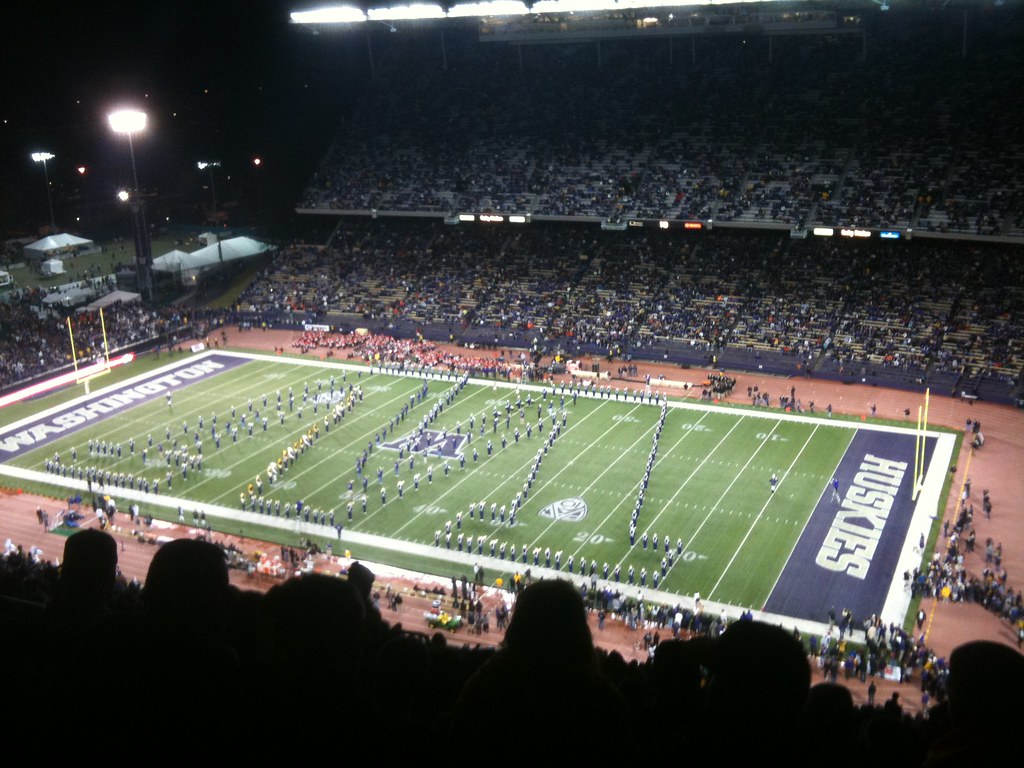
While “misery” may be a bit facetious to describe a program and fanbase which just experienced its most successful season in recent memory, there is little doubt that nothing has gone UW football’s way since kicking off the national championship game on January 8th. In the span of a week, UW lost the national championship game, its coaching staff, and countless starters on offense and defense—with many lost to the depths of the “transfer portal.” Even a few years ago, this turnover would be completely unheard of—but that is the current reality of collegiate athletics. However, recently proposed Washington State legislation may make it easier for UW to recruit and retain prospective student athletes (PSAs) in the Name, Image, and Likeness (NIL) and transfer portal era. 

Payment to the Players 

“Nowhere else in America can business get away with agreeing not to pay their workers a fair market rate on the theory that their product is defined by not paying their workers a fair market rate . . . . The NCAA is not above the law.” Justice Kavanaugh’s concurring opinion in NCAA v. Alston (2021) signaled to the NCAA that they would likely lose any future antitrust challenges to their longtime ban on student athlete compensation. While the Alston decision was limited to education-related non-cash compensation, the NCAA quickly recognized the changing landscape and announced an interim NIL policy just nine days after the decision’s release. 

To the distress of ex-collegiate athletes like Reggie Bush, the interim policy now allows student athletes to receive cash or non-cash compensation for the use of their NIL through activities like endorsements, signings, and appearances. But NIL agreements must still be based on the market value that each player brings to the deal—ostensibly prohibiting NIL agreements that are “pay-for-play” (compensation solely for playing sports at the university) or compensation that is contingent on enrollment at a particular school (known as a “recruiting inducement”). 

The “Wild West”

Due to NIL and the introduction of the transfer portal in 2018 —which eliminated the requirement for players to serve a “year of residence” before becoming eligible after transferring schools—student athletes now have agency to move to schools where they will both play and earn more. Facilitated mostly through what are known as “NIL Collectives”—independent entities that pool the money of two or more influential supporters or alumni of certain institutions—student athletes now have legal access to the type of money that traditionally was reserved only for professionals (schools themselves are still prohibited from directly paying athletes for their NIL).

As House subcommittee chair Gus Bilirakis (R-Fla.) stated during an NIL hearing on January 18th, “the sudden transition to NIL has enabled a wild west environment where pay-for-play is rampant.” By NCAA rule, collectives are not only disallowed to contact or issue recruiting inducements to PSAs, but they also cannot communicate with coaching staffs or institutions regarding recruiting lists or watch lists. Florida State University’s football program, for example, was penalized by the NCAA earlier this year for coordinating an improper recruiting inducement worth $15,000 per month to a PSA. But despite reports of pervasive rule breaking by coaches, athletes, and collectives alike, this has been the only significant punishment dished out by the NCAA regarding NIL rules. As one anonymous Pac-12 football coach stated regarding conversations about pay-for-play deals with PSAs and their parents, “We’ll tell them those are against NCAA rules, but you know how it works… it’s basically NFL free agency money.” Colorado football coach Deion Sanders even publicly asserted in an interview “Fifty [thousand]!?…Fifty will get you a walk-on these days. … [A]in’t never seen nothing like it.” NCAA leaders have cited lack of evidence for not pursuing more cases concerning NIL violations. In reality, it is likely the murkiness of the interim policy, combined with the lack of a federal law and inconsistent state law, that makes it almost impossible for the NCAA to enforce its own laws on pay to play and improper inducement. 

Ongoing Development of Federal and State NIL Laws

During the aforementioned January 18th hearing, Congressman Bilrakis proposed the FAIR College Sports Act, aiming to federally address the compliance and standardization issues in NIL by creating a nongovernmental oversight board that would dictate NIL rules. But despite some support by current student athletes, it also received significant pushback via the testimony of current UCLA quarterback and NIL star, Chase Griffin. For now, standardized federal legislation may still be a long way off. 

While the NCAA announced proposed changes to the NIL interim policy to also address these issues, to date, collegiate institutions have mostly been guided by their own state’s laws for NIL compliance. Thirty-two states (not including Washington) have passed legislation largely modeled after California’s “Fair Pay to Play Act” passed two years prior to the Alston decision. The advantage of these laws in concurrence with NCAA interim policy comes down to one crucial aspect—many of them allow school personnel to work directly with students to facilitate deals without running afoul with state ethics laws. This provides a significant advantage in both recruiting and player development, as it allows coaches and athletics departments to “basically barter on behalf of athletes.” 

Proposed Washington State Bill

In a tongue and cheek opening to a hearing for his proposed bill on January 16th, UW grad and State Senator Javier Valdez communicated the concern voiced to him by UW and WSU athletics administrators by saying, “[a]s much as I would love to have a bill about the transfer portal . . . this is actually about NIL.” The bill would amend the current ethics guidelines to allow state employees to directly communicate with student athletes about NIL opportunities and help organize NIL deals with collectives like Montlake Futures. Testifying in support of the bill, UW Chief Compliance Officer Kiley Strong noted, “[W]e want to avoid putting our student athletes at a disadvantage and to ensure that recruits want to continue competing at schools in Washington State.” During the hearing, UW reported that in 2023, 150 students disclosed NIL deals to the school. 

Future of NIL?

NIL rulemaking and regulation is clearly still in flux. Countless issues all deserve their own debate: the legality of 501(c)3 NIL collectives; whether these unprecedented payments mainly to male athletes comply with Title IX; predatory NIL deals; the effect of transferring on preexisting NIL contracts; and whether student athletes should be considered employees. (e.g. a recent University of Alabama sophomore had to forfeit $1.5 million in PGA tour winnings due to his “amateur” status). The NCAA, the States, and the federal government all must wrestle with these problems going forward.One thing is certain: all student athletes deserve the opportunities that NIL presents. They pour their time, effort, and heart into representing their respective institutions. To quote Chris Mulick, the Washington State University representative who testified in support of the bill: “The star quarterback will always be found, but the tennis player may not be, and we think . . . this bill could really help us grow into that.” As of now the proposed legislation has passed to the Rules Committee for a second reading. 

Time to Face the Music: A.I. Music Copyright Infringement Battle Makes It to Court

By: Mackenzie Kinsella

AI-generated music has been a point of contention in copyright law since the song, “Heart on My Sleeve,” performed by an AI-generation of Drake and The Weeknd’s voices. The song acquired millions of listens on TikTok, Spotify, Apple Music and other streaming platforms before it was taken down due to the requests from Universal, Drake and The Weeknd’s label. “Heart on My Sleeve” became an alarming indication of potential copyright and right of publicity issues in music surrounding the use of AI. After the release and the pressure to take down this song, Universal urged different platforms to stop AI companies from using these AI generated tracks, and even have gone so far as to figure out different legal avenues to prevent the use of AI generated music. Publishers and streaming platforms could argue that AI companies have infringed on their copyrights, however, a fair use defense is anticipated to be used by AI companies and users. 

Now, AI is problematically being used to create lyrics to iconic songs like Katy Perry’s “Roar,” Gloria Gaynor’s “I Will Survive,” and the Rolling Stones’ “You Can’t Always Get What You Want.” In response, Universal and other music publishers have filed a lawsuit accusing AI-company, Anthropic PBC, of “training” its AI models to mimic copyrighted music. 

Universal Music Group (UMG) v. Anthropic 

Universal Music Publishing, Concord and ABKCO have sued Anthropic in a Tennessee federal court for exploiting lyrics that each music publisher controls in the training of Anthropic’s AI chatbot, Claude 2. UMG alleges that because Claude 2 generates identical or nearly identical copies of copyrighted lyrics, Anthropic violated their publishers’ right by using lyrics from at least 500 songs without any licenses. UMG v. Anthropic and other similar cases signal a point of contention over the copyright obligations of AI companies. Music publishers, like other copyright owners, argue that tech companies have to gain permission to use copyright protected works for training AI models. Anthropic is accused by publishers of profiting from infringement and removing copyright management information from Claude 2’s output. Furthermore, UMG claims that there is already an existing market for licensing copyrighted works, currently being exploited by  music streaming platforms, like Spotify, that operate licensing artists’ work. 

UMG has  asked the court to issue a preliminary injunction for Anthropic’s current AI model to prevent it from generating outputs that disseminate UMG’s lyrics and for the mentioned lyrics to not be used in training any of Anthropic’s future models. Without a preliminary injunction, Anthropic’s alleged copying and continued use of Claude could cause irreparable harm in regard to the licensing market for lyrics, and could erode the relationships between publishers, licensees, and the songwriters these music publishers represent

What This Case Means for AI and Copyright Law Today?

The decision in UMG v. Anthropic could change the entire landscape of music copyright law because it is one of the first cases that addresses the use of song lyrics in AI models. Whatever the outcome, the case could set a precedent for other AI cases. A win for Anthropic could be a substantial win for AI as a whole industry and would establish a precedent against this type of AI copyright regulation within the music industry. Furthermore, a court finding in favor of Anthropic could have the potential to establish that “fair learning,” the fair use of copyrightable materials for sake of training AI models to allow for the betterment of AI development, is appropriate. However, if the court finds in favor of UMG, the ruling could act as a signal for AI developers to become more cautious in their treatment of copyrighted material without licensing. Anthropic, who has financial partnerships with Google and Amazon, could be used as an example for consequences of AI development. Google and Amazon have invested $300 million and $4 billion, respectively. Thus, the outcome of this case may affect how major tech companies evaluate their investments in AI startups.