Move Fast and Break Things: Ethical Concerns in AI

By: Taylor Dumaine

In Jurassic Park, Dr. Ian Malcolm famously admonished the park’s creator by saying “your scientists were so preoccupied with whether or not they could that they didn’t stop to think if they should.” Technological advancement for the sake of advancement alone ignores the genuine negative effects that advancement could cause or contribute to. The negative externalities of technological advancement have often been overlooked or ignored. There is also often a reliance on federal and state governments to regulate industry rather than self-regulation or ethics standards.  That reliance has become especially true in the AI and generative AI spaces. The lack of government regulation in AI technology is far outpaced by its rapid development, hindering the government’s ability to address ethical issues adequately.

Relying on government regulation is a copout for large tech companies. Congress’s record on technology regulation is poor at best, with most bills failing to become law and those that do being insufficient to effectively regulate. The United States still does not have a national privacy law and there is little political will to pass one. The increasingly octogenarian makeup of Congress does not have the best track record of actually understanding basic concepts in technology let alone increasingly complicated technology, such as AI, they are tasked with regulating. During Senate testimony regarding the Cambridge Analytical scandal, Meta CEO, Mark Zuckerberg, had to explain some pretty rudimentary internet concepts.

Earlier this year, Open AI CEO, Sam Altman, called for government regulation of AI in testimony before Congress. Altman also carries a backpack around that would allow him to remotely detonate ChatGPT datacenters in the scenario where the generative AI goes rogue. While by no means a perfect example of ethics in the AI space, Altman seems to at least be aware of the risks of his technology. Altman relies on the federal government to regulate his technology rather than engaging in any meaningful self-regulation.

In contrast to Altman, David Holz, Founder and CEO of Midjourney, an image generation AI program,  is wary of regulation, saying in an interview with Forbes, “You have to balance the freedom to do something with the freedom to be protected. The technology itself isn’t the problem. It’s like water. Water can be dangerous, you can drown in it. But it’s also essential. We don’t want to ban water just to avoid the dangerous parts.” Holz highlights that his goal is to promote imagination and is less concerned with how his goal may impact people so long as others benefit. This thinking is common in tech spaces.

 Even the serious issues in generative AI, such as copyright infringement, seem almost mundane when faced with facial recognition tools such as Clearview AI. Dubbed “The Technology Facebook and Google Didn’t Dare Release,” these facial recognition tools have the disturbing ability to recognize faces across the internet. Clearview AI specifically has raised serious Fourth and Fifth Amendment concerns regarding police use of the software. Surprisingly, the large tech companies, Apple, Google, and Facebook, served as de facto gatekeepers of this technology for over a decade due to their acquisitions of facial recognition technology, recognizing the dangers of this technology. Facebook was subject to a $650 million lawsuit related to its use of facial recognition on the platform.  Clearview AI’s CEO Hoan Ton-That has no ethical qualms regarding the technology he is creating and marketing specifically to law enforcement. Clearview AI is backed by Peter Thiel who founded Palantir, which has its own issues regarding police and government surveillance. The potential integration of the two companies could result in an Orwellian situation. Therefore, Clearview AI represents a worst-case scenario for tech without ethical limits, the effects of which have already been disastrous.

Law students, medical students, and Ph.D. students are all required to take an ethics class at some point. Many self-taught programmers do not incorporate ethics classes or study into their learning. There are very real and important ethical concerns when it comes to technology development. In an age, culture, and society that values advancement without taking the time to consider the negative ramifications, it is unlikely that society’s concern over ethics in technology will change much. In a perfect scenario, government regulation would be swift, well-informed, and effective to protect against the dangers of AI. With the rate of technological innovation, it is hard to stay proactive in the ethics space, but that does not mean there should be no attempt to. Arguing for a professional ethics standard in computer science and software engineering is not without its own serious problems and would be almost entirely impossible to implement. However, by creating a culture where ethical concerns are not just valued but considered in the development of new technology, we can hopefully avoid a Jurassic Park scenario.

Distress in the West: The Collapse of the Pac-12 Conference

By: Mayel Andres Tapia-Fregoso

2023 marks the end of the 108-year legacy of the Pac-12 athletic conference as we know it. One by one, the conference’s top athletic programs have abandoned the conference to secure their own financial futures after a decade of risky network gambles, scandals, and significant losses in revenue. 

The Pac-12 Cements its Power Five Status

In July 2009, the presidents of the Pac-12 (known as the Pac-10 until 2011) agreed to a 11-year contract with Larry Scott to serve as the commissioner of the Pac-10. Scott took control of the Pac-10 after presiding over a successful six-year run as the Women’s Tennis Association’s CEO. The Pac-10 hired Scott with the goal of boosting its national brand and securing a television contract comparable to those obtained by rival Power Five conferences, the most well recognized and highest earning athletic conferences in the National Collegiate Athletic Association (NCAA). In 2008, another Power Five conference, the Southeastern Conference (SEC), had agreed to a $2 billion agreement with ESPN to exclusively broadcast football and men’s and women’s basketball over 15 years. Meanwhile the Big Ten conference, in partnership with Fox, launched the “Big Ten Network.” To capitalize on the rapidly growing market for college sports, the Pac-10 desperately needed to expand beyond the west coast to bring its content to viewers across the nation. However, Scott had an even more ambitious plan for the Pac-10: securing a lucrative television deal and starting the Pac-10 network, modeled after the Big Ten Network, but owned entirely by the conference.

 In 2010, the Pac-10 announced the additions of Colorado and Utah, the top athletic programs in the mountain states. Scott hoped these acquisitions would expand the conference’s reach across nine television markets and increase its annual television earnings. In 2011, the new rebranded Pac-12 agreed to a record setting 12-year, $2.7 billion television contract with ESPN and Fox, earning the conference approximately $225 million per year. Fox and ESPN split the rights to most of the Pac-12’s football and men’s basketball games. Scott preserved the remaining football and men’s basketball games, non-revenue sports and Olympic sports for his newly created Pac-12 Network. Unlike the Big Ten Network, who shared its ownership with Fox, the Pac-12 was the sole owner of its network. By choosing not to partner with a major network like ESPN or Fox, Scott relied heavily on his ability to sell the Pac-12’s limited product to cable providers like DirecTV and Comcast. After this deal, it appeared like the Pac-12 would become the nation’s next marquee conference.

Some Gambles Just Don’t Pay Off

When the Pac-12 agreed to the record-setting contract with ESPN and Fox, the Pac-12 jumped from fifth among conferences in television revenue to first. The Pac-12 Network even retained full ownership of its own network with the promise that it would deliver its sports content to subscribers across the nation and enhance the schools’ ability to recruit athletes at the national level.

When the Pac-12 Network launched in 2012, Scott asked cable providers to pay $0.80 cents per subscriber. All providers except one agreed to Scott’s terms. DirecTV, one of the nation’s largest television carriers with over 20 million subscribers, two million in southern California alone, refused to pay Scott’s asking price. At the same time, the SEC member schools began to reap the benefits of their significant investment in their football programs, resulting in seven consecutive national championships from 2006 to 2012. Building off their success, in 2014, the SEC partnered with ESPN to launch the “SEC Network.” The SEC’s success on the field and its partnership with ESPN also allowed it to charge providers like DirecTV $1.30 per subscriber

Meanwhile the Pac-12’s product, and with it, its leverage over DirecTV suffered. A Pac-12 school has not won a Football National Championship since USC in 2004 or won the NCAA college basketball tournament since Arizona in 1997. From 2017 to 2022, the Pac-12 schools spent an average of $681,404 on football recruiting expenses, behind the Big Ten and SEC who spent $798,122 and $1,176,055, respectively. To add insult to injury, several schools became embroiled in recruiting violations, and other scandals like the infamous Reggie Bush scandal, that led the NCAA to hand down numerous sanctions and postseason bans against Pac-12 schools. 

In 2014, the Pac-12 Network reached 11 million paying subscribers. In comparison, the Big Ten and SEC Networks reached 57 million and 67 million households, respectively. Without DirecTV subscribers, the Pac-12 could not compete with the other conferences within its own markets including the lucrative Southern California market, home to two Pac-12 schools: UCLA and USC. 

While the Pac-12 struggled, Larry Scott’s salary continued climbing, reaching $5.4 million in 2019, making him the highest-paid commissioner in the NCAA. During the 2018-19 season the SEC, in partnership with ESPN, distributed $45 million to its member schools. The Big Ten, in partnership with Fox, distributed $55 million to its schools while the Pac-12, without a partner, distributed $32 million to its schools. Despite all these troubles, the worst was yet to come. The Covid-19 pandemic had serious financial consequences for the Pac-12’s members. Schools like Arizona and Utah reported losses in excess of $60 million, causing sports programs to be discontinued, significant budget cuts, and layoffs. In 2021, amid these financial troubles, the Pac-12 parted ways with Larry Scott. With the current television contract expiring after the 2023 season and a breakdown in negotiations with DirecTV, the situation in the Pac-12 became dire. 

Abandon Ship!

It became clear to many member schools, especially those in the largest television markets, that remaining in the Pac-12 conference was no longer in their best interest. On June 30 2022, UCLA and USC, two flagship members of the Pac-12 conference for almost a century, announced they would be joining the Big Ten conference effective after the 2023 football season. With the loss of the Pac-12’s largest market, Southern California, it was only a matter of time before the conference collapsed. Oregon, Washington, California, Stanford, Colorado, Utah, Arizona, and Arizona State have all left the conference to join other Power Five conferences beginning in 2024. OSU and WSU are the only remaining members of the Pac-12. In response, OSU and WSU have filed a lawsuit against the Pac-12 to strip the 10 departing member schools’ voting rights, pursuant to the Pac-12’s bylaws. OSU and WSU hope to gain control of the conference’s remaining assets, valued at $42.7 million as of 2022, to prevent the departing schools from taking the Pac-12’s reserve funds on their way out. OSU and WSU hope to lure members of lesser conferences by offering them membership in Power Five conference and money from Pac-12’s remaining assets in hopes of rebuilding the gutted conference. However, a recent lawsuit, requiring the Pac-12 to pay $72 million to Comcast due to conference executives overreporting its subscriber numbers to Comcast, will likely exhaust most of the conference’s assets.

Larry Scott and the Pac-12 elected to launch its network, without a partner, in hopes of maximizing profits. Instead, the Pac-12’s legacy will be mired in scandal, greed, and failure to its schools, fans, and most importantly, its student athletes. 

Rights of the Dead: Human Remains and Museum Collections

By: Sarah Fassio

There are 255 human brains in the Smithsonian’s Natural History Museum storage facility in Maryland. In Pennsylvania, the Penn Museum housed over 900 human skulls as recently as 2021. The American Museum of Natural History in New York hosts some 12,000 human remains. These collections, amassed throughout the nineteenth and twentieth centuries, represent the non-consensually acquired human remains of historically exploited groups—particularly Indigenous populations and people of color—and are a tangible legacy of white-supremacy pseudoscience in the United States.  

It is an almost cliché tableau: to think of a museum of natural history, anthropology, or medical science is to envision carefully curated exhibits of skeletons, cuts of brains, and jars of preserved organs. Such displays often disquietingly blur the distinction between an impartial, academic teaching tool and the actual body of a real person. They also raise questions about who is being displayed. How did these human remains come to be displayed or acquired by museums and academic institutions?  

There are, of course, those who donated their body to science—a practice that is still around today. The University of Washington has the Willed Body Program, a whole-body donation opportunity for individuals from Washington State. Dozens of universities across the country have similar programs. However, whole-body donation in the twenty-first century is a process laden with paperwork and legal boundaries. The Mayo Clinic, for example, requires the prospective donor themselves sign an Anatomical Bequest Consent Form. Signatures from an individual’s medical power of attorney or guardian are insufficient for this process—and if a next of kin opposes the donation, it will not occur. 

Historically, such formalized donation schematics did not underpin some of the grander museum collections of human remains nor was their inception so necessarily scientific.  Viewed today as discredited pseudoscience, many collections of human remains were predicated on proving the principles of white supremacy and anatomical racism: the belief that white superiority was due to structural differences between races. White scientists robbed graves, exploited those too poor to afford proper burials, or outright stole bodies from Black and Indigenous communities. Many immediate family members were unaware their loved ones’ bodies were held by museums. Many are still unaware.

Faced with such a horrifying past, what can be done to move forward? Are there currently legal structures aimed at encouraging museums to properly confront their human inventories?  

The law is not entirely silent on the issue of misplaced human remains. One avenue for recourse for some Indigenous communities is the Native American Graves Protection and Repatriation Act of 1990 (NAGPRA). NAGPRA is concerned with items of Indigenous cultural significance, covering things like human remains and funerary or sacred items. It provides a process for federal agencies and museums to repatriate or transfer those pieces back to their rightful homes.

But the more unfortunate truth is that there are not comprehensive laws aimed at ameliorating the ugly collection processes of yesterday’s anatomical racism. The Smithsonian, for instance, requires those with a personal interest or legal right to the remains to submit a formal request. But doing so remains difficult, if not impossible, since many living relatives are unaware these collections even exist—much less that their lineage is an unwilling part of it. The American Museum of Natural History, for instance, holds records naming the individuals to whom the human remains once belonged, but declined as recently as this month to release a list.

Ultimately, change and repatriation seems largely left up to the museum institutions themselves, often motivated by public pressure and activism. The Penn Museum’s recent treatment of the Morton Cranial Collection—900 human skulls obtained by early-nineteenth-century scientist Dr. Samuel Morton for the purpose of articulating racial differences—is one encouraging example of visible change.

Beginning in 2020, the Penn Museum formed an evaluation committee, published a report on contributions to the Morton Collection by Black Philadelphians, and recommended burial and commemorative actions. Among the recommendations were an interfaith memorial service, the erection of a permanent remembrance marker on the University of Pennsylvania’s campus, and participation in a community-led transparency forum. 

In February 2023, the Philadelphia Orphans’ Court granted the museum’s request to respectfully bury the cranial remains of twenty individuals in a historic African American cemetery. For those, at last, a final rest.

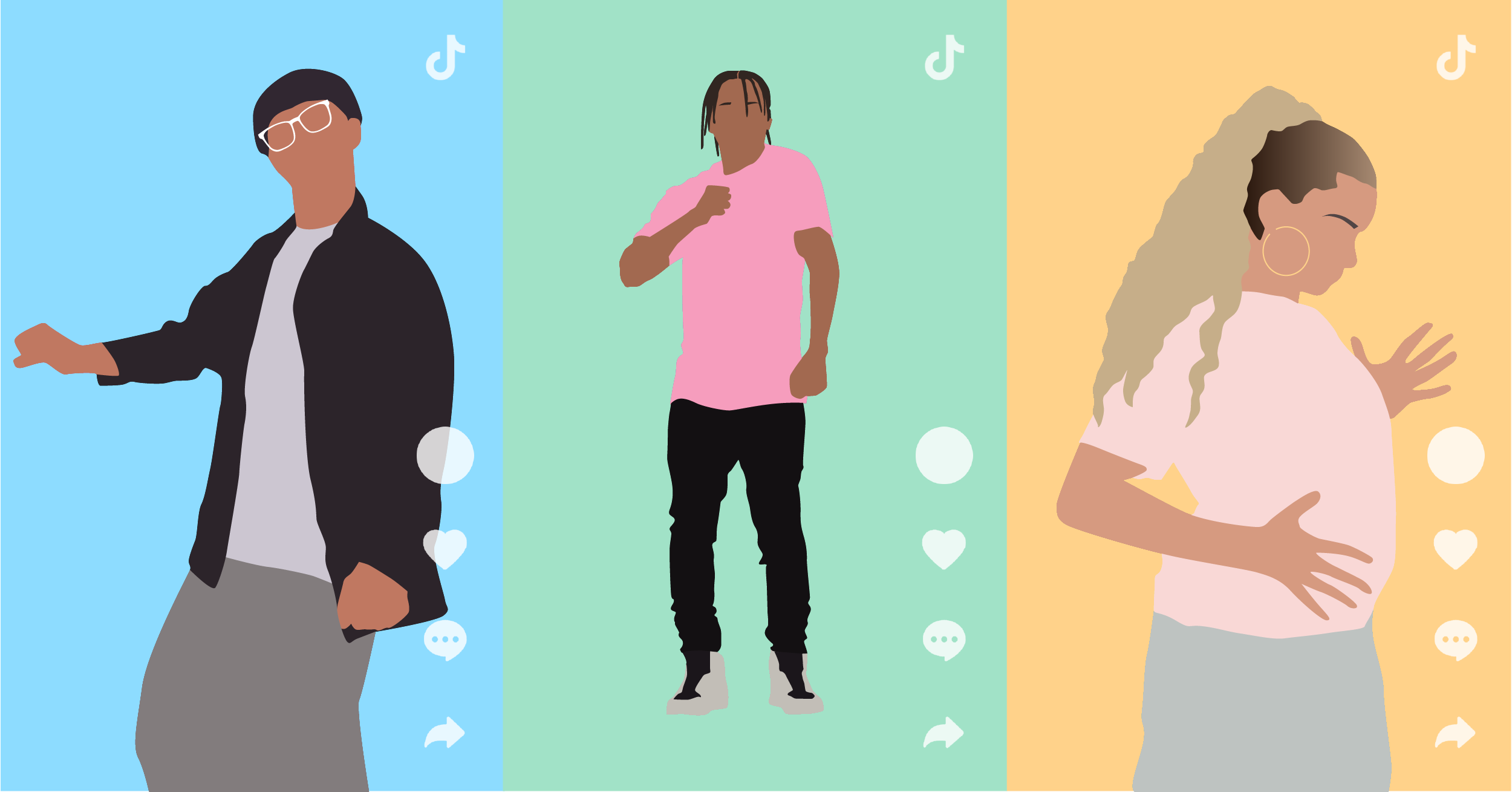
So You Think You Can Dance? TikTok and the Appropriation of Viral Choreography

By: Sofia Ellington

Since 2020, viral TikTok dances have helped promote some of the biggest hit songs in the music industry. Artists and record labels have made millions on increased streams of those hit songs. TikTok itself is valued at around 65 billion dollars. However, most dance creators on the platform retain no rights in their choreography, meaning that they do not profit directly off the licensing or use of their dances that help make both the music and TikTok popular. Black, Indigenous, People of Color (BIPOC) artists are behind some of the most popular viral dances and are particularly affected by social media platforms that make it difficult to receive recognition and publicity for their work. However, the crux in extending protection to TikTok dances through a Western Intellectual Property (IP) regime is that videos are meant to go viral through large scale replicating and copying, not just through users merely viewing them. Registering those dances could restrict and change the nature of interactive sharing on the platform, which suggests that copyright may not currently be suited to the demands of modern social media platforms. Artists will want to look to alternative regimes, such as Indigenous IP, as inspiration for how to protect their dances while leaving non-commercial sharing unrestricted.

TikTok has an Accreditation Problem 

BIPOC artists are behind some of the most popular viral dances to songs such as “Savage” and “WAP,” but TikTok’s algorithm, which shows undated videos in an endless stream detached from chronology, makes it almost impossible to uncover the original choreographer. Due to this accreditation difficulty, many dances go viral once a famous, oftentimes White, creator on the app posts a video of themselves doing the dance. The publicity for the dance then focuses on the already famous creator instead of the choreographer who originally created the dance. 

It was not until months after rapper K Camp song’s “Lottery” inspired the viral dance “Renegade, ” that the original creator, 14 year-old Jalaiah Harmon, was correctly credited in an article by The New York Times. Originally, the dance was accredited to two White TikTok creators, Addison Rae and Charlie D’Amelio. Before the New York Times Article was published, Rae was invited on The Tonight Show to perform some of the dances that made her famous, including “Renegade.” She failed to shout out any of the original creators of the dances, leading to backlash. The hashtag “BlackTikTokStrike” trended in 2021 to draw attention to the centrality of Black artists to the platform as well as rampant appropriation and lack of credit. 

The Hegelian personhood theory of property ownership posits that our autonomy and personality is intrinsically tied to what we own and the outputs of our creative expression. Lack of protection for these BIPOC artists, whose work is appropriated and uncredited on TikTok, is harmful, not just to their bottom line, but to the sense of control over their autonomy and personhood. Even though the unfairness of her uncredited dance was not lost on Harmon, she told the New York Times that she has continued to choreograph because ultimately, “it makes me happy to dance.” 

Can Copyright Protect TikTok Dances?

Whether Copyright can protect viral dances is more complicated than a simple yes or no. Copyright protection is available for original works of authorship that are fixed in a tangible medium and fall into a list of non-exhaustive categories in the Copyright Act of 1976.

The fourth category includes choreographic works, which are defined by the Copyright Office as, “the composition and arrangement of a related series of dance movements and patterns organized into a coherent whole.” Most TikTok dances easily meet this definition, but copyright requires that choreographic works amount to more than social dance steps or simple routines, an additional hurdle for TikTok dances to clear. 

The prohibition on copyrighting social dances or simple routines is well settled and informed by the utilitarian goal of copyright in the Copyright Clause of the U.S. Constitution, which states that Congress has the power to secure copyrights “to promote the progress of science and the useful arts.” Copyright tries to balance creating incentives for creation without preventing the free flow of ideas. It would be antithetical to the goals of copyright to allow one person to lock up simple steps or the building blocks of dance and prevent future artists from using those ideas to progress expression of the art form. 

While most complex TikTok dances will rise above the level of a mere social dance and be eligible for protection by meeting the statutory elements of choreography, found in the United States Copyright Office’s Circular 52, copyright must balance incentivizing new work without chilling the ability of other creators to build upon that work if TikTok is to remain an interactive platform. TikTok relies not just on viewership, unlike past song and dance media platforms such as MTV, but on participation in the content which presupposes copying and replication. This built-in assumption is obvious through the apps tooling which permits a user to “Duet” or “Stitch” other creators’ videos to their own. 

Shayné Abram and Zhané Miller went viral in 2020 for their choreography to the Remix of Megan Thee Stallion’s song “Savage,” and are in the process of applying for copyright protection for their moves. Their concern is protecting themselves against commercial exploitation, not dance challenges on TikTok. If protecting against the commercial use, and not the social use, of dances is the goal, alternative IP regimes may offer inspiration for a system of protection without the potential downside of chilling creative expression.  

Indigenous IP 

The 2004 broadcast of the Grammys featured a performance by OutKast’s Andre “3000” singing “Hey Ya!” Outcast was joined onstage by dancers wearing Indigenous “symbols usually reserved for ceremonial purposes, like feathers and war paint.” Additionally, the introduction to the performance appropriated a sacred Navajo/Diné  “Beauty Way” prayer which is used for sacred ceremonies and considered improper for use in entertainment. The incident left many questioning if federal laws could effectively prevent offensive appropriations of non-tangible sacred property. 

Congress has passed statutes such as The Native American Graves Protection Act and the Indian Arts and Crafts Act to protect Indigenous tangible cultural property. However, Western IP laws are often too narrow to protect intangible Indigenous property, such as song and dance. Instead, those forms of property are a continual collaboration and conversation in the community, not the work of a single author— one of many reasons that they are ineligible for copyright. 

Many Indigenous nations have utilized their sovereignty to create tribal laws that reflect a wider conception of property ownership that protects sharing sacred customs among the tribe while prohibiting improper and exploitative uses. While these laws are not binding on courts outside of the reservations’ jurisdictions, using tribal laws outside of the tribal context can influence courts to respect alternative means of recognizing property. A wider conception of property that is recognized in Indigenous IP could be an inspiration for how the current copyright system can evolve to protect against commercial appropriation while still allowing for the social and communal sharing of dance. 

Toward a Better Platform 

For creators on TikTok, there are huge monetary and personal incentives for receiving credit for choreography. An increasing desire to gain copyright over these dances is important for BIPOC creators in order to reap the economic benefits of their labor. However, fear of enforcement for copying and sharing these dances could lead to a chilling of expression on the platforms that made them popular. Creating a space for communal sharing and participation in the expression of these dances makes TikTok a powerful platform. Social media companies should feel incentivized to create a more rigorous system for accrediting and certifying original creators to prevent copyright enforcement mechanisms from dampening participation and engagement. There is value in looking outside of the traditional IP system, whether to Indigenous IP or to alternative licensing schemes, to work together to create platforms that encourage community sharing but prevent the appropriation and exploitation of individual users’ content. 

Plugging-in Your EV? More Like Plugging-in Your Data.

By: Caroline Dolan

As global warming and ecological degradation progress, sustainable technology and infrastructure is being implemented to remediate and prevent aggravation. However, electric vehicles (EVs), which are an effective way to curb carbon emissions and boost green efforts, pose a unique set of privacy risks every time we plug-in.

The data transaction: Plugging-in

EVs are dependent on EV chargers and for the majority who do not have the capacity to charge at home, public chargers are a necessity. Public EV chargers are essentially an Internet of Things (IoT) device that facilitate the transaction of data for kilowatts. Information involving pricing, session date, time, duration, and power patterns is collected and sent to the operator’s network. Furthermore, most chargers are affiliated with a mobile-app or use a radio-frequency identification card (RFID) implicating your phone as another data source sharing payment information, names, emails, IP addresses, and internet history. In order for an app to make the consumer experience more convenient and recommend the nearest charger, location identification is necessary. However, Certified Information Privacy Professionals have reported how this data can be used to pinpoint your location and predict your typical driving route. 

Sharing and collecting this information can make life a lot more convenient and does not seem to pose any imminent risks of harm. However, every public charger is connected to a grid and whether it is a closed or open network, there is always a risk of ransomware attacks, ID fraud, and grid damage. The Cybersecurity and Infrastructure Security Agency defines ransomware as “a form of malware designed to encrypt files on a device, rendering any files and the systems that rely on them unusable. Malicious actors then demand ransom in exchange for decryption.” As described by privacy professionals, closed networks relate to a certain set of manufacturers who have discretion and unrestricted authority to use the data and create profiles; open networks tether multiple manufacturers which decreases each manufacturer’s control but gives more stakeholders access increasing your data’s vulnerability. In other words, while there is not an imminent risk of harm, there is a perpetual risk.

An EV economy

As the Wall Street Journal reported, “Modern vehicles are effectively connected computers on wheels. They’re able to collect a wealth of information via built in apps, sensors, and cameras, which can monitor people both inside and near the vehicle.”

Whether the data originates from the user’s personal device connected to the EV or solely through the charging equipment, the data is ripe for hackers, car manufacturers, insurance companies, and emergency service providers. While such data can help urban planners determine the optimal areas for development and economic profit, it can also inform insurance companies on how to set rates based on driving risk and behavior. More importantly, the Wall Street Journal has recognized that if data brokers obtain and sell the data, even with personal information redacted, movements and habits are individualistic and may provide insight into one’s identity.

Well-intentioned green policy may be getting ahead of itself

President Biden’s goal of boosting U.S. EV production is being achieved through his Made-in-America EV charging network initiative which is supported by the Department of Transportation’s National Electric Vehicle Infrastructure (NEVI) program. NEVI is distributing $5 billion into various EV programs to create a coast-to-coast network of EV chargers and electrify the highway system. However, these good intentions may be putting the cart before the horse since privacy risks of EVs have yet to be adequately and uniformly regulated.

Notably, the Federal Highway Administration (FHWA) has imposed a set of requirements on NEVI fund recipients stated in its “final rule.” The final rule consists of network connectivity requirements that ensure secure payment processing and minimize the amount of personal information that companies may retain. While these efforts seek to safeguard data and promote transparency, the final rule essentially requires merely “appropriate” data protection and gives states the discretion to determine the means. 

California is one state that is addressing the privacy concerns raised by the EV boom. California’s newly approved Electric Vehicle Infrastructure Deployment Plan cites the state’s Senate Bill 327 which requires a manufacturer of a “connected device” to equip the device with reasonable security features based on the nature and function of the device. From a legal perspective, the reference to SB-327 indicates that EV chargers may constitute a “connected device” and therefore warrant reasonable and appropriate security features and protection. 

However, state regulations are not an adequate shield from the broad destruction of a cyberattack. Therefore, some EV charger companies like ChargePoint have adopted internal regulations and earned certifications from the International Organization for Standardization (ISO) based on its comprehensive  information security and cyber-risk management. ChargePoint is a predominant U.S. company that supplies EV charging stations across North America as well as Europe and is therefore subject to Europe’s General Data Protection Regulation (GDPR). The GDPR controls the collection, use, and storage of personal data as well as the conduct of non-EU companies that possess the data of EU residents and citizens. While it seems unlikely that the U.S. will implement a federal law akin to the GDPR, California and ChargePoint may prompt other states and companies to implement regulations that supplement FHWA’s final rule.

Will supporting EVs come at the cost of our privacy?

While it is difficult to encourage people to undertake the risks posed by EVs, even for the sake of curbing carbon emissions; the Earth is a finite resource and without it our privacy is moot. Therefore, people should not be discouraged from purchasing an EV or plugging-into a public charger. Rather, the government and individuals should be compelled to hold corporations accountable for how data is stored and used so that we may plug-in without fear. As the effects of global warming become more apparent, embracing corporate accountability and privacy protection is critical in order to keep up with the EV boom and conserve the Earth.