Are there double standards for women in collegiate and professional sports?

By: Aminat Sanusi

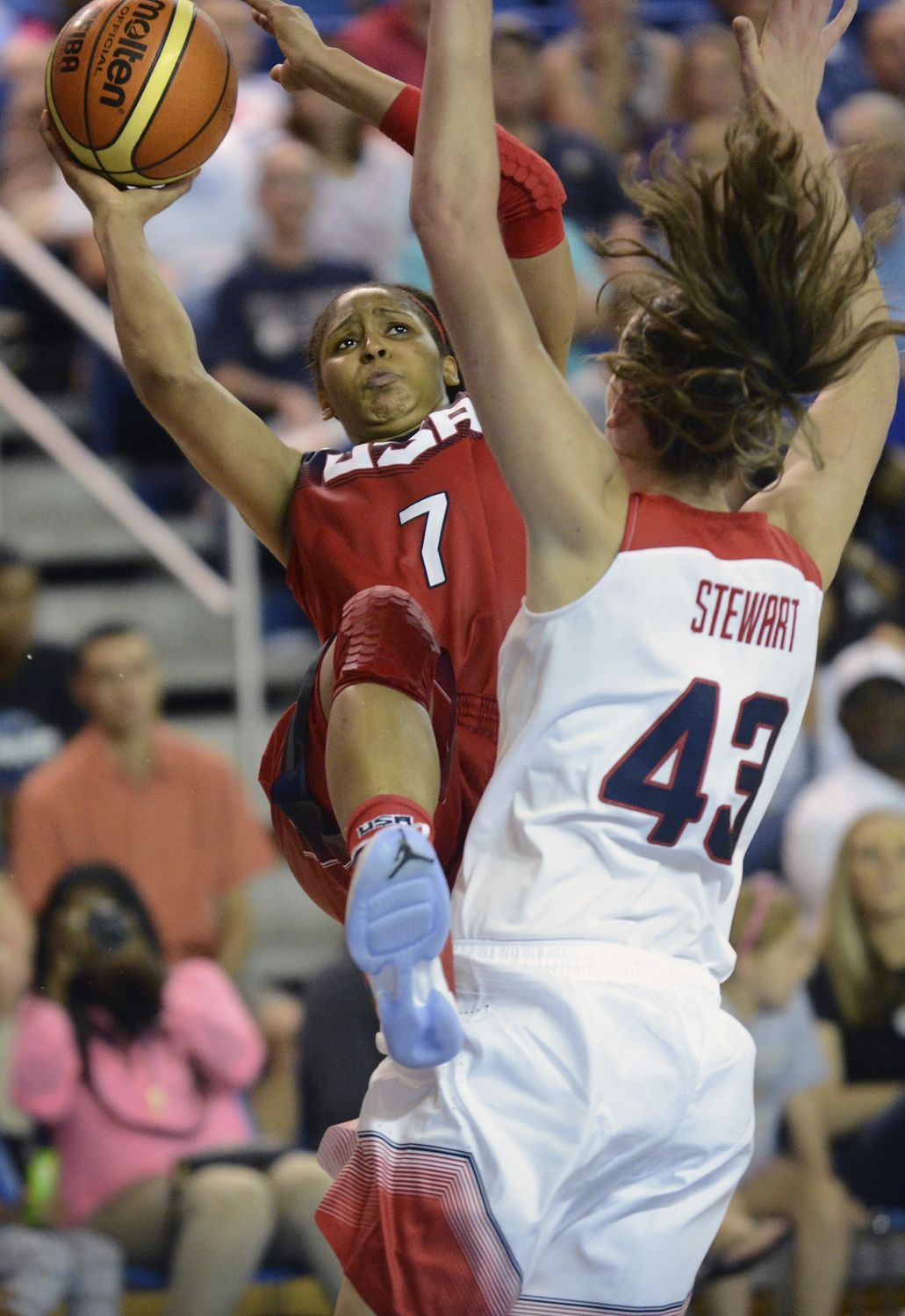
It is no secret that women in professional sports are paid significantly less than men in the same sports. For example, the average pay for a player in the NBA in 2022 was $5.3 million per year but the average pay for a player in the WNBA was $130,000 per year. Not only are there pay gaps between male and female athletes in professional basketball, but the same goes for professional softball players and other sports as well. In addition to receiving lower wages than their counterparts, women are also held to a double standard when it comes to the way they are expected to conduct themselves in the sports they play. Women are often seen as emotional when men are seen as passionate, or women are viewed as aggressive when men are just seen as playing the game.

          A couple of years ago Serena Williams, the greatest female tennis player of all time, received backlash for her actions during the US Open Tournament against Naomi Osaka. Serena accused the umpire of sexism and treating her more harshly than men. She ended up losing the tournament in part because she lost a point from destroying her tennis racket and calling the umpire a thief. Serena has even said herself that if she did some of the things male tennis players do on the court she would be in jail. She stated that she has heard men call the umpires worse names without being penalized for it. This shows that though Serena has won multiple championship titles, it does not change the fact that she was held to a double standard throughout her career as a tennis player. Although Serena is now retired, she continues to fight for women’s equality off the tennis court.

A recent example of double standards in women’s sports comes from the 2023 NCAA Women’s Basketball Championship. Louisiana State University (LSU) NCAA Women’s Basketball 2023 Most Outstanding Player Angel Reese received both praise and criticism for her response to First Lady Jill Biden’s invitation to have both LSU and the University of Iowa come to the White House for a visit. Angel called the First Lady’s invitation a joke because traditionally runner-ups never get invited to the White House, so the invitation to both teams diminished LSU’s historic win. When the First Lady’s press secretary walked back the statement, Angel stated in an interview that she did not accept her apology. Some viewers claimed that she should have accepted the First Lady’s apology and was being rude and disrespectful by not doing so. However, other viewers found it refreshing to see her stand up for what was right and not be afraid of what the naysayers may think of her. Throughout her season, Angel Reese was characterized as “ghetto”, “classless” and “disrespectful”. Many viewers that watched her play claimed she did not have respect for the game or good sportsmanship because of certain actions she would do on the court. Angel’s response was that she was always going to be her authentic self on and off the basketball court and they would not be calling her those names if she was a male basketball player. Many people took to social media post-championship game to show their support for Angel and call out her critics on their misogynistic and racist double standards.

Following the 2023 NCAA Women’s Basketball Championship game, United States Representatives Mikie Sherrill (NJ-11) and Maria Salazar (FL-27) introduced the Women in NCAA Sports (WINS) Act, a bipartisan bill that promotes and addresses fairness for NCAA women’s sports programming. The NCAA has made some corrections to the inequities between the men’s and women’s Division I Basketball Championships, but there are still inequalities that need to be fixed to ensure that women collegiate athletes have the full representation they deserve. The goal of the WINS Act is to achieve equity in women’s college sports. The Act will establish a sixteen-member congressional commission to comprehensively study inequality in the NCAA’s operation of tournaments and other programs where there are men’s and women’s divisions. The commission will include members appointed by House and Senate leadership with special consideration for individuals with expertise and experience in college sports. The commission will give its final report to Congress. The report must include three provisions. First, a comparison of how the NCAA operates men’s and women’s championship tournaments across all sports and other student-athlete programs with the respect to the treatment of the participating men’s and women’s teams. This includes evaluation of the equipment and venues provided for games and practices, lodging and transportation, media exposure and contracts, sponsors, and overall budgets. Second, would include studying the NCAA constitution, policies, and practices that affect gender equity between men’s and women’s college sports teams. Third, is an overview of federal government support for the NCAA and recommendations for improved federal oversight of the NCAA’s promotion of equality.

If the WINS Act is passed, it has the power to be very beneficial in changing the way people perceive women athletes’ behaviors. For example, collegiate women’s sports such as basketball, volleyball, and swimming would get the same amount of funding and media airtime as men’s collegiate sports. Also, there would be less pressure put on women college athletes like Angel Reese for playing the game how they want and being scrutinized for every little thing they do. It is important to note that the WINS Act would only apply to college-level sports and not professional athletes. Therefore, there is still more effort required and additional rules that need to be changed to be able to allow women professional athletes, like Serena Williams, to be able to play the games they love without being criticized or penalized for how they choose to play the game.

With this year’s NCAA Women’s Basketball Championship game being the most watched game in NCAA women’s basketball history, now is the perfect time to take advantage of the momentum and fight for a change in women’s sports.

Massive Tech Layoffs Negatively Impact H1-B Visa Workers and Immigration

By: Talia Cabrera

At the beginning of 2023, no one would have expected that the U.S. tech sector would be in the headlines for laying off thousands of tech workers. Tech giants like Google, Meta, Disney, and Microsoft were faced to deal with the consequences of inflation and potential recession after the pandemic. Even Amazon was not free from the wave of layoffs after their profits increased 220 percent during the first year of the pandemic. Collectively, the U.S. tech sector has laid off more than 150,000 workers. So why are we seeing tech companies layoff their workers? Rapid hiring because of fast growth without a care in the world about the implications of a workers life, especially H-1B visa holders.

Though layoffs are meant to alleviate the financial burden companies are left to deal with, they unfortunately disrupt a worker’s life with just a simple email. Workers who no longer have a career are now left to start over and find a new job during a time when companies are freezing hiring. Though these layoffs have had a negative impact on thousands of people, one group of workers is left in a unique position: US immigrants holding an H-1B visa.

The H-1B visa is a work visa that allows U.S. employers to sponsor a foreign worker to work in the U.S. for a specific period of time. These “specialized skill” visas are heavily used by large tech companies and have contributed to their success. For example, in 2021, Amazon was approved for over 4,800 H-1B visas, Miscroft was approved for 1,200 H-1B visas, and Apple had over 1,000. Yet, the recent wave of tech layoffs has shown us the lack of support H-1B visa holders have when the unexpected happens. Once an H-1B visa holder is told that they no longer have a job, they have to face the harsh reality of a limited time period to find a new job. If an H-1B visa is unable to find a new employer within a 60-day window, they may be forced to leave the United States and return to their home country.

But the reality is that many of these visa holders have built a life in the United States for years and are now facing the uncertainty of being deported. These visa holders have invested time and resources in their careers in the U.S. and many of them have built a family and community. Now, the post-pandemic economy is highlighting how this system needs to be updated. In the recent economic climate, the hiring freeze is leaving visa holders concerned about their future in the United States, especially now having to compete in an already competitive work sector.

So what needs to change? There need to be more resources in place to help H-1B visa workers during layoffs. Tech companies have invested millions of dollars into lobbying for visa workers to invest in innovation so they need to make sure they support them in their transition period. Now, tech companies should facilitate a smooth transition or risk losing future generations of skilled workers. Maybe tech companies need to lobby for workers to extend the 60-day window or keep them as sponsors until a new company can sponsor that so they can continue working for citizenship. If tech companies want to use H-1B visa holders then they need to not take advantage of them and leave them left with nothing.

The recent wave of tech layoffs in 2023 has had a significant impact on many workers and has highlighted the lack of support for tech workers. Employers and policymakers need to stop using greed as a motivating factor for innovation and instead make sure their workers are taken care of. But until then, we will see big tech companies concerned about making money without a care in the world.

The State of Sampling: The Landscape of Sampling and Copyright Law in 2023

By: Cooper Cuene

De La Soul’s 1989 album 3 Feet High and Rising is a classic and hugely influential record that Rolling Stone recently described as “a landmark of the genre” when ranking it as the 33rd best rap album of all time. Until recently, however, a listener eager to give the album a listen would have quickly realized that it is difficult to find: Despite its classic status, until just last month, 3 Feet High and Rising was not available on any streaming platforms. This is because the album is densely packed with chopped up samples of other artists’ music that until recently either had not been or could not be cleared. Alas, the mere fact that sampling has been around since the dawn of rap music has not meant that the legal structure of the practice has improved for artists today. In a recent high-profile case, the late rapper Juice WRLD was forced to pay Sting 85% of the royalties for his song Lucid Dreams which sampled Sting’s Shape of My Heart. While it remains difficult (and expensive) for artists to use samples of existing music in new tracks, the state of sampling in 2023 is ripe for change. Multiple academics are eager to propose new regimes to regulate the sampling of other artist’s tracks, especially in a day and age where digital tools make the use of samples easier than ever.

The origins of the severe restrictions on the ability of producers to sample music can be traced back to Grand Upright Music v. Warner Bros, Inc., a 1991 decision by the Southern District of New York. This case set early precedent in its full-throated prohibition on sampling in music. The decision invoked the ten commandments in reminding the defendants “thou shalt not steal,” without contemplating that sampling could be a legitimate use of a copyrighted work. At issue was a sample on Biz Markie’s album I Need a Haircut, and the ruling immediately stunted the use of sampling throughout the music industry. As Pitchfork noted in their retrospective review of Public Enemy’s Fear of a Black Planet, following Grand Upright Music it became “forbiddingly difficult and expensive to incorporate even a handful of samples” into a new work. Unfortunately, later developments in the case law would be no kinder to the practice of sampling.

Later significant decisions concerning sampling were handed down in the 2000s and continued to be  unambiguous in their prohibition of the practice. Bridgeport Music, Inc. v. Dimension Films is a prime example of the way that courts have approached sampling over the last few decades. In that 2005 case, the defendant released a movie with a soundtrack containing a track that sampled a short portion of a song called Get Off Your Ass and Jam. The film contained only a four second section of a guitar riff from the original song that had been slowed and stretched to extend to a sixteen-bar loop. Despite the defendant’s argument that the small amount of the original track used was de minimis, the Sixth Circuit still found for the plaintiffs. Their opinion was resounding, commanding artists to simply “[g]et a license or do not sample.” Despite the inflexibility of this standard, it remains valid law today.

Bridgeport’s standard and its rigidity has unsurprisingly sparked calls for reform from musicians and academics alike. A common thread among calls for reform is that a reformed legal regime governing licensing should aspire to more actively promote the Constitution’s grant of power to Congress to “promote the progress of . . . useful arts.” One leading alternative regime is the idea that works that make use of samples include a clear attribution to the original song in their title, much like songs do with featured artists already. John Ehrett is a prominent supporter of this alternative, arguing in his 2011 paper “Fair Use and an Attribution-Oriented Approach to Music Sampling” that the music industry should take up citation standards for samples akin to the specialized citation styles present in other industries. Under Ehrett’s proposal, songs that include samples would include an indication in their titles that they do so, such as “Song A (samp. Song B).” This would ensure that the original work gets the necessary recognition while also providing a smoother sampling process for the artist behind the new work. Others have proposed a sliding licensing scale that requires artists to pay less for a license the more they transform the work. In either case, it has become clear to many artists and academics that the current regulatory regime governing samples is untenable and should be reformed to better enable new artists to create with existing works.

The Importance of Artwork Authentication in the Digital Era

By: Lauren Liu

The digital era has gifted the art world with new mediums, increased access to audiences, and innovative platforms for art exhibitions and transactions. For artists, the internet has provided  greater  access to the art marketplace and modern tools for bolder digital creation. However, some may also consider these changes troublesome. One of the biggest concerns in the art world is the threat of forgery. Although forgeries existed long before the digital era, modern technology has given art forgers and those who sell their products more temptation and opportunities to create and sell their forged works.

Now, more than ever, emerging artists need to protect themselves from forgeries, making the authentication of artworks increasingly crucial.

One important aspect of authenticating artwork is also known as provenance, or the documentation that outlines a particular art piece’s creator and history. A signed certificate of authenticity is one of the most common forms of provenance. For such documentation to establish authenticity, it should include the work’s title, date it was made, mediums, dimensions, and appraisal value. For example, a provenance could list an individual as the owner of the particular work of art in question in a museum exhibit catalog. This would constitute valid provenance. Most of the time, only names of previous owners do not constitute valid provenance. For art purchasers, they should consider getting full names and contact information for the current and previous owners to ensure the authenticity of the artwork in question. A “good provenance” is often taken as an indication of authenticity, because the longer the chain of ownership, the more likely that the artwork is authentic. Prominent or well-attended exhibitions of a picture are also taken as not only indications of value but also some evidence of authenticity and ownership, the logic being that an artwork would not be frequently displayed if its authenticity was questionable or if there was a dispute as to ownership. Provenance, even if not usable in court as evidence of authenticity or ownership, may still be admissible to oppose a new claim of ownership on the legal doctrine of laches (prejudice caused by undue delay by a claimant in coming forth with a claim).

Another popular method of authentication is the examination of the artist’s signature. Technology now allows fairly easy investigation of artworks and signatures via computerized databases and photographs to gather large samples of an artist’s works and signature for comparison. When creating signatures, artists should consider using a hand signature that is different from their legal signatures and is legible. Such a signature can later be thought of as a brand logo that makes artwork recognizable, and handwriting it makes it harder for forgers to replicate. Furthermore, artists should consider signing all works upon completion, preferably before the paint dries. By doing this, the artist essentially embeds the signature into the work. Artists should also use the same medium as the art to prevent the suspicion that the signature is forged or added by another person later. 

Authenticating art is important and worthwhile, especially for any artist who wants to build a recognizable brand and protect their reputation and livelihood. Understandably, the prevalence of digital art theft, fakes, forgeries, art scams, fraudulent art sales, and falsified certificates of authenticity can be discouraging. However, methods of authentication can help prevent the likelihood of such violations. While art thieves, plagiarists, and scammers continue to evolve as quickly as technology does, artists can also protect themselves using their own creativity and following legal advice on authentication.