Are 3D printed human organs a possibility in the near future?

By: Aminat Sanusi

Medically 3D printed human organs have the possibility to save many lives. The United Network for Organ Sharing controls the American transplant system and lists patients in need of an organ transplant. Procedures such as kidney and liver transplants are possible with living donors. But patients on the list for transplants of the heart and lungs are not so lucky. Imagine the infinite possibilities of being able to print a human organ to save a life, instead of waiting until someone died to use theirs? With constant innovation in medicine and the legal field trying to keep up, maybe in this decade or the next, medical trials of 3D printed organs will be a success.

In 2020, the average kidney transplant cost $442,500 and 3D printers cost up to $100,000. The expensive costs of organ transplant surgery come from the transport costs and the actual surgery of implanting the organ. Affordability and insurance coverage issues may arise from time to time but nothing extremely unusual from a normal organ transplant. Nevertheless, accessibility wouldn’t be a huge issue because the organ is created with the patient’s own cells versus a living or non-living organ donor.

What are the current regulations of 3D printed medical devices?

Medical 3D printing has already enhanced treatment for certain medical conditions such as joint replacements and prosthetic limbs. The Food and Drug Administration (FDA) is currently in charge of the regulation of products made and used in the medical field by a 3D printer. The FDA regulates 3D medical devices by categorizing them into groups based on their levels of risk. Regulatory control increases from Class I to Class III, with Class I devices posing the lowest risk to patients. Some requirements apply to the medical devices before they are marketed (premarket requirements), and others apply to the medical devices after they are marketed (postmarket requirements). 

The FDA also regulates the information and application process that the 3D printed medical device seeking acceptance should include. In 2016, the FDA issued a draft guidance to assist manufacturers who are producing medical devices through 3D printing with design, manufacturing, and testing considerations. The guidance categorizes two major topic areas: design and manufacturing considerations which addresses the quality sy draft guidance tstem of the device, and device testing considerations which addresses the type of information that should be included in premarket notification submissions. The FDA continues to evaluate submissions of new 3D printed medical devices to determine its safety and effectiveness.

How are 3D printed organs made?

The possibility of printing 3D human organs is in the near future with organ bioprinting. According to a 2019 medical study, organ bioprinting is the use of 3D printing technologies to assemble multiple cell types, growth factors and biomaterial in a layer-by-layer fashion to produce bioartificial organs that ideally imitate their natural counterparts. The ability to recreate organs with the patient’s own cells is key to avoiding the risk of the patient rejecting the organ or dying before they could be matched with a healthy organ.

Dr. Anthony Atala, the director of the Wake Forest Institute for Regenerative Medicine, and Dr. Jennifer Lewis, a professor at Harvard University’s Wyss Institute for Biologically Inspired Engineering, discuss and explain the process of bioprinting. To begin the process of bioprinting an organ, the doctors need the patient’s cells, so they either choose to do a biopsy of an organ or surgically remove a piece of tissue from the patient’s body. Now the cells need to grow outside of the body, so it’s placed into an incubator that way it’s constantly fed nutrients. Next the cells are mixed with a gel which is similar to glue to create a printable mixture of living cells. Typically the gel is made out of collagen or gelatin. 

For the printing process, the 3D printer is programmed with the patient’s imaging data from X-rays or scans and then loaded with the bioink, which is the gel mixed with the patient’s cells, into the printing chamber to print the organ. Much similar to a regular printer that has cartridges filled with different colored ink, the 3D printer fills up its cartridges with cells. The printing process could take hours to weeks depending on the type of organ that is being printed.

As technological innovation becomes more successful and precise, 3D-printed organ transplants will likely become reality. However, there are current challenges involved with 3D bioprinted organ transplants. The first issue is the functioning of the 3D bioprinted organ is still undergoing testing and trials. The second issue is the uncertainty of how FDA regulations will control the manufacturing and testing of the 3D bioprinted organs. Lastly, the accessibility and affordability of the 3D printed organs is currently limited. 

3D bioprinted organs are created to be complex like a human organ and there are still many challenges to overcome with getting the printed organ to properly function alongside the other human organs in the body. It is still unclear how FDA regulations will be able to control the usage and safety of the product versus the manufacturing and engineering of the product. While there are already procedures in place for 3D printed medical devices like prosthetic limbs which could potentially be applied to bioprinted organs, the regulation of device testing may change because of the use of human cells to print the organs. 

So what comes next?

3D printed medical devices already exist. But why stop there? Why not 3D print human organs? In the award-winning American medical drama television series Grey’s Anatomy, the surgeon 3D printed a part of a human heart and surgically implanted it into the patient. Although the idea of it seems plausible on TV, the reality is a 3D printed human organ has yet to be implanted into a human body. However, that does not mean that 3D printing has not been utilized in the medical field.


How FTC’s Proposed Rule Could Eliminate NFL’s Exclusive Franchise Tags

By: Annalyse Harris

FTC’s Proposed Rule 

In January 2023, the United States Federal Trade Commission (“FTC”) released a proposed rule that, if enacted into law, would ban companies from the use of non-compete clauses in employment agreements. Additionally, the rule will require companies to fully rescind all non-competes with current and former employees. 

The rule defines “non-compete clause” as a “contractual term between an employer and a worker that prevents the worker from seeking or accepting employment with a person, or operating a business, after the conclusion of the worker’s employment with the employer.” 

Importantly, the rule clarifies that whether or not a contractual term is considered a “non-compete clause” does not depend on its express terms, but rather on how the term functions. Therefore, if a contractual term has the effect of preventing a worker from seeking or accepting employment subsequent to the worker’s employment with the employer, it will be prohibited. Jackson Lewis, one of the nation’s most prominent labor and employment law firms, effectively labels such term as a “de facto” non-compete

NFL Franchise Tags 

The National Football League (“NFL”) gives each team the right to “franchise tag” one player a year. This means a team can restrict an otherwise unrestricted free agent–a player with at least four seasons accrued whose contract has expired and is free to negotiate and sign with any team—for a year longer than his contract. 

Teams can choose between a non-exclusive and exclusive franchise tag. The former allows a player to further negotiate with other teams, while the latter does not. Additionally, players generally have little to no control over the tagging, and as a result this is not usually a player-friendly practice, as it blocks players from becoming unrestricted free agents. 

NFL Exclusive Franchise Tags as Non-Competes

An exclusive tag gives the team exclusive negotiating rights. This tag comes with a salary of either 120% of the player’s current year’s salary or an average of the top five salaries of players at his position, whichever is greater. While on its face, this may not seem like a bad deal, it is only a one-year contract and eliminates players’ ability to obtain long-term contracts with any other team. Not only are the players barred from negotiating and signing with other teams, but they do not have the option to refuse the tag. If a player refuses the tag, he is then barred from signing with any other team for the entire season. In short, these tags act as an ultimatum with no security.

It should also be noted that the NFL, the most profitable sports league in the world, is the only league that has such restriction. Further, in industries outside of the scope of sports, such restriction would never be enforceable. Indeed, the exclusive tag has been called the “prison tag” by many players in the league, as they maintain other leagues do not have such tags and the tags unfairly control their free agency, earning potential, and ability to be employed by a team of their own choosing. 

Therefore, because the exclusive tag restricts a player’s actions by banning negotiations and employment with other teams, it has the effect of a non-compete clause and will likely be prohibited by the FTC’s proposed rule. 

While it can be argued that the tags are defined and governed by the NFL Players Association (“NFLPA”) Collective Bargaining Agreement (“CBA”) and are therefore organized labor, which has been exempted as non-statutory labor, the FTC’s rule as written does not include any non-statutory labor exemptions. This being said, if the FTC’s proposed rule becomes law and does not exempt the NFL in said capacity, the NFL’s almost three decades of exclusive franchise tagging will come to an end. 

When Could this Happen?

Because the FTC’s proposal is left open for public comment until at least March 10, 2023, and the window teams can tag players for the upcoming season is from February 21 through March 7, 2023, it is likely there will not be any changes for this year/season. Members of the public have the right to ask the FTC be granted additional time to amend the proposal to add and/or omit comments and changes. After this window is closed, the FTC can change, terminate, or make a final rule that must be published by the Federal Register. Then, upon Congressional approval, the rule will become law at least 60 days after the Federal Register’s publication. Accordingly, it could be months before any movement is made in regard to the FTC’s proposed rule on banning non-competes.

Spicy Lawsuit May Lead to Sweet Payout: Fireball Class-Action

By: Nicholas Neathamer

Known for its slogan, “Tastes Like Heaven, Burns Like Hell,” Fireball Cinnamon Whisky is a popular liquor with a sweet taste and a spicy, cinnamon aftertaste. The mixture of Canadian whisky, cinnamon flavoring, and sweeteners is produced by the Sazerac Company, and shots of the alcohol are sold in distinctive 50 milliliter bottles around the world. But to the dismay of at least one customer, that distinctive packaging has recently been used with only minor changes to sell shots of Fireball Cinnamon, a beverage that does not contain any whisky but rather is a flavored malt beverage (FMB) containing only half of the alcohol by volume as its whisky counterpart. Anna Marquez, that spurned purchaser of the FMB variant, has filed a class-action lawsuit in the United States District Court for the Northern District of Illinois against Sazerac Company, Inc.

Marquez seeks to certify two classes of Fireball Cinnamon purchasers for the lawsuit. The first consists of purchasers in Illinois, her home state, while the second consists of those from eleven other states: North Dakota, Wyoming, Idaho, Alaska, Iowa, Mississippi, Arkansas, Kansas, Arizona, South Carolina and Utah. Marquez’s complaint lists a variety of claims, including violations of the Illinois Consumer Fraud and Deceptive Business Practices Act, various state consumer fraud acts, breaches of express and implied warranties, negligent misrepresentation, fraud, and unjust enrichment. While these claims contain different elements, they collectively boil down to one main premise: by using near-identical packaging, Sazerac has deceived whisky-seeking consumers into purchasing a flavored malt beverage at whisky-level prices.

Aside from the one-word change in its name, Fireball Cinnamon (the FMB) has nearly identical packaging as Fireball Cinnamon Whisky. Both come in 50 mL, identically-colored bottles with a red cap and yellow label, and both drinks have an amber color. Both feature the brand’s red devil on their labels, sandwiched by the words “RED” and “HOT.” Combined, the similarities allegedly caused Marquez to mistake Fireball Cinnamon for Fireball Cinnamon Whisky, as well as pay more than she would have had she realized that it did not contain distilled spirits of any kind. To this point, Marquez claims that the similarities have allowed Sazerac to take advantage of “consumers’ cognitive shortcuts made at the point-of-sale.” The only other differentiation in Fireball Cinnamon’s packaging is a statement of the beverage’s composition in the smallest allowable font, stating that it is a “Malt Beverage with Natural Whisky & Other Flavors and Caramel Color.” Even this description is misleading, as it can easily be misinterpreted as meaning that Fireball Cinnamon contains whisky, when in fact it only contains whisky flavoring. 

Many may wonder why this matters. After all, haven’t consumers been happily enjoying Fireball Cinnamon’s familiar taste and getting buzzed regardless? Aside from the general principle that consumers should be able to have reasonable confidence in distinguishing between products they purchase, one point that Marquez’s complaint fails to elaborate on thoroughly is its argument that the false and misleading representations have allowed Fireball Cinnamon to be “sold at a premium price” of $0.99 per 50 mL bottle. While it may not sound like a steep price, this is far above the average price of malt-based beverages. In fact, as of December 2022, the average price per 50 mL of all malt-based beverages in the United States is only $0.1834. This means that consumers are paying over five times more for Fireball Cinnamon than beverages of similar composition. And while one could argue that shoppers are willing to spend this higher price, such an argument fails when considering the fact that many purchasers may be mistaking the FMB for Fireball Cinnamon Whisky. 

Another reason to care is that Sazerac’s tactics allow them to sell beverages where they previously could not. Many states heavily restrict where distilled spirits and liquors above a certain ABV can be sold, typically only allowing products such as Fireball Cinnamon Whisky shot bottles to be purchased in liquor stores. Meanwhile, by introducing the malt-based Fireball Cinnamon that contains a lower ABV, Sazerac is able to sell its products in a variety of locations that are able to sell beers, wine, and malt-based beverages. This includes being able to sell Fireball Cinnamon shot bottles in many grocery stores and gas stations, and Sazerac itself touts that the company is now able to sell the FMB in approximately 170,000 additional stores in the United States. If whisky-seeking consumers continue to be deceived into purchasing Fireball Cinnamon at these locations where hard liquors are not allowed, it may provide Sazerac an unfair advantage in both sales and brand recognition. 

While we will have to wait to see whether Marquez is able to certify the two classes of purchasers and prevail on any of her claims in federal court, the issue of deception in marketing and packaging is made clear by Sazerac’s two beverages in question. The clever similarities in the packaging of Fireball Cinnamon Whisky and Fireball Cinnamon and the success of the FMB in grocery stores demonstrate that despite how sophisticated we may like to consider ourselves as consumers, companies are still able to take advantage of our lack of time and our desire for convenience. No matter the outcome, this case may cause shoppers to take a second look at what they toss into their shopping carts. 

The Space Regulation Race: Modernizing Space Law for Modern Industry

By: Cooper Cuene

“We choose to go to the moon in this decade and do the other things, not because they are easy, but because they are hard . . .”

  • President John F. Kennedy, Address at Rice University on the Nation’s Space Effort (1962)

“Gotta go to space. Yeah. Gotta go to space.”

  • Space Core, Portal 2 (2011)

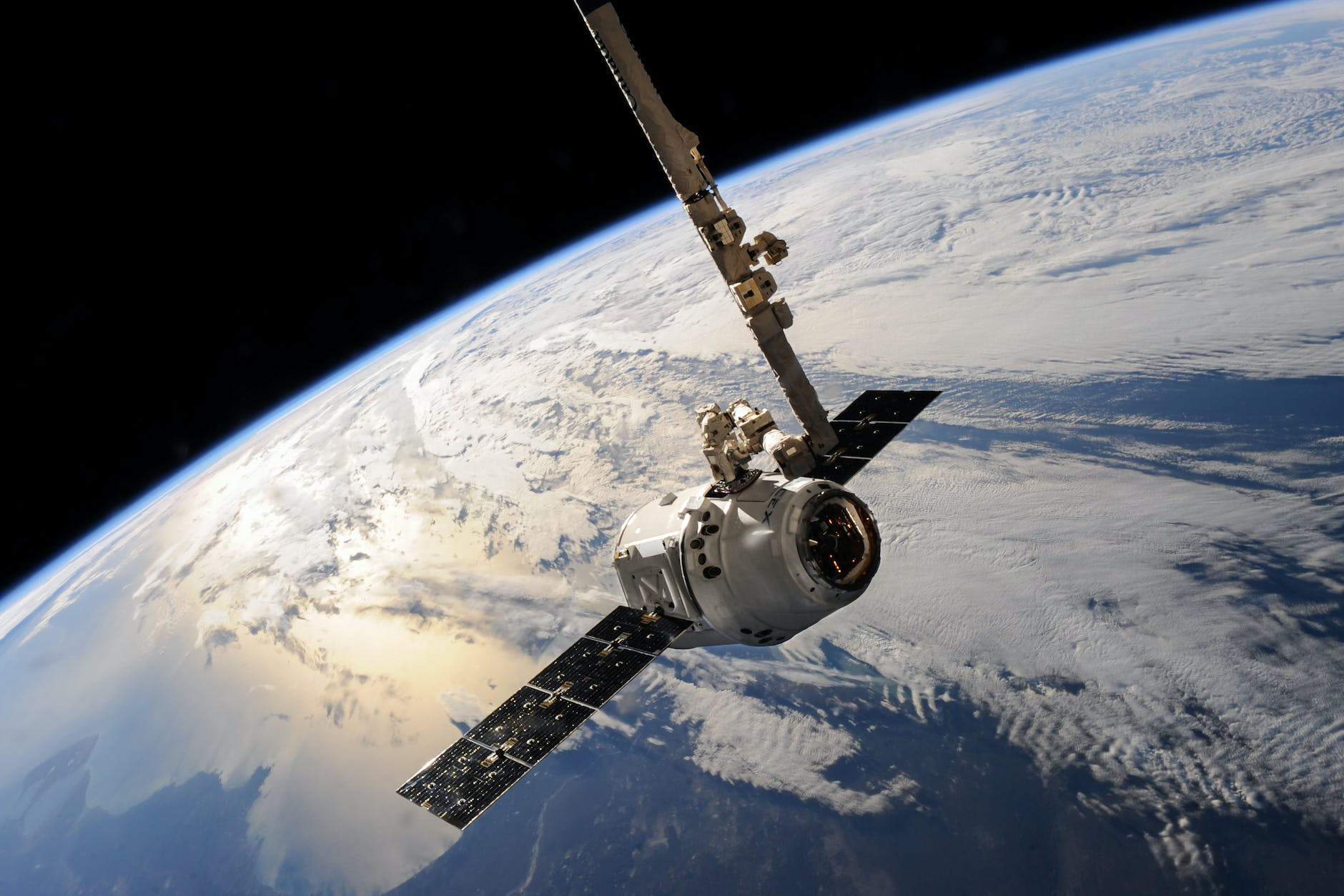
50 years after the success of Apollo 11, the United States is returning to the Moon. Following the success of the first mission of NASA’s Artemis program, the stage has been set for American astronauts to venture beyond low earth orbit for the first time in decades. The landscape of space flight, however, is much different and the industry far more crowded than the days of the Apollo program. As NASA prepares its missions to the Moon and eventually beyond to Mars, an environment crowded with other stakeholders both public and private awaits it. Inevitably, zero-gravity disputes will arise between these stakeholders, but when they do, what forums and rules are used to resolve them?

To put it gently, the law governing space is far from concrete. The majority of international space law is laid out in a small handful of treaties with the most important being the United Nations Outer Space Treaty. Counting 109 nations among its signatories, the treaty’s provisions are an international consensus. That being said, reading the Outer Space Treaty makes it clear that the agreement is a product of the Cold War and may not be suitable for the increasing number of public and private stakeholders that participate in today’s space industry. Notably, the treaty’s terms read more closely to principles than well-defined regulations. Examples of the treaty’s terms are “outer space shall be free for exploration and use for all states” and “astronauts shall be regarded as the envoys of mankind.” A nice sentiment, to be sure, but not the clear regulations needed to manage the growing space industry.

One area where this lack of regulation could prove especially damaging is the growing problem of space debris. While international regulations lag behind the lightning quick pace of private spaceflight, the debris left behind by those flights has accumulated in low earth orbit, defined as the range between 160 and 1000 kilometers above earth’s surface. SpaceX, for example, recently lost 40 Starlink satellites as a result of a solar flare. While those satellites reentered Earth’s atmosphere and burned up, plenty of other junk has taken up a concerning amount of space in lower earth orbit where active satellites normally reside. Much of the debris is harmless, but the FAA has so far failed to implement a meaningful regulatory regime to govern the creation and disposal of this kind of space junk.

Space agencies and Non-governmental organizations (NGOs) have begun to step up and propose regulations where Congress and other international bodies have failed to take action. The Inter-Agency Space Debris Coordination Committee (IADC), for example, is a coalition of space administrations that seeks to publish guidance on how to avoid the creation of space debris. While various government space agencies typically follow the rules suggested by the IADC, the same can’t be said about private spaceflight companies. Moreover, efforts to give IADC guidance the force of law is met (unsurprisingly) by pushback by both private spaceflight companies and nations that are opposed to new regulations on their own space agencies. A failure to curtail the creation of space junk could jeopardize future space missions as well as traditional flight and even people on the ground. While the IADC guidelines are a start, without true government action to create regulatory boundaries for private spaceflight companies, we risk an unregulated and dangerous environment in low-earth orbit.

So, what happens when a space-related commercial dispute occurs? As of now, there’s no good answer to that question. Like the other areas of space law discussed above, the UN’s Convention on International Liability for Damage Caused by Space Objects, or simply the Liability Convention, governs dispute resolution at a high level. However, the Liability Convention has only been invoked once, after a Russian spacecraft scattered a load of radioactive material over Canada. Hopefully, this won’t be the type of dispute that becomes common going forward. 

Existing commercial litigation doesn’t give us many answers either. Cases so far have involved government contract and intellectual property disputes within the space industry rather than cases that are unique to space. Both law firms and the government alike have generally embedded any space law attorneys within larger aerospace practice groups, again with the most common disputes centering around patents on satellites and rockets. In contrast to the sluggish pace of legal innovation in the US, the UAE has made efforts to establish a dedicated space court in Dubai for handling disputes ranging from collisions between spacecraft to litigation over satellite purchases. Only time will tell which approach wins out, but regardless of where space law begins to take shape, it will be an area of law ripe for innovation in the decades to come. 

The Reality of Deepfakes: The Dark Side of Technology

By: Kayleigh McNiel

We’ve all seen the viral Tom Cruise Deepfake or played around with the face-swapping Snapchat filters. But the dark reality of deepfake technology is far more terrifying than an ever-youthful Top Gun star. 

Deepfakes are images and videos digitally altered using artificial intelligence (AI) and machine learning algorithms to superimpose one person’s face seamlessly onto another’s. They can be incredibly realistic and impossible to detect with the naked eye. Many websites and apps allow anyone with access to a computer to produce images and videos of someone saying or doing something that never actually happened. 

While law-makers and the media have focused their concerns on the potential impact of political deepfakes, nearly all deepfakes online are actually non-consensual porn targeting women. Gaps in the law and easy access to deepfake technology have created a perfect storm, where anyone can make their most perverse fantasy come to life, at the expense of real people.

The Tech Behind The Fakes

Deepfakes are created using generative adversarial networks (GANs) that use AI and two machine learning algorithms (an image generator and an image discriminator) which work in tandem to create and refine the fakes. The process begins by feeding each algorithm the same source data, i.e., images, video, or even audio. Then, the generator iteratively creates new samples with the target image until the discriminator cannot tell whether the generated image is a real image of the target or a fake.

Historically, creating a truly realistic and quality deepfake required dozens of images of a person with enough similarities to the original subject. That is, until July 2022, when Samsung developed MegaPortriats, a technique that creates high-resolution deepfakes from a single image. Now, highly realistic deepfakes can be made from a single innocuous selfie posted online. 

With advancements in technology, detecting deepfakes has become increasingly more difficult. In response, researchers have raced to develop more accurate detection tools. For example, in July 2022 Computer scientists at University of California Riverside created a program that detects manipulated facial expressions in videos and images with up to 99% accuracy. While promising, there is still a long way to go before this or similar detection tools are widely available to law enforcement, consumer protection agencies, and the public. 

The Dark Side of Deepfakes

Realistic deepfakes pose an enormous risk to politicians and fair elections. Many deepfakes have already surfaced of high-profile politicians engaging in acts designed to undermine their credibility. In March 2022, Russian hackers posted a deepfake video of Ukrainian President, Volodymyr Zelenskyy, telling his soldiers to surrender on Ukrainian news outlets and social media. While the video was quickly debunked, it demonstrates how this technology is likely to become a standard tactic used by adversaries to interfere in politics.  

While political deepfakes do pose a very real danger to our democratic institutions, the technology is currently primarily used to victimize women. A 2019 report by Deeptrace confirmed that 96% of all deepfakes online are actually non-consensual porn targeting women and the  number of such deepfakes is rapidly growing. Cybersecurity firm Sensity reports the volume of deepfakes online nearly doubles every six months, largely due to the increase in availability of cheap and easy deepfake technology. Free face-swapping software found on apps like Deepnude, Deepswap, and FaceMagic are commonly used to create deepfake porn. Scammers have even begun using these in extortion cases; threatening to release the fake videos to victims’ family, friends, and employers unless they pay up. 

Having your likeness stolen and used to perform degrading sex acts without your consent is becoming a disturbing reality for celebrities and women in the public eye. A quick Google search reveals nearly a dozen websites with hundreds of deepfake porn videos using the faces of celebrities like Emma Watson, Gal Gadot, and Maisey Williams, among many others. Earlier this month, Twitch streamer, Atrioc, was forced to apologize after he accidentally revealed he used a website dedicated to sharing deepfake porn of popular female streamers, many of whom he is friends with in real-life. 

While celebrities are most at risk, there are websites (which I will not name here) specifically designed for men to create non-consensual deepfake porn of the women in their lives. While no longer publicly active, an anonymous user released an AI bot on right-wing messaging app, Telegram, which rapidly generated thousands of deepfakes of women and underage girls from photos uploaded by men seeking revenge. An investigation by Sensity found that these deepfakes were shared over 100,000 times before the bot was reported to the platform.

To add insult to injury, women who speak out against revenge porn are often the targets of relentless online harassment. Kate Isaacs, a 30-year-old woman from the UK, was the victim of deepfake porn after she successfully campaigned Pornhub to remove nearly 10 million non-consensual and child porn videos. Afterwards she was subjected to humiliating and terrifying harassment from men who “felt they were entitled to non-consensual porn.” They posted her work and home addresses online and threatened to follow her, rape her, and then post the video of it on Pornhub. Shortly thereafter, deepfake porn videos of her began to circulate online. 

Many victims of deepfake and revenge porn are forced to shut down their social media accounts and minimize their online presence to avoid further harassment and embarrassment. Notably, it is somewhat ironic that the men who seek to silence women by creating and sharing these videos often do so under the guise of the First Amendment. The dangers of deepfakes are undeniable, but women have largely been left to fend for themselves.

Our Legal System Is Not Ready for This

The combination of a lack of awareness and the difficulty in detecting deepfakes creates a significant challenge for victims when reporting.. Most law enforcement agencies lack the training and software to confirm that a video is a deepfake. Even if law enforcement can prove it is a forgery, by the time they do so significant damage is already done. People have already seen what they believe to be the victim engaging in degrading sex acts. Those images can never be unseen and will continue to damage victims’ reputations, relationships, and mental health. 

The legal system has been slow to react to the threat women face from deepfake porn. While 48 states and Washington D.C. finally have laws against the creation and distribution of non-consensual “revenge” pornography, only three have specifically banned deepfake porn. In 2018 proposed federal deepfake legislation died in the Senate. The state laws prohibiting deepfakes will likely face huge hurdles from First Amendment and personal jurisdiction challenges:

  • In 2019, Texas was the first State to ban deepfakes, but only those intended to influence elections. 
  • Also in 2019, Virginia amended its “revenge porn” statute to include deepfakes. 
  • In 2020, California prohibited the creation of deepfakes within 60 days of an election and for unauthorized use in pornography.
  • Also in 2020, New York passed a law protecting a person’s likenesses from unauthorized commercial use as well as non-consensual deepfake pornography.

In states without laws against deepfakes, victims will be forced to find relief through a patchwork of consumer privacy protection, defamation, and revenge porn laws. Notably, many state’s revenge porn laws do not apply to deepfakes because the victim’s body is not actually being portrayed. 

Biometric privacy laws could be used to combat deepfake porn in states like Illinois, Texas, Washington, New York, and Arkansas, where residents can file a civil claim against those who use their faceprints, facial mapping, or identifiable images without their consent. Similarly, defamation claims could potentially be brought against the creators of deepfake porn. 

Even if a clearly applicable law exists, bringing any civil claim requires the victim to be able to prove the identity of the video’s creator. This can be incredibly challenging when websites and apps allow users to upload videos with near total anonymity. The bottom line is that current laws do little to deter deepfake creators from continuing to victimize women for their own pleasure. 

What Are Tech Platforms Doing To Fix the Problem They Created?

Furthermore, the tech platforms on which deepfakes are widely shared are completely shielded from any legal liability under Section 230 of the Communications Decency Act. Without any consequences, it has been difficult to get platforms to address the impact that content shared on their site has on people’s lives. Still, some have taken action against deepfakes. In 2018 both Reddit and Pornhub banned deepfake porn, categorizing it as inherently non-consensual. The following year Discord banned the sale of Deepnude, an app designed to remove clothing from women (yes—only women) in photos. Apple removed the Telegram deepfake bot from its iOS for violating its guidelines. Pornhub and YouPorn both redirect users searching for deepfakes to a warning that they’re searching for potentially illegal and abusive sexual material. Users are then provided with directions on how to request the removal of content and resources for victims. Telegram, on the other hand, has never publicly commented on it and has never identified its creator. 

While these efforts are promising, more still needs to be done. Tech companies, lawmakers, and communities must work together to regulate the use of deepfake technology.

If you or someone you know has been the victim of online sex abuse, you are not alone. Support is available through the Cyber Civil Rights Initiative online or via their 24-hour hotline at 1-844-878-2274.