Fair Use at the U.S. Supreme Court? The Andy Warhol Case

By: Lauren Liu

In our modern society where information is exchanged at lightspeed and entertainment choices are abundant, copyright infringement has become a more widespread issue than ever. The 1976 Copyright Act harmonized copyright law with free-expression principles, and for the first time, incorporated the concept of “fair use.” If the use of a copyrighted work is “fair use,” then it does not infringe on the original author’s copyright. However, the Fair Use Doctrine, and even copyright as a whole, can seem very conflicting in terms of its purposes. On one hand, copyright offers exclusive rights to copyright owners to protect their work and profitability. On the other hand, the exception of fair use allows others to use and alter the original work without permission from the copyright owner. In 2022, the case alleging the Andy Warhol Foundation of copyright infringement was the center of copyright law. The case raises questions surrounding copyright law and the Fair Use Doctrine. How are we supposed to define the line between fair use and copyright infringement? How can we protect copyright without jeopardizing freedom of expression?

The Copyright Act of 1976 provides that “the fair use of a copyrighted work is not an infringement of copyright.” 17 U.S.C.A. § 107. To determine whether an allegedly infringing use is “fair use,” courts need to consider four factors: (1) the purpose and character of the use, including whether such use is of a commercial or for nonprofit educational purposes; (2) the nature of the copyrighted work; (3) the amount and substantiality of the portion used; and (4) the effect of the use upon the potential market for or value of the copyrighted work. The case of Andy Warhol Foundation for the Visual Arts, INC., v. Lynn Goldsmith involves the commercial licensing of a silkscreen image that Andy Warhol had created based on respondent Lynn Goldsmith’s copyrighted photograph. The Supreme Court of the United States recently granted this case certiorari. The question mainly focuses on the first element of fair use, and examines whether or not the petitioner, Andy Warhol Foundation (the Foundation), has established that its licensing of the silkscreen image was a “transformative” use, and that this factor should weigh in its favor. The Court will likely look closely at whether or not the transformative use can be established simply by showing that the image conveys a meaning or message different from that of respondent’s original photograph.

The Appellate Court’s decision focused on the first and most important statutory factor: the purpose and character of the use. The purpose of this factor is to distinguish the original creator’s use and the second author’s use of the original work. Although some copying of the original will often be necessary or at least useful in making the second author’s expression clearer and more effective, the second author has to demonstrate that the second work is unlikely to supersede the original. In this case, the Supreme Court will possibly find that the Foundation’s allegedly infringing use served the same purpose—depicting Prince in an article published by a popular magazine—for which Goldsmith’s photographs have frequently been used. Furthermore, although the Foundation argued that the Prince Series was intended for communicating a message about celebrity, the Foundation has not attempted to establish that it needed to reproduce the creative elements of the Goldsmith Photograph in order to communicate that message. The Supreme Court might find that when examining this factor and all other factors, the Foundation’s use of the original work does not meet the requirements for “fair use”, and will likely rule in favor of Goldsmith.

As the legal and artistic worlds wait for a final judgment from the Supreme Court, it is worth noting that the Appellate Court’s ruling and many other “fair use” cases have already created a balance between protecting copyrighted works and allowing other creative expressions. As one of the most popular and well-regarded modern artists, Andy Warhol’s works not only bring aesthetic values to the art world, but also inspire so much creativity. However, it is obvious that many of his works contain elements drawn from public figures and other existing works. Thus, his works can become quite controversial in terms of copyright law. More broadly speaking, in the artistic world, permitting secondary users to copy protected works to a certain degree will facilitate new and creative artistic expressions. However, when such copying becomes unnecessary for the secondary user’s work, the use risks jeopardizing the original author’s rights over the original art. Such unnecessary copying also risks diminishing artists’ incentive to create future original works. Although the fair use of copyrighted works has to be determined on a case-by-case basis, the doctrine helps avoid extreme exclusions or permissions in copyright infringement cases. Creative endeavors should not be deterred by a system that categorically precludes all unauthorized uses of copyrighted works, nor should they be protected by allowing indiscriminate copying.

Adventures in Antitrust: Evaluating the Probability of Regulatory Action Related to Adobe’s Acquisition of Figma

By: Cooper Cuene

Since early this year, both public and private markets have endured a considerable slowdown as interest rates rose and the economy slowed. Despite this turbulence, one super-sized acquisition has demonstrated that not all companies are deterred from making big moves in the current market. In September, Adobe announced a plan to acquire Figma, a fast-growing tech company known for its cloud-based collaborative graphic design software. At a staggering $20 billion, the deal is set to break the record for the largest acquisition of a private tech startup, making Figma’s founder a billionaire in the process. That is, of course, assuming the deal goes through. 

That assumption looms large. Because Figma is Adobe’s largest competitor in the market for cloud-based design software, news of the acquisition immediately triggered antitrust concerns. The unease was palpable throughout Figma’s user base, many of whom had been disappointed by Adobe’s mishandling of other design tools acquired in the past. However, while many observers have opined that FTC intervention is forthcoming, regulatory agencies are yet to take any meaningful action to block the acquisition. 

The legality of corporate acquisitions, such as this one, is governed by section 7 of the Clayton Act. The act forbids one company from acquiring another when the result would be the creation of a monopoly. The act’s language is expansive, stating that “[n]o person . . . shall acquire, directly or indirectly, the whole or any part of the stock or other share capital . . . where . . . the effect of such acquisition may be substantially to lessen competition, or tend to create a monopoly.” 15 USC §18. 

Naturally, such broad language has led to the development of expansive case law defining when the results of an acquisition will “lessen competition” or “tend to create a monopoly.” The Supreme Court has not ruled on the interpretation of these provisions since the 1960s. In the 1963 decision U.S. v. Philadelphia Nat. Bank, the Supreme Court ruled that any acquisition that results in a “significant increase” in market concentration would be viewed as “presumptively illegal.” 

Over the years, the circuit courts have refined these broad principles. In addition to the standards set forth by the Supreme Court, many circuits have adopted a forward-looking analysis of the merger’s effects. For example, the Seventh Circuit noted in its 1986 decision Hospital Corp. of America v. F.T.C. that all that is required to show the formation of a monopoly is that “the merger create[s] an appreciable danger of such [monopolistic] consequences in the future.” This principle has continued to be applied to more recent cases. For example, when the Ninth Circuit granted an injunction to stop the acquisition of a seafood processing company in the 2016 case Boardman v. Pacific Seafood Group, the court noted that “a prima facie case [under section 7] can be established simply by showing a high market share would result from the proposed merger.” 

Alternatively, we can consider the FTC’s own guidelines used to determine whether the agency will take action on a merger or acquisition. According to Section 1 of those guidelines, the “unifying theme” is the idea that mergers should not be permitted to “create, enhance, or entrench market power or to facilitate its exercise.” To this end, the guidelines state that important types of evidence to consider include: whether the firms are, or absent the merger are likely to become, head-to-head competitors; the sizes of the merging parties’ market shares; and direct historical comparisons to the potential merger. In addition to these considerations, the guidelines also consider the principle that the acquisition of one company by another should not serve to “diminish innovation.” 

Drawing from both the applicable case law and the guidance published by the regulatory agencies, it seems overwhelmingly likely that Adobe will face antitrust action in its attempted acquisition. Adobe and Figma are the two largest competitors with the market for collaborative graphic design tools, a market which is projected to near $17.7 billion globally by 2027. If the acquisition were to be completed, combining Figma and Adobe’s pre-existing suite of graphic design tools would lead Adobe to possess a market share of nearly 70%. 

The probability of FTC action is only increased by the fact that Figma and Adobe are direct head-to-head competitors. Figma’s website speaks for itself: it has an entire page dedicated to directly comparing its product to Adobe XD. By acquiring its largest competitor, Adobe could have the freedom to raise prices for all of its graphic design products. Speculation is already widespread that Figma’s free tier will be eliminated soon after a merger is completed. Finally, as mentioned previously, Adobe has a history of acquiring innovative graphic design upstarts before eventually allowing the products to stagnate and die. A direct historical comparison can be found in Adobe’s own acquisition of Macromedia and their well-loved design software, Firework, which stopped receiving development support soon after the acquisition completed. Between price hikes, direct competition, and Adobe’s acquisition track record, the likelihood of FTC action to block this deal is nearly certain. 

Judicial precedent, FTC guidelines, and the circumstances of the acquisition support the conclusion that the FTC will take action to block the Adobe and Figma merger. The timing of the FTC suit and its exact allegations remain to be seen, but in all likelihood, the only question remaining is not if, but when.  

Why Biden’s Crypto Directive is Misguided

By: Chi Kim

During his second term, President Biden has taken a more proactive stance on crypto by asking the Federal Reserve to explore digital currency options and even announced a general gameplan around around digital assets. However, not all initiatives were as open minded. In July 2022, the United States Office of Government Ethics issued a directive that all U.S. officials holding cryptocurrencies and stablecoins directly as personal investments will be disqualified from working on any regulation that could influence the value of their digital assets. Although well-intentioned, this directive is an oversimplified policy to mask the appearance of conflicts of interest that will stifle meaningful regulation of the crypto-industry. The policymakers for crypto should actually understand the space and its nuances to ensure that it can develop without obstacles. This directive is short-sighted because if rulemakers do not hold and engage with a modest amount of crypto, then they will not have the sufficient knowledge and experience to effectively rulemake.

The crypto industry is not composed of regular securities and should not be treated as such by regulators. The crypto-industry is a fluid environment with new products emerging from decentralized finance (defi) that will require regulators to be just as flexible. When crypto developers create new projects, they often do not start from scratch and use a base layer cryptocurrency from commonly used platforms like Ethereum, Polkadot, or Solana to start building. For the layperson, I would analogize this to real estate, where developers continue to build their projects based off of the technology of the underlying platform and smart contracts to bring more complex financial products from these base layers. Beyond complex layering structures, there are utility coins that have functionality built around the coin’s use like for file storage or for renting computer power. Most notably, Non-Fungible Tokens (NFTs) have exploded in popularity and have come to resemble a market much like art more than any type of financial product. These products cannot be blanketly dismissed as securities. 

Federal officials unfamiliar with cryptocurrency will be greatly disadvantaged without the ability to learn as a retail user. As a relatively new industry, crypto does not have traditional paths or longstanding resources to become knowledgeable. The crypto industry does not have a universal organization that has certification courses like the FINRA’s Securities Industry Essentials Exam or Series 7. Most crypto experts became knowledgeable from working in industry or simply by being a customer. Government officials should be afforded the same opportunity to learn by becoming end users. From this perspective, government officials can also create better policies that actually serve retail users and the ecosystem. 

Lastly, there is a great incongruence of standards between the average federal employee and Congressional members. Last year, Senator Kelly Loeffler and Senator David Perdue may have profited in the ballpark of tens of millions of dollars from selling securities with non-public information. During the 2021 term, Congress even beat the market trading nearly $290 million in securities through the year. If a stricter standard needs to be set, it does not have to be here, but rather to individuals that regularly benefit from non-public information. The Biden Administration has an opportunity here to create a more comprehensive policy that can be replicated rather than implementing a crude blunt ban.

The Biden Administration should temper its strict restrictions to conform to the different nuances within the cryptocurrency ecosystem by allowing certain kinds of utility coins to be held. Government employees can also be supported with a robust policy that consists of holding limits, disclosure requirements, and restricted trading periods. Holding limits will cap the amount of crypto held by policymaking employees to give flexibility around holding small amounts, especially for educational purposes. Disclosure requirements can help create transparency around financial gains by the employee to their respective agencies. Restricted trading periods create safeguard periods for employees following significant events to maintain trust around non-public information. These efforts create a more robust policy with flexibility for small holdings rather than create a superficial blanket against conflict of interests.

Regulating Technology: Can Hermès Secure the Bag?

By: Trent M.C. McBride

It is no surprise that the legal system trails behind technological advancements. Lawyers, judges, and policymakers necessarily must wait for technology to mature before attempting to regulate it.  Due to this maturity period, it is estimated that the law is consistently around 5 years behind technological developments.  This lag in the law creates scenarios where new technologies are generally unregulated for several years before the legal system ever gets involved. 

An example of this lag in the law is the technology of Non-Fungible Tokens, or NFTs.  In very general terms, NFTs, in conjunction with Blockchain technology, allow for digital or real-world assets to be given unique digital identifiers that certify ownership of that asset.  These certified assets can then be bought and sold on the open market.  

While NFTs have been around since 2014, gaining more popularity around 2018, they have been largely unregulated with little to no oversight.  However, the law is finally catching up to this technology and the case Hermès International v. Mason Rothschild (Hermès v. Rothschild) is gaining significant attention.  

Hermès v. Rothschild 

Currently, in active litigation, Hermès v. Rothschild, is a case out of the Southern District of New York. The case centers on the legality of online creators and artists replicating tangible, real-world, legally protected, assets and turning them into unique digital assets that are being marketed as NFTs without permission.  

The defendant, Mason Rothschild, is an entrepreneur who has found success creating digital replicas of the popular Birkin Bag from Hermès.  In May 2021, Rothschild created his first Birkin Bag inspired NFT—the Baby Birkin.  This NFT went on the market and within 8 months sold for $47,000.

On the heels of this success, Rothschild went on to create the currently disputed project— “MetaBirkins.”    This project consists of 100 unique MetaBirkins that are covered in a wide range of colored faux fur.  These NFTs are currently sold at varying prices with a floor price of 2.5 ETH or roughly $3,750 USD.  So far, this project has generated between $450,000 – $800,000.

Once Hermès caught wind of this project, they sought legal action to protect their brand.  In their Complaint, Hermès alleged seven causes of action: misappropriation and unfair competition under New York common law; common law trademark infringement; injury to business reputation and dilution; cybersquatting; federal trademark dilution; false descriptions and representations; and trademark infringement.  The central theme throughout each cause of action is that the MetaBirkins brand is profiting from the well-known and highly successful Hermès brand without permission and that MetaBirkins’ use is harming the Hermès reputation and brand. 

Rothschild immediately moved to dismiss these claims arguing his actions were protected under the First Amendment. The court was not convinced by this line of reasoning and denied Rothschild’s motion to dismiss.  The court held that the Hermès complaint provided sufficient factual allegations to bring a claim. 

This does not mean that Hermès has won this case.  It simply means that the case will continue, and the two parties will resume litigation. As this case plays out, we may finally gain some clarity as to the legality of NFT creation and distribution of already existing real-world assets. 

Are there other examples?

The Hermès litigation is just one example of technology outpacing the legal system. In the grand scheme of things, this dispute will have a relatively small impact on the broader public. As it stands, NFT technology is a niche area of the law that will likely go unnoticed by most people. However, if this lag in legal intervention extends to other areas of technology that have a broader reach, there could be serious consequences. 

Take a moment to consider the implications of medical care and the adoption of virtual doctor’s visits or Mental Health Apps that supplement care.  We will all need medical care at some point in our lives and these technologies will undoubtedly impact that interaction.  

Or consider Financial Technology (FinTech) in which these companies are changing the way we all use and handle currency.  Money is the foundation of the modern world and allowing for unregulated manipulation of this sector could have a global reach.

Technologies in a wide range of areas are advancing rapidly and changing the world in drastic ways. It is important that we closely monitor these advancements to prevent extended lags in the law and be diligent in our regulations.  

Careful! Big Brother is Watching (or rather Listening)

By: Enny Olaleye

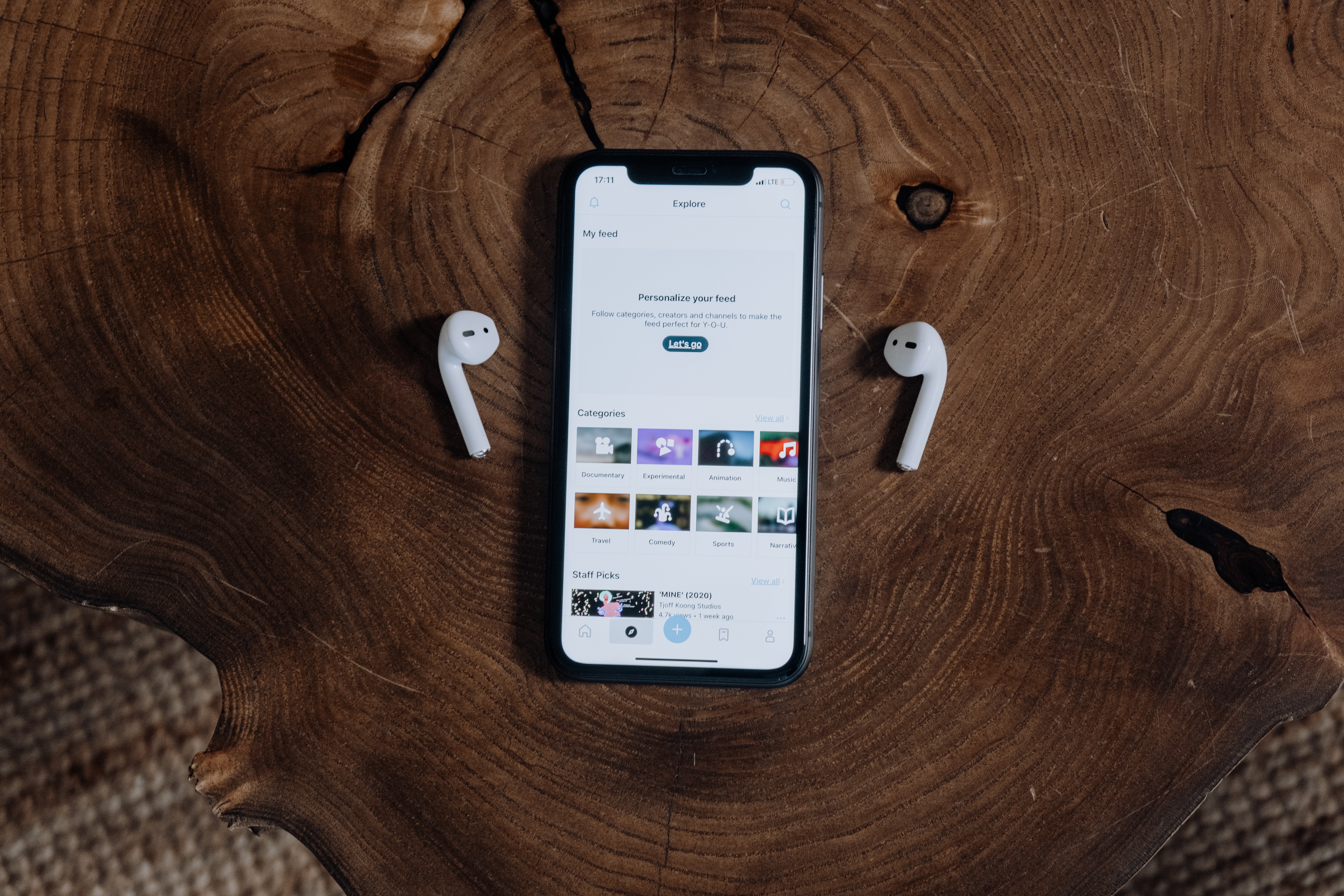
Earlier this year, social media users may have been surprised to see #LiveListen trending on websites such as Twitter and TikTok. This hashtag represented one of Apple’s newest innovations called Live Listen, an accessibility feature designed to help the hearing-impaired, by permitting users to use their AirPods to turn their electronic devices (iPhones, iPad, etc.,) into a microphone—which sends sound to their AirPods. However, what Apple intended to be a simple new feature for their products quickly transformed into a social media craze, where Apple users discovered that they could use this new function to eavesdrop on other people’s conversations. 

Activating the Live Listen feature is as easy as opening your iPhone’s settings application. Once activated, the Live Listen feature allows users to hear conversations more clearly, by tuning out any background noise present. With your AirPods in your ears and your iPhone near the person you are trying to hear, Live Listen will transmit the audio to your AirPods. While navigating this new feature, users soon found out that when their AirPods were connected, they were able to listen in on any conversations happening in the room the iPhone was placed in—even when they were in a different room from the device. Live Listen remains active until the AirPods are put back in their case or disconnected from their mobile device. This feature means that, even if the connected iPhone or iPad is hidden somewhere out of sight, it can still clearly pick up conversations within the same room. 

Social media users began to label this new advancement as a “game-changer,” publicly admitting the different ways as to how they planned to utilize this feature to eavesdrop on their friends, partners, and even their employers. 

Thus, the question arises: Are AirPods our newest security threat? 

When you think of the word “wiretapping,” or what is commonly referred to as “eavesdropping,” you may imagine a black-and-white scene with a bunch of men in suits huddled around a clunker of a machine wearing oversized headphones—looking intently into the distance. Well, thanks to Ring cameras, high-definition drones, and of course smartphones, wiretapping laws have greatly expanded from what they used to be back in the day of drama-filled, black-and-white criminal television shows. The Electronic Communications Privacy Act of 1986 (ECPA), made it a federal crime to engage in, possess, use or disclose information obtained through illegal wiretapping or electronic eavesdropping. This statute applies to any face-to-face conversations, emails, texts, phone calls, or “electronic communication,” that are reasonably expected to be private. 

“But—I don’t plan to record the conversation; I just want to listen in.” Still…no. 

Aside from the literal action of using AirPods as a wiretapping device, the ECPA also considers it a felony to intentionally intercept electronic communication—which translates to setting up your AirPods to listen into private conversations. Further, the ECPA also considers it a felony to attempt to intercept an electronic communication—which includes the mere action of attempting to set up the LiveListen feature for the purpose of listening into a reasonably private conversation. Regardless of whether you are recording or just listening in, the consequences of even attempting to wiretap or eavesdrop include imprisonment of up to five years (if criminal intent can be proven) and up to a $250,000 fine. 

With the advancement of technology not dwindling down any time soon, it brings up the matter that if your peers can so easily listen into your conversations, what does that mean for those with more resources and power? 

Electronic surveillance, whether through AirPods or government-funded access to encryption tools, is fundamentally at odds with personal privacy. Under the Fourth Amendment, government agencies must obtain a warrant, approved by the judge, before engaging in wiretapping or electronic surveillance. However, while government agencies are required to secure a warrant, their requests for wiretaps are almost never turned down by judges. Once authorized, both wiretapping and electronic eavesdropping enable the government to monitor and record conversations and activities without revealing the presence of government listening devices. 

Legislation concerning wiretapping and privacy rights continuously lag behind the fast-paced advancement of technology. Even so, products as simple as AirPods and iPhones will never be tagged as security threats due to the sheer awareness that they already exist everywhere. The old-time anecdote that “Big Brother is Watching You” is slowly coming into fruition as user privacy can be surpassed at our own fingertips. While the expansion of electronic surveillance was originally meant to reduce serious violent crimes after 9/11, it has only led to the heightened violations of privacy rights amongst those in the United States. 

“So now what?” 

Well, simply put—in most circumstances, listening in to conversations that are “reasonably expected” to be private, without the consent of those participating in the conversation, will most likely constitute a federal crime. Thus, activating LiveListen and utilizing it outside its designated role as an accessibility feature is not a good idea. With respect to protecting yourself and your information—that is a bit more difficult. Avoiding the entire “surveillance economy,” by not using Apple products or avoiding Google and Twitter is just very unlikely (I still haven’t been able to give up Amazon Prime). However, taking action can be as small as searching on secure networks only (with the little lock on the search bar), to as large as applying pressure to your state’s representatives to pass legislation centered on protecting our individual privacy rights is a step in the right direction. 

The bottom line is; without the assurance that our private communications are, indeed, private, privacy rights will continue to be glazed over and decisions based upon free will and personal choice will slowly be replaced by decisions centered in prudence and fear.