
American Museums: Rightful Heirs or Pretenders to the Throne?

By: Anna Long

It is essentially undisputed that thousands of artworks and artifacts have been stolen or looted throughout history as the result of outright theft, colonial conquest, and war. Today, a number of these stolen works sit behind glass in museums, the plaques that detail their origins conveniently leaving out exactly how each piece ended up in American institutions. And while the last handful of years has seen a movement towards the repatriation of stolen artworks and artifacts, actual return of that artwork is the exception rather than the rule. First, museums are only compelled to repatriate the art if there is proof it was stolen or looted. And second, in laying claim to particular artworks and artifacts, museums reaffirm the American savior identity rooted in cultural appropriation. Prioritizing repatriation is a necessary step towards the decolonization of the art trade. Relaxing the mens rea requirement of the National Stolen Property Act of 1934 is the best tool for effecting this repatriation.

While the expectation that stolen art should be repatriated is gaining acceptance, the museum community has yet to come to a consensus on its appropriateness and efficacy. Some experts assert that the artworks and artifacts should stay wherever they are currently placed, regardless of national origin or cultural importance. This argument is usually centered on the claim that American museums can better manage and protect the art. However, the fact that the American market encourages continued looting and, correspondingly, further damage calls that claim into question. Other scholars advocate for the return of the art to its country of origin or, if possible, the original owner. This sentiment rests on the concept that cultural property belongs where it originated, especially if it was forcibly removed. This debate does not change the reality that museums are only required to repatriate the art if it is proven to be stolen or looted. Clear provenance, documenting the piece’s history, usually means the art stays where it is. Documentation of ownership going back decades should not necessarily absolve museums of responsibility now. 

Ancient Greek art and artifacts embody the implications of continued American control over cultural property and the importance of repatriation. These artifacts, spread through museums across the country, are a good way to conceptualize how a claim to cultural identity can be expressed through control of material objects. 

“For reasons rooted in everything from Hollywood marketing to Cold War politics, most Americans, regardless of their level of formal education, have a sense that democracy was invented in Athens, Aphrodite was a literal sex goddess,… and (Eric Bana’s) Hector was no match for (Brad Pitt’s) Achilles in the Trojan War.” 

Stretching from democracy, a fundamental building block of American identity, to Brad Pitt and Eric Bana, who are also arguably central to that identity, Greek myth and imagery exist in all aspects of American media. The artifacts that line our museums are the physical manifestation of that imagery.  In appropriating the physical artifacts, we have laid claim to a cultural inheritance of idyllic heroes and representative government.  We are leaning on manipulations of history to do so; manipulations intended to valorize the United States as the exemplar and appropriate inheritor of past greatness.

This interest in control of these artifacts and claim of ownership of a heroic narrative legacy then has greater implications of colonialism. In asserting a legacy from the Ancient Greeks, America, and other centers of the Western world,  claim descendance from a culture that, in turn, claims a descent from the gods and god-like heroes of its own past. The result is an implication that the nations and cultures that originated this grand legacy, no longer have what it takes to expand and continue it.  This opens the door to oppression under the guise of rescue. Even something as simple as asserting that non-Western museums are incapable of maintaining the art reemphasizes the notion that American greatness has supplanted that of the nations and cultures that preceded it.

This appropriation of the art blends uncomfortably with the savior narrative it reinforces.  Wealthy white Americans take it upon themselves to manage the art they have deemed worthy, removed from the people they have deemed unworthy. Unfortunately, it is here that race and privilege are unavoidably thrown into the mix. Although applicable to art and artifacts across the world, the Ancient Greek pieces provide a clear example: it is only in contrast to Western ideals that we considered modern Greeks unworthy inheritors of their own history. Echoing uncomfortably with the fact that most modern audiences do not know that the statues and temples were painted, the modern aesthetic value placed upon the gleaming white is imposed by the colonial powers, preventing understanding of the values of the originating culture.  

Understanding just how deeply ingrained these colonial concepts are in our national identity, it can seem like repatriation will make little difference. But it is a step in the right direction and the National Stolen Property Act of 1934 (NSPA) is a way to get started. The NSPA, often used in conjunction with foreign patrimony laws restricting ownership and transport of cultural property, penalizes the possession, transport, and sale of items that have crossed a state or U.S. border after having been stolen, converted, or taken

Although the statute seems fairly straightforward in its application, it was the 1986 amendment and the Second Circuit’s United States v. Schultz decision that gave the NSPA real teeth. Implemented in 1934, it wasn’t until 1986 that the amendment added possession to the list of criminal behaviors.  Prior to 1986, museums used the statute of limitations as a defense, with decades if not centuries passing between the act of theft and active museum control. As possession is an on-going action, the amendment erased this defense and opened the door for actual enforcement.

United States v. Schultz then expanded the reach of the statute. In Schultz, the Second Circuit held that “just as the property need not be stolen in the United States to bring the NSPA into play, the fact that the rightful owner of the stolen property is foreign has no impact on a prosecution under the NSPA.” Allowing foreign nationals, and even governments, as victims under the act expanded the opportunities for enforcement. Together the 1986 amendment and Schultz brought the NSPA to the forefront of antiquities litigation.

But it is a removal or relaxation of the mens rea requirement that would make the NSPA the most effective tool for repatriation and decolonization of the art trade. The NSPA currently requires a defendant’s knowing violation, and with antiquities long since removed from their context, it is difficult to prove knowledge that the artifacts were stolen. Removing, or at least relaxing, the scienter requirement lowers the burden of proof needed to hold museums liable for possession of stolen property. This is simultaneously a deterrent for the continued acquisition of stolen goods and a justification for the repatriation of artifacts currently within museum collections. And as further enforcement will only limit the number of stolen artifacts entering the US, relaxing the mens rea requirement will do little harm to any legitimate antiquities trade, if there is one.
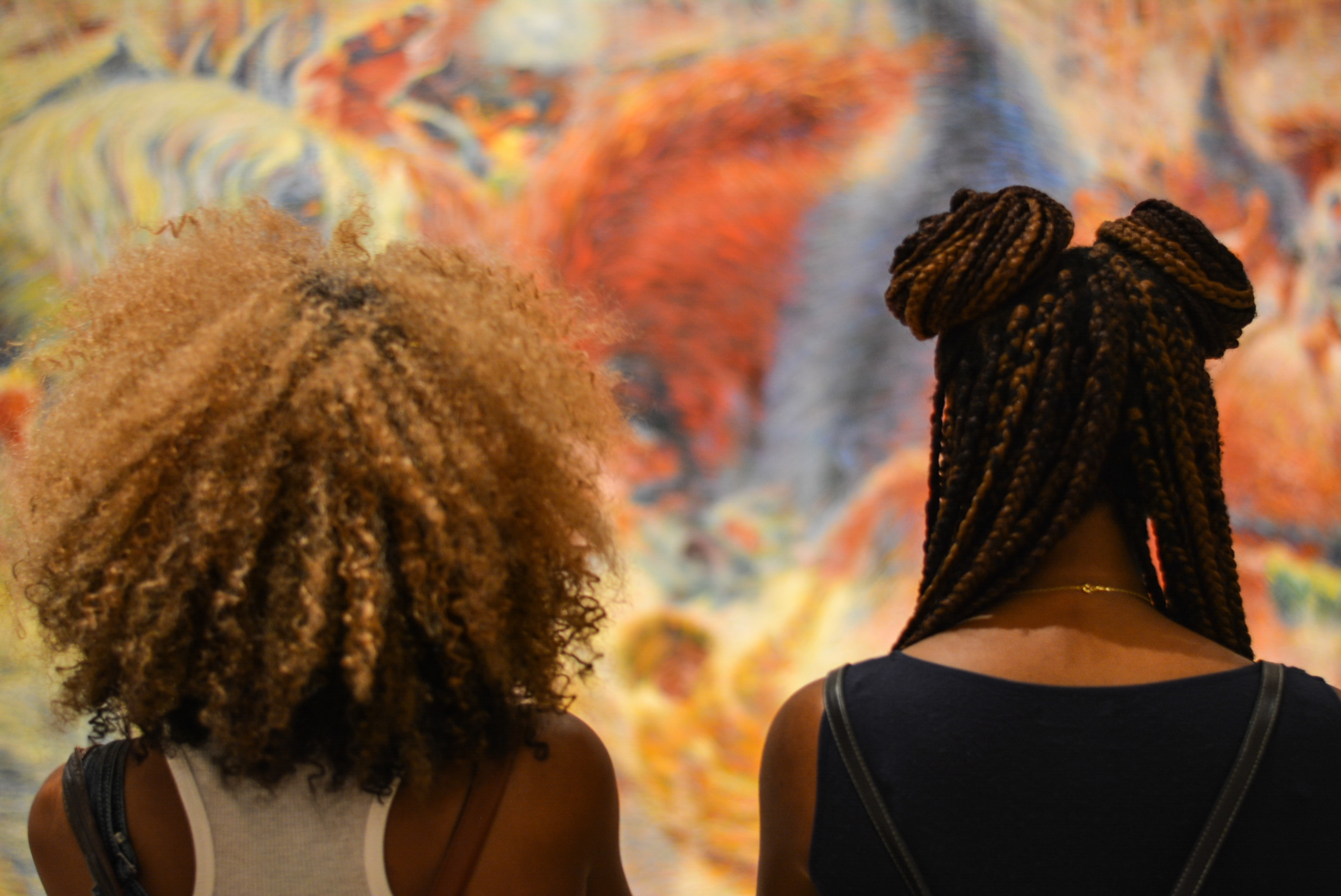
Artists Demonstrate the Significance of the CROWN Act

By: Stephanie Turcios

Artists Supporting the CROWN Act. 

Nina Simone once said that it is an artist’s duty to reflect the times. Studies have shown that hair-based discrimination is a form of race-based discrimination and artists across multiple genres have denounced discrimination and promoted embracing love for all hair types. Notably, two friends, Alisha Brooks and Elizabeth Austin-Davis, created The Black Hair Experience, an art exhibit in multiple cities described as an “interactive selfie-museum…in the name of celebrating Black hair.” The inspiration for the art exhibit stems from the creators wanting to explore why Black women feel insecure about their hair in certain spaces. 

This insecurity starts at a very young age. According to one study, 53% of Black mothers say their daughters have experienced race-based hair discrimination as early as five years old. The study also found that 66% of Black children in majority-white schools have faced race-based hair discrimination – and 86% of those children experienced it by the age of 12. In response to the discrimination that youth of color experience, director Matthew A. Cherry created the Oscar-winning animated short-film, Hair Love,  to normalize textured hair. In his acceptance speech in 2020, Cherry supported then-pending legislation, the CROWN Act, which stands for Creating a Respectful and Open World for Natural Hair. Cherry advocated for the CROWN Act in response to the expulsion of DeAndre Arnold, a Black high-school student who was expelled for having dreadlocks. Although Arnold was later able to seek an injunction against the school district, it came at the expense of his high school graduation. See also Arnold v. Barbers Hill Indep. Sch. Dist., 479 F. Supp. 3d 511, 531 (S.D. Tex. 2020).

But What is the CROWN Act?

On March 18, 2022, the U.S. House of Representatives passed the CROWN Act in a 235-189 vote. The CROWN Act addresses long-standing prejudice and discrimination against people of color who wear their hair in specific styles and/or people with textured hair. The CROWN Act prohibits discrimination against individuals based on their hair textures or hairstyles. Specifically, the CROWN Act prohibits discriminatory practices in employment, housing, and other public sectors “based on the person’s hair texture or hairstyle, if that hair texture or that hairstyle is commonly associated with a particular race or national origin (including a hairstyle in which hair is tightly coiled or tightly curled, locs, cornrows, twists, braids, Bantu knots, and Afros).” The Act is currently languishing in the Senate. Due to the fierce opposition to the bill, many people fear that the bill will not pass the Senate and the issue will be left to individual states to contend with. Presently, 14 states, including Washington, have passed versions of the CROWN Act banning hair-based discrimination. 

The Opposition. 

Opposition to the CROWN Act is often politically and racially charged. Inflammatory remarks, such as those from Rep. Lauren Boebert, who described the CROWN Act as the “bad hair bill” or Rep. Marjorie Greene who voted no on the “nappy hair act” only further polarize the issue. Many people watched as Rep. Jim Jordon condemned the CROWN Act as nonimportant, purporting that the issue of discrimination has already been addressed through Title VII of the Civil Rights Act of 1964, which prohibits discrimination on the basis of race, color, and national origin. He further characterized the bill as a “distraction from issues American people care about.” 

The Bigger Picture: Hair-based Discrimination is a Legal Loophole to Race Discrimination.

Proponents of the CROWN Act note that Title VII has been narrowly construed, effectively creating a legal loophole in race-based discrimination that disproportionately effects Black people. For example, in 2016, an employer based in Alabama rescinded a job offer made to a Black woman after she refused to cut her dreadlocks. E.E.O.C. v. Catastrophe Mgmt. 852 F.3d 1018, 1021 (11th Cir. 2016). The court held that “dreadlocks, though culturally associated with race, are not immutable characteristics of Black persons,” and cannot serve as a basis of a Title VII claim. Id. Also, in 2016, in South Carolina, a Black woman was fired after she refused to chemically straighten her afro despite her compliance with conservative grooming policies; her termination was upheld because she could not establish a Title VII claim. Nelson v. Town of Mt. Pleasant Police Dep’t, No. 2:14-CV-4247-DCN-MGB, 2016 WL 11407774, at *4 (D.S.C. June 28, 2016), report and recommendation adopted, No. 2:14-CV-4247-DCN, 2016 WL 5110171 (D.S.C. Sept. 21, 2016). As these cases demonstrate, the CROWN Act is meant to address where Title VII of the Civil Rights Act falls short. 

Artists Empower Black People to Keep Fighting.

However, discussing the political arguments and legal cases surrounding this issue will never capture the dehumanizing effects of hair-based discrimination. Artists are better suited to express the emotional, spiritual, and mental impact hair-based discrimination has on people. Artists across many platforms have spoken out about the significance of accepting and validating all hair types. Poets such as Teeanna Munro who performed Burn Scars, or Nina West who performed The Crown, call out the discrimination people face because of the texture of their hair while simultaneously advocating for acceptance and self-love. Musicians have done the same thing. Solange wrote in Don’t touch my hair, “don’t touch my crown . . . they don’t understand what it means to me.” 

Music also reflects the lived experiences of many people who face hair-based discrimination. A hip-hop classic, I am not my hair by Akon and India Arie, lyrically portrays the experience of the plaintiff in E.E.O.C. v. Catastrophe Mgmt when they said “. . . I couldn’t get no job ’cause corporate wouldn’t hire no dreadlocks.” And their lyrics ring with truth when they reflect people’s bigoted beliefs that “good hair means curls and waves, bad hair means you look like a slave,” which was insinuated by the comments of Rep. Greene and Rep. Boebert. The sad part remains that this song was written in 2006, yet these discriminatory beliefs and practices persist today in 2022.  

So, Should you Care about Hair-based Discrimination?

So, is what Rep. Jordan said true? Is this an issue “American people” don’t care about? Are people of color with textured hair not part of the American people? Is discrimination not an issue the American people care about? 


For what it’s worth, I think this is an issue worth caring about. In the words of India Arie, I leave you to ponder this: “Does the way I wear my hair make me a better person? Does the way I wear my hair make me a better friend? Does the way I wear my hair determine my integrity?” If the answer to these questions is no, then a person’s hair texture or hairstyle should not be a factor when pursuing employment, education, or any other opportunity. 

Two New Antitrust Bills Could Increase App Store Competition and Spark Discussion of Privacy and Security as Consumer Welfare Metrics

By: Zoe Wood

In the first quarter of 2022, Apple beat its own record for quarterly spending on lobbying ($2.5 million). What’s the occasion? Two new antitrust bills which threaten Apple’s dominance over its App Store are gaining ground in Congress.

What Bills? 

In late January, the Senate Judiciary Committee voted to advance the American Innovation and Choice Online Act by a vote of 16 to 6. Just a few weeks later, the Committee advanced the Open App Markets Act by a vote of 20 to 2. 

The bills are similar, however, the former has more sweeping coverage. It applies to all “online platforms” with 50,000,000 or more monthly active US-based individual users or 100,000 monthly active US-based business users which (1) enable content generation and content viewing and interaction (i.e., Instagram, Twitter, Spotify, etc.), (2) facilitate online advertising or sales of products or services of any sort (i.e., Amazon, etc.), or (3) enable searches that “access or display a large volume of information” (i.e., Google, etc.). The bill describes ten categories of prohibited conduct, all aimed at curbing covered platforms’ preferential treatment of their own products or services over other products on the platform. 

For example, the Act would prohibit “covered platforms” from “limit[ing] the ability of the products, services, or lines of business of another business user to compete on the covered platform relative to the products, services, or lines of business of the covered platform operator in a manner that would materially harm competition.” 

The latter act, the Open App Markets Act, in contrast would apply to “any person that owns or controls an app store” with over 50,000,000 US-based users. It proceeds by identifying and defining app store behaviors which are purportedly anticompetitive. For example, the Act would prohibit an app store from conditioning distribution of an app on its use of store-controlled payment systems as the in-app payment system. The Act would also prohibit app stores from requiring developers to offer apps on pricing terms equal to or more favorable than those on other app stores and from punishing a developer for doing so. Similar to the Innovation and Choice Online Act, the Open App Markets Act prohibits covered app stores from preferential treatment towards their own products in the app store search function.

Why Does Apple Oppose These Bills (Aside from the Obvious)? 

While the obvious answer (the bills would diminish Apple’s dominance and therefore diminish its profit) is probably also correct, Apple has put forward a different reason for its opposition to the acts. In a January 18th letter addressed to Senators Durbin, Grassley, Klobuchar, and Lee, and signed by Apple’s Senior Director of Government Affairs Timothy Powderly, Apple expressed concern that “[t]hese bills will reward those who have been irresponsible with users’ data and empower bad actors who would target consumers with malware, ransomware, and scams.”

The bills create an exception for otherwise prohibited actions which are “reasonably necessary” to protect safety, user privacy, security of nonpublic data, or the security of the covered platform. Apple’s letter principally takes issue with this exception, finding that it does not provide the company with enough leeway to innovate around privacy and security. The letter complains that “to introduce new and enhanced privacy or security protections under the bills, Apple would have to prove the protections were ‘necessary,’ ‘narrowly tailored,’ and that no less restrictive protections were available.” According to the letter, “[t]his is a nearly insurmountable test, especially when applied after-the-fact as an affirmative defense.” Of course, this is an overly broad statement­. The bills don’t subject all new privacy and security measures to this standard. Only the measures that are anticompetitive in the ways specifically spelled out by the bills are implicated. 

So what privacy and security measures would the bills prohibit? The letter is most concerned with the fact that the bills would restrain Apple from prohibiting “sideloading.” Sideloading refers to downloading an application onto, in this case, an Apple device, from somewhere other than the App Store. Lifting Apple’s restriction on the practice would allow developers to implement their own in-app payment systems and avoid the commission Apple takes (up to 30%) from app sales and in-app subscriptions and purchases. The theory is that prohibiting sideloading is anticompetitive in part because it results in higher prices for consumers. 

But Apple says that allowing sideloading would “put consumers in harm’s way because of the real risk of privacy and security breaches” sideloading causes. The letter further explains that sideloading allows developers to “circumvent[….] the privacy and security protections Apple has designed, including human review of every app and every app update.”

Are Apple’s Security Concerns Shared by All?

No. Privacy and security expert Bruce Schneier, who sits on the board of the Electronic Frontier Foundation and runs the security architecture at a data management company, wrote a rebuttal to Apple’s letter. According to Schneier, “[i]t’s simply not true that this legislation puts user privacy and security at risk” because “App stores monopolies cannot protect users from every risk, and they frequently prevent the distribution of important tools that actually enhance security.” Schneier thinks that “the alleged risks of third-party app stores and ‘sideloading’ apps pale in comparison to their benefits,” among them “encourag[ing] competition, prevent[ing] monopolist extortion, and guarantee[ing] users a new right to digital self-determination.”

Matt Stoller, who is the Director of Research at the American Economic Liberties Project, also wrote a strongly worded rebuttal. Like Schneier, Stoller seems to believe that Apple’s­ security-centric opposition to the bills is disingenuous. 

A New Angle on Consumer Welfare

Regardless of whether Apple’s concerns about privacy and security are overblown, the exchange between Apple, the drafters of the new antitrust bills, and members of the public is interesting because it engages with “consumer welfare”­–the entrenched legal standard which drives antitrust law­–in an atypical way.

Antitrust law exists primarily in common law, and the common law is the origin of the all-important consumer welfare standard. The standard is simple and has remained consistent since a seminal case from 1977. It is concerned primarily with whether a particular practice tends to decrease output and/or causes price to increase for consumers. If it does, the practice is anticompetitive and subject to injunction. While antitrust parties occasionally introduce other aspects of consumer welfare­­, such as the effects on innovation of a challenged practice, such effects are extremely difficult to prove in court. Therefore, most antitrust cases turn on price and output.

The bills in question implicitly take issue with the consumer welfare standard because they, in the language of the American Innovation and Choice Online Act, “provide that certain discriminatory conduct by covered platforms shall be unlawful.” Similarly, the Open App Markets Act seeks to “promote competition and reduce gatekeeper power in the app economy, increase choice, improve quality, and reduce costs for consumers.” By defining and prohibiting specific conduct outright, the bills circumvent the consumer welfare standard’s narrow focus on price and output and save potential antitrust plaintiffs from having to prove in court that Apple’s practices decrease output or increase price. 

Apple’s letter speaks the language of consumer welfare. It insists that “Apple offers consumers the choice of a platform protected from malicious and dangerous code. The bills eliminate that choice.” This point goes to the more traditional conception of consumer welfare in the antitrust context, i.e., proliferation of choice available to consumers. But primarily, the argument that Apple is making (however disingenuously) is that the bills “should be modified to strengthen­–not weaken–consumer welfare, especially with regard to consumer protection in the areas of privacy and security.” 

By focusing on “privacy and security” as a metric of consumer welfare in the antitrust context, Apple, legislators, and the general public are engaging in a conversation that ultimately expands the notion of consumer welfare beyond what would be borne out in a courtroom, constrained by entrenched antitrust precedent. In this way, the bills have already been productive. 

Narrower Patent Means CRISPR Victory for Broad Institute

By: Smitha Gundavajhala

On February 28, 2022, the US Patent and Trademark Office (USPTO) handed down a ruling in one of the most bitterly fought patent turf wars in biotechnology: the battle over the use of CRISPR-Cas9 in humans. The two major groups that were vying for recognition were the Broad Institute, consisting of researchers from Harvard, and MIT and CVC, consisting of researchers from UC Berkeley, the University of Vienna, and Emmanuelle Charpentier. 

CRISPR-Cas9 is a revolutionary gene editing tool that has implications for healthcare, agriculture, and more. CRISPRs are DNA sequences with proteins that act like scissors. Originally derived from bacterial genomes, CRISPR technology has since been extended to apply to eukaryotes, which are multicellular organisms. Examples of eukaryotes include plants, animals, and humans. As one might imagine, the latest evolution in CRISPR technology is immensely lucrative. The technology could be used to prevent viral infections and chronic conditions in humans, as well as to genetically modify produce to carry more nutrients.  Both Broad Institute and CVC stood to lose a great deal in their hard-fought dispute about the CRISPR-Cas 9 patent.

The dispute between these parties was complicated by timelines, the change in US patent law, and the contradictory decisions of different jurisdictions across the world. Jennifer Doudna of UC Berkeley was the first to file a patent application in 2012, a few months before Feng Zhang and the Broad Institute filed their patent application. However, prior to 2013, the USPTO’s rules were different: the agency awarded patents to the entity that was the “first to invent,” rather than the entity that was “first to file.” 

Thus, when Doudna asked USPTO to declare an “interference” between the two patents in 2015, the office had to consider which group was the first to invent by “reducing the concept to practice.” CVC argued that Broad Institute’s patent for gene editing in eukaryotes was a mere extension of CVC’s seminal work on CRISPR-Cas9. In 2017, the Patent Trial and Appeal Board (PTAB) ruled that Broad Institute’s patents were not derived from CVC’s patents. In 2019, PTAB again declined to declare an interference regarding claims to CRISPR-Cas9 technology used in eukaryotes, and confirmed that the Broad Institute’s patents were properly issued.

Ultimately, Doudna’s patent application did not explicitly address CRISPR-Cas9 applications for eukaryotes, and Zhang’s patent application did. Thus, Zhang and the Broad Institute were determined to be the “first to invent” CRISPR-Cas9 gene editing for humans. This year’s USPTO decision represents potential losses of billions in licensing revenue for UC Berkeley and priority of invention for Broad Institute.

However, this turf war is far from over and recognition of the Broad Institute’s and CVC’s patents varies across jurisdictions. Currently, CVC maintains fundamental CRISPR-Cas9 patents in over 80 jurisdictions, including China, Japan, and the European Union. CVC and the Broad Institute also face challenges in other countries: South Korea’s ToolGen and Germany’s Sigma Aldrich still have open interference motions with the Broad Institute. From the looks of it, the international fight for CRISPR-Cas9 patent recognition won’t be over any time soon, even while the dust has seemingly settled in the United States.

“Grounded”: Amazon’s Delayed Promise of Aerial Package Delivery

By: Justin Cooper

In late 2013, Amazon CEO Jeff Bezos made a surprise announcement on a segment of 60 Minutes: Amazon was developing small aerial drones capable of delivering packages directly to customers’ doorsteps. He stated that the drones would be used to make speedy thirty-minute deliveries from Amazon fulfillment centers, would have a range of over ten miles, and could carry packages weighing up to five pounds. At that time, he also claimed that the widespread use of drones was at least four to five years away. Nine years later, however, “Amazon Prime Air” is still grounded largely because Amazon’s rollout of delivery drones has faced multiple technical challenges which continue to push back the program’s launch. Although the clearance of FAA regulatory hurdles briefly kindled hope that the program was back on track in 2020, concerns about the privacy and safety of Amazon Prime Air, coupled with the possibility of state and municipal challenges to the program’s rollout, could keep Amazon’s delivery drones grounded well into the future.

During the first few years after Bezos’ announcement, research and development of Amazon Prime Air services seemed to be moving at a steady pace. However, in 2015 the program hit its first snag when the Federal Aviation Administration (FAA), which establishes airworthiness criteria to ensure the safe operation of aircraft in accordance with 49 U.S.C. 44701(a) and 44704, published its widely anticipated rules governing “Unmanned Aerial Systems.” Notably, the FAA refused to green light the use of drones for commercial delivery. Amazon responded with a letter to the FAA “threatening to test the drones abroad if the FAA continued to refuse to let it test the machines outdoors in the United States.” The FAA consequently granted Amazon the ability to conduct limited domestic testing, requiring that drone test flights take place under 400 feet and remain in sight of the pilot and observer. Meanwhile, Amazon continued the development of its drones in the United Kingdom, celebrating its first successful commercial delivery in 2016. Amazon Prime Air’s United Kingdom operation seemed to be advancing even more quickly when “UK regulators…fast-tracked approvals for drone testing.” This fast-tracking “made the country an ideal testbed for drone flights and paved the way for Amazon to gain regulatory approval elsewhere.” However, behind the scenes, Amazon’s program was dealing with major problems, including staff layoffs, redundancies, and reports of mismanagement, including reports of employee drunkenness while on the job

During all of this, and back in the United States, Amazon Prime Air was making slow progress. In 2019, Amazon petitioned the FAA to allow it to begin wide-scale testing of its drones, and a year later the company announced it had received approval from the FAA to begin testing commercial deliveries. Despite this victory, however, Amazon Prime Air has continued to face significant issues that cast doubt on the program’s safety, and an investigative report conducted by Bloomberg News has recently revealed multiple Amazon drone crashes, as well as accounts of a management culture more focused on speed than safety.

This focus on speed likely stems from the fact that Amazon has fallen behind its rivals in the drone delivery space. In August 2021, Alphabet Inc.’s program, Wing, announced that it had successfully made its hundred thousandth delivery in Australia. Wing’s drone deliveries are also automated, “but monitored by pilots who function more as air traffic controllers.” A notable difference from Amazon’s drones is that Wing packages “are dropped in front of homes using a winch”, while Amazon’s drones land to deliver their packages. In addition to Wing, UPS has also successfully tested the use of delivery drones in innovative ways. For example, UPS has tested launching drones from its delivery trucks, which allows a delivery driver to cover large rural areas in a much more efficient manner. 

Aside from the technical and production challenges that have slowed the rollout of Amazon Prime Air, Amazon will likely face continued challenges due to significant privacy concerns. According to CNBC, “detecting telephone wires, people, property and even small animals on the ground all require careful sensing and collision avoidance systems.” In addition to the multiple cameras needed to navigate these obstacles, Amazon “is investing heavily in artificial intelligence to help drones navigate safely to their destinations, and drop off packages safely.” The possibility of fleets of AI-automated drones equipped with precision cameras surveilling American cities, a scene seemingly pulled from a dystopian science fiction novel, could quickly become a concerning reality.

Beyond privacy concerns, Amazon Prime Air will likely have to contend with major safety concerns. Accidents caused by manned drones have already led to multiple legal disputes. For example, in 2017, “[t]he owner of an aerial photography business was sentenced to 30 days in jail and a $500 fine after a drone he was operating crashed into people during a 2015 parade and knocked one woman unconscious. Paul Skinner, 38, was found guilty of reckless endangerment by Judge Willie Gregory of the Seattle Municipal Court.” In the case of piloted drones, victims can bring a suit against the human operator; the widespread use of automated drones, in contrast, raises difficult questions about the increased risk of personal injury and how to apportion blame. Last month, questions about the safety of Amazon’s ground-based “autonomous personal delivery devices”, known as Amazon Scout, led the city of Kirkland, Washington to place a temporary moratorium on their continued use, and as Amazon Prime Air moves towards wide-scale implementation, it could likely face similar slow-downs and push back from various state and local governments. 

Despite these setbacks, Amazon has not faltered in its commitment to implement Amazon Prime Air. The promise of faster, more efficient shipping will very likely continue to outweigh the challenges facing the implementation of aerial delivery drones; this is proven by Amazon’s commitment to launching its program, along with Alphabet Inc.’s and UPS’ already operational delivery drone programs. However, the technical challenges and social concerns surrounding these programs will likely continue to delay their full-scale rollout in the near future, “grounding” Amazon Prime Air for at least a little bit longer.