AI Ethical Regulations — A Not So Simple Task

By Sean Hyde

Artificial Intelligence (AI) systems emerging today create unintended consequences that raise ethical questions. Unsurprisingly, these ethical concerns have led some to call for ethics regulations in AI development. Regulation of ethics is not unique to AI development, but a mechanism to enforce the standards proposed by various organizations helps in making effective regulations. It is important to note that enforceability is not necessary for regulations to be effective; even nonbinding regulations can make a significant difference if the industry follows them.

Continue reading

The Complex Role of Public Innovation Capital

Picture1.png

By Rob Philbrick

The notion that a state, county, or city should have a limited role in the development of local innovation economies stems from neoclassical economic theory, which advises that competitive markets be left alone so optimal outcomes can occur. I suggest a different notion: public commitment to invest across our local innovation chain is a desirable outcome.

Public investment plays an important role in setting foundations, while private finance is better suited for commercializing the innovative ideas born from these foundations. Neither one acting alone is sufficient. Continue reading

Under the Sea, Under the ©? Ninth Circuit Considers Art Inspired by Nature

Folkens (left) vs. Wyland (right)

By Yonah Reback

The intersection of copyright law and the animal kingdom reached new heights during the global phenomenon of Naruto v. Slater. When wildlife photographer David Slater traveled to the jungles of Indonesia in 2011, he surely expected to take snapshots of its native inhabitants. To Slater’s surprise, a macaque nicknamed Naruto grabbed his camera and took what soon became the infamous “monkey selfie.” Thus began a six-year legal saga as to whether Naruto or Slater owned the copyright for the photograph. Although the U.S. Copyright Office indicated that there was no basis for extending copyright ownership to animals, the case—filed by PETA in defense of the monkey—ultimately settled, leaving the public wanting for legal analysis of the issue.

Continue reading

Deepfakes – A Disastrous Merger of AI and Porn

fakepornlead

By David O’Hair

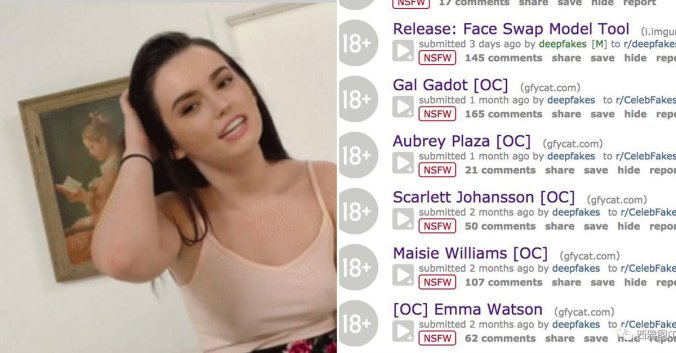
First appearing on reddit, a new trend called “deepfakes” has captured the public’s attention with one of the internet’s oldest promises – nude celebrity photos. Intimate celebrity images appearing online is nothing new in and of itself. A 2014 hack exposed hundreds of nude-celebrity images, while Gawker notoriously posted Hulk Hogan’s sex tape.

However, deepfakes present a novel issue in that the images, and often videos, of the celebrities are fake – but the underlying porn is real. Deepfakes use artificial intelligence mixed with facial-mapping software to essentially copy and paste someone’s face into preexisting porn content. The AI-software’s sophistication is such that content created by it, i.e., deepfakes, can be virtually indistinguishable from an authentic porn video featuring a specific celebrity. Celebrities are often the victims of deepfakes, because deepfakes require massive amounts of “raw footage” to import into the pornographic video. Chances are a celebrity has more time collected on video than the average person, but non-public figures can be the victims of deepfakes too. Continue reading

Autonomous Driving, Standard

Cruise_Automation_Bolt_EV_third_generation_in_San_Francisco

By Daniel Healow

As in many areas where technology has disrupted the status quo, the availability of automotive safety systems has been generally dictated by the speed of its technological development. However, as these technologies are made available to the public, the law is often called upon to create minimum safety regulations on the back end.

As demonstrated at CES and the Detroit Auto Show in early January, automakers are rapidly increasing their research and development spending and highlighting their autonomous vehicle breakthroughs as they jockey for position in the race to bring a consumer product to market.

In some regions, the general public is already participating in early stage self-driving trips, but autonomous vehicles remain firmly in the product development testing phase across the industry. Some industry observers predict a market for these vehicles to emerge “in a noticeable way” by 2020, but less clear is when they will saturate the driving market. While it’s impossible to predict the exact timing, looking to past adoption of safety technologies may offer some evidence that could indicate an imminent mandate based on patterns of federal regulation. Continue reading