The Arrival of CRISPR: Why The Genetically Modified Human Is No Longer Science Fiction

gattacaBy Miles Bludorn

The 1997 film Gattaca, set in “the not too distant future,” envisioned a world where parents possess complete control over the DNA they pass on to their children. The “future” forecasted in the film is now closer than ever with the latest advancement in genetic engineering known as CRISPR-Cas9 (“CRISPR”).

With the use of CRISPR, scientists, for the first time ever, can precisely edit, delete, and rearrange the DNA of nearly any living organism, including humans. Genetic editing using CRISPR takes place inside an embryo on what is known as the germ line. This allows scientists to edit the genetic material that can be inherited by the next generation. After altering, a genetic trait can be passed on to future generations. The potential of editing the germ line does not just mean that we will be able to control a child’s eye or hair color, it could also mean the ability to eliminate hereditary diseases altogether.
Continue reading

Courtroom Theatrics Find New Meaning as Hamilton Sues for Copyright Infringement

hamiltonBy CaroLea Casas

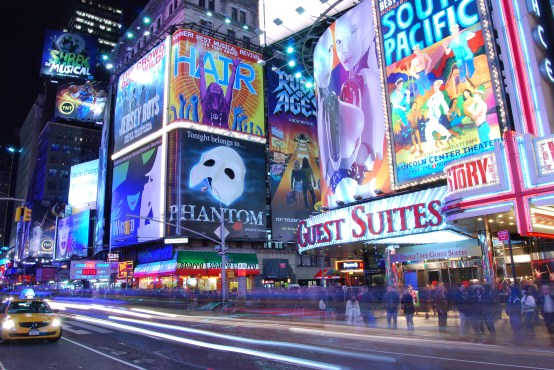
Lin Manuel Miranda’s musical Hamilton is a hit – it’s on Broadway, a national tour, and most likely on your neighbor’s favorite playlist after the soundtrack’s historic debut on music charts.

Even people who have never seen the production know every word to all forty-six songs.  First Lady Michelle Obama herself was quoted by the New York Times as saying “[Hamilton is the] best piece of art in any form that I have ever seen in my life.” With a cast composed predominately of people of color, Hamilton brings a fresh voice, perspective, and representation to an age-old art form. The show is no longer just a production – it is a brand that fans love; and one that its copyright holders are zealously guarding. Continue reading

First They Let You Tweet—Then They Pay You

footballBy Michael Rebagliati

Should your employer let you comment on your workplace on social media? How much should your employer pay you? Do you even “work” for your employer?

For college football players, all of these questions are now connected. Last month a regional office of the National Labor Relations Board issued a controversial advisory memorandum. The NLRB indicated that some rules in Northwestern University’s Football Handbook were unlawfully overbroad with respect to Section 8(a)(1) of the National Labor Relations Act. The NLRB previously interpreted this provision of the statute as enforcing certain rights of expression for employees on social media where those rights relate to “concerted activity for mutual aid and protection.” The provisions of the Northwestern Football Handbook at issue discouraged players’ social media presence largely due to concerns about protecting the school’s image. Among other things, the NLRB memorandum countered that players must have greater freedom to post on social media to discuss issues such as their health and safety.

Continue reading

SCOTUS to Weigh in On Constitutionality of Offensive Trademarks

wa-redskins

Another Controversial Trademark: The Washington Redskins

By Adam Roberts

Simon Shao Tam named his band ‘The Slants,’ to make a statement.  He wanted to address cultural issues and discussions regarding race in society.  This type of free speech is generally considered foundational to the protections of the First Amendment.  But, Tam was denied this right.

In In Re Tam, the U.S. Patent and Trademark Office (USPTO) denied Tam’s registration for ‘The Slants,’ finding that a “substantial composite of persons of Asian descent would find the term offensive.”  Tam appealed his case to the Federal Circuit Court of Appeals who overturned the decision.  In her opinion, Judge Kimberly Moore expressed that the statute on which the Government relied – Section 2(a) of the Lanham Act – was unconstitutional under the First Amendment.  The court held that discrimination against content-based private speech is subject to strict scrutiny, which means the Government must present a compelling interest to restrict this kind of speech.  The Government’s interest in excluding speech they determined offensive was considered illegitimate to the court, and a judgment was entered in favor of Tam.

Continue reading

Expanding the Fringe of Patent Infringement

screen-shot-2016-10-18-at-10-19-49-amBy Sebastian Stock

In Akamai Technologies, Inc. v. Limelight Networks, the Federal Circuit broadened potential patent infringement claims by no longer requiring a defendant perform all the steps of a patented method before direct infringement occurs. As the dust settles from Akamai, should courts expect an influx of patent infringement suits.

Akamai Technologies, Inc. began in 2006 when Akamai Technologies, Inc. (“Akamai”) sued Limelight Networks, Inc. (“Limelight”), claiming infringement of claims on its patent related to its content delivery network (“CDN”). A CDN is a platform of proxy servers designed to directly deliver end-user internet content. CDN’s are widely used – they carry nearly half of the world’s internet traffic.

Continue reading