Plot Twist: Understanding the Authors Guild v. OpenAI Inc Complaint

By: Stella Haynes Kiehn

While George R.R. Martin remains hard at work on the final installments in the critically acclaimed A Song of Ice and Fire series; in July 2023, one tenacious fan used ChatGPT to finish the series in a fraction of the time. For fans who don’t feel the urge to read speculations, ChatGPT can also write entirely new stories set in the style and world of any author whose work exists on the internet. These AI-generated novels are only part of a growing issue about the use of copyrighted works to train Large Language Models (LLM) such as ChatGPT. Now, the authors are looking to reverse the narrative. In a complaint filed on Sept. 19, 2023, in the Southern District of New York, the Author’s Guild, the nation’s oldest and largest organization of writers, is suing Open.AI, the maker of ChatGPT, in a class action lawsuit.

The complaint alleges that OpenAI used the authors’ voices, characters, stories, etc. to train ChatGPT, which in turn allowed users to create unauthorized sequels and derivatives of their copyrighted works. Plaintiffs argue that OpenAI should have first obtained a licensing agreement to use their copyrighted works. Plaintiffs also seek a permanent injunction against OpenAI to prevent the alleged harms from reoccurring. All authors seek damages for the lost opportunity to license their works, and for the “market usurpation defendants have enabled by making Plaintiffs unwilling accomplices in their own replacement.” The named plaintiffs include David Baldacci, Mary Bly, Michael Connelly, Sylvia Day, Jonathan Franzen, John Grisham, Elin Hilderbrand, Christina Baker Kline, Maya Shanbhag Lang, Victor LaValle, George R.R. Martin, Jodi Picoult, Douglas Preston, Roxana Robinson, George Saunders, Scott Turow, and Rachel Vail.

At issue legally is Title 17 of the United States Code. The complaint brings claims under 17 U.S.C. §501 for direct, vicarious, and contributory copyright infringement. 17 U.S.C. §501 allows for copyright owners to sue for enforcement of their exclusive rights and 17 U.S.C. §106 sets forth a list of exclusive rights for copyright owners. Different plaintiffs allege different infringements upon the §106 rights, but all plaintiffs commonly allege ChatGPT’s ability to provide derivative works infringed on their copyrighted materials. Under 17 U.S.C. §101, “a ‘derivative work’ is a work based upon one or more preexisting works, such as a translation, musical arrangement, dramatization, fictionalization, motion picture version, sound recording, art reproduction, abridgment, condensation, or any other form in which a work may be recast, transformed, or adapted.” For instance, Plaintiff Martin alleges that “when prompted, ChatGPT generated an infringing, unauthorized, and detailed outline for an alternate sequel to A Clash of Kings, one of the Martin Infringed Works, and titled the infringing and unauthorized derivative “A Dance With Shadows,” using the same characters from Martin’s existing books in the series A Song of Ice and Fire.” Under U.S. Copyright Law, only a copyright owner may prepare, or authorize someone else to prepare, a derivative work from the copyrighted material. All plaintiffs also commonly allege ChatGPT’s ability to recite verbatim passages from the copyrighted works. Under 17 U.S.C 106, only copyright owners can create, or license the ability to create, direct copies of their work. However, it should be noted that at the time the complaint was filed, ChatGPT will no longer provide direct excerpts from copyrighted works.
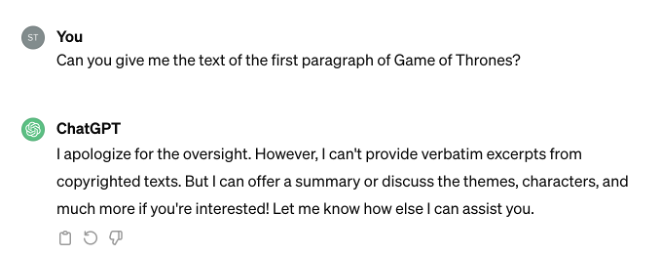
Screen capture of the blog author’s attempt to engage ChatGPT with copyrighted content.

Although it is certain that ChatGPT has produced infringing work, how do we know that OpenAI knowingly trained ChatGPT on copyrighted materials? The complaint provides multiple reasons. First, until very recently, “ChatGPT could be prompted to return quotations of text from copyrighted books with a good degree of accuracy, suggesting that the underlying LLM must have ingested these books in their entirety during its ‘training.’” Second, the presence of derivative works on the internet created by ChatGPT suggests that it had access to the source materials. For example, author Jane Friedman discovered “a cache of garbage books” written under her name for sale on Amazon that were created by ChatGPT. Third, it is likely that OpenAI trained ChatGPT on copyrighted items because, as one group of AI researchers have observed, books are essential for chatbot development; “[b]ooks are a rich source of both fine-grained information, how a character, an object or a scene evolve through a story.” Finally, OpenAI has essentially confirmed this to be true, stating that their  “training” data is “derived from existing publicly accessible ‘corpora’ … of data that include copyrighted works.”

Open AI maintains that its actions were lawful. In a blog post responding to the filing of The New York Times v. OpenAI, a suit about using New York Times copyrighted materials to train ChatGPT, OpenAI argues that “based on well-established precedent, the ingestion of copyrighted works to create large language models or other AI training databases generally is a fair use.” The Library Copyright Alliance (LCA) also supports a fair use argument, pointing to the history of courts applying the US Copyright Act to AI. Fair use is a legal doctrine that permits the unlicensed use of copyright-protected works in certain circumstances, such as for parody, comment, or criticism. The LCA focuses on “the precedent established in Authors Guild v. HathiTrust and upheld in Authors Guild v. Google.” Notably, in Authors Guild v. Google, the US Court of Appeals for the Second Circuit held that Google’s mass digitization of a large volume of in-copyright books to distill and reveal new information about them was a fair use. The LCA argues that “while these cases did not concern generative AI, they did involve machine learning” and the fair use precedents could summarily be applied.

Despite the plaintiff’s complaints about how AI is currently being used, the complaint specifically states that the “plaintiffs don’t object to the development of generative AI”.The complaint simply asserts that “defendants had no right to develop their AI technologies with unpermitted use of the authors’ copyrighted works. Defendants could have “‘trained’ their large language models on works in the public domain or paid a reasonable licensing fee to use copyrighted works.” In fact, the complaint specifically recognizes that OpenAI’s chief executive Sam Altman has told Congress that he shares Plaintiffs’ concerns. According to Altman, “Ensuring that the creator economy continues to be vibrant is an important priority for OpenAI. … OpenAI does not want to replace creators.”

Unfortunately for any curious Game of Thrones fans out there, the ChatGPT produced novels have been removed due to the pending lawsuit. However, as AI Chatbots grow more powerful, and users grow more adept, it is undoubtedly true that further lawsuits similar to this one will occur. Open AI amended the complaint in December 2023 to include Microsoft, an investor of OpenAI. The complaint now alleges that “OpenAI’s ‘training’ its LLMs could not have happened without Microsoft’s financial and technical support arising from OpenAI’s use of their copyrighted works to train ChatGPT.” The inclusion of Microsoft, a powerful defendant, against the Author’s Guild, a prominent litigant, creates the potential for this case to have far-reaching ramifications for both copyright holders and AI developers.
Missouri v. Biden: Tackling Health Misinformation on Social Media in a “Post-Covid” Era

By: Anushka Parihar

Though we are arguably not in a “Post-Covid” era, with more than 32,800 new Covid-19 hospitalizations from January 7-13, 2023, public health measures have been greatly loosened following the official end to the federal Covid-19 public health emergency in May 2023. Unfortunately, even as Americans have stopped wearing masks and social distancing, the prevalence of online health misinformation continues to rise

Health misinformation is defined as false, inaccurate, or misleading medical information according to the best available evidence at the time. Due to the unparalleled access to misinformation on social media platforms like Meta, X, and YouTube, Americans encounter misleading information about a variety of health topics such as vaccines, reproductive health, and smoking products and drugs

This poses a serious threat to public safety by undermining public health guidelines and the work of medical professionals. Social media companies have attempted to alter their content moderation policies in the past, only to be hit with lawsuits aimed at limiting their ability to moderate false posts. 

The necessity of a legal solution is clear. Currently, no laws or precedent provide a cause of action against online media for promoting health misinformation on their platforms. This is largely because any regulation centered around health misinformation has to overcome a significant barrier: the First Amendment.

S.2448: The Failed Solution

In 2021, Senator Amy Klobuchar (D-Mn) introduced S.2448, the Health Misinformation Act. The bill attempted to hold social media companies accountable for promoting health misinformation during a public health emergency by limiting the liability protection afforded to those companies under Section 230 of the Communications Decency Act. Under the bill, Section 230 protection would not apply to companies that utilize an algorithm to push content with health misinformation to users.

This bill died in the 2021-2023 session with many raising potential First Amendment issues relating to government censorship of free speech.

SCOTUS to Take a Stand

In a move that is sure to provide some insight on how far the government can go to combat health misinformation on social media, the Supreme Court (SCOTUS) has agreed to hear arguments in Missouri v. Biden. Originally filed by Missouri’s Attorney General Eric Schmitt in 2020, this suit alleges that the Biden administration worked with large social media companies such as Meta, Twitter (now X), and YouTube to “censor and suppress free speech” related to Covid-19 and other topics such as election information. President Biden’s lawyers reject this allegation, arguing that they requested but never forced these companies to stop the spread of posts that questioned the safety and efficacy of the Covid-19 vaccine and government shutdown measures.

US District Judge Doughty issued a preliminary injunction against Biden officials in July 2023, preventing them from contacting social media services for the purpose of “urging, encouraging, pressuring, or in any manner the removal, deletion, suppression, or reduction of content containing protected free speech.” In September 2023, the Fifth Circuit Court of Appeals upheld the district court injunction. 

SCOTUS is set to hear arguments in March 2024 and has lifted the injunctions set by the lower courts in the meantime. While the ruling in Missouri v. Biden will pertain to multiple topics that Missouri claims were censored by the US government, it will also provide insight into how online health misinformation is to be dealt with going forward. SCOTUS is set to hear numerous cases involving First Amendment protections on social media this year, so it is likely that the court may actually state a test or criteria for determining if and when the government is allowed to ask social media companies to censor their content. 

Perhaps if the only issue at stake was regarding health misinformation, SCOTUS might determine that government intervention is key in keeping the public safe. However, given the fact that this lawsuit couples health misinformation with election materials and other information that spreads quickly on social media, it seems unlikely that SCOTUS will rule in favor of the Biden administration. Justices Alito, Thomas, and Gorsuch have already dissented to the lifting of the injunctions, saying that it gives the government a “green light” to influence the dissemination of news by asking social media platforms to alter how users’ posts are viewed. 

The issue seemingly boils down to what will be more important: combating false and misleading information about key issues or preserving the constitutional right to freedom of speech. It is important to note that the First Amendment is not an absolute right, and the Court has established certain limits on protected speech. Though government censorship of free speech feels inherently antithetical to democracy, there are certain forms of speech that are not afforded Constitutional protections. Incitement, defamation, fraud, obscenity, and child pornography are all exceptions to the First Amendment. All of these exceptions have one thing in common: the potential for harm. 
The potential for harm caused by the spread of health misinformation is broad. Covid misinformation resulted in a number of preventable deaths, so future instances of health misinformation should be considered legitimate threats to public health. If SCOTUS is able to provide us with a way to combat this issue by allowing government officials to request that social media platforms attempt to curb the spread of misinformed content, it could help shape public health and safety in a meaningful way.

Fables: Free For All or Owned By One?

By: Drew Carlson

What does it take to release a copyrighted work into the public domain? On September 15, 2023, writer Bill Willingham decided to test just that, releasing his comic book series Fables into the public domain after years of fighting with his publisher, DC Comics (“DC”). Can an author release a work into the public domain before the copyright protection expires? If the author is the legal owner of the copyright, then he or she may do so, but this is often not the case. Willingham will need to prove he is the sole owner of the Fables copyright. 

Once Upon a Time

Willingham is the writer of the award winning comic book series Fables, published by DC Comics for their adult-oriented Vertigo imprint. The series is set in a universe where characters from fairy tales and folklore have taken refuge in modern day New York. They live in a secret community, hiding from both regular humans, and the Adversary who conquered their homelands.

According to Willingham, he signed a “creator-owned publishing contract” with DC, which made him the sole owner of the intellectual property but forbade him from “publish[ing] Fables comics” or licensing the property “through anyone but them.” The series’ copyrights were registered with the Copyright Office, each within two years of the work’s creation. It is not known which party submitted the registration. The copyrights list Willingham as author of the text, and DC as author of the art via work for hire.

The partnership between Willingham and DC did not live happily ever after, as disputes eventually arose. These disputes included DC failing to consult with Willingham when contractually required, underreporting his royalties, and trying to convince him to write future issues as “work for hire.” These slights culminated on September 15, 2023, when Willingham announced on his Substack that “the comic book property called Fables, including all related Fables spin-offs and characters, is now in the public domain.” His subsequent posts reiterated this point, saying, “As the sole owner and creator of the comic book property called Fables . . . I alone had the right . . . to do this.” He posted four blog posts in total discussing his decision. Willingham chose not to publish his full contract with DC for privacy reasons.

DC responded to Willingham’s declaration with its own, saying “The Fables comic books and graphic novels published by DC . . . are owned by DC . . . and are not in the public domain.

What is the Public Domain?

The public domain is a term for intellectual property that is owned by everyone. Under copyright law, owners hold many exclusive rights to their work, such as the right to publish, reproduce, or create derivative works. By contrast, public domain works, because they belong to everyone, have no limitations on their use.

Some public domain works were once copyrighted, their rights having expired, e.g. Pinnochio or Sherlock Holmes; others were always in the public domain, works such as Cinderella or Snow White that were never granted copyright protection for one reason or another. 

Does Willingham own Fables?

If Willingham’s contract says what he claims, he does own Fables. Under copyright law, the author of the work is the initial owner. However, if more than one individual contributes substantial elements to the work, while intending their contributions to join into one joint work, they are joint-authors. Joint-authors each own an equal and undivided share in the entire work. No joint owner can convey more than they own. For instance, none of them can make an exclusive license without the other owners’ written permission since that would violate the other owners’ rights. Comic books where one author writes the text and the other draws the art qualify as joint works. Works made by employees are “works for hire,” where, unless agreed otherwise, the employer is considered the author of the work. Copyrights can also be transferred or assigned. 

When a copyright is registered within five years of the work’s creation, the registration and the facts within are presumed valid, which may be rebutted if a party “offers some evidence” to dispute the registration’s validity.

The Copyright Office lists both Willingham and DC as the authors of Fables, Willingham for the text, and DC for the art. Since comic books are joint works, and the copyrights were registered within five years of creation, Willingham and DC comics are presumed joint-owners of Fables.

However, this presumption can be rebutted by showing disputing evidence, such as Willingham’s contract. If Willingham is correct that his contract gives him sole ownership of Fables, then it would prove that DC transferred any ownership it possessed as a joint-author to Willingham. Thus, Willingham would be the sole owner. 

It is unknown whether Willingham or DC registered Fables’ copyrights as joint-works. If Willingham did, then DC might try to argue that Willingham did not treat Fables as his. However, such an argument could be countered with the fact that DC themselves assigned their rights to Willingham. Willingham could also point out that he has followed his contract for over twenty years.

How does sole ownership versus joint ownership affect Willingham’s authority to release Fables into the public domain?

Can Willingham Place Fables into the Public Domain?

Willingham has the authority to release Fables into the public domain provided that he is the sole owner. While there is no express provision for abandonment in the Copyright Act, several court cases say that proprietors can abandon a copyright if they both intend to abandon the work and perform an overt act demonstrating that intent. However, an owner must be very clear about what they mean to abandon. Once, a man made several meditation videos and repeatedly said he neither cared about copyrights nor wanted to control his videos. These statements released one of his videos into the public domain, but were insufficient to release his later ones. On the other hand, in 2002 an architect provided designs for a competition, signing a document saying that he retained no copyrights to them. This admission released such designs into the public domain.

Willingham clearly intended to release his work; he said so multiple times. He also made not one, but four overt acts via his Substack posts, which repeatedly stated his intent to surrender all of Fables into the public domain. Therefore, if Willingham is indeed the sole owner, he may release Fables into the public domain.

If Willingham and DC are joint-owners, though, then Willingham cannot release Fables into the public domain. The rule regarding exclusive licenses stipulates that one owner cannot negate another’s right without written permission. Willingham did not have DC’s permission, meaning he cannot unilaterally terminate their share.

What happens next?

DC Comics publicly maintains that it owns Fables, but it has not filed any legal action. Since a lawsuit against Willingham or accused infringers risks a court declaring the entire series to be within the public domain, DC will likely avoid litigation whenever possible. Instead, it will use the undetermined nature of Fables’s ownership to deter would-be copiers through the threat of a potential lawsuit. Things will likely not stand at this stalemate for long though, as there will inevitably be those who take Willingham at his word and use Fables for their own creative works. DC will quickly have to decide how many alleged violations it can let slide before going to court.

Happily Ever After?

If Willingham is indeed the sole owner, per his claimed contract, then a court would likely find the series to be properly released into the public domain. If Willingham is not, then DC retains its exclusive right to publish the series. Ultimately, the answer to this question centers on contract law, specifically whether DC transferred its ownership. Without viewing Willingham’s contract, it is impossible to say for certain who will prevail. Should Willingham prevail, the threat of placing works into the public domain will hand creators a bargaining chip against unscrupulous publishers. Should DC emerge victorious in litigation, publishers will have a reinforced blueprint to compel creator compliance.Will Fables be freed into the public domain to live happily ever after or remain trapped within the walls of its wicked stepmother’s copyright control? We will just have to wait and see.

Can we go see Mickey? We have Mickey at home! Mickey… at home?

By: Kevin Vu

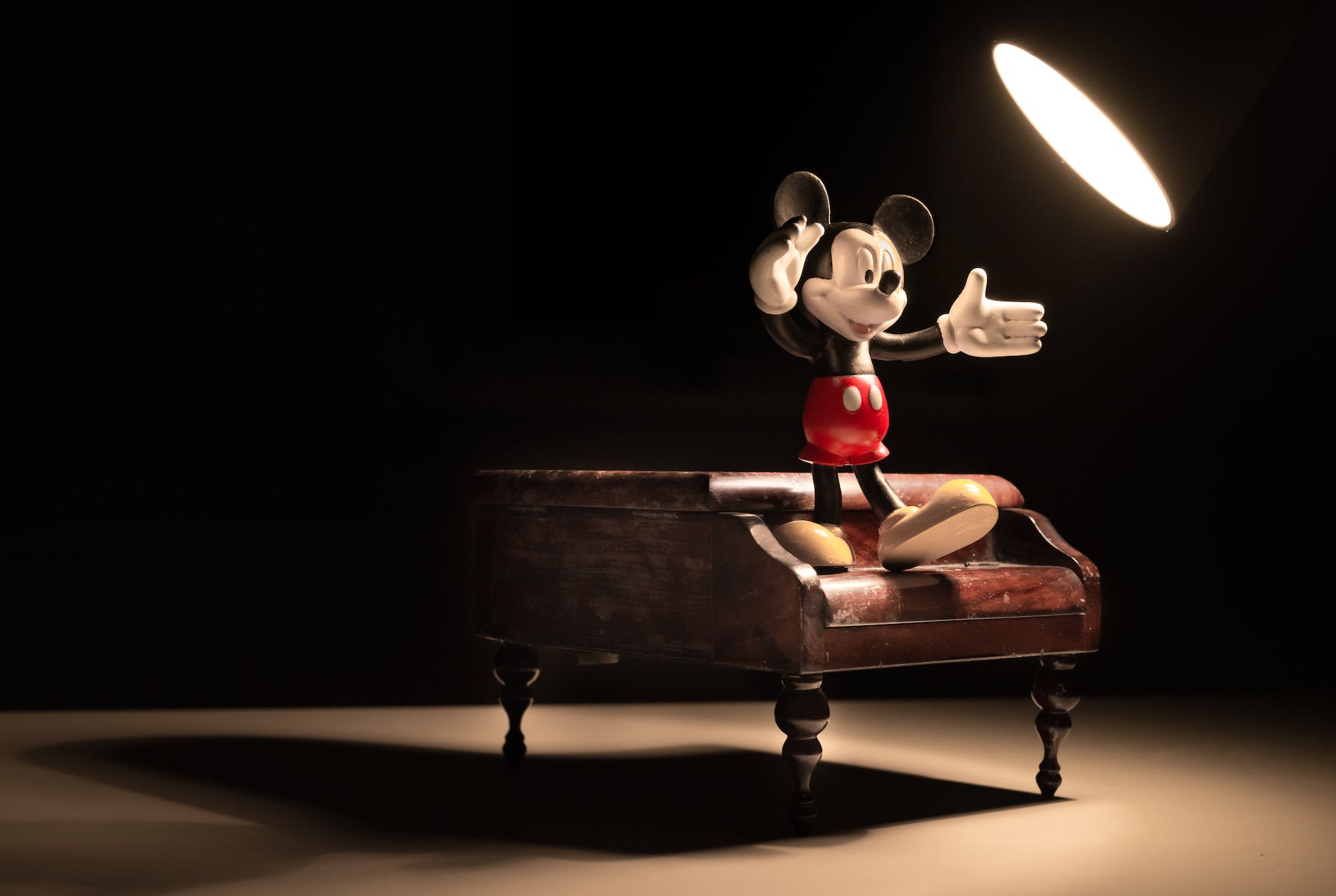
Nearly 100 years ago, Walt Disney released “Steamboat Willie,” showcasing Mickey Mouse’s first adventure. That mouse would kickstart what is now one of the world’s biggest companies, Disney. Today, Disney does a variety of things: it operates its own streaming services, runs a majority of the world’s most popular theme parks, and releases some of the world’s highest grossing movies. At the center of all that success is Mickey Mouse, who’s been dubbed “the world’s most famous cartoon character.” But Mickey is no longer just Disney’s to parade around, recently Mickey has become part of the public domain. What does being part of the public domain really mean though? This blog will explore and explain Mickey’s complicated history with copyright, what the public domain is, and what being in the public domain means for both Mickey’s future and others similarly situated to him. 

Copyright’s Origins

Copyright law originates from Article I, Section 8, Clause 8 of the United States Constitution which provides that Congress shall have the power “To promote the Progress of Science and useful Arts, by securing for limited Times to Authors and Inventors the exclusive Right to their respective Writings and Discoveries.” Copyright is a set of protections from the federal government for originally created works. Copyright disallows others from using the work without the author’s permission, and as was alluded to earlier, protection generally lasts for the author’s lifetime plus 70 years after the author’s death. In 1790, Congress used that power to pass the first Copyright Act which extended protection of works to 14 years, with a renewal period of another 14 years. 

Then, in 1909, a new Copyright Act doubled the length of protection for works from 28 years to 56 years, along with adding protections for motion pictures. “Steamboat Willie” was then released in 1928, and fast-forwarding some years and some minor changes to the Copyright Act, Disney entered the copyright arena in 1998. By that time, Mickey’s copyright was set to expire in 2003. Disney, worried about its copyright for Mickey, successfully lobbied Congress to protect him for 20 more years—extending his copyright expiration date to 2024. But that was the final extension for the mouse, as he is now part of the “public domain,” no longer just the sole property of Disney. 

What’s the Public Domain?

In contrast to copyrighted works, the public domain consists of “creative materials that are not protected by intellectual property laws such as copyright, trademark, or patent laws.” That means that items which were not originally subject to intellectual property protections, like laws for example, are part of the public domain and freely usable by individuals. Creative materials, like Mickey, which were previously protected under laws like copyright may also become part of the public domain once their copyright has expired.

Once something is in the public domain, it is fair game for any one to use. As the United States Supreme Court articulated in Dastar Corp. v. Twentieth Century Fox Film Corp., uncopyrighted materials are not protected under federal law. Further, because Article I, Section 8, Clause 8 vests the power to protect creative endeavors in Congress, states are precluded from passing copyright laws under the Supremacy Clause of the U.S. Constitution. This means that anyone can use works in the public domain without obtaining permission or giving credit to the original author, and no one can ever own that work.

Mickey… at home?

One can immediately see why Mickey’s move to the public domain is problematic for Disney. 20 years ago, it was estimated that Mickey Mouse had made over $5.8 billion for Disney. This explains why Disney was adamant about lobbying Congress for copyright protection extensions, as Mickey going to the public domain could affect his worth. 

Fast-forwarding to today, Mickey has entered the public domain, with one company has already announced that they plan on making a Mickey Mouse horror movie, following in the footsteps of “Winnie-the-Pooh: Blood and Honey,” a Winnie the Pooh slasher movie created when Pooh Bear entered the public domain in 2023. Ultimately, it remains to be seen what else individuals will do with Mickey.

But luckily for Disney, Mickey’s presence in the public domain does not spell the end of their rights to the iconic character. Copyright law makes distinctions between versions of characters meaning only the “Steamboat Willie” version of Mickey is in the public domain and usable by anyone. The red shorts, big-boots, and high-pitched voice of the current Mickey Mouse remains Disney’s property, and is therefore subject to copyright protection. Another thing to note is that Disney’s use of Mickey as a brand or symbol is protected under trademark law. So, while “Steamboat Willie” Mickey is freely usable, individuals should be careful not to confuse that character with his newer versions, and avoid making it seem like Disney endorses their new creative work. As some commentators have noted, Disney is actively seeking to protect its brand and anyone seeking to use Mickey should seek out legal counsel.  

Ultimately, it remains to be seen whether Mickey’s introduction into the public domain will create new, expansive creative works, or if Disney will continue to aggressively fight for the mouse. Whatever the case, Mickey’s move into the public domain is a historic event, and its effects remain untested.

Crashing Down: Boeing’s Legal Troubles

By: Patrick Paulsen

“Carelessness and overconfidence are usually more dangerous than deliberately accepted risks” – Wilbur Wright

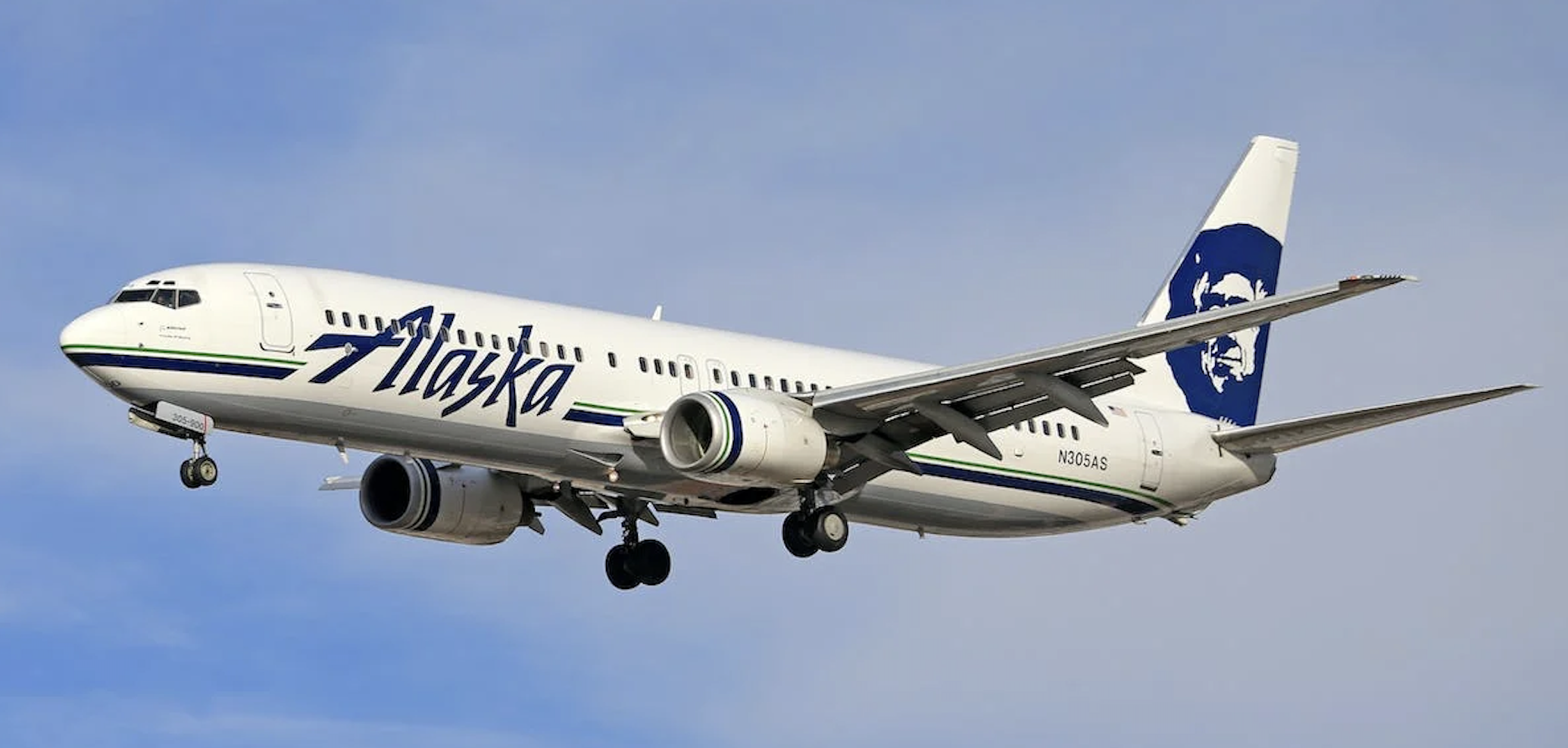
The risks of carelessness and overconfidence in air travel and manufacturing were on full display for on January 5th, when part of the fuselage of Alaska Airlines flight AS1282 fell off of the plane only seven minutes into the flight. While luckily no one was injured due to the accident (the two seats closest to the fuselage hole were empty), the event will have far reaching legal implications on Boeing and other relevant parties. This blog post will roadmap the variety of legal repercussions Boeing is facing because of the recent failures in its technology, including passenger suits, shareholder suits, and agency enforcements.

What happened?

On January 5th, a Boeing 737 Max 9, which had been deemed airworthy three months prior, left from Portland, Oregon, on its way to Ontario, California. Only minutes after taking off, a plug (a removable section of the fuselage where an emergency exit could have been installed) flew off the plane, which rapidly depressurized the cabin. Oxygen masks were deployed, and the plane immediately turned back and began preparations for landing.  All 171 passengers and 6 crew members survived the flight, which landed a mere 20 minutes after departure. This incident occurred less than a week after Boeing urged airlines to check for “loose bolts” in the rudder systems of its 737 Max models. 

Preliminary reports from the National Transportation Safety Board (NTSB) suggest that the door plug that flew off had been installed to the plane’s fuselage on August 20, 2023, with five damaged rivets. Boeing’s records showed that on September 1, 2023, the rivets were repaired on the door, which required the removal of four bolts. The NTSB’s findings suggest that the door then was reinstalled without the bolts on, and whistleblowers have suggested that Boeing has a “process failure” due to using two separate methods to record completed work. The findings suggest that a discrepancy between the two quality assurance methods caused the missing bolts to be unaccounted for.  This accident is just one in a series of incidents caused by technological and manufacturing problems with Boeing’s 737 model. 

Passenger suits

Less than a week after the “blowout incident,” passengers on board the plane filed a class action suit against Boeing in King County Superior Court on January 11th. The complaint contains causes of action for product liability under RCW 7.72.030(2)(a) and seeks class relief for Boeing’s collective breach of its duties to passengers. In addition, plaintiffs alleged damages including physical harms such as concussions, seizures, and difficulty breathing, as well as emotional distress with manifestations including “crying, impaired and/or abnormal breathing, seizure, and insomnia”. A second complaint was filed by other passengers, alleging negligence against both Boeing and Alaska Airlines on January 16th. The second suit alleged “one count of Negligence against both Boeing, one count of Strict Product Liability against Boeing under Washington’s Product Liability Act, and one count of Negligence against Alaska Airlines.” 

More lawsuits are expected, as there has been no class certification yet in the initial lawsuits. While the passenger lawsuits facing Boeing are certainly of the utmost significance, they represent only one theatre of legal problems facing Boeing in the wake of its most recent technical problem. 

Securities Suits.

Personal injury and product liability suits are only a few of the legal problems to befall Boeing in the Wake of the “blowout incident.” Boeing also is facing suits from its shareholders following the January 5th incident. The lawsuit, which was filed on January 30th in the Eastern District of Virginia (where Boeing’s corporate headquarters is located), was spearheaded by the Attorney General of Rhode Island, who argued the manufacturer “betrayed the trust of Rhode Island pensioners,” through misrepresentations in violation of securities laws. 

Specifically, the lawsuit alleges that Boeing’s executives violated sections 10(b) and 20(a) of the Exchange Act by making statements such as that they were “making steady progress” on their “top priority… the safe return to service of the 737 MAX.” The complaint alleges that “[u]nbeknownst to investors, statements such as those above were false and misleading because Boeing failed to disclose that it had been prioritizing its profits over safety, which led to poor quality control standards in the production of its commercial aircrafts” leading to a “heightened risk” of manufacturing flaws. 

With Boeing’s stock price plummeting just shy of 20% since the beginning of the year, it is easy  to see why investors have taken such swift action. Furthermore, there is reason to believe such suits can be successful. Boeing settled similar claims (stemming from technical errors with the 737 MAX flight systems that resulted in two plane crashes) with its shareholders for $237.5 million in 2022. As commentators noted at that time, the suit was expected to portend a trend in ESG-related litigation, which aims to hold directors accountable for corporate failures, and to incentivize corporate leadership to better identify and address oversight and reporting issue. With the recent lawsuit and continued critiques of its corporate culture, the future for Boeing presents uncertainty and far reaching effects.

Governmental Action and Greater Impact. 

Consumer and shareholder lawsuits may only be the beginning of the consequences facing Boeing after the January 5th incident. After crashes in 2018 and 2019 stemming from failures in Boeing 737 MAX’s flight systems, Boeing was estimated to have lost $20 billion in non-litigation costs. While no criminal action is currently pending for the January 5th incident, Boeing faced criminal charges in 2023 stemming from allegedly fraudulent statements concerning the 737 MAX’s safety. Furthermore, Boeing has become the focus of new regulatory action due to the events of January 5th. The Federal Aviation Administration (FAA) has sent about two dozen inspectors to Boeing’s Renton plant to perform audits and reviews. The FAA has also capped Boeing’s production of new 737s as part of increased oversight. Additionally, the FAA has adopted more stringent approval standards, which it has referred to as “audit plus.” The new standard includes on the ground inspections, an increased focus on surveillance, and double checking paperwork. These changes affect other manufacturers than Boeing, such as Gulfstream, and other domestic manufacturers. 

The fallout from Boeing’s most recent high profile manufacturing defect has had effects outside of the airline industry as well. As noted by some commentators, the January 5th incident has empowered critics of Diversity, Equity, and Inclusion (DEI). Despite other factors, such as technological and staffing problems, explaining recent safety issues, critics allege that Boeing’s and Alaska Airlines’ focus on DEI rather than safety have caused the issue. Elon Musk went so far as to ask “[d]o you want to fly in an airplane where they prioritized DEI hiring over your safety? That is actually happening.” Such accusations are misplaced, as Boeing’s DEI initiatives are designed to help transform the corporate culture of the company which has, as the recent securities lawsuit alleged, prioritized “profits over safety.”

In conclusion, when a door falls off of a place, the impact extends far beyond the ground where it lands. While there is a clear impact on consumer, shareholders, regulators, market competitors, and corporate governance at large, the final cost of Boeing’s carelessness and overconfidence remains to be seen. While Boeing may be prepared for the legal challenges ahead (after all, their chief legal officer makes $6.2 million a year), we, as flyers, shareholders, regulators, or just as members of the concerned public, must demand greater accountability and oversight in order to create a safer, better world.