Glorified Gambling: Moral and Legal Issues Within the Gacha Gaming Industry

By: Kiara Hildeman

What are gacha games?

Gacha games were first developed and received popularity in the early 2010s with the release of the first notable gacha game which shifted Japanese gaming culture forever. Gacha games are video games that revolve around a “gacha” (toy vending machine) mechanic. This mechanic functions through virtual in-game currency that is traded for a randomized item to be used in the video game. Items include anything from characters to weapons and each fall on a spectrum of rarity and utility. Therefore, players are known to “roll” for the rarest items multiple times during the window of availability. 

In the United States, gacha games have been in the forefront of gaming in recent years with the release of hits like Genshin Impact. Games like these are free to download but include in-game purchases that often raise more revenue than would purchases for the game itself if it were sold for a one-time retail price. Popular games nowadays are sold for upwards of $60 and are anticipated to increase in price through the upcoming year. Since its release in September 2020, Genshin Impact has accumulated over 127 million downloads, and since then, the game has generated $3.7 billion in revenue.

How is gacha gaming harmful?

In-game currency is much like gambling chips as they are both purchased with real money. Also like gambling, gacha games are highly addictive. The chance-based mechanics of the games render them predatory and exploitative of their users. Addicts of gacha games are known to spend thousands of dollars on in-game currency, desperate for the best characters, gear, and skins. However, the difference between gacha games and gambling is that the prizes in gacha games have little real-world relevance. Gamblers and casinos have the opportunity to win a jackpot prize of real money for real purchases while gacha gamers are betting for virtual prizes that are later superseded by new items with each update to the game.

While gacha games are free to download, they are incredibly hard to succeed in if a player chooses to be “free-to-play”. Obviously, a free-to-play player will struggle when up against a “whale” who has invested a ton of money to possess the best items. The competitive atmosphere of these games influences their players to use their real money to acquire in-game items that will boost their stats. With new content being released on a weekly, monthly, or quarterly basis, a cycle is created wherein players must continue to gamble their money to maintain their status or ranking in the game.

What are the legal issues of gacha gaming?

Fundamentally, gacha games and gambling are almost identical. An alarming difference is that age restrictions for gacha games are lenient and hard to enforce. In casinos and with online gambling, the minimum age of eighteen is regularly enforced. Under Washington law, penalties for underage gambling include fines (up to $125), up to four hours of community service, court costs, and forfeiture of any winnings. Meanwhile, most gacha games have a minimum age of twelve. Genshin Impact is rated twelve and over and suggests having parental or guardian consent upon purchasing in-game currency. Still, there is no age verification process in the game, and there is no way to monitor whether a child has received parental consent. Compared to gambling, the innocent mask of a virtual game makes parents less likely to monitor the use of gacha games, increasing the likelihood that children are spending hours on these games unsupervised. There are sure to be ill effects with exposure to gambling at such a young age, including strained relationships, delinquency, and depression. If the gambling industry deems age restrictions necessary, then why should gacha games be open and accessible to teenagers and children?

A number of countries have enacted legislation that limits and restricts gacha gaming. In 2012, Japan’s Consumer Affairs Agency declared complete gacha to be a violation of the law. Complete gacha is a particular model of gacha wherein players are required to collect a series of items in order to claim a grand prize. Japan’s Consumer Affairs Agency felt that complete gacha was too similar to gambling, and the decision was a reaction to two cases where one middle schooler spent $5,000 in a month and another student spent $1,500 in three days on complete gacha rewards. China has also implemented restrictive gacha law that discloses the drop rate of items and loot boxes and a system of “pity” where a player is guaranteed an item after a certain number of purchases. The UK Gambling Commission has stated that video game loot boxes are a reason behind the rise in underage gambling and more children being classified as “problem gamblers”. Currently, only a handful of countries have active gacha regulations, and these games are fully banned in Belgium and the Netherlands.

In the United States, the circuit courts are split over whether gacha games constitute gambling. For one, judges cannot decide what the intrinsic value of virtual currency should be. Second, the nature of gacha games results in injuries that are often intangible and not addressable through the current court system and statutory framework. For example, if gacha games are not considered gambling, then plaintiffs cannot reasonably bring their claims under their state’s anti-gambling statutes. However, this has not stopped claims against these video games. In Taylor v. Apple, Inc., plaintiffs sought to hold Apple liable for having games on their app store with “features legally equivalent to slot machines.” A plaintiff’s minor son felt that he had been “induced” to make “in-game” purchases on loot boxes while playing Brawl Stars. The California federal district court dismissed the complaint and suggested seeking legislative remedies as loot boxes are not plainly prohibited by statute. In recent years, several states including Washington have introduced bills to regulate loot boxes in games (though all have failed). In 2019, the Protecting Children From Abusive Games Act was introduced in the Senate with intentions to regulate pay-to-win microtransactions and loot boxes in minor-oriented games. All these unanswered questions are understandable when it comes to the new realm of gacha gaming, but the United States will have to make a decision sooner or later as young and unsuspecting Americans continue to download these games and fall victim to their tactics. 
Have Trademark Protections Gone to the Dogs?

By: Nick Clawson

Spuds Mackenzie was not without his share of controversies as the face of Bud Light from 1987 to 1989, but at least the “original party animal’s” antics never prompted Supreme Court intervention. Unfortunately, the same cannot be said for VIP Products (“VIP”) and their “Bad Spaniels” chew toy. The Supreme Court recently granted the petition for a writ of certiorari in Jack Daniel’s Properties, Inc. v VIP Products LLC, a case that will review the 9th Circuit’s application of one of trademark law’s most well-known cases. The outcome at the nation’s highest court next year could result in an expansion of the fair use defense in trademark infringement cases, as well as new challenges for trademark owners moving forward.

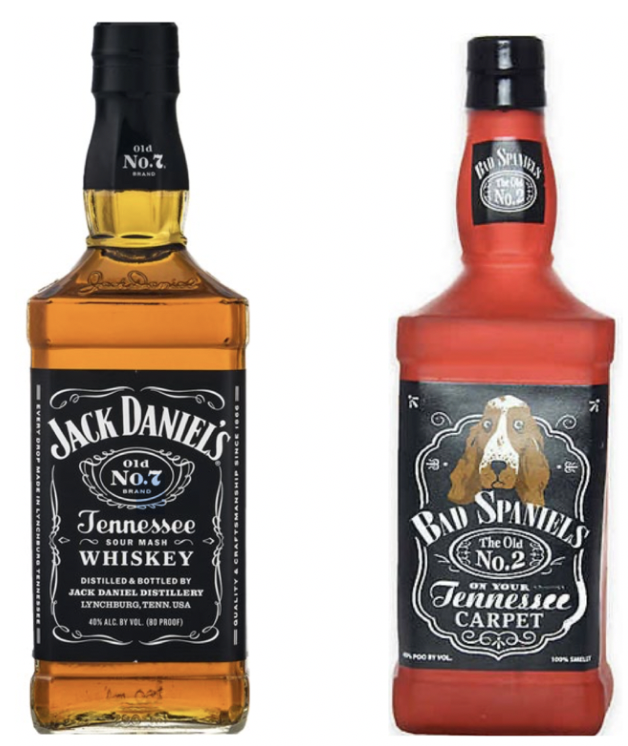
VIP Products, a manufacturer of dog toys, sells a plastic squeak toy that resembles a bottle of Jack Daniel’s Old No. 7 Black Label Tennessee Whiskey. VIP’s “Bad Spaniels” toy incorporates dog puns and “poop humor” to distinguish the two products, as depicted below. Per court filings, the dog toy also comes with a tag stating that the product is “not affiliated with the Jack Daniel Distillery” (not pictured). 

After receiving a cease-and-desist letter from Jack Daniel’s in 2014, VIP filed the present action, seeking declaratory judgment that the dog toy did not infringe upon or dilute the distiller’s trademark. VIP alleged that the dog toy constituted both nominative and First Amendment fair use. While differing slightly in application and analysis, both would provide an affirmative defense to an infringement claim.

Nominative fair use involves a party’s use of a trademark in a descriptive manner to refer to the trademark and its associated goods or services. The Ninth Circuit Court of Appeals outlined the requirements for the nominative fair use defense in the 1992 case New Kids on the Block v. News America Publishing, Inc., which would allow VIP to avoid liability for infringing use of an identical trademark if they could demonstrate each of the following: (1) the product is difficult to describe or identify without using the trademark; (2) the use of the trademark is limited to the amount necessary to identify the product; and (3) nothing about the use of the trademark could suggest endorsement or sponsorship by the holder of the trademark. Such a nominative use would, by definition, not dilute the distiller’s trademark. 

First Amendment fair use, as applied to trademarks, protects the right of an alleged infringer to use a trademark (or, often, a humorous variation thereof) for creative expression. While courts generally grant greater latitude when the use is purely creative, the Ninth Circuit notes in this case that parodying a trademark for a commercial product is not inherently dispositive. Courts generally review the case facts to determine whether (1) the use is actual parody, and (2) whether the use is likely to cause confusion for consumers. Whether the mark is diluted would depend upon the outcome of this second factor–if the likelihood of confusion is low, a trademark is less likely to be diluted by the parodic use.

The district court rejected both of VIP’s fair use defenses. First, the district court held that, because VIP did not use the identical Jack Daniel trademark or trade dress in its toy, it could not be considered nominative fair use. Second, the district court held that VIP could not receive First Amendment fair use protections because the manufacturer used Jack Daniel’s distinctive trade dress to promote a commercial product, which traditionally weighs against a finding of fair use. Furthermore, the district court found that the distiller’s brand had been tarnished by the squeaky look-alike and granted partial summary judgment to Jack Daniel’s.

The Ninth Circuit Court of Appeals, however, viewed two of VIP’s arguments much more favorably. While affirming the lower court’s holding regarding nominative fair use (reiterating that nominative fair use defense did not apply where a mark was “not identical”), the circuit court held that the dog toy constituted an expressive work deserving of First Amendment fair use protections. To reach this conclusion, the Ninth Circuit attempted to balance artistic expression with trademark rights utilizing several precedential tests. First, the Lanham Act, which governs trademarks at the Federal level, imposes liability upon those who create a likelihood of confusion with a valid, protectable trademark. The court notes, however, that this test fails to fully account for the public’s interest in free expression and thus is only applicable when the plaintiff can establish one of the two requirements set forth in Rogers v Grimaldi—a landmark trademark case from 1989 out of the Second Circuit Court of Appeals. In the Ninth Circuit, the Rogers test requires the plaintiff to show that the defendant’s use of the mark is either (1) not artistically relevant to the underlying work or (2) explicitly misleads consumers as to the source or content of the work. 

The Ninth Circuit held that the VIP’s chew toy, while “not the equivalent of the Mona Lisa,” did constitute artistic expression, commenting on corporations (like Jack Daniel’s) that take themselves and their brand “too seriously.” The court further held that, because VIP’s chew toys conveyed an artistic expression, its use of the Jack Daniel’s trade dress did more than propose a commercial transaction, making the use noncommercial overall. Therefore, the use did not dilute the distiller’s trademark. The circuit court remanded the case back to the lower court for a determination of whether Jack Daniel’s could satisfy either prong of the Rogers test. Jack Daniel’s appealed this decision.

Next term, the Supreme Court will take on two questions arising from this decision: 

(1) Whether humorous use of another’s trademark as one’s own on a commercial product is subject to the Lanham Act’s traditional likelihood-of-confusion analysis, 15 U.S.C. § 1125(a)(1), or instead receives heightened First Amendment protection from trademark-infringement claims; and 

(2) whether humorous use of another’s mark as one’s own on a commercial product is “noncommercial” and thus bars as a matter of law a claim of dilution by tarnishment under the Trademark Dilution Revision Act, 15 U.S.C. § 1125(c)(3)(C).

The answer to the first question will hinge upon the Ninth Circuit’s holding that VIP’s dog toy constituted artistic expression. While it may sound bizarre, it is supported, albeit indirectly, by a 2007 decision out of the Fourth Circuit Court of Appeals—Louis Vuitton Malletier S.A. v. Haute Diggity Dog, LLC.  The defendant in this case produced a line of dog toys based on the famous luxury brand’s name and logo (aptly named “Chewy Vuiton”). The Fourth Circuit held that the toys constituted a successful parody that was similar to, yet clearly distinct from, the registered mark. Given the First Amendment protections granted to parody, the court then applied its own likelihood of confusion test (the Pizzeria Uno test, analogous to the Rogers test), holding that the factors substantially favored the dog toy manufacturer and that any likelihood of confusion was minimal. Furthermore, the court held that the toys did not dilute the fashion house’s mark by either dilution or tarnishment. Regarding dilution, the court noted that the similarities found in the toy were not close enough to destroy the parodic message in the product or lead consumers to believe that they were a source of Louis Vuitton merchandise. Regarding tarnishment, the court held that the fashion house had not provided any evidence that would support a finding that the dog toys had harmed their illustrious brand.

Several concerned parties have already filed amici curiae briefs in support of Jack Daniel’s, including the American Intellectual Property Law Association, the International Trademark Association, and the American Craft Spirits Association. Many note that the Rogers test has been historically limited to artistic works, and that its application to commercial products is misguided. Their concerns are certainly valid–if the Ninth Circuit’s approach is adopted in this case, trademark owners will likely have a more difficult time bringing infringement actions against parodies of their marks and trade dress. However, the circuit court’s approach does not appear to be so limiting as to grant potential infringers free reign over registered marks under the guise of protected parody. This case will likely be one in which the Supreme Court steps in to clarify and elaborate upon the various circuits courts’ decisions, rather than a major upheaval of trademark law and free speech protections.

Couldn’t Get Tickets to the Taylor Swift Concert? A Retroactive Look at the Live Events and Ticketing Monopoly in the US

By: Justine Kim

With soaring anticipation for the first live tour in five years, 3.5 million “registered” Taylor Swift fans around the country attempted to purchase presale tickets for the Eras Tour on Tuesday, November 15, 2022, ultimately resulting in website crashes and the cancellation of the scheduled public sale for non-registered fans. Although 2.4 million tickets were sold on that Tuesday, the incident became the catalyst for reignited scrutiny against Ticketmaster by concertgoers and artists alike, with renewed accusations of the company “abusing its market power at the expense of consumers.” As is the case for 80% of the ticketing market in the U.S., the Eras Tour tickets were sold by Live Nation Entertainment Inc. (LNE) through Ticketmaster

In 2010, Ticketmaster completed a $2.5 billion, tax-free merger with Live Nation to form LNE. This merger has been criticized (since its announcement) for “locking” competitors out of the industry and leaving consumers out of options. Consumers, lawmakers, and artists have continuously sought antitrust investigations into LNE for allowing the merged company to be the predominant servicer of tickets and live events in the U.S. with no meaningful competition.

Questions regarding the creation of a potential monopoly have persisted since the announcement of the merger, with notable criticism from Bruce Springsteen about Ticketmaster’s alleged “scalping” practices to a 2015 antitrust lawsuit by Songkick, LNE’s competitor. According to the Songkick suit, LNE had “threatened” artists to not work with Songkick and “abus[ed] [LNE’s] power as a concert promoter to influence how musicians sell their tickets.” In 2018, the two parties reached a $110 million settlement, including “an additional undisclosed sum [for LNE] to acquire some of Songkick’s remaining technology assets and patents.”

Analysis

Modern antitrust law in the U.S. is governed by three key federal statutes. First, the Sherman Antitrust Act of 1890 represents the federal government’s “commitment to a free market economy” by “outlaw[ing] all contracts, combinations, and conspiracies that unreasonably restrain interstate and foreign trade” or “monopoliz[ing] any part of interstate commerce.” According to the U.S. Department of Justice (DOJ), there is an unlawful monopoly under the Sherman Act if “only one firm controls that market for a product or service” and this market control was obtained “by suppressing competition with anticompetitive conduct” and not by the superiority of its product or service. Under this Act, unlawful monopolies are usually “punished as criminal felonies,” and the DOJ is the only entity with the power to bring such criminal prosecutions.

Second, the Federal Trade Commission Act, signed into law in 1914, established the Federal Trade Commission (FTC) and empowered the Commission to “prevent unfair methods of competition,” among other duties. The FTC Act, however, does not impose civil or criminal penalties, and provisions of this Act may only be enforced by and through the FTC.

Third, the Clayton Antitrust Act of 1914 empowered the FTC, in addition to other pro-competition duties, to prevent and eliminate unlawful corporate mergers and acquisitions (M&A). This Act mandates all entities considering M&A activity to consult the DOJ’s Antitrust Division and the FTC with violations of this Act resulting only in civil penalties. 1976 amendments to the Clayton Act allow “private parties to sue for triple damages when they have been harmed by conduct that violates either the Sherman or Clayton Act.”

Under this statutory framework, a merger of two or more entities may trigger FTC or DOJ investigations if either agency believes that there has been or may be a violation of antitrust law. In such cases, either agency “may attempt to obtain voluntary compliance” for the investigation “by entering into a consent order” with the merging entities. While a consent order is not an admission of violating antitrust laws, the order represents the signing entities’ agreement “to stop the disputed practices outlined in an accompanying complaint or [to] take certain steps to resolve the anticompetitive aspects of [their] proposed merger.” The entities’ refusal to sign a consent agreement with the DOJ or the FTC or their noncompliance with a consent agreement may cause the agencies to seek injunctive relief in a federal court.

In the LNE merger, the DOJ required the merging companies to divest some of their assets in order to obtain approval for the proposed merger. Specifically, Ticketmaster was required to “license its primary ticketing software to a competitor” (Anschutz Entertainment Group, “the second-largest concert promoter and operator of major venues”) and sell off its Paciolan Inc. ticketing unit. Live Nation, the concert-and-venue-hosting counterpart, “agree[d] to be barred from retaliating against venue owners who use a competitive ticket service” for a period of ten years.

However, as the ten-year deadline of the non-retaliation provision of the DOJ—Live Nation agreement drew near, the two organizations agreed to amend and extend this provision in 2019, based on Live Nation’s repeated violations of the provision. The DOJ had found that Live Nation, in violation of the original merger agreement, “had used its control over the concert touring business to pressure music venues into signing contracts with its Ticketmaster subsidiary.” This agreement, which will expire in 2025, would clarify the restriction that Live Nation “is not allowed to threaten venues in any way and may not retaliate against venues that decide to use a system other than Ticketmaster.”

LNE’s anti-competitive behavior has directly impacted consumers and the industry. According to a 2018 article, Ticketmaster, through LNE, ticketed eighty of the top one-hundred arenas in the U.S. Between 2009 to 2019, the average ticket price for the top 100 tours worldwide increased by 55% with the average ticket for the highest-grossing tour in North America (The Rolling Stones) costing $226.61. Using its unmatched power in the live music industry, Ticketmaster introduced a “dynamic pricing” system in 2011, which allows ticket prices to be dependent on the level of demand for the event and seat location. Bruce Springsteen has been a vocal critic of Ticketmaster’s dynamic pricing, particularly after prices for his concert ticket rose to $5,500—before the tickets were resold by a third party.

Conclusion

The Taylor Swift ticket sales reignited attention on the power of LNE in the ticketing and live event industry. Following the Eras Tour presale, the New York Times reported that the DOJ had opened an antitrust investigation into LNE, regarding their alleged abuse of “power over the multibillion-dollar live music industry.” Congress is also stepping in. The Senate Judiciary Subcommittee on Competition Policy, Antitrust, and Consumer Rights announced that it would hold a hearing for “the lack of competition in the ticketing industry.” Industry competitors, consumers, and lawmakers are once again calling for greater scrutiny on the alleged anticompetitive power LNE has amassed since the 2009 Live Nation and Ticketmaster merger.

3D Printing in Intellectual Property

By: Yixin Bao

Starting in the 1980s, 3D printing or additive manufacturing arose and began to develop. Although the standard limitations that exist in current Intellectual Property (“IP”) law can be applied to 3D printing, there are still gaps in the legal profession that the courts need to address.

What is 3D printing? 

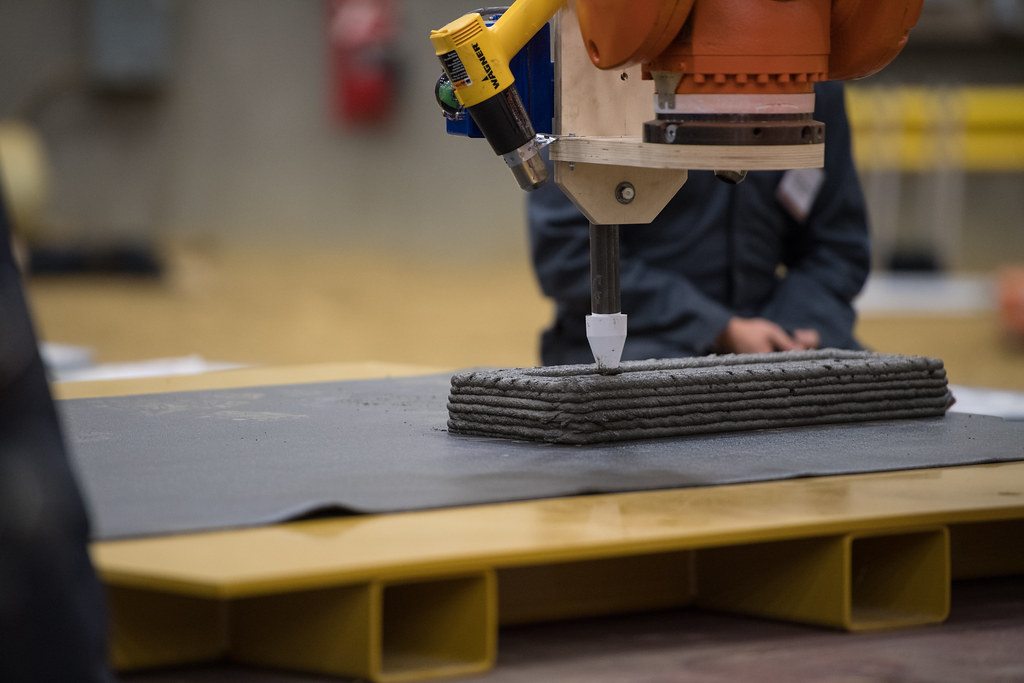
3D printing produces 3-dimensional physical objects from digital templates through a variety of processes. This is normally done under computer control, with materials added together, such as plastic, metal, and others, typically layer by layer. As of 2020, after around 40 years of its initial development, 3D printing has become a more mature technique. 3D printers are now more affordable allowing the public to use 3D printing techniques in normal life. Consumers can easily find a low-cost 3D printer as cheap as a few hundred dollars. 

3D Printing and IP Law

Today, there are more prosecutions and litigation over the use of intellectual property protection measures in the context of 3D printing. For example, Patent and Litigation Trends for 3D Printing Technologies published on IPLytics Platform found that the patent applications related to 3D printing continue to rise in the passing years, from around 2,000 in 2007 to over 20,000 in 2019. The good news is that the standard limitations that exist in current IP law can also be applied to 3D printing. 

Patent protection, for example, plays a significant role. In the U.S., patents are a government-granted monopoly towards the inventor for a limited period of 20 years. As WIPO’s 2015 World Intellectual Property Report on Breakthrough Innovation and Economic Growth has shown, 3D printing companies are enforcing patents heavily. These include not only specialist 3D printing companies but also major manufacturing companies, such as GE and Siemens. One of the reasons why patent protection is an important strategy over 3D printing is that such protection covers a wide variety of objects, including printers, the components of such printers, the manufacturing processes, and the products. In addition, the industrial 3D printing sector does not solely rely on patent law in its protection strategy. Trade secrets, copyright, and trademark protections also play a role.

However, there are also questions that courts need to address when it comes to the 3D printing technique. Compared to the industrial sector where the protection is similar to the other manufacturing industries, 3D printing for non-commercial purposes seems to face several new challenges. One question raised by Elsa Malaty and Guilda Rostama published in World Intellectual Property Organization (“WIPO”) Magazine is who would own an object when it is conceived by one individual, digitally modeled by another, and printed by a third individual. 

Why does it matter?  

With the quality of 3D printing continuing to rise and the price continuing to drop, 3D printing is now more advanced and accessible, so it can be foreseen that 3D printing-related legal protections and disputes will only increase in the future. The challenges and opportunities will come after the earliest patents start to expire. The original owners would need to develop new patentable technologies to maintain those protections. The expiration will also present an opportunity for the Open Source Community.

IP law contributes enormously to national economies. Dozens of industries, including 3D printing, rely on the adequate enforcement of IP. On the other hand, consumers benefit from IP to ensure the quality of the products, such as 3D printers. This is especially important because the availability of low-cost, high-performance 3D printers has put the technology within reach of consumers. 

At the same time, IP-related issues are only one legal aspect that 3D printing raises. During the use and application of this technique, other aspects of law will undoubtedly be implicated and will need to be resolved eventually.

SMRs: A Critical Piece of Washington’s Energy Future

By: Nicholas Lipperd

The state of Washington has been an effective leader in the transition to clean energy production and must continue to lead boldly. In passing the Clean Energy Transformation Act, Washington pledged to become a carbon-free energy producer by 2045. While the State’s natural resources allow hydroelectric power to lead the charge, hydroelectric cannot achieve Washington’s goal alone. With electricity demands expected to grow between 30% and 90% by 2045, in addition to the statewide drought that has been hampering hydroelectric power over the last decade, other clean energy sectors must step up. Solar is the industry that garners the most attention, and wind certainly has a role to play, but neither can contribute a reliable and sufficient portion of electricity demands for the immediate future. In order for the State  to meet its energy goals while maintaining its status as an energy exporter rather than importer, Washington should expand its commitment to nuclear energy. 

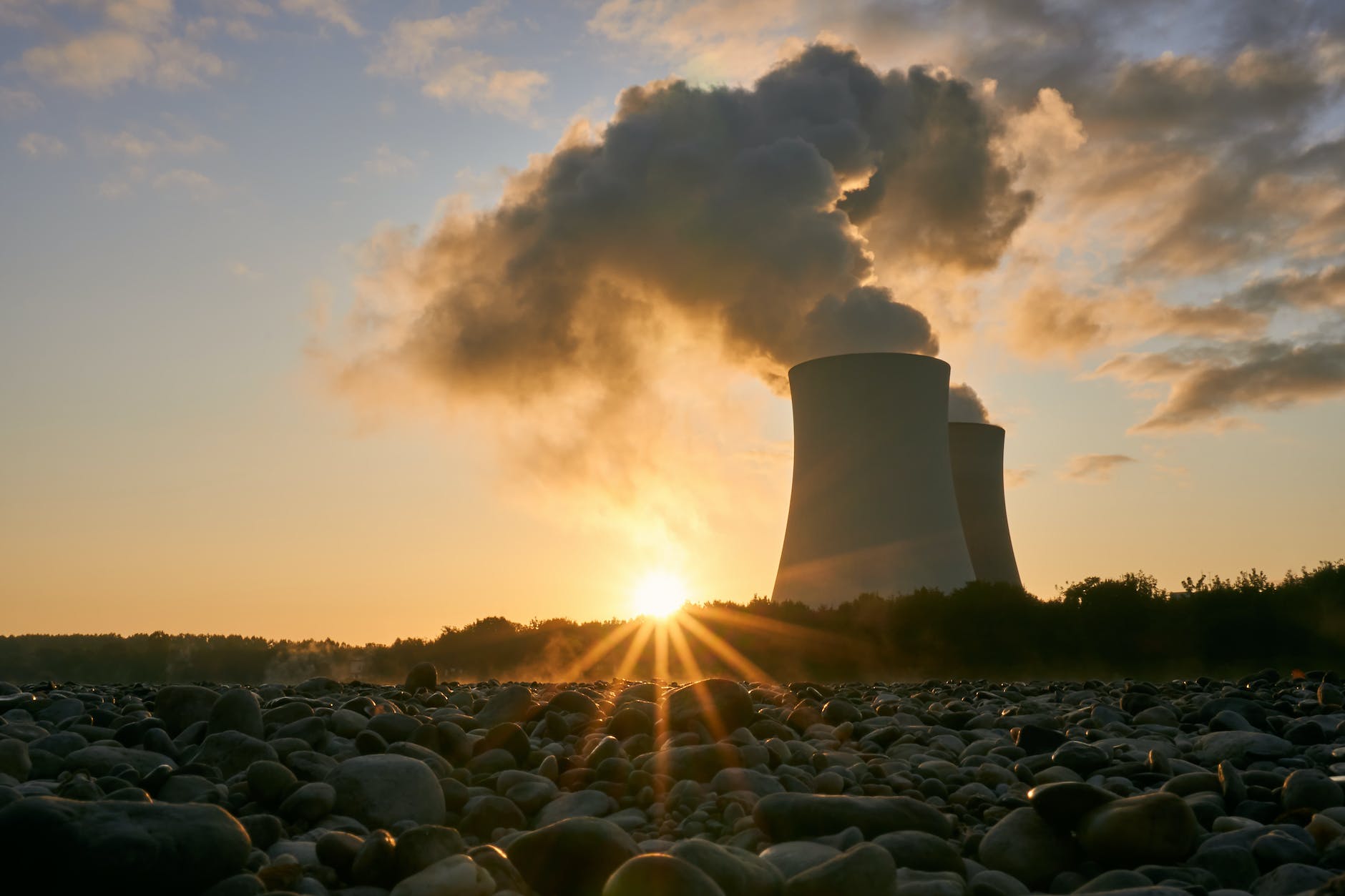
In the simplest of terms, a nuclear plant is nothing more than a hot rock that makes steam. That steam turns enormous turbines that, in turn, create clean, carbon-free electricity. Washington’s only nuclear power plant, Columbia Generating Station, generates 1200 megawatts (“MW”), enough to independently power the city of Seattle. By comparison, a single wind turbine typically creates 2.75 MW and the solar panels on a home generate about 300 watts (0.0003 MW). Given technological advancements, well-designed safety systems, and carefully monitored training standards, nuclear reactor plants in the U.S. are exceptionally safe steam-producing rocks. Just as importantly, the nuclear industry — as a whole — is an exceptionally safe operating environment, with only 0.1 fatalities per trillion kilowatt-hours of production in the U.S., as compared to 10,000 fatalities in U.S. coal production (and 100,000 in global coal).

Despite the incredible power reactors safely produce, America’s nuclear industry has been slowly declining because of diminishing economic value. Why make an investment in an industry with so many permitting and safety requirements when coal or gas can be produced so cheaply? This short-sighted approach is one from which America is finally shifting. The recently passed Bipartisan Infrastructure Bill (“BIB”) and Inflation Reduction Act (“IRA”) have created opportunities and incentives for the nuclear industry that the state of Washington must seize so that it may continue to meet its energy goals and lead our country towards clean, sustainable energy production. The BIB and IRA allow states to resurrect the dying nuclear industry and capitalize on an energy source that is powerful, long-lasting, and carbon-free. The IRA, for example, invests $2 billion into energy research, functionally accelerating the permitting and production of Small Module Reactors (“SMRs”). The IRA also allocates a $25 per MW credit for any new carbon-free energy production and invests $700 million in uranium enrichment for production of more efficient reactors. The BIB allocates funding directed to the continued operation of existing reactors; $6 billion in credits incentivizes companies and states to extend the lifetime of their reactors. Nuclear power currently provides 52% of the nation’s 100% clean electricity, and these bills embrace the idea that nuclear energy is vital to achieve carbon-free energy independence.

Washington must capitalize on these bills and further integrate nuclear power into its plan for clean energy production. Nuclear energy currently accounts for just under 10% of Washington’s power production, while hydroelectric dominates at 66%. Hydroelectric will continue to dominate, but it is unable to meet consumer demand alone. Washington’s two largest hydroelectric plants are over 80 years old. Its largest, Grand Coulee, has produced 20% less energy in recent years due to drought. As climate change makes droughts more likely and thus hydroelectric less reliable, nuclear energy can operate as a counterbalance. During dry seasons, Columbia Generating Station operates at near 100% output continuously to make up for demand. When spring comes and hydroelectric surges, Columbia is able to reduce its output, allowing demand to be met while extending the plant’s lifetime. Nuclear energy is dependent on, to paraphrase the USPS, neither wind nor rain nor heat nor sun. 

Columbia Generating Station is licensed to operate through 2043. The station seems to already be taking advantage of BIB funding: it has plans to increase power output 15% by 2033 and will likely extend the lifetime of the reactor through 2063. That is a critical step in the right direction, but, simply put, it won’t be enough. Washington needs more reactors and more flexibility in their operation to support its hydroelectric generation and meet increasing demands. Should Washington enable new reactor plant construction to meet demands, and SMRs are the best bet.

SMRs, defined by the U.S. Department of Energy (“DOE”) as modular nuclear power plants of 300 MW or less, are the next generation of nuclear reactors. A module design allows SMRs to be almost built completely in a controlled factory setting and installed module by module, reducing construction and maintenance costs and offline time. The small size means less heat energy to manage, less radioactivity during operations, and less radioactive waste. It also means the design is safer than current operating plants despite needing fewer safety systems. Due to their size and design, SMRs are so safe that they can’t melt down, the sensationalized concern of traditional nuclear plants. The small size also allows plants to be strategically placed in regions where power production or supply has traditionally been a challenge.

NuScale’s 77 MW is the leading SMR design for DOE approval. NuScale’s design includes installment plans of four or twelve reactors, depending on the energy demand for the region in which it would be installed. The small size and modularity allow flexibility of site location, expanding options to low water flow regions. This flexibility allows SMRs like NuScale to be built throughout Washington such that they are placed to efficiently bring energy to traditionally hard to supply regions while staying protected from natural disasters. SMRs can adjust power levels much more quickly and efficiently than large plants such as Columbia. Thus, placing SMRs near existing hydroelectric plants will allow nuclear power to more efficiently complement the hydroelectric plant’s output based on water flow. 

Even before the IRA made SMRs increasingly economically viable, Washington’s Energy Facility Site Evaluation Council (“EFSEC”) was scouting potential sites for SMRs. Because the DOE permitting process is cumbersome, sites with either existing energy operations or prior energy permits would enable the quickest installations. EFSEC has identified six of the former and nine of the latter with adequate conditions for SMR installation. With the IRA providing a pathway for cheaper, more efficient uranium and credits for clean energy production, Washington should take advantage and commit SMRs to some of these sites. 

Decades of design improvements prevent the world from experiencing another Chernobyl. Tightly regulated training standards and supervision prevents America from seeing another Three-Mile Island. Careful site selection and the design of SMRs are the nail in the coffin of nuclear disaster fears. In fact, the SMR idea has been flawlessly executed in Washington already. The U.S. Navy has operated SMR-style reactors incident-free in the most dynamic of environments for seventy-five years, with as many as a dozen such reactors operating on ships stationed in the Puget Sound. 
Nuclear power is energy that can be created without any carbon emissions that’s production does not rely on weather patterns. It is safe and reliable, but just as importantly, it produces magnitudes more power than other forms of energy. Not only has nuclear power earned a spot in Washington’s energy future, it is an energy source that Washington must embrace in order to meet its energy goals.