March 7, 2025 Symposium: “New” “Frontiers” in Property in the Time of AI
This symposium examined the evolving role of property law in shaping wealth, power, and justice in the United States. It explored how traditional doctrines, rooted in European legal frameworks and settler-colonial interests, have historically reinforced racial capitalism, Indigenous dispossession, and structural inequality, while also considering how these legacies persist in legal education and practice. At the same time, the rise of new technologies—such as artificial intelligence, data commodification, and synthetic content—poses unprecedented challenges to traditional property doctrines and raises questions about whether existing theories remain adequate. Bringing together leading scholars, the event provided a forum to rethink property law’s history, pedagogy, and future, with an eye toward building more equitable and responsive frameworks.
Below you will find brief biographies of our speakers, along with the topics of their presentations.
Panel 1: Old Ideas in a “New” World
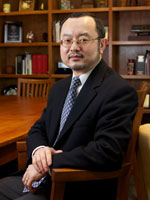
Professor Dongsheng Zhang: Professor Zhang presented on “Revisiting John Locke’s Notion of Property and Entick v. Carrington.” Professor Zhang joined the UW Law faculty full-time in 2006 after serving as a visiting professor the prior year. His scholarship focuses on international trade law and comparative Chinese law, particularly the role of law and the state during social crises and transformation in China. He holds an S.J.D. and LL.M. from Harvard Law School, an LL.M. from Renmin University, and an LL.B. from Beijing College of Economics. His Harvard dissertation, One-way Transparency, received the 2004 Yong K. Kim ’95 Prize.
Professor Monte Mills: Professor Mills presented on “Doctrines of Discovery and Prior Appropriation in the AI Age: Old
Frontiers Made New Again.” Professor Mills joined the UW faculty in 2022 as the Charles I. Stone Professor of Law and Director of the Native American Law Center. He teaches American Indian Law, Property, and courses related to Native American and natural resources law. His research explores Federal Indian Law, Tribal sovereignty, natural resources, and race in the law, and he has co-authored leading casebooks and scholarship, including A Third Way: Decolonizing the Laws of Indigenous Cultural Protection (2020). Before UW, he taught at the University of Montana and previously served as Director of the Legal Department for the Southern Ute Indian Tribe, where he represented the Tribe in litigation, legislation, and internal governance.
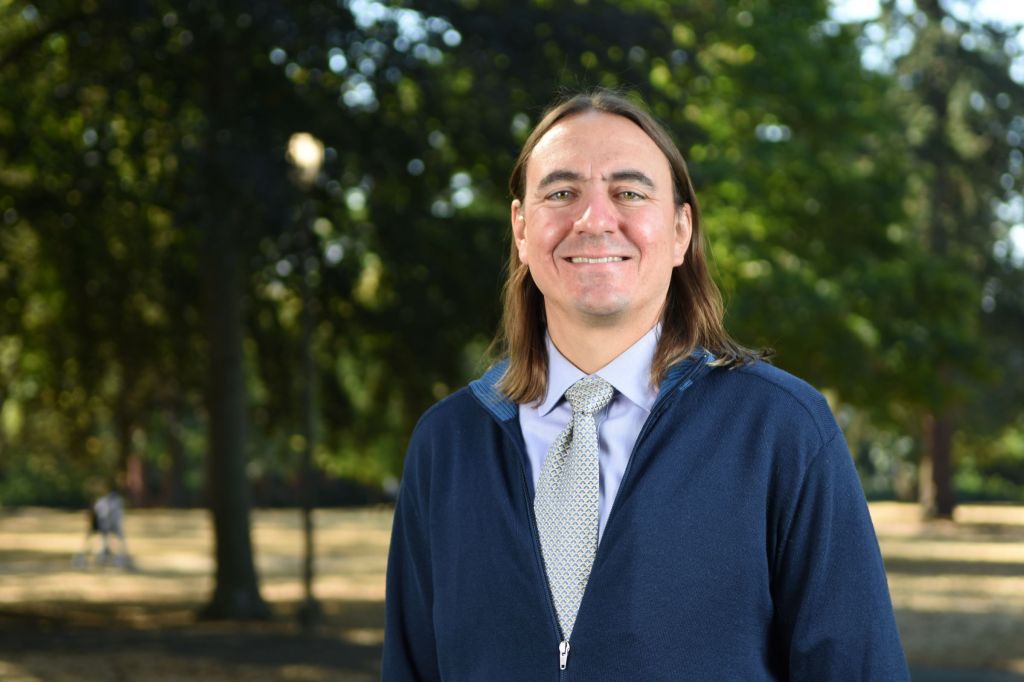
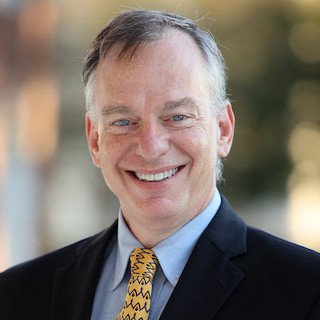
Professor Scott Titshaw: Professor Titshaw presented on “Lessons from ‘New Frontiers’ in the Distant Past: How Time Makes Rights.” Professor Titshaw is Associate Dean for Faculty Research and Development at Mercer Law, where he teaches Property, Immigration Law, and a seminar on Sexuality and the Law. His scholarship focuses on immigration, comparative, and family law, and he has held research fellowships in Europe, including a Fulbright-Schuman fellowship and recent work on comparative citizenship law at the Robert Schuman Centre in Florence. Before academia, he practiced immigration and transactional law for twelve years in Atlanta, clerked for Judge Adrian Duplantier, and worked with courts and firms in Germany. He holds degrees from Georgetown, the University of Georgia, and the Universität Hamburg.
Professor Trevor Reed: Professor Reed presented on “Indigenizing Property: What Tribal Law Can Teach First-Year Students.” Professor Reed is a legal scholar and social scientist at UCI Law, where he studies the impacts of IP law on people and communities. His current research considers how illicit appropriations of Indigenous peoples’ creativity and cultural data impacts their sovereignty today. He additionally serves as an associate justice on the high court of the Hopi Tribe and sits on the executive board of the Section on Indian Nations and Indigenous Peoples of the Association for American Law Schools. At UCI, he has taught numerous classes related to scholarship, including Copyright Law, Property, and Federal Indian Law.
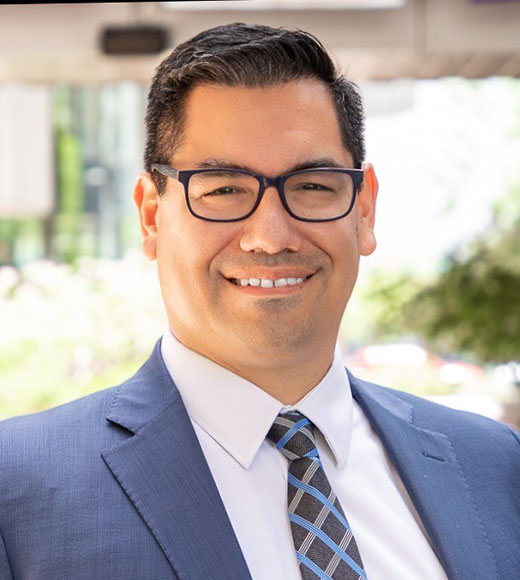
Panel 2: AI and Intellectual Property Dilemma
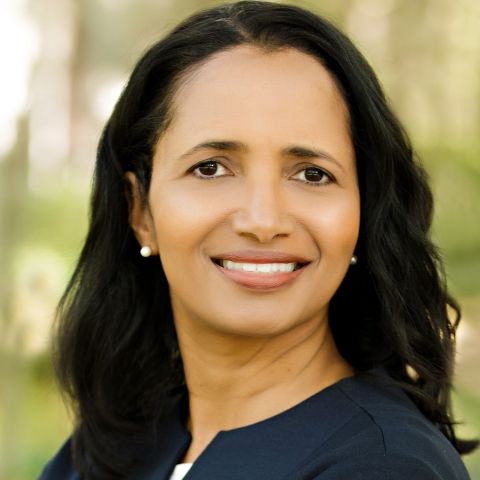
Professor Elizabeth A. Rowe: Professor Rowe presented on “Trade Secrets, Data, and AI.” Professor Rowe is a trade secrets and IP law scholar at UVA Law, having published over 50 books and articles on all facets of IP law. At UVA, she co-directors both the Law School’s LawTech Center and the Center on Intellectual Property Law. She currently teaches several IP classes, including Patent Law, Trademark Law and Trade Secret Law. Before joining UVA Law, she served as the Irving Cypen Professor of Law at UF Law, where she also served as the director of the program for IP law. Before academia, she practiced complex commercial litigation as a partner at Hale and Dorr.
Professor Keith Robinson: Professor Robinson presented on “Accountability, Responsibility, and Transparency in AI Patents.” Professor Robinson is a current Associate Dean of Research and a Professor of Law at Wake Forest University School of Law, where he teaches Property, Artificial Intelligence Law and Litigation, and other Intellectual Property focused courses. With an expertise in patent law and the intersection of artificial intelligence and legal institutions, Professor Robinson’s research emphasises the ethical implications of artificial intelligence in the legal system. His writing has been included in journals including the Florida Law Review, DePaul Law Review, and the American University Law Review. Prior to joining the Wake Forest faculty Professor Robinson spent 10 years as an Associate Professor at SMU where he was a founding Co-Director of the Tsai Center for Law, Science and Innovation.

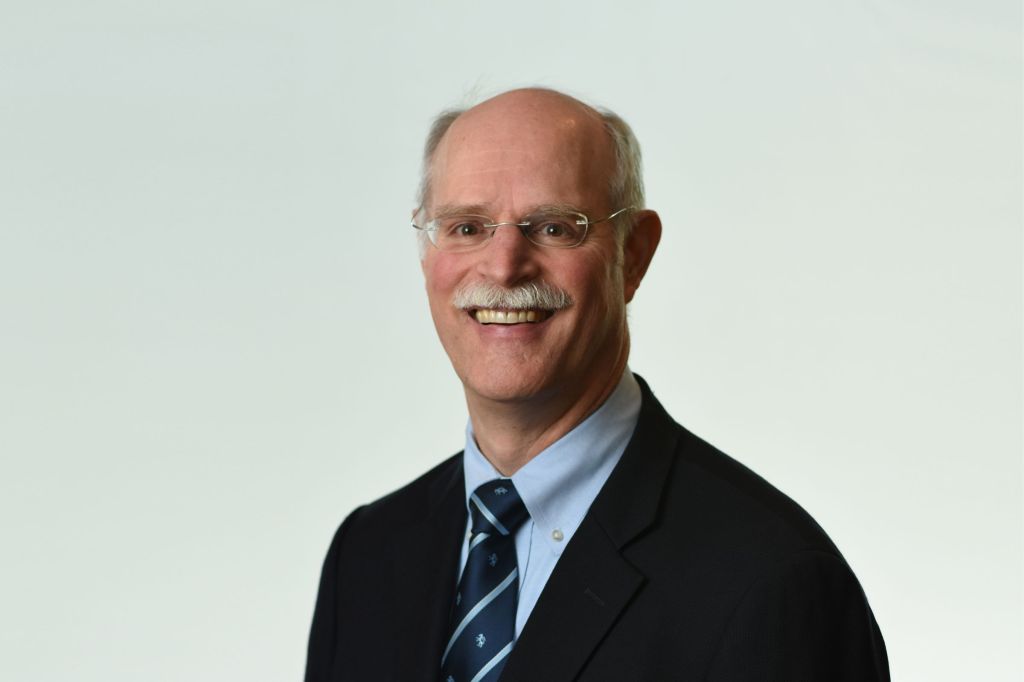
Professor Bob Gomulkiewicz: Professor Gomulkiewicz presented on “Licenses as Property.” Professor Gomulkiewicz is the Judson Falknor Endowed Professor of Law and was the founding Director of the Intellectual Property Law & Policy Graduate Program at the University of Washington School of Law. He teaches Constitutional Law: Freedom Of Expression, Trademark and Trade Secret Law, and Drafting Intellectual Property Licenses. Professor Gomulkiewicz’s research evaluates the intersection between contracts and the creation and distribution of software and other forms of technology. Prior to joining academia Professor Gomulkiewicz worked at Microsoft as an Associate General Counsel, assisting the development of the company’s major systems software. He has also worked for the Business Software Alliance, serving as the Chair of the Uniform Computer Information Transactions Act (UCITA) working group.
Panel 3: AI Property Rights, Venture Capital, and (In)Equity
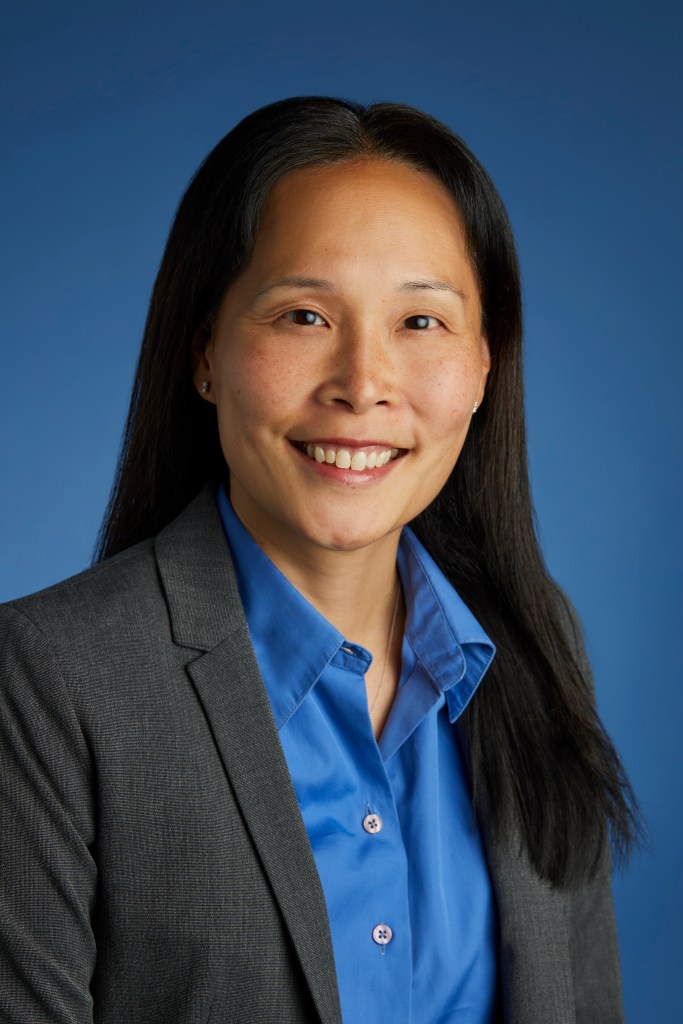
Professor Jennifer Fan: Professor Fan presented presented on “AI Property Rights in Venture Capital: Adapting Traditional Frameworks for Innovation Equity.” Professor Jennifer S. Fan, the Therese Maynard Chair in Business Law and Professor of Law, was appointed LMU Loyola Law School’s Associate Dean for Faculty and Academic Affairs in 2025. Professor Fan’s research explores questions of corporate law in the context of entrepreneurship and innovation, with a focus on corporate governance.
Prior to joining LMU Loyola Law School, Professor Fan held multiple leadership positions at the University of Washington School of Law, including Associate Dean for Research and Faculty Development, Faculty Director of the Entrepreneurial Law Clinic, and Faculty Advisor for the Law, Business, and Entrepreneurship track.
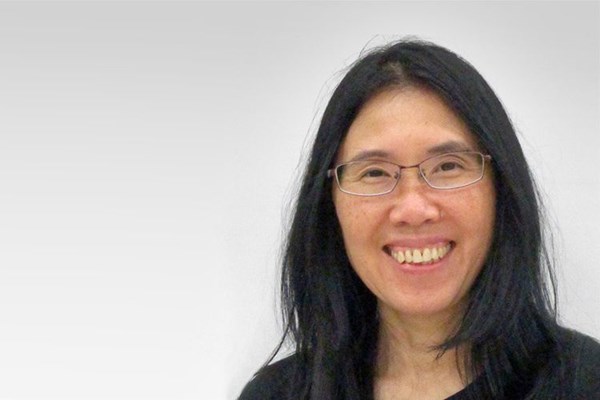
Professor XUAN-THAO NGUYEN: Professor XUAN-THAO NGUYEN presented on “ChatGPT and DeepSeek Race: Inconvenient Truths Regarding Property Rights in VC Hype.” Professor Xuan-Thao Nguyen joined the University of Washington School of Law faculty in 2022, where she holds the Pendleton Miller Endowed Chair in Law. She teaches Property, Business Organizations, Venture Capital Deals, and Intellectual Property Innovations in Science and Technology. In addition to her teaching and scholarship, she serves as the director of UW Law’s Asian Law Center.
Professor Nguyen is internationally recognized for her expertise at the intersections of business and commercial law, financing, intellectual property, bankruptcy, licensing, and taxation. Professor Nguyen also serves as a senior consultant for the World Bank/IFC on financial infrastructure projects in China, Vietnam, and the Mekong Region.
 Washington Journal of Law, Technology & Arts