Copyright Beams: Protecting Artists Work on Social Media

KanyeBy Alex Bullock

When Kanye West announced the development of his seventh studio album in March of 2015 (what would eventually become The Life of Pablo, released earlier this year) Nick Stokes and Eric Swanson, two Portland-based artists and Kanye fans, were inspired to make something to commemorate the occasion. The result was What ‘Ye Is It?, a custom-animated calendar that features a looping animation for each day of the week, inspired by West’s collection of works. After its creation, various media outlets linked to Stokes’ and Swanson’s website (for a list of the coverage, see here).

Fast forward to June 8 of this year: Finish Line, the athletic shoe and apparel retailer, posted the animation to their Instagram account in honor of West’s 39th birthday. However, the post credited music and lifestyle magazine The FADER for the work. The FADER posted about Stokes’ and Swanson’s work on May 14, 2015, but it is not the author of the work. Even after being notified by the authors of their mistaken attribution and their unauthorized use of the work, Finish Line has not made any effort to resolve the issue.

Continue reading

Can the Creator of an Unauthorized “Fair Use” Work Claim Copyright Protection?

ObamaaaaaBy Chike Eze

The Copyright Act balances granting exclusive rights to copyright owners on the one hand, and limiting those rights through several exceptions, including “fair use,” on the other. A creator of an unauthorized derivative work may escape a copyright infringement claim by successfully asserting a defense of “fair use.” However, the question is whether the creator may also claim copyright protection for the unauthorized derivative work.

The Second Circuit Court of Appeals answered this question in the affirmative. In Keeling v. Hars, the Second Circuit Court interpreted Section 103 of the Copyright Act to determine whether an unauthorized work, within the bounds of fair use, may itself be protected by copyright. The Keeling court held that copyright law provides that an unauthorized but lawful “fair use work may itself merit copyright protection.”

Continue reading

Where Will the Purple Rain Fall?

Prince 2

By Kelsey O’Neal

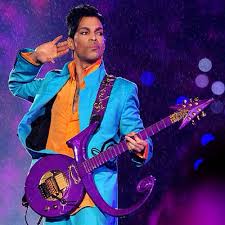
Prince will remain one of the greatest musicians in American history; he prolifically produced music since 1978 and sold approximately 36 million albums. He was also one of a few musicians who owned his own master recordings. This ownership did not come easily, but resulted from a copyright war he engaged in with Warner Bros in the 1990’s. As a form of protest against the recording company and to gain control of his masters from the recording studio, the artist changed his name to an unpronounceable “Love Symbol” and even appeared on stage with the word “slave” emblazoned on his forehead. His battle with Warner stemmed, mostly, from his desire to release more music than the label was willing to sponsor.

More recently, Prince struggled with how easily consumers could access his music in the digital era. Many recall that he sued a woman for posting a video of her daughter dancing to “Let’s Go Crazy,” one of his iconic pop songs, on YouTube. Prince sent a Digital Millennium Copyright Act (DMCA) takedown notice to YouTube, which led the woman to sue, claiming her upload constituted fair use of the song. Continue reading

Using the Crying Michael Jordan Meme: Playful Troll or Inevitable Lawsuit?

mj memeBy Yayi Ding

The Crying Michael Jordan Meme has struck again! However, this time it has struck at the expense of Jordan’s own alma mater, the University of North Carolina (UNC). Earlier this month, the annual NCAA championship game ended in a dramatic fashion, as Villanova hit a buzzer-beating shot to end UNC’s title hopes. And almost immediately, the internet responded, with none other than the wildly popular Crying Michael Jordan Meme. The Crying Michael Jordan Meme has become an internet sensation in recent years, but can its use ever lead to legal troubles? Continue reading

Work for Hire: Who Owns the Copyright In The Iron Man Theme?

ironmanBy Chike Eze

Generally, the author of a work owns the copyright in the work. However, an exception to the rule is that the employee or hiring party for whom the work was prepared is considered the owner of the work. The U.S. District Court for the Southern District of New York applied the “instance and expense” test in Urbont v. Sony Music Entertainment to determine whether the Iron Man Theme, created by Jack Urbont (“Urbont”) at Marvel’s request, was a work made for hire. Continue reading