By: Kevin Vu
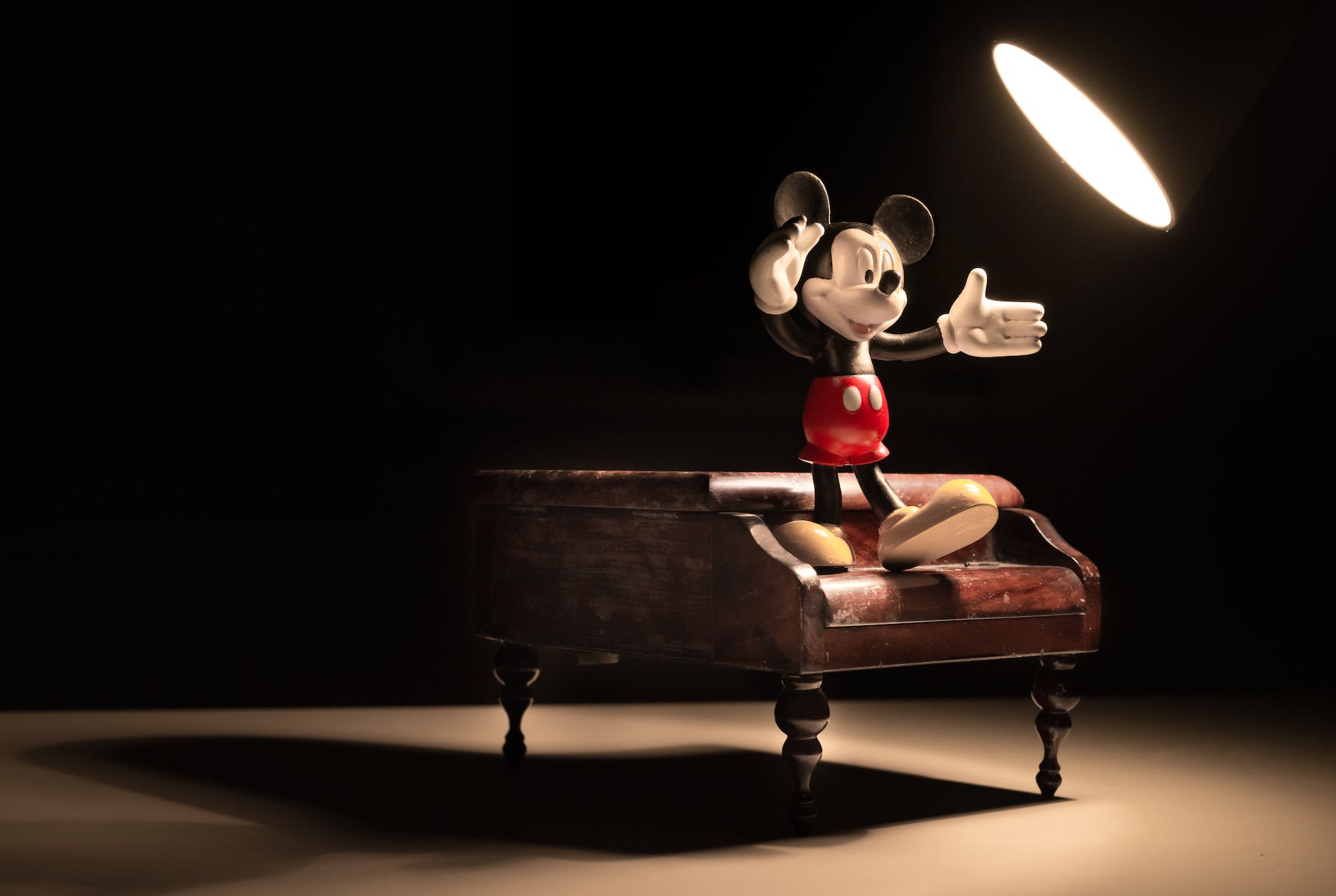
Nearly 100 years ago, Walt Disney released “Steamboat Willie,” showcasing Mickey Mouse’s first adventure. That mouse would kickstart what is now one of the world’s biggest companies, Disney. Today, Disney does a variety of things: it operates its own streaming services, runs a majority of the world’s most popular theme parks, and releases some of the world’s highest grossing movies. At the center of all that success is Mickey Mouse, who’s been dubbed “the world’s most famous cartoon character.” But Mickey is no longer just Disney’s to parade around, recently Mickey has become part of the public domain. What does being part of the public domain really mean though? This blog will explore and explain Mickey’s complicated history with copyright, what the public domain is, and what being in the public domain means for both Mickey’s future and others similarly situated to him.
Copyright’s Origins
Copyright law originates from Article I, Section 8, Clause 8 of the United States Constitution which provides that Congress shall have the power “To promote the Progress of Science and useful Arts, by securing for limited Times to Authors and Inventors the exclusive Right to their respective Writings and Discoveries.” Copyright is a set of protections from the federal government for originally created works. Copyright disallows others from using the work without the author’s permission, and as was alluded to earlier, protection generally lasts for the author’s lifetime plus 70 years after the author’s death. In 1790, Congress used that power to pass the first Copyright Act which extended protection of works to 14 years, with a renewal period of another 14 years.
Then, in 1909, a new Copyright Act doubled the length of protection for works from 28 years to 56 years, along with adding protections for motion pictures. “Steamboat Willie” was then released in 1928, and fast-forwarding some years and some minor changes to the Copyright Act, Disney entered the copyright arena in 1998. By that time, Mickey’s copyright was set to expire in 2003. Disney, worried about its copyright for Mickey, successfully lobbied Congress to protect him for 20 more years—extending his copyright expiration date to 2024. But that was the final extension for the mouse, as he is now part of the “public domain,” no longer just the sole property of Disney.
What’s the Public Domain?
In contrast to copyrighted works, the public domain consists of “creative materials that are not protected by intellectual property laws such as copyright, trademark, or patent laws.” That means that items which were not originally subject to intellectual property protections, like laws for example, are part of the public domain and freely usable by individuals. Creative materials, like Mickey, which were previously protected under laws like copyright may also become part of the public domain once their copyright has expired.
Once something is in the public domain, it is fair game for any one to use. As the United States Supreme Court articulated in Dastar Corp. v. Twentieth Century Fox Film Corp., uncopyrighted materials are not protected under federal law. Further, because Article I, Section 8, Clause 8 vests the power to protect creative endeavors in Congress, states are precluded from passing copyright laws under the Supremacy Clause of the U.S. Constitution. This means that anyone can use works in the public domain without obtaining permission or giving credit to the original author, and no one can ever own that work.
Mickey… at home?
One can immediately see why Mickey’s move to the public domain is problematic for Disney. 20 years ago, it was estimated that Mickey Mouse had made over $5.8 billion for Disney. This explains why Disney was adamant about lobbying Congress for copyright protection extensions, as Mickey going to the public domain could affect his worth.
Fast-forwarding to today, Mickey has entered the public domain, with one company has already announced that they plan on making a Mickey Mouse horror movie, following in the footsteps of “Winnie-the-Pooh: Blood and Honey,” a Winnie the Pooh slasher movie created when Pooh Bear entered the public domain in 2023. Ultimately, it remains to be seen what else individuals will do with Mickey.
But luckily for Disney, Mickey’s presence in the public domain does not spell the end of their rights to the iconic character. Copyright law makes distinctions between versions of characters meaning only the “Steamboat Willie” version of Mickey is in the public domain and usable by anyone. The red shorts, big-boots, and high-pitched voice of the current Mickey Mouse remains Disney’s property, and is therefore subject to copyright protection. Another thing to note is that Disney’s use of Mickey as a brand or symbol is protected under trademark law. So, while “Steamboat Willie” Mickey is freely usable, individuals should be careful not to confuse that character with his newer versions, and avoid making it seem like Disney endorses their new creative work. As some commentators have noted, Disney is actively seeking to protect its brand and anyone seeking to use Mickey should seek out legal counsel.
Ultimately, it remains to be seen whether Mickey’s introduction into the public domain will create new, expansive creative works, or if Disney will continue to aggressively fight for the mouse. Whatever the case, Mickey’s move into the public domain is a historic event, and its effects remain untested.
 By Tyler Quillin
 By Binh Vong
 By Mackenzie Olson
 Washington Journal of Law, Technology & Arts