Securing Dr. Robot

unnamed By Brooks Lindsay

Medical device robots present a number of cybersecurity, privacy, and safety challenges that regulation and industry standards must address in order to safely and rapidly advance innovation in the field.

The University of Washington’s Computer Science Department recently highlighted the problem. Computer Science Researchers hacked a teleoperated surgical robot called the Raven II during a mock surgery. The hack involved moving pegs on a pegboard, launching a denial-of-service attack that stopped the robot, and making it impossible for a surgeon to remotely operate. The researchers maliciously controlled a wide range of the Raven II’s functions and overrode command inputs from the surgeon. The researchers designed the test to show how a malicious attack could easily hijack the operations of a medical device robot. The researchers concluded that established and readily available security mechanisms, like encryption and authentication, could have prevented some of these attacks.  Continue reading
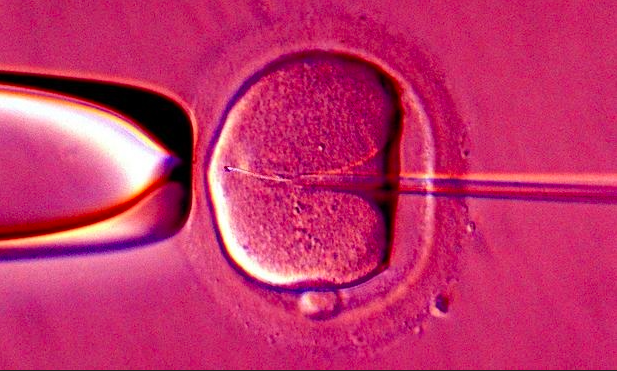
Two Mums and a Dad: UK Approves Technique by Which a Child Has Three Genetic Parents

Screen Shot 2015-02-18 at 12.26.44 PMBy Sam Hampton

On February 3, 2015, the UK House of Commons voted to authorize a fertility technique known as mitochondrial donation. The babies that result from such a technique would have three genetic parents: one father and two mothers. The process shows promise in preventing the passing on of serious mitochondrial diseases from mother to infant. Perhaps belying the controversy surrounding a novel reproductive technology, the vote in the House of Commons was fairly one-sided; there were 382 members in approval and 128 against. Approval by the House of Lords is necessary, but if it is forthcoming, babies conceived by this process could be born in 2016.

The process involves the manipulation of embryos from two women. The nuclear DNA of a woman who will pass on a mitochondrial disease is transplanted into the de-nucleated embryo of a donor. The resulting embryo has sets of nuclear and mitochondrial DNA from two different women, and the process of in vitro fertilization is then used to carry out the pregnancy. The infant born of this process would have the genetic material of three people, but would also hopefully be free of the diseases resulting from the defective mitochondrial DNA. Mitochondrial diseases are untreatable, and those afflicted by them often do not live into adulthood. This new fertility process is the result of lengthy scientific research, and heralded as a medical breakthrough. Proponents of the process say that it provides women who would otherwise pass on these debilitating diseases with the opportunity to have healthy genetic offspring. Continue reading