
Cheaters Never Win, Bungie’s 4.3 Million Dollar Award Against AimJunkies

By: Perry Maybrown

Does anyone else remember being a kid, getting stuck on that super hard level and having to insert a Game Genie or GameShark into their machine to activate cheats? Apparently Nintendo really did not like these types of add-ons, so they sued the company that made them, and lost. But in today’s internet age, cheating has gotten more sophisticated, and much more illegal. 

Earlier this month, AimJunkies.com, a website that offers video game cheats for sale, was ordered by an arbitration judge to pay Bungie 4.3 million dollars after being sued for copyright infringement and violations of the Digital Millennium Copyright Act (DMCA). Bungie followed up by filing a motion with the court, to affirm this monetary award. 

Bungie brought nine claims in its original complaint filed in 2021 . The company argued that AimJunkies had infringed upon their copyright of Destiny 2, by “copying, producing, preparing unauthorized derivative works from, distributing and/or displaying Destiny 2 publicly all without Bungie’s permission.” Under those same facts, AimJunkies also infringed upon Bungie’s Destiny 2 trademarks. Furthermore, by making use of Bungie’s trademarks and copyrights, AimJunkies was also accused of false designation of origin. As well as two separate DMCA violations, breach of contract, tortious interference, consumer protection act violations and unjust enrichment. 

Later in 2022, a court dismissed Bungie’s copyright infringement allegations, for failure to state a claim. And while the copyright issue was dismissed, the door was still left open by the judge for Bungie to refile the claim later, with more evidence. Which Bungie unsurprisingly did. The court later upheld this amended complaint when AimJunkies once again tried to get it dismissed. 

After substantial litigation, Bungie decided to change tactics. Rather than attacking AimJunkies in court, they would drag them into mandatory arbitration.  This was accomplished by citing Destiny 2’s user agreement. Whenever a user plays games online, they are usually required to sign some kind of user agreement, which almost alway includes a mandatory arbitration agreement. Arbitration is a process that happens out of court, where two sides argue their case to a neutral arbitrator (usually a retired judge). There is a lot of controversy surrounding mandatory arbitration. For one thing, the “neutral” party deciding the case is usually paid/hired by whatever company included the arbitration agreement in the first place. It’s also difficult to overturn an arbitration agreement, as decisions can only be challenged for a limited number of very specific issues. 

A judge agreed to allow claims four through nine in Bungie’s lawsuit to be decided by mandatory arbitration. This meant that JAMS, one of the world’s largest private alternative dispute resolution providers, would be overseeing these six claims. Thus beginning the long, 9 month, process of arbitration. Bungie won and was awarded more than $4 million in damages as reported by TorrentFreak

So how did the arbitrator reach that huge number? It’s mostly thanks to the DMCA. The DMCA is an amendment to the copyright act from 1998 which seeks to address the relationship between the internet and copyright. The DMCA includes a section also referred to as the anti-circumvention law, which makes it illegal to knowingly circumvent a copyrighted work’s electronic security measures. For example, most video games have some kind of security measure, or Digital Rights Management (DRM) that stops users from getting into the source code. But some bad actors will sneak around these protections, so they can get a peek into the code. This allows those same bad actors unfettered access to the games, making it possible for them to reverse engineer different systems or download the game itself and share it. In this case the arbitrator found that AimJunkies had circumvented Destiny 2’s DRM to see the code and develop an effective cheat. Following § 1203 of the DMCA, the arbitrator awarded Bungie 2,500 per violation. With  102 violations, that meant AimJunkies was fined $255,000 for just one of Bungie’s six claims. 

Additionally, by hosting the cheats and selling them, the arbiter found that AimJunkies was in violation of the anti-trafficking provisions of the DMCA. This is where the costs really start to stack up. Just like the previous issue, Bungie was granted $2,500 per violation. With more than  1,316 copies of the Destiny 2 cheat sold, AimJunkies faced a whopping  $3,402,500.00 in anti-trafficking violations.

Finally, Bungie was awarded a further $738,722 in costs and attorney’s fees after proving AimJunkies had committed spoliation, the intentional destruction of evidence. This was found on the grounds that AimJunkies failed to keep proper financial records even after receiving a cease and desist letter from Bungie, which the arbitrator found to be a purposeful choice.

While this is a huge win for Bungie, the war is not over. As of February 28, 2023, AimJunkies is attempting to contest the arbitration decision. While it is unclear whether they will succeed, it’s a good lesson for us all. Just like the old saying goes, cheaters never win.
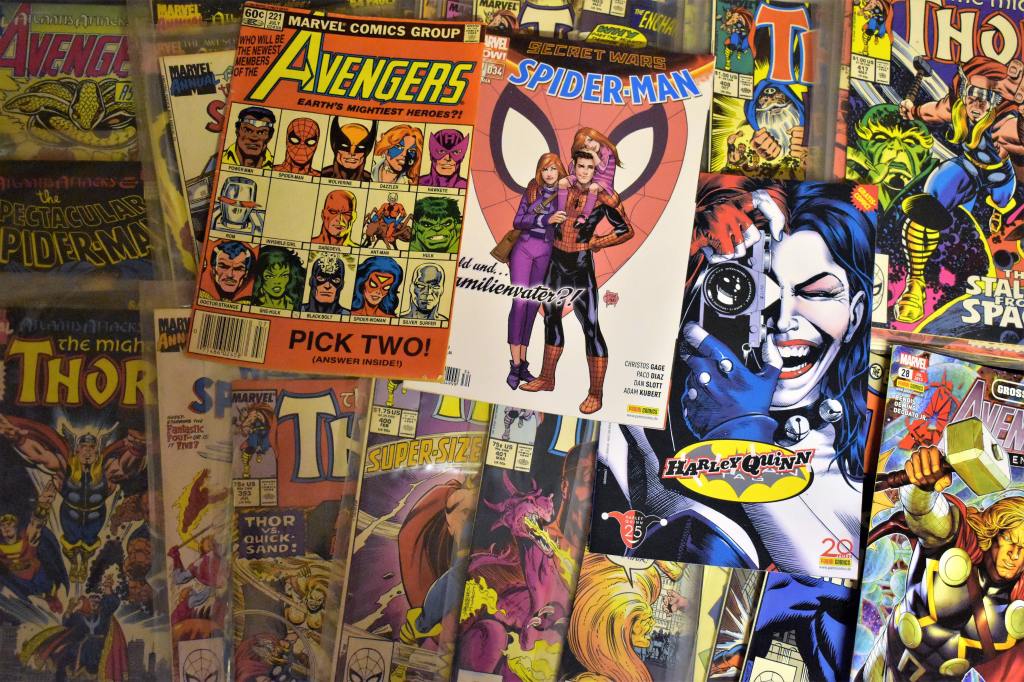
An Infinity War: Will the Latest Marvel Lawsuits Finally Declare a Winner in the Battle of Copyright Termination Tests?

By Gracie Loesser

The Marvel Cinematic Universe is the highest-grossing franchise of all time, with a total worldwide gross profit of over $22 billion, and the demand for superhero content shows no signs of stopping.

So, it should not be a surprise that the original creators of characters like Iron Man, Spider-Man, and Dr. Strange are hoping to share in the success. Just this year, five former Marvel artists and their heirs have issued copyright termination notices, asserting their right to share in the Marvel Universe profits. In response, Disney-owned Marvel has sued, effectively asking the court to dismiss the creators’ ownership rights.

Whether the original Marvel artists will prevail depends on whether the creations are considered “works made for hire” under the federal Copyright Act. But how that will be determined is surprisingly unclear.

In 1976, Congress amended the Copyright Act addressing concerns that artists were losing valuable ownership rights through coercive agreements. The new Act incorporated a termination provision, which gave artists the right to reclaim any copyright interest they previously transferred regardless of any preexisting contract. Notably, the termination provision excluded any “work[s] made for hire,” with the rationale that an employer is considered the author and original copyright holder of any work made by an employee within the scope of their job. The issue is the law does not provide a definition of an “employer” and a “work made for hire” within the scope of the Act.

Courts have since stepped in to fill this gap. The Second Circuit developed the “instance and expense” test, which states that a work is made for hire “when the employer induces the creation of the work and has the right to direct and supervise the manner in which the work is carried out.” Under this inquiry, an independent contractor would be considered the author and original copyright holder of her work. However, the independent contractor could impliedly transfer her rights to the hiring party if certain conditions were met. The Second Circuit’s test proved popular, with the Fourth and Seventh Circuits adopting the approach.

This approach soon faced an existential challenge. In 1989, the Supreme Court attacked the appropriateness of the “instance and expense” test in CCNV v. Reid. The Court held that the Second Circuit’s analysis was not “consistent with the text of the Act,” stating the structure of Copyright Act § 101 necessitated two separate analyses: one for employees and one for independent contractors. This finding directly challenged the Second Circuit’s single test based on project control. To determine whether an artist should be classified as an employee or an independent contractor, the Supreme Court identified thirteen non-exhaustive factors rooted in the common law of agency to guide the analysis.

Although the Supreme Court’s ruling appeared to rebuke the “instance and expense” analysis, the Second Circuit continued to apply the test in the years following the Reid decision. In Marvel Characters, Inc. v. Kirby, the Second Circuit was asked to review the district court’s grant of summary judgment in favor of Marvel. The lower court had applied the “instance and expense” test and determined that former Marvel artist Jack Kirby’s drawings were works made for hire, thus invalidating the termination notices issued by his heirs. Upon review, the Second Circuit affirmed the district court’s use of the “instance and expense” test, acknowledging and simultaneously dismissing the Supreme Court’s criticism in a brief footnote. Kirby appealed the decision hoping that the Supreme Court would grant certiorari to once and for all dismiss the “instance and expense” test. Kirby’s cause was given further support when the former director of the U.S. Patent and Trademark Office, Bruce Lehman, filed a brief urging the Court to use this opportunity to reject the “instance and expense” analysis as improper. Unfortunately, Marvel settled the case, just as it looked like the Kirby campaign might succeed in convincing the Supreme Court to grant certiorari.

Since the ruling in Kirby, the Second Circuit’s rulings have only added to the confusion. In Horror Inc v. Miller, the court was again asked to analyze the validity of an author’s copyright termination. In that case, writer Victor Miller contended he was an independent contractor under the Copyright Act when he created the original Friday the 13th screenplay, making his termination notice enforceable. Surprisingly, the Second Circuit agreed, relying on the Supreme Court’s thirteen Reid factors in determining that Miller’s screenplay was not a work made for hire. Despite this major shift from the Circuit’s previous defense of their “instance and expense” approach, the court did not acknowledge the change or explain their reasoning.

Now, the Second Circuit is faced with five potential Marvel copyright termination cases, all of which closely resemble the facts in Kirby. Assuming the Second Circuit continues to apply the Reid analysis as it did in Miller, the outcome will likely be in the artists’ favor.

However, that assumes the Circuit maintains this approach. Based on the content of at least one complaint, Marvel’s counsel may try to convince the court to reverse course. The filed claims against the company’s former artists notably include separate considerations of “instance” and “expense.” Given the Circuit’s inconsistent rulings in the last decade, the outcome of these latest cases is less than certain, making this an important opportunity for the court to clarify its stance. Nevertheless, even if the Second Circuit decides to abandon the “instance and expense” test, whether the Fourth and Seventh Circuits will make similar changes to their analysis remains to be seen.

Daily Fantasy Sports Leagues: To Regulate or Not To Regulate

ffpicBy Tyler Quillin

Daily fantasy sports companies, DraftKings and FanDuel, have taken center stage in the past few weeks with a controversy surrounding potential impropriety in the form of insider trading. Adam Johnson, a Kentucky resident and DraftKings user, filed a class action lawsuit against DraftKings and FanDuel on October 8th in the United States District Court’s Southern District of New York alleging negligence, fraud, and a violation of consumer protection acts in New York, Kentucky, and Massachusetts.

Fantasy sports leagues are internet-based games that allow fans to “draft” players from a designated sports league to a team and apply a points system to the athletes’ performance in order to compete with other league members. Allowing increased opportunities to play throughout the week, season, and sporting world, daily fantasy sports leagues differ from traditional fantasy sports leagues because they begin and end on a single day. Continue reading