EU Privacy Litigation: United States Now Filing An Amicus Brief in Facebook Case

EU FlagBy Jason Liu

The United States will be filing an amicus brief in the ongoing EU case between privacy activist Max Schrems and Facebook. Although not filed yet, the brief will provide vital information on the U.S.’ stance on privacy and international data transfers.

The case comes about because the Data Protection Commissioner of Ireland sought a declaratory action in the Irish High Court, alleging that Facebook was illegally transferring EU citizens’ data to the U.S. under EU law.

Past Privacy Actions in Europe

In the related pivotal case invalidating the U.S.-E.U. Safe Harbor agreement, Max Schrems, an Austrian privacy activist and attorney, brought a prior complaint with the Data Protection Commission (in Ireland) that Facebook was illegally transferring EU citizen information to the U.S. Schrems claimed that the personal data he provided to Irish Facebook servers was also transferred to the U.S.

But what is the Safe Harbor in question? EU privacy law forbids the movement of its citizens’ data outside of the EU, unless it is transferred to a location which is deemed to have “adequate” privacy protections in line with those of the EU. The prior Safe Harbor agreement allowed U.S. companies to transfer EU citizen data to the U.S. if the U.S. government promised to protect the data.

Schrems claimed that the U.S. failed to provide legal protections against U.S. surveillance of data on U.S. servers. These claims were supported by the Edward Snowden revelations of 2013. The Snowden revelations included the NSA PRISM program that provided the U.S. government access to private industry servers of tech companies such as Google, Facebook, or Apple. Snowden also revealed surveillance of world leaders, XKeyscore (internet activity logging program), and various NSA practices used to overcome encryption and hacking methods.

Ultimately, the European Union Court of Justice (EUCJ) ruled that the Safe Harbor agreement was invalidated due to inadequate protection of EU citizens’ data to the U.S. in light of the Snowden revelations.

What is going on now?

Following the case, the Irish Data Protection Commissioner referred Schrems’ original complaint against Facebook to the Irish High Court and also the EUCJ. The current case is about Standard Contractual Clauses and the ability of tech companies to contract with EU citizens to have their data stored in U.S. servers. U.S. companies have argued the “model clauses” from template agreements provided by the EU Commission let EU member states send personal data to countries lacking “adequate levels” of protection under the 1998 Data Protection Act.

In response, Shrems stated that:

I see no way that the [EUCJ] can say that model contracts are valid if they killed Safe Harbor based on the existence of these US surveillance laws. All data protection lawyers knew that model contracts were a shaky thing, but it was so far the easiest and quickest solution they came up with. As long as the US does not substantially change its laws I don’t see how there could be a solution.

What will be the U.S.’ amicus position?

Although unwritten, the U.S.’ amicus brief may contain stances from the U.S.-EU Privacy Shield that was recently ordered by the EU Commission. Notably, the new Privacy Shield will provide:

  • Strong obligations on companies and robust enforcement;
  • Redress options;
  • Clear safeguards and transparency obligations on U.S. government access; and
  • Annual joint review monitoring.

However, because the EU Order providing for the Privacy Shield was EU-centric, it has been difficult to discern which particular points are emphasized by the U.S. Thus, the amicus brief may be a unique opportunity to learn about the most compelling arguments of the U.S. in light of the new Privacy Shield.

Furthermore, although the amicus brief will be directed at international data transfers, it may also prove an important way to gauge how the U.S. views the domestic regulation of data. Through the Cybersecurity National Action Plan, the Obama administration has shown support for protecting privacy rights through the creation of the Federal Privacy Council.

Of course, any further insight into the U.S. treatment of consumer information is always welcome.

Image source: Pixabay

Is There Really An App for That?

A Review of Technology That is Intended to Help Protect Against Sexual Assault

mobile-application-rc38wc

By Carlie Bacon

The recent case about Brock Turner sexually assaulting a woman at a Stanford party has cause major outrage and has revived an ongoing public discussion about rape culture, victim blaming, and other important issues.

There’s no doubt that sexual assault is a serious and widespread problem on college campuses and around the world.  The National Sexual Violence Resource Center states that in the U.S., 20 percent of women and about 1.4 percent of men will be raped at some point in their lives, with those numbers skyrocketing when factoring in other forms of sexual violence as well as LGBTQ people.  Incidences are probably much greater in number, as rape is the most under-reported crime.

Over the last few years, app developers and innovators believe they have devised ways to help people protect themselves against sexual assault.

Many of the recent designs are fashion-focused.  ROAR for Good is a company that has designed and marketed jewelry that is designed to reduce assaults.  The button-sized piece can be worn as a necklace pendant or as a pin.  When in need, the wearer presses a panic button that emits a loud alarm and sends distress texts with GPS location to “emergency contacts” (friends and family).

A company out of the Netherlands called Pearltect is designing jewelry that, when activated, produces an odiferous substance to deter sexual activity, and a tracking compound that can link the perpetrator to the crime scene.

Undercover Colors, a start-up comprised of North Carolina State University students, is in the process of bringing to market a nail polish that changes color when it comes into contact with common date rape drugs.  The wearer swirls a coated nail in a drink to determine if such a drug is present.

And let’s not forget the simpler, controversial, but nevertheless innovative, Rape-aXe, The “anti-rape condom” is a barbed, rubber device that women may wear to cut short an assault.

Critics voice concerns about, among other things, the effectiveness of such personal protection devices against the reality of rape: 92 percent of rapes are committed by people familiar to the victim.  Critics also argue against the innovations’ exclusiveness to people who can afford to pay.

In addition to wearable devices, personal safety apps like PanicGuard, MyForce, and OnWatchOnCampus offer various features.

India recently announced its plans to mandate technological crime prevention.  Beginning in 2017, all mobile phones in India must include a panic button.  These new phones will be pre-configured to send a distress signal to family members or the police when the user presses the power button three times in succession.  In 2018, all phones will need to be equipped with GPS.

Despite U.S. law enforcement’s research and implementation of numerous technological innovations in preventing and policing crime, it does not seem that much attention has been devoted to improving ways for the public to communicate with law enforcement.  For instance, text messaging from mobile phones has been available to the public since 1993.  Fast-forward over twenty years, and the Federal Communications Commission reports that “text-to-911” is only available in certain markets where call centers “have elected to accept emergency text messages from the public.”

While apps and gadgets can never solve the underlying issue of sexual violence, they may provide some help in preventing certain instances.  It will be interesting to see how much the public sector includes private sector innovations (even basic stuff like texting) into its crime prevention and policing repertoire.

Image source: GSU.EDU


Predictive Policing: The Future in Solving Crimes or the Arrival of Minority Report

By Michael Hugginsminority-report-11-3.jpg

The film Minority Report tells the story of a future society that uses technology to predict who will commit crimes. When the crime starts to occur, the Pre-Crime police department uses those predications to capture the individual before they commit the offense. Specifically, the Pre-Crime police department uses knowledge acquired from three pre-cognitive beings to predict the time and the place of the crimes. This 2002 film continues to spark intellectual and ethical curiosity in the minds of many science-fiction fans. But Minority Report is just that: science-fiction. Or is it?

Continue reading

Saving “Face”: Pushback against Facebook’s Facial Recognition Survives in Court


Facebook-face-recognition-2By Julie Liu

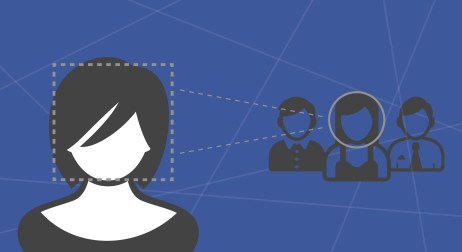
Facebook’s facial recognition technology has evolved to a point where it is as disturbing to many users as it is helpful. Earlier this month, the District Court for the Northern District of California denied a motion to dismiss a class action alleging that Facebook had unlawfully collected biometric data. In particular, plaintiffs took issue with Facebook’s “tags suggestion” feature, which identifies subjects in users’ photos and suggests names for users to tag faces in photos with.

Continue reading

Digital Whispers: Encrypted Communications and Law Enforcement

By Sam Hamptonlock

Much of the media attention addressing encryption for smartphones has been primarily centered on Apple and Google. Both Android and iOS operating systems offer whole device encryption, where a user’s phone data cannot be accessed without a code. Apple was the target of a lawsuit brought by the FBI who was requesting Apple unlock the cellphone of San Bernadino shooter, Syed Farook (see previous WJLTA Blog posts here and here). This case typifies an ongoing public debate about the balance the law should strike between privacy and security. But whole device encryption is just the tip of the iceberg.

Continue reading