Everything New Is Old and Unprofitable

Screen Shot 2016-05-11 at 7.51.43 AM

Image: Uber circa 1802

By Jessy Nations

With the advent of the smartphone, people have gained unfettered access to technology and services previous generations never could have imagined. With a few taps on your touchscreen, you can have someone pick you up and drive you anywhere in the city. Going on a trip? You can find lodging nearly anywhere at an ostensibly reasonable price. Hungry? Through the miracle of technology, you can have groceries or meals from your favorite restaurant delivered right to your doorstep. It’s all thanks to the wonders of the exciting new “sharing economy.”

Of course, none of this is actually new. Uber is a taxi service that forces its drivers to provide their own cars. Airbnb allows you to rent a hotel room in some stranger’s house. There is an entire field of law that is older than the United States that regulates common carriers, such as taxis, and another field regulating hotels called hospitality law. But Uber isn’t considered a common carrier; it’s “ride sharing.” Airbnb isn’t a hotel service; it’s a “home sharing” platform.

Continue reading

Sorry, that isn’t actually Scarlett Johansson.


By Beth St. Clair

 What would you do if someone built a robot version of you?

 It happened to Scarlett Johansson. A graphic designer from Hong Kong spent over a year, and $50,000, to build a robot in her likeness. While the robot’s abilities are limited, it can respond to compliments and questions, laugh, bow, and blink its eyes. Most notable, however, is the fact that the designer used 3D-printing technology and silicone to make the robot look exactly like Johansson.

For some, the coquettish machine represents an objectification of women, “an utterly disappointing reflection of the way women are portrayed in society.” For others, it is an extreme example of fandom.

But because the programming and machinery needed to make very advanced robots are now so widely available that a person can create one at her own house, we will see more celeb-bots in the future. Those robots, especially female celebrity-inspired robots equipped with realistic features and the ability to mimic life-like movement, will continue to be controversial.

Continue reading

The Apple v. FBI Saga Continues: The House Energy and Commerce Committee Hearing

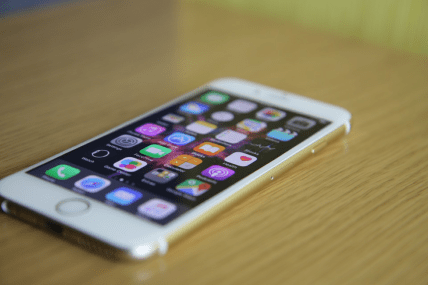
Iphone

By Jason Liu

Despite the Department of Justice (DOJ) dropping its case against Apple, (as covered in this earlier post), the same legal arguments were salient before the House Energy and Commerce Committee (Committee).  On April 19th, the Committee heard testimony from the FBI, law enforcement heads, Apple and other technology experts about the use of encryption in technology and law enforcement action.

During the hearing, Rep. Tim Murphy (R-Penn.) asked the central question, “Should the government have the ability to lawfully access encrypted technology and communications?” Law enforcement officials insisted on “backdoor” access, while Apple countered that encryption protects people from cybercrime. Overall, the hearing continued to repeat prior arguments from the FBI that access was necessary to prevent criminal activity and Apple that encryption protects free speech and privacy made during the San Bernardino shooter case.

Continue reading

Exit Smartphones, Enter Smart Contact Lenses

contact lenseBy Tyler Quillin

Remember Google Glass? The spectacles Google

developed that allowed users to have hands-free, smart technology integrated into their eyewear.

Well, Google Glass did not do as well as projected, and Google ceased production in 2015. However, Google and Samsung are now rumored to be taking “wearable technology,” like Google Glass, to another level.

Both Google and Samsung are reportedly developing similar “smart” contact lenses. News surfaced on April 5, 2016 that Samsung submitted a patent application  for contact lenses with built-in cameras and other features. And both companies’ patent applications describe contact lenses containing a camera, sensors to detect movement, and antennae to interface with smart devices. Some speculate that blinking could control the lenses, which poses potential concerns over accidental commands.  However, by placing the device directly on the eye, the companies hope to improve clarity and accuracy, features that Google Glass lacked. Continue reading

Erin Andrews’ Privacy Lawsuit and its Possible Effect on Hotel Policy

erinandrewsBy Joe Davison

On March 7th, 2016, a jury awarded $55 million to Erin Andrews, a famous sports reporter and cohost of the popular show Dancing With The Stars, in an invasion of privacy lawsuit. In 2008, Michael David Barrett, a convicted stalker, secretly videotaped Andrews through the peephole in her hotel room door at a Marriot hotel in Nashville. Barrett had conned a hotel employee into confirming Andrews’ hotel reservation and asked to reserve the adjoining room. After filming Andrews while she was undressing, Barrett posted the video online. Continue reading