Diarra v. FIFA: A Clash Between Global Sports Governance and Individual Labor Rights

By: Tavis McClain

When a footballer challenges the most powerful governing body in sports, the world pays attention. Lassana Diarra, a talented midfielder, has entered into a stand-off with the very institution meant to uphold the spirit of the game. This case incited intense debate on fairness, freedom, and the balance of power in professional football.

Introduction

Diarra v. FIFA challenges the foundational structures of sports governance. This dispute raises crucial questions about how international sports bodies govern, how athletes assert their rights, and where the boundaries lie between sporting rules and fundamental labor protections. The situation is emblematic of a deeper tension in modern sport: the power of centralized global institutions like FIFA versus the rights of individuals navigating the professional system. It reveals a crucial lens into how the governance of international sport must adapt in response to legal, ethical, and human rights standards.

Background

Lassana Diarra, a well-regarded French international, terminated his contract with Russian club Lokomotiv Moscow in 2014. Diarra claimed the club had breached the contract by failing to pay his wages and creating a hostile work environment. However, FIFA’s Dispute Resolution Chamber (DRC) ruled Diarra had no just cause for the termination as there wasn’t sufficient evidence of a breach by Lokomotiv Moscow. FIFA subsequently imposed a fine and a global playing ban until the compensation was paid—a punishment that effectively paused Diarra’s career and forced him out of the game.

FIFA’s Ruling and CAS Appeal

Diarra appealed to the Court of Arbitration for Sport (CAS), which largely upheld FIFA’s decision. Decisions from the CAS are generally considered binding on FIFA as well as other institutions. The CAS ruling emphasized the principle of contractual stability in football—a cornerstone of FIFA’s regulations, designed to prevent players and clubs from breaching agreements unilaterally. Diarra subsequently challenged the ban in French civil courts, arguing that the enforcement of FIFA’s decision within national jurisdiction violated his fundamental labor rights, particularly his right to work.

Global Sports Governance Under Scrutiny

FIFA, as the global governing body of football, enforces a centralized dispute resolution system designed to streamline legal matters and preserve uniformity across jurisdictions. This case, however, exposes the limitations of that model:

  • Enforcement Without Borders: FIFA’s global ban extended beyond Russia, restricting Diarra’s ability to play in any league worldwide. This reveals how sports governing bodies can bypass national labor protections through international enforcement.
  • Lack of Worker Protections: FIFA’s mechanisms often prioritize contractual order over employee rights, a model that may not always align with domestic labor standards, especially within the EU.
  • Limited Transparency and Appeal: The CAS arbitration system, while designed for expediency, is often criticized for its lack of transparency, limited recourse, and the asymmetry in power between athletes and governing bodies.

What This Means for Labor Rights in Sport

  1. The Right to Just Cause
    The case demonstrates how difficult it can be for players to assert just cause in contract disputes, especially when proving workplace mistreatment or unpaid wages. It sparks questions about the fairness of a system where players are held to stricter standards than employers. Players are forced to prove they were not fired for a legitimate purpose, while FIFA is not required to present evidence.
  2. Access to National Legal Systems
    Diarra’s recourse to the French courts signaled that national jurisdictions can and will challenge the authority of sports bodies when fundamental rights are at stake. This could set a precedent for athletes bypassing arbitration if labor rights are seen to be compromised. If FIFA does not provide relief when its players have their labor rights violated, then they will seek alternative routes of action. It is in the interest of FIFA and the players to settle these conflicts on their behalf to reduce transaction costs and promote transparency.
  3. Rethinking the Role of CAS
    As the de facto “supreme court” of sports, CAS must adapt its structure to better balance institutional interests with individual protections. The current structure favors institutional interests over those of the individual. This may include more transparent hearings, greater independence, and recognition of fundamental labor norms. If these changes are made, it may remedy the issues that footballers are facing.

Conclusion

Diarra v. FIFA exposed a fault line between the old world of insular sports governance and the new reality where labor rights and ethical governance matter more than ever. For international sport to remain credible and fair, its legal infrastructure must shift toward transparency, equity, and respect for the individual.
Can college sports afford pay-to-play?

By: Kyle Kennedy

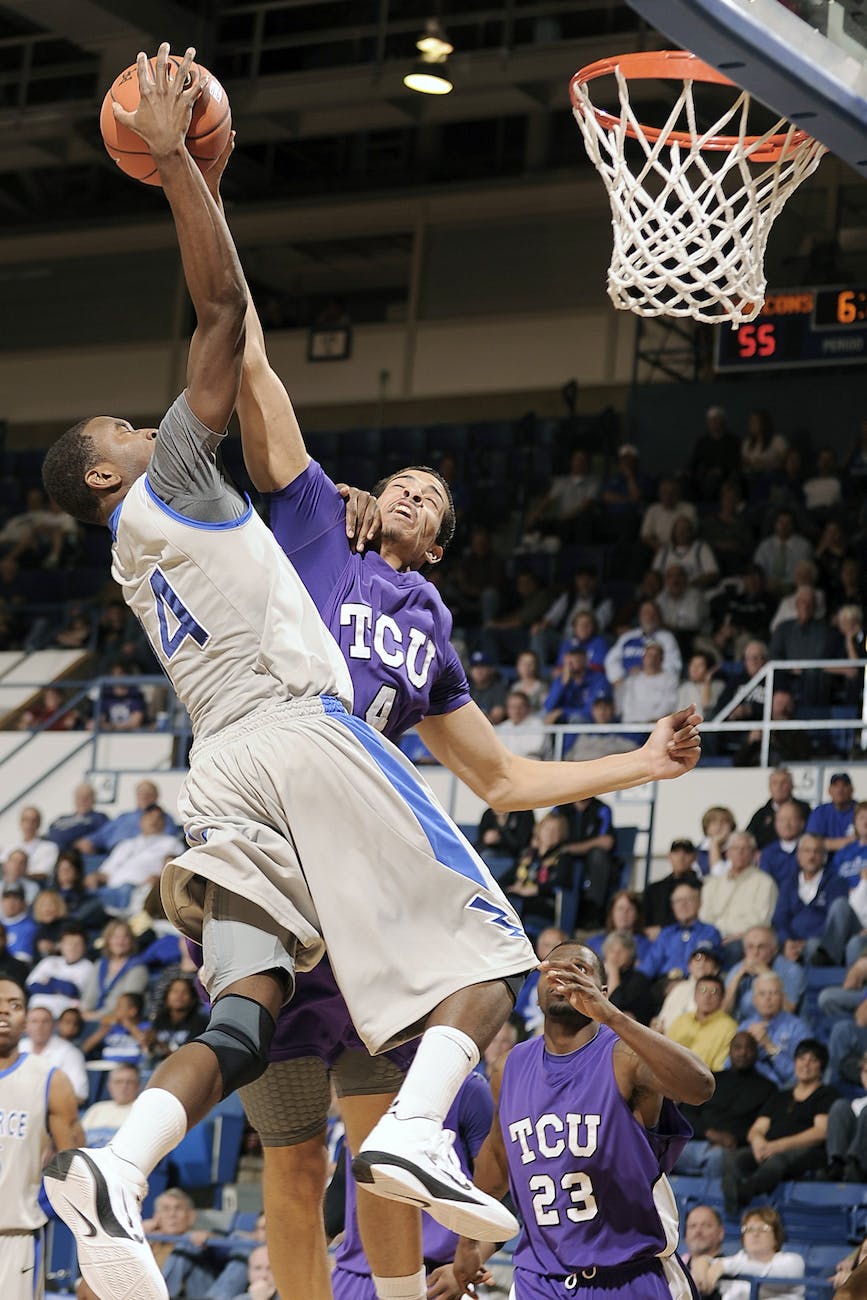
Earlier this month, the NCAA asked the 3rd Circuit to block a federal lawsuit brought against them by multiple former student-athletes spearheading a legal effort to have student-athletes treated as paid employees by their schools. This effort would essentially require schools to compensate their student-athletes as employees and subject the schools to labor regulations. Judge Theodore McKee, one sitting member of the 3rd Circuit panel hearing the motion, indicated that student-athletes could be considered employees under the Fair Labor Standards Act (FLSA). The FLSA covers individual employees whose work regularly involves them in interstate commerce, including travel to other states to do their jobs. The NCAA limits teams from practicing more than 20 hours per week, but student-athletes reported spending between 35 and 40 hours per week on their sport. Student-athletes travel interstate for competitions and essentially work on their sport full-time in addition to their classes and other responsibilities, which tends to point towards employee status. In September of 2021, the National Labor Relations Board released a memo through their general counsel Jennifer Abruzzo which stated that college athletes should be treated as employees of the school. 

In 2021, the NCAA generated $1.15 billion dollars in revenue, with $850 million coming from the rights to televise March Madness. Despite their overloaded schedules, a 2019 study by the National College Players associated reported that 85% of college athletes living on campus and 86% living off campus live below the federal poverty line. Most college athletes do not receive full scholarships; the average award for a Division I athlete was $18,013 for males and $18,722 for females. For Division II athletes those averages dropped to $6,588 for males and $8,054 for females, and Division III schools are prohibited from offering athletic scholarships. While the NCAA has recently approved a policy allowing athletes to be compensated for their name, image, and likeness, these profits have mostly been directed to high-profile athletes in profit-bearing sports who already are likely receiving large or full ride scholarships. 

The lawyers for the athletes are not seeking a large reward or to cut a chunk from the pie of NCAA profits. Instead, they are simply seeking to have athletes paid at a reasonable hourly wage like students who work in the libraries or dorms as a part of work-study programs.  The NCAA in arguing for dismissal stated that paying college athletes is a slippery slope, that it may lead to schools cutting less profitable sports, and that qualifying the student-athletes as paid employees could expose their scholarships to taxation.  There is certainly some truth to these concerns, as Judge McKee of the 3rd circuit offered that the court may take the stance that some athletes, such as “the quarterback at the SEC school,” would be considered employees while other athletes are not. 

This could create huge complications among college athletic departments because football and men’s basketball are often the main sources of revenue for smaller school’s entire athletics budgets. These schools could essentially be forced to eliminate all or many of their smaller sports to be able to afford to pay the athletes that fall under the FLSA. It’s also unclear how this dichotomy of employee and non-employee athletes would interact with other NCAA regulations such as Title IX, which promotes equality in sports by requiring equalized investment. If sports like football and basketball were to be excluded from the calculation because the athletes are employees, this would lead to a huge loss in gender equity in sports because schools would be able to pour money into their men’s basketball, football, and other profit-bearing programs without spreading the funding among women’s teams and less profitable sports.

For many student-athletes, especially those in smaller sports, college athletics is not just about a scholarship or advancing an athletic career. Most athletes in these sports are competing for far less than full scholarship and choose to pursue their sport because of their passion. While it’s important to acknowledge that athletes in profit-bearing sports have traditionally been taken advantage of by the NCAA under the guise of amateurism, the recent changes to NCAA policy to allow name, image, and likeness deals allow high-profile athletes to reap the value of their market worth. If a pay-for-play structure truly threatens the existence of these smaller sports at the college level, then perhaps the newly minted name, image, and likeness policy of the NCAA will have to serve as a placeholder for the compensation of athletes, or at least those with market value. Additionally, the formal consideration of student-athletes as employees of their schools under the FLSA raises a host of unanswered questions requiring a massive overhaul of current individual school policies and practices. Regardless of one’s opinion on the way the case should turn out, college athletics departments and legal scholars alike will be carefully tracking this case and its possible future implications.