Harvard Law School and Ravel Law Collaborate to Improve Access to the Common Law

printerBy Carlie Bacon

The technological age has transformed the once-useful volumes lining the walls of law firms and libraries into decorative dust-collectors. Just like this blog post, the information in those books can be accessed from anywhere that you can check your email. Law is widely regarded as a conservative profession, but even so, modern attorneys and law students conduct legal research online. Why turn page after page at a desk somewhere, when you can scroll through seamless documents from the comfort of, well, anywhere?

Companies like Westlaw and LexisNexis offer access to enormous electronic databases and handy research tools, but at a cost. Subscription fees can total millions of dollars annually for large firms. Like those shelves full of books, commercial databases’ days may be numbered too. Continue reading

A Glimpse into the Future: Driverless Cars Have Arrived

teslaBy Naazaneen Hodjat

To much fanfare, Tesla Motors announced the release of its Autopilot version 7.0 which effectively allows its Model S to use a “combination of cameras, radar, ultrasonic sensors and data to automatically steer down the highway, change lanes, and adjust speed in response to traffic.” Tesla’s Chief Executive Officer, Elon Musk, describes the Autopilot program as a “profound experience for its drivers” —one that “when owners try it out and see the car drive [by itself] they’re blown away.”

The Tesla Autopilot program aims to increase the driver’s confidence behind the wheel by reducing the driver’s workload and helping the car avoid hazards—significantly improving driver safety. Its Autosteer technology allows for hands-free and pedal-free driving on the highway. The new program, however, does not read traffic lights or poorly marked roads and is programmed to relinquish control back to the driver if it loses confidence in its ability to drive safely. The Autopilot also contains an Auto Lane Change feature—the driver must simply engage the turn signal and the Autopilot will move itself over to the adjacent lane when it is safe to do so. Finally, the program has an Autopark function that enables the car to scan the surroundings of a parking spot and parallel park itself. Although the Autopilot program allows Tesla sedans to steer and park themselves, Musk warns that Tesla drivers are expected to stay engaged while driving. In fact, owners are instructed to keep their hands on the steering wheel at all times. Tesla cautions drivers against trusting its Autopilot program too much and reminds drivers that they are still responsible. Continue reading

Artificial Nature: Will the astounding become common?

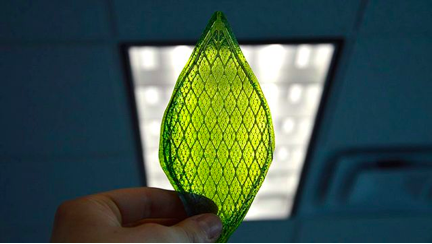
leafBy Robin Hammond

From artificial leaves to digital rodent brains, computer scientists are successfully implementing processes from the natural world. Does the Alice ruling on software patentability provide a glimpse into how these technologies will be treated in the future? In 15 years, will computer-implemented natural processes be patent-ineligible?

The utilization of natural processes in computing is astounding. Recently, researchers in Melbourne developed a solar-power device that is close to simulating photosynthesis. The Energy and Environmental Science journal published these details in an article; in the article, researchers claim “This simple and adaptable system addresses key criteria for the large-scale deployment of an artificial photosynthesis device” to “provide a cheap, clean and renewable source of hydrogen as the ultimately sustainable fuel.” In August, news broke that IBM had created a digital equivalent of a small rodent’s brain, a type of chip with neuro-synaptic architecture, called TrueNorth. Both the chips and subsequent software recreate a brain’s neurons and synapses. The TrueNorth chip is another leap forward for computing through ‘deep learning’. Deep learning operates in two stages: “First, companies … must train a neural network to perform a particular task. If they want to automatically identify cat photos, for instance, they must feed the neural net lots and lots of cat photos. Then, once the model is trained, another neural network must actually execute the task. You provide a photo and the system tells you whether it includes a cat. The TrueNorth, as it exists today, aims to facilitate that second stage.”

It has taken many years, but the courts are finally addressing the realities of software patentability. In Alice, the Supreme Court did an about-face in terms of the validity of business-method and software patents. No longer are ideas or processes patentable because a computer executes them. While the opinion did not itself mention software, it has heralded in a new age of hostility at the U.S. Patent and Trademark Office toward business-method and software patents, with many courts overturning patents under the new standard of Alice.

In 15 years, will natural processes that are merely implemented by computers be novel enough to qualify for patents? Or will the two-step inquiry applied in Alice be similarly interpreted once these processes become commonplace? The analysis under Alice begins with the question: does the invention consist in significant part of a patent-ineligible concept—for example, a law of nature, natural phenomenon or abstract idea? If so, the invention is patent-eligible only if the remaining parts of the invention have an “inventive concept”—one or more elements that ensure a patent on the invention amounts in practice “to significantly more than a patent upon the ineligible concept itself. In Alice, the patents at issue were for computerized escrow. The court decided that the abstract idea of escrow was patent-ineligible and performing escrow on a computer was not sufficient to provide an inventive concept: “A mere instruction to implemen[t an abstract idea] on … a computer … cannot impart patent eligibility.”

Does the shift in the patentability of software patents in Alice foretell the future of the patentability of artificial nature? One could foresee a future where the idea of brain functioning (arguably a natural phenomenon) is in itself not patentable, and the mere implementation of specific neuro-synaptic architecture by a computer would not rise to the level of inventive concept. Or will future courts embrace Judge Rader’s broad interpretation of the applicability of §101? Where natural laws are restricted to “universal constants created, if at all, only by God, Vishnu, or Allah”; “even gravity is not a natural law“; and the slightest bit of labor mixed with nature is property under Lockean reasoning.

Image source: http://maxmania.pl/nauka/syntetyczny-lisc-wytwarzajacy-tlen/.

China Poised to Tighten Grip on Cybersecurity with New Law

CyberSecurityBy Andrew H. Fuller

As Cybersecurity becomes a prominent global issue for nation states, governments consider options to curb their nation’s digital vulnerability. On July 6th, China, an undisputed major player on the global digital frontier, released the Cyber Security Law of the People’s Republic of China (“CSL”) for public comments. The CSL will, among other things, encourage education and training in cybersecurity related fields, establish new protections and rights for personal and sensitive data, and create government set standards for information technology hardware and software. Once adopted, the CSL will be the first Chinese law that exclusively focuses on cybersecurity. Continue reading

“Back Doors” in Encrypted Technology for the Government Will Harm National Security and Privacy

Screen Shot 2015-08-10 at 8.32.43 AMBy Michael Huggins

In the wake of an international controversy over government surveillance, U.S. technology companies have developed end-to-end encryption for users who want to send information. End-to-end encryption gives the sender and the recipient decryption keys for a piece of data or a message. Without these decryption keys, law enforcement officials cannot access the data or the message. Even with lawfully authorized access to the information, end-to-end encryption may allow criminals to keep their communications secret from the government. Additionally, the United States and other nations have expressed concerns that encryption will provide secure communications to terrorist organizations.  Continue reading