On July 27th, 2015, Chinese smartphone manufacturer OnePlus unveiled its second-generation smartphone, the “OnePlus Two.” This was a highly anticipated launch, because OnePlus’ first device, the OnePlus One, took the smartphone industry by storm just over a year ago. The OnePlus One offered the kind of high-end specs found in today’s elite smartphones, but for just a fraction of the price. Consequently, OnePlus has sold over 1 million OnePlus One smartphones thus far – no small feat for a new start-up based out of southern China. But, due to a series of behind-the-scenes legal issues, the OnePlus Two will not offer the popular operating system found in its predecessor, Cyanogen OS, but instead will feature OnePlus’ own operating system: Oxygen OS. This difference may be critical to the OnePlus Two’s future success. Continue reading
Technology
Just Add Sugar: Home Brewing Morphine Using New Process
On May 18, a group of researchers published an article describing a method for the conversion of simple sugar to opioids including morphine. Proponents believe this could change the way many useful drugs are manufactured, while others are calling for regulation that limits access to the required DNA. The process is not currently feasible outside of a laboratory, but commentators worry that refinement of the technique could lead to people creating morphine with the same equipment used to craft home brewed beer. Such a streamlined process could be developed within a year.
Morphine and other opioids are historically produced from the poppy plant. The cultivation of the crop is common in Latin America, as well as Southwest and Southeast Asia. Farmers in countries with weak drug enforcement, such as Afghanistan, Myanmar, and Mexico, supply the crop to drug cartels, who smuggle and distribute heroin throughout the world. In Afghanistan, which produces much of the world’s heroin, the value of trafficking of opium is estimated to be $8 billion dollars a year. The wide spread use of this new process could disrupt these established supply routes.
The DEA does not presently consider the development to be “an imminent threat.” However, commentators, such as Kenneth A. Oye, have voiced concerns over the implications of this new process. He is particularly concerned with the reaction of drug cartels. These cartels could adopt the technology and manufacture heroin domestically, without the need to smuggle drugs across borders. The loss of exclusive control over the supply could also lead to a violent reaction as it has in other drug markets; Mexican gangs have taken over farms growing marijuana in the United States. Moreover, the capacity to create the opioids could lead to widespread domestic manufacture, as in the case of methamphetamine, resulting in increased availability.
Heroin is extremely dangerous and addictive. According to a 2014 DEA report, both use and availability are actually on the rise in the United States. In recent years, heroin and opioid abuse have ravaged regions of the country, particularly the Northeast. In 2014 in Connecticut alone, there were around 500 deaths involving overdoses of heroin and other opioids. Widespread availability resulting from the new process could exacerbate these trends.
Yet proponents of the process think these concerns are overblown. Christina D. Smolke believes that the required skills for this sort of manufacture are beyond those without training. Furthermore, Robert H. Carlson argues that these prohibitions would simply fail to work, just as Prohibition failed to abolish illegal alcohol manufacture. This may be a practical reality, but the consequences of wide spread heroin availability are a far more dangerous proposition that may warrant tight control of this process.
Image Source: http://7-themes.com/6921476-red-poppies-field.html.

New York Telehealth Law Raises Hopes for Access, Targets Concerns about Billing
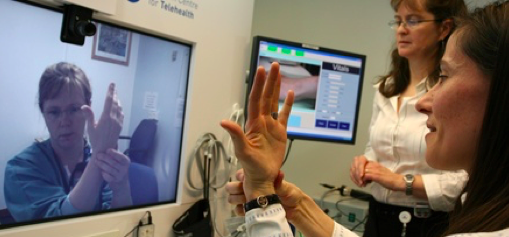
A new year, new legislation, new legal issues. New York rang in 2015 by becoming the 22nd state to enact a telehealth parity law. The law requires that deductibles, co-insurance, and other coverage conditions for telemedicine be treated the same as payments for typical in-person hospital visits. As such, commercial insurers will be required to cover telehealth and telemedicine services, starting at the end of this year. The new law is an exciting development for patients, especially in rural areas, who have previously had limited options in health services. For payers and providers, however, questions remain about the feasibility of this law and how it could impact the entire healthcare reimbursement landscape.
Telehealth and telemedicine have been among the most significant developments in healthcare delivery in decades. Though the terms telehealth and telemedicine are often mistakenly used interchangeably in everyday conversation, they in fact refer to separate modes of delivery, as made explicit by the New York law. Under the statute, “telehealth” means healthcare delivery services through “communications technologies consisting of telephones, remote patient monitoring devices or other electronic means.” The electronic communications facilitate the assessment, diagnosis, consultation, treatment, education, and management and self-management of care while the patient is at the “originating site”—the place where the patient is located when services are provided—and the healthcare provider is at a “distant site.” Telehealth also encompasses non-real-time means of “communicating” health data, and includes devices that transmit a patient’s vital signs to the health care provider. “Telemedicine,” on the other hand, refers to real-time two-way audio-visual communication aimed at assessment, diagnosis, consultation, etc. Thus, telemedicine is more akin to a typical doctor’s visit, with the patient interacting with the healthcare provider as if in the examination room. Continue reading
Wearable Technology: Better and Worse Than You Thought
The idea of wearable electronics has long been associated with distant technologies that never quite materialize. But as technology keeps marching forward, so does the prospect of having highly functional devices that are layered on, attached to, or even embedded into our bodies. Many are now familiar with Google’s Google Glass, the wearable eyewear that provides users with a functional screen and camera attached to a pair of glasses, yet fewer are familiar with other wearable technologies on the horizon.
Intel recently announced its “Make It Wearable” competition finalists. The finalists include: a project aimed at allowing users to run on a treadmill and read at the same time by tracking the vertical motion of the user and matching the text’s movement; a jacket that cools down hot people and warms cold people; a wisdom tooth monitoring device that tracks conditions in one’s mouth after wisdom teeth removal; a small listening device designed to track the voices of those speaking to children; and a special fabric designed to absorb human sweat and carbon dioxide in order to produce oxygen. Continue reading