There is Also an App For That


judge-aiken

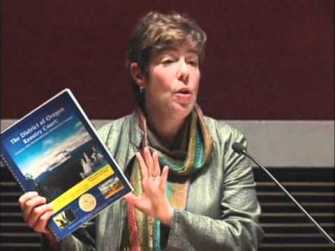
The Honorable Judge Ann Aiken

By Jessy Nations

At the risk of sounding older than my years, it seems we are now demanding an app for everything these days. Even when we don’t need or want an app for something, one inevitably appears. That is, except, for legal apps, which are notably absent from the app store. Sure, I can download a copy of Black’s Law Dictionary, and Google is more than happy to direct me to lawyers in my area, but last I checked the smartphone revolution hadn’t done much for the criminal justice system … for now.

However, in an effort to modernize the reentry process for former inmates, a group of developers, lawyers, and judges are working on a reentry app . The idea is to turn the justice system from Big Brother into little brother. Continue reading

A Tale of Two Cameras

By Daniel Healow

cmera
Depending on your views about privacy and police accountability, it may be the best of times or the worst of times. Either way, it is clear that sensors, specifically cameras, have taken center stage as communities seek to objectively reconstruct confrontations between law enforcement and the public.

In what many call the “fastest technology upgrade in policing history”, body-worn cameras (BWCs) are quickly being deployed by police forces throughout the nation, inspiring widespread public support. Although a recent New York Times profile on the rollout of BWCs in Seattle highlighted the growing pains of rapidly deploying new technology, a summer survey found that  70% of Americans support BWCs becoming standard issue throughout all law enforcement. As an added bonus, the cameras appear to be increasing public accountability as well. Studies show public complaints of police misconduct down a whopping 93% in municipalities that have deployed the cameras. So the more cameras the better, right?

Continue reading

The Arrival of CRISPR: Why The Genetically Modified Human Is No Longer Science Fiction

gattacaBy Miles Bludorn

The 1997 film Gattaca, set in “the not too distant future,” envisioned a world where parents possess complete control over the DNA they pass on to their children. The “future” forecasted in the film is now closer than ever with the latest advancement in genetic engineering known as CRISPR-Cas9 (“CRISPR”).

With the use of CRISPR, scientists, for the first time ever, can precisely edit, delete, and rearrange the DNA of nearly any living organism, including humans. Genetic editing using CRISPR takes place inside an embryo on what is known as the germ line. This allows scientists to edit the genetic material that can be inherited by the next generation. After altering, a genetic trait can be passed on to future generations. The potential of editing the germ line does not just mean that we will be able to control a child’s eye or hair color, it could also mean the ability to eliminate hereditary diseases altogether.

Continue reading

Design Patents Taking Center Stage in IP Litigation

Center Stage.pngBy Toban Platt

In Apple v. Samsung, the Federal Circuit court of appeals showed how valuable a design patent can be by affirming the trial court’s award for over $500 million dollars to Apple based largely on its design patents. This decision put design patents in the spotlight of intellectual property protection. The case first started in 2012 and revolved around design patents on particulars of Apple phones, including D618,577 (black rectangle with rounded corners), D593,087 (bezel on surrounding rim), and D604,305 (colorful grid of 16 icons). Apple was able to show that several Samsung phones were substantially similar to the iPhone, which included the design patents at issue. The court found this entitled Apple to collect all of the profits Samsung had made from its infringing phones.

Continue reading

Uber for the Skies Gets Shot Down by Federal Regulators

FlyNowBy: Samuel Daheim

In December 2015, the United States Court of Appeals for the District of Columbia Circuit held the Federal Aviation Administration (FAA) rightfully concluded that private pilots, using a web-based service to offer flights to potential passengers, presented themselves as common carriers willing to transport persons for compensation.  Thus, the pilots had violated the terms of their noncommercial pilot licenses.  The pilots petitioned the Supreme Court of the United States for certiorari, and a response came on August 1, 2016.

Continue reading