Sorry, that isn’t actually Scarlett Johansson.


By Beth St. Clair

 What would you do if someone built a robot version of you?

 It happened to Scarlett Johansson. A graphic designer from Hong Kong spent over a year, and $50,000, to build a robot in her likeness. While the robot’s abilities are limited, it can respond to compliments and questions, laugh, bow, and blink its eyes. Most notable, however, is the fact that the designer used 3D-printing technology and silicone to make the robot look exactly like Johansson.

For some, the coquettish machine represents an objectification of women, “an utterly disappointing reflection of the way women are portrayed in society.” For others, it is an extreme example of fandom.

But because the programming and machinery needed to make very advanced robots are now so widely available that a person can create one at her own house, we will see more celeb-bots in the future. Those robots, especially female celebrity-inspired robots equipped with realistic features and the ability to mimic life-like movement, will continue to be controversial.
Continue reading

The Apple v. FBI Saga Continues: The House Energy and Commerce Committee Hearing

Iphone

By Jason Liu

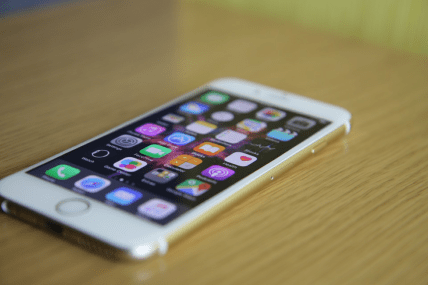
Despite the Department of Justice (DOJ) dropping its case against Apple, (as covered in this earlier post), the same legal arguments were salient before the House Energy and Commerce Committee (Committee).  On April 19th, the Committee heard testimony from the FBI, law enforcement heads, Apple and other technology experts about the use of encryption in technology and law enforcement action.

During the hearing, Rep. Tim Murphy (R-Penn.) asked the central question, “Should the government have the ability to lawfully access encrypted technology and communications?” Law enforcement officials insisted on “backdoor” access, while Apple countered that encryption protects people from cybercrime. Overall, the hearing continued to repeat prior arguments from the FBI that access was necessary to prevent criminal activity and Apple that encryption protects free speech and privacy made during the San Bernardino shooter case.

Continue reading

I Spy With My Legislative Eye

Remarks on the Defend Trade Secrets Act of 2015

Vault.pngby Gwen Wei

On April 4, 2016, the Senate approved Bill S. 1890, the Defend Trade Secrets Act of 2015 (“DTSA”) with a vote of 87-0. While major media outlets everywhere greeted this show of bipartisan support with well-deserved astonishment, legal professionals focused on a single question: will such an act be worth its costs?

Since the 1970s, practitioners and academics have clamored for a federal remedy specific to trade secret theft. Such demands have only grown with time: in 2013, the Obama administration released a 140-page report. In it, the administration recognized the exponential increase in trade secret theft from U.S. corporations and in international economic espionage, and contemplated solutions to this increasingly charged issue.

Continue reading

Exit Smartphones, Enter Smart Contact Lenses

contact lenseBy Tyler Quillin

Remember Google Glass? The spectacles Google

developed that allowed users to have hands-free, smart technology integrated into their eyewear.

Well, Google Glass did not do as well as projected, and Google ceased production in 2015. However, Google and Samsung are now rumored to be taking “wearable technology,” like Google Glass, to another level.

Both Google and Samsung are reportedly developing similar “smart” contact lenses. News surfaced on April 5, 2016 that Samsung submitted a patent application  for contact lenses with built-in cameras and other features. And both companies’ patent applications describe contact lenses containing a camera, sensors to detect movement, and antennae to interface with smart devices. Some speculate that blinking could control the lenses, which poses potential concerns over accidental commands.  However, by placing the device directly on the eye, the companies hope to improve clarity and accuracy, features that Google Glass lacked. Continue reading

What Can a Foul-Mouthed Twitter Troll and a Board Game Playing Robot Tell Us About Artificial Intelligence’s Ramifications for the Legal System?

AIBy Jeff Bess

Rapid technological development in the digital age has disrupted countless industries and fundamentally reshaped many aspects of modern life. Many of these technologies also present legal challenges; ranging from Constitutional privacy concerns stemming from government surveillance, to ongoing employment law disputes about companies’, like Uber, use of independent contractors. A perhaps even greater disruptor – to both the law and society in general – is found in the emerging field of Artificial Intelligence. There have been numerous scholarly inquiries into theoretical challenges of creating a moral and legal framework to govern Artificial Intelligence technologies, but recent accomplishments in the field can provide clues as to how the direction of the technology will inform necessary legal rules. Continue reading