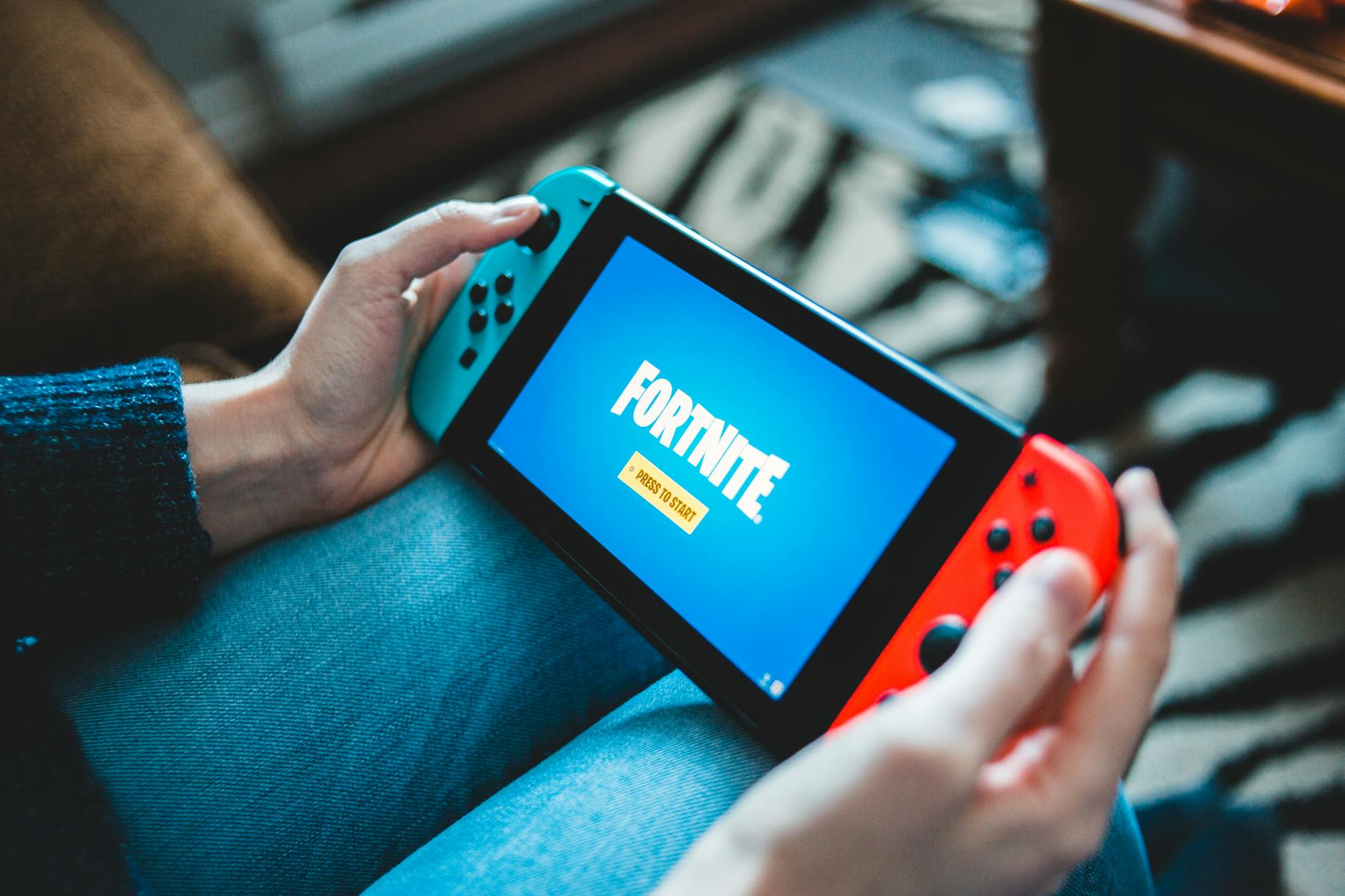
Epic Games Defeats Patent Infringement Claim Over Fortnite Virtual Concerts

By: Esha Kher

Epic’s Virtual Concerts 

Epic Games has successfully defended itself against a $32.5 million patent infringement lawsuit over its groundbreaking Fortnite concerts featuring artists like Travis Scott and Ariana Grande.  On May 19, 2025, a federal jury in the Western District of Washington found that Epic did not infringe a patent held by Utherverse Gaming LLC, a company licensing technology for virtual environments. The verdict, delivered after over six hours of deliberation, ended a high-profile trial that raised critical questions about intellectual property in the metaverse.

Epic Games revolutionized in-game experiences with Fortnite concerts—live events where real artists perform as digital avatars in evolving virtual environments. These concerts exemplify the metaverse’s core: a shared, persistent digital space for interactive, social experiences that go beyond traditional gaming. In 2020, pop icon Travis Scott drew over 27 million players to his in-game concert, setting new records for Fortnite. The following year, Ariana Grande headlined the “Rift Tour,” a narrative-driven concert experience that lifted players into a dreamlike, cloudscape environment. These events not only attracted millions of viewers but also generated tens of millions of dollars through merchandise sales and in-game purchases. To meet this demand, Epic looped and replayed each concert over several days.

Utherverse claimed that Epic has utilized three of their patents concerning “multi-instance, multi-user animation platforms” to host repeatable, large scale events for multitudes of participants. However, the jury sided with Epic, reinforcing the difficulty of applying traditional patent frameworks to dynamic, interactive digital performances.

The Lawsuit: Does Replay Mean Infringement? 

In June 2021, Utherverse sued Epic Games, alleging infringement of U.S. Patent No. 9,724,605, which covers technology for “playing back recorded experiences in a virtual world system.” Utherverse claimed that Epic’s technology for managing massive online crowds and replaying events in Fortnite incorporated methods protected by this patent. 

Utherverse alleged that its technology enabled Fortnite concerts to support millions of avatars without overwhelming network bandwidth. The company argued that Epic used similar methods without permission and did so intentionally. 

Epic’s Defense: It is Innovation, Not Infringement

In response, Epic filed a counterclaim in January 2022 denying the allegations and asserting that it developed its concert technology independently using its own Unreal Engine software, which has existed since 1998. Epic argued that Utherverse’s patent covers technology for replaying past events—something that doesn’t apply to Fortnite’s concerts.

While the music was pre-recorded and performers appeared as animated 3D avatars, the concerts themselves were not recordings of prior events. Instead, they were pre-scripted, interactive shows that took place live at scheduled times. Players had to join during those windows, and there was no option to watch the events later, reinforcing that these were real-time experiences—not replays.

Epic’s attorneys further contended that Utherverse’s patent was overly broad, and invalid because the underlying concepts were well-known to professionals in the field at the time the Utherverse patent application was submitted in 2014. The video game publisher has argued in its defense that the patent is invalid because the concepts would’ve been considered obvious, abstract, and conventional to a professional in the field when the patent was sought. Finally, Epic accused Utherverse of contributing nothing to Fortnite’s development while attempting to capitalize on the game’s commercial success.

The Verdict: No Infringement 

The jury concluded that Utherverse failed to meet its burden of proof under the “preponderance of the evidence” standard, which requires showing that it is more likely than not that infringement occurred. To succeed on its infringement claims, Utherverse needed to prove that Epic’s technology fell within the scope of at least one valid patent claim. Infringement can be established either through direct infringement—where every element of a claim is present in the accused product—or under the doctrine of equivalents, which applies when a product performs substantially the same function in the same way to achieve the same result. The jury found no infringement of any of the three patent claims at issue.

While the jury largely rejected Epic’s separate claim that the patent was invalid, they did find one claim—related to how avatar movement is constrained by virtual objects—to be based on routine and conventional technology, as would have been understood by a person skilled in the art in 2014. This part of the verdict engages with the legal standard for patent validity under § 101 of the Patent Act, specifically whether the patent claims involve an “inventive concept” beyond well-understood, routine, or conventional technology.

As a result, Utherverse was awarded no damages, and Epic Games emerged from the trial without liability. The verdict ultimately reflects the legal complexity of applying traditional patent law to novel, immersive digital experiences, particularly when distinguishing between live interactive events and replayed content in virtual worlds.

Conclusion 

The jury’s verdict in Utherverse v. Epic is a landmark moment in the evolving relationship between intellectual property law and the virtual world. By rejecting Utherverse’s infringement claim, the decision highlights the challenges of applying traditional patent frameworks to immersive, real-time digital experiences. While Utherverse claimed its patent covered essential technology for replaying virtual events, the jury ultimately accepted  Epic’s argument that its concerts were original, live performances, not reproductions of past gameplay.

This case highlights the growing tension between innovation and patent enforcement in the virtual world. A ruling in favor of Utherverse could have opened the floodgates for similar lawsuits targeting large platforms and game developers, potentially stifling creativity and experimentation in digital entertainment. As the virtual landscape continues to evolve, so too must the legal frameworks that balance innovation, ownership, and fair competition.

Breaking the Game: The Legal Fallout of the EA-FIFA Divorce

By: Santi Pedrazas Arenas

I. Introduction

For nearly three decades, the FIFA video game series stood as both a cultural phenomenon and a revenue juggernaut, melding the world’s most popular sport with cutting‑edge digital technology. Yet on May 10th, 2022, Electronic Arts (EA) and Fédération Internationale de Football Association (FIFA) announced that their long‑running licensing agreement would not be renewed at the end of that year. This departure was far more than a simple rebranding exercise; it reflected a complex tug‑of‑war over intellectual property (“IP”) rights, brand equity, and digital distribution in an age when gaming companies increasingly rival traditional sports institutions in global influence.

Beyond the headlines, the EA‑FIFA breakup offers a rich case study in contract negotiations, trademark strategy, and the evolving contours of digital IP. By examining the key legal fault lines, from licensing fees and player likenesses to trademark dilution and collective bargaining with player unions, we can trace how tech giants assert greater autonomy over digital assets once held by legacy organizations. 

II. Background: A $20 Billion Partnership

EA first partnered with FIFA in 1993, releasing FIFA International Soccer for the Sega Genesis and Super Nintendo Entertainment System. Over the ensuing years, the franchise evolved into EA’s flagship title, particularly following the introduction of FIFA Ultimate Team (FUT) in 2009, a game mode that grew to dominate the company’s monetization strategy. By the time of the split announcement, “FIFA 23” accounted for a significant amount of the financial success for EA

Under the terms of the licensing deal, FIFA granted EA exclusive rights to use its trademark, official competition names (including the World Cup), and related branding elements. In return, reports suggested that annual licensing fees ran into the billions of dollars per World Cup cycle. Meanwhile, EA negotiated separate agreements with player associations (FIFPro), major leagues (Premier League, LaLiga, Bundesliga), and individual clubs to secure likeness rights, kits, and stadiums — a sprawling web of sublicenses that gave the series’ authenticity.

This dual‑track licensing approach meant that while FIFA owned the name, EA controlled the experience. As digital distribution overtook physical sales, EA began to question the value of the FIFA trademark itself. The core gameplay, player likenesses, leagues, and clubs that fans cared about were secured through separate agreements and remained intact regardless of the FIFA name. In this context, the branding offered by FIFA was increasingly seen as symbolic rather than essential. For EA, long-term value lay in recurring in‑game revenues from microtransactions and content updates, not in legacy naming rights. This shift in perspective helped set the stage for license renegotiations in 2022.

III. The Licensing Dispute: FIFA vs. EA

At the heart of the breakup lay a disagreement over the value and scope of FIFA’s trademark. Reports indicate that FIFA sought over $1 billion for a renewed naming‑rights deal covering the next World Cup cycle, a figure EA deemed unjustifiable in light of its digital‑first business model. EA countered with a proposal that would have granted it broader rights to digital and streaming content, global mobile distribution, and extended sublicensing flexibility, terms FIFA ultimately refused to grant.

When negotiations collapsed in May 2022, both parties publicly assured fans that the split would be “amicable,” but behind the scenes, lawyers scrambled to untangle overlapping rights before the December 2022 deadline. 

IV. Who Owns the Game? A Legal Anatomy of the Split

A. Trademark Law

Under U.S. and international trademark principles, a mark grants its owner the exclusive right to use a brand identifier in commerce. FIFA’s insistence on preserving exclusive control over “FIFA” threatened to limit EA’s ability to leverage the brand in new digital arenas. In contrast, EA holds registered trademarks for “EA Sports,” “FUT,” and related subbrands. The split has tested the consumer confusion doctrines. This raises important questions about whether or not fans can distinguish EA Sports FC from FIFA games, or whether EA’s longstanding association would dilute FIFA’s goodwill. 

B. Collective Licensing & Player Likenesses

Crucially, EA’s separate agreements with FIFPro conferred rights to more than 17,000 player likenesses, independent of the FIFA deal. This collective bargaining arrangement allowed EA to continue featuring top athletes even as the FIFA name disappeared. From a contract‑law perspective, these parallel licenses insulated EA against the fallout of a single counterparty walkout, showcasing a best practice in risk diversification for IP‑heavy ventures.

VI. Conclusion

The end of the EA‑FIFA partnership marks more than the sunset of an era; it signals a tectonic shift in how IP, branding, and digital distribution intersect in sports entertainment. By dissecting the legal anatomy of the split, from the high‑stakes trademark negotiations and contract‑law intricacies, we glimpse the future battlegrounds where tech companies and traditional institutions will fight for control. As virtual sports become ever more immersive and monetized, law will play a pivotal role in defining the balance of power. Can governing bodies adapt to digital‑first licensing models? And will new stars emerge amid the legal skirmishes over fan engagement and metaverse extensions? For lawyers, technologists, and gamers alike, the story of EA Sports FC versus FIFA is just the opening whistle in a game whose final outcome remains to be determined.

Hitting Refresh: How Drug Companies Use Patents to Extend Their Monopoly Power

By: Alexander Okun

  On April 17, 2025, the non-profit Initiative for Medicines, Access, and Knowledge (“I-MAK”) published a report detailing the tactics that two pharmaceutical companies use to maintain their monopolies for their popular diabetes and obesity drugs. The two drugs are Semaglutide (marketed by Novo Nordisk as Ozempic, Rybelsus, and Wegovy) and Tirzepatide (marketed by Eli Lilly as Mounjaro and Zepbound). According to I-MAK, Novo Nordisk and Eli Lilly will effectively extend their patent-based monopolies on these drugs for up to a decade. The tactic of  “patent thickets” is not new to the pharmaceutical industry, but its potential economic impact as applied to these products (known collectively as “GLP-1” drugs) could be on a scale previously unseen. Given the adverse impact this could have on US patients, the need for legal reform is greater than ever.

“Patent Thickets” and Their Uses

A US pharmaceutical patent provides 20 years of protection, after which other manufacturers can produce generic versions of the drug. However, drug companies often file an array of patents for aspects beyond the drug’s core ingredients (called a “patent thicket”) like the method of administration. Subsequent changes to the product may also get patented (known as “secondary” or “follow-on” patents) but can be as minor as adding a dose counter to the injection device. Follow-on patents can also protect purportedly “new” applications of a drug without making any changes, even though those “novel” uses were  disclosed in the initial patent. For example, Eli Lilly’s Mounjaro is approved to treat diabetes while Zepbound is approved for weight loss even though Tirzepatide’s original patent disclosed both uses.

This practice is neither novel nor unique to the GLP-1 market: a 2018 report by I-MAK found that in 2017, the top 12 grossing medications in the US had an average of 71 active patents each, extending each drug’s protection for an average of 18 years. However, the profitability of those extensions is miniscule relative to the potential with GLP-1 drugs. Whereas the top-selling drug in I-MAK’s 2018 report, Humira, produced roughly $200 billion in revenue in its first 20 years, the GLP-1 market is projected to reach $150 billion in annual revenue by 2030. Novo Nordisk has already extended its patents for Ozempic and Wegovy by five years (expiring in 2031), which I-MAK says will deliver $166 billion in additional profits. As of now, patent thickets have effectively extended the protections for Semaglutide by 10 years (expiring in 2042) and Tirzepatide by five years (expiring in 2041). 

Potential for Reform

High drug prices are a perennial issue in US politics, and two proposals appear most promising in preventing further abuses of the patent system. The first approach is to limit the number of patents that can be cited in an infringement lawsuit. This would reduce the deterrent value of patent thickets by limiting the complexity of infringement actions (therefore defendants’ costs) and reducing plaintiffs’ likelihood of succeeding. The Affordable Prescriptions For Americans Act would implement this strategy, and on April 10 it was placed on the Senate’s legislative calendar. However, some analysts say the bill’s exemptions and waivers could make it largely ineffective.

A second option is to crack down on petitions that delay the approval of generic drug versions by using the filer’s patent thickets. The “Stop STALLING Act,” would enable the Federal Trade Commission (“FTC”) to sue filers if it deems a petition “objectively baseless” and intended to “interfere with the business of a competitor.”  However, the requirement of government intervention creates greater administrative costs and potential inconsistencies in enforcement. On April 10 the Stop STALLING Act was also placed on the Senate’s legislative calendar. While both bills have potential and bipartisan sponsorship, they have failed to garner sufficient support in their past iterations. Last year the Affordable Prescriptions for Patients Act passed the Senate unanimously but was never scheduled for a vote in the House of Representatives; the Stop STALLING Act never received a vote in the Senate whatsoever. Hopefully, the resounding success of GLP-1 drugs despite their exorbitant pricing will trigger public interest broad enough to provoke Congressional action.

Diarra v. FIFA: A Clash Between Global Sports Governance and Individual Labor Rights

By: Tavis McClain

When a footballer challenges the most powerful governing body in sports, the world pays attention. Lassana Diarra, a talented midfielder, has entered into a stand-off with the very institution meant to uphold the spirit of the game. This case incited intense debate on fairness, freedom, and the balance of power in professional football.

Introduction

Diarra v. FIFA challenges the foundational structures of sports governance. This dispute raises crucial questions about how international sports bodies govern, how athletes assert their rights, and where the boundaries lie between sporting rules and fundamental labor protections. The situation is emblematic of a deeper tension in modern sport: the power of centralized global institutions like FIFA versus the rights of individuals navigating the professional system. It reveals a crucial lens into how the governance of international sport must adapt in response to legal, ethical, and human rights standards.

Background

Lassana Diarra, a well-regarded French international, terminated his contract with Russian club Lokomotiv Moscow in 2014. Diarra claimed the club had breached the contract by failing to pay his wages and creating a hostile work environment. However, FIFA’s Dispute Resolution Chamber (DRC) ruled Diarra had no just cause for the termination as there wasn’t sufficient evidence of a breach by Lokomotiv Moscow. FIFA subsequently imposed a fine and a global playing ban until the compensation was paid—a punishment that effectively paused Diarra’s career and forced him out of the game.

FIFA’s Ruling and CAS Appeal

Diarra appealed to the Court of Arbitration for Sport (CAS), which largely upheld FIFA’s decision. Decisions from the CAS are generally considered binding on FIFA as well as other institutions. The CAS ruling emphasized the principle of contractual stability in football—a cornerstone of FIFA’s regulations, designed to prevent players and clubs from breaching agreements unilaterally. Diarra subsequently challenged the ban in French civil courts, arguing that the enforcement of FIFA’s decision within national jurisdiction violated his fundamental labor rights, particularly his right to work.

Global Sports Governance Under Scrutiny

FIFA, as the global governing body of football, enforces a centralized dispute resolution system designed to streamline legal matters and preserve uniformity across jurisdictions. This case, however, exposes the limitations of that model:

  • Enforcement Without Borders: FIFA’s global ban extended beyond Russia, restricting Diarra’s ability to play in any league worldwide. This reveals how sports governing bodies can bypass national labor protections through international enforcement.
  • Lack of Worker Protections: FIFA’s mechanisms often prioritize contractual order over employee rights, a model that may not always align with domestic labor standards, especially within the EU.
  • Limited Transparency and Appeal: The CAS arbitration system, while designed for expediency, is often criticized for its lack of transparency, limited recourse, and the asymmetry in power between athletes and governing bodies.

What This Means for Labor Rights in Sport

  1. The Right to Just Cause
    The case demonstrates how difficult it can be for players to assert just cause in contract disputes, especially when proving workplace mistreatment or unpaid wages. It sparks questions about the fairness of a system where players are held to stricter standards than employers. Players are forced to prove they were not fired for a legitimate purpose, while FIFA is not required to present evidence.
  2. Access to National Legal Systems
    Diarra’s recourse to the French courts signaled that national jurisdictions can and will challenge the authority of sports bodies when fundamental rights are at stake. This could set a precedent for athletes bypassing arbitration if labor rights are seen to be compromised. If FIFA does not provide relief when its players have their labor rights violated, then they will seek alternative routes of action. It is in the interest of FIFA and the players to settle these conflicts on their behalf to reduce transaction costs and promote transparency.
  3. Rethinking the Role of CAS
    As the de facto “supreme court” of sports, CAS must adapt its structure to better balance institutional interests with individual protections. The current structure favors institutional interests over those of the individual. This may include more transparent hearings, greater independence, and recognition of fundamental labor norms. If these changes are made, it may remedy the issues that footballers are facing.

Conclusion

Diarra v. FIFA exposed a fault line between the old world of insular sports governance and the new reality where labor rights and ethical governance matter more than ever. For international sport to remain credible and fair, its legal infrastructure must shift toward transparency, equity, and respect for the individual.

Marks Madness: University (Basketball) Trademarks and TV

By: Angela Chung

Universities may be unhappy with how their brands are presented in television shows, but comparison and commentary does not necessarily produce consumer confusion. Where trademark law falls short, are there other legal avenues for universities to distance their marks from uses that are inconsistent with their values? 

Duke University recently criticized The White Lotus for depicting characters wearing Duke apparel in scenes involving suicidal ideation. Memes sprouting from these scenes in reference to Duke’s March Madness progression (and the later Final Four finish) prompted an official reply that the imagery “mistakenly suggests an endorsement or affiliation” with the show’s themes. This comes not long after Pepperdine University sued Netflix and Warner Bros. Entertainment for using “Waves” athletic branding in Mindy Kaling’s new show, Running Point. Pepperdine similarly asserted that the show’s depictions of identifiable branding created a false sense of endorsement by Pepperdine of the show’s suggestive themes, which are inconsistent with the university’s Christian values.

TV Does Not Dilute TMs

Trademark law is, at its core, intended to prevent consumer confusion. Facilitating distinctions and siloing off the rights to marks helps consumers and companies associate brand logos with particular values. For example, an Apple logo creates expectations of  sleek aesthetics and user interface while the Gucci logo communicates high status and product quality. When certain marks—like Apple or Gucci—are extremely well known, trademark law extends further protections for said ‘famous’ marks when they get linked to unsavory subject matter. This is called trademark dilution. Dilution can occur through blurring (chipping away at the distinction between brands in a way that harms brand reputation) or tarnishment (lowering brand reputation through association with subject matter or product quality in tension with actual values of mark owner). For instance, if a knockoff iPhone was being sold with glitchy and poor functionality, Apple may have a trademark dilution claim on the grounds that  the knockoff harms Apple’s reputation for creating smooth and reliable smartphones. 

At first glance, both universities appear to have an argument for trademark dilution, particularly via tarnishment. Associating university brand imagery with unsavory images that are contrary to university values could arguably imply inaccurate ideas about both schools. But the foundational goal of trademark law to prevent consumer confusion limits the protections these universities may seek. Context matters—seeing a particular university brand associated with products or services is very different from seeing that same brand within an expressive work on TV. 

Ultimately, viewers are unlikely to believe that university logos in creative works—like a TV show—indicate that the universities actually endorse ideas from the show itself. In fact, university branding can be a tool to express new commentary or criticism in themes across education, class, athletics, and more. Using a mark in a creative work fundamentally changes the way potential consumers view its associated ideas. Trademarks can therefore become independent vessels for communicating artistic expression, rather than identifiers of potential product or service origins.

Creative Expression > Commercial Identity

Trademark expressions in creative works are therefore explicitly protected through fair use exceptions to trademark infringement and dilution claims. The two-prong test from Rogers v. Grimaldi, 875 F.2d 994 (2d Cir. 1989) is used to determine if a trademark falls under fair use in a creative work. Under the Rogers test, courts assess if the use of a trademark (1) has artistic merit and (2) explicitly misleads a viewer as to the source of a work. Under 15 U.S.C. § 1125(c)(3)(A), if the mark has some artistic merit and does not mislead a user to believe the creative work originates from the trademark owner, there is no cause of action for trademark infringement. Ultimately, the Rogers test seeks to distinguish artistic expression from commercial products and protect free speech. Recent Supreme Court rulings have affirmed strong support for use of trademarks in creative / artistic works without permission from the mark owners.

Pepperdine’s temporary restraining order on Netflix was therefore denied because Netflix’s use of the Waves’ marks “does not explicitly mislead consumers as to the source of the work.” And Duke would not have a strong claim for trademark dilution because trademarks do “not give one control over how others reference one’s brand, including in critical ways.” (Duke Says ‘White Lotus’ Went ‘Too Far’ With School References – The New York Times). Under the Rogers test, the Duke logo likely has artistic merit for shaping out characters of the show, and does not explicitly mislead viewers into thinking The White Lotus is endorsed or produced by Duke. 

Ultimately, trademark laws protect companies where the use of their marks by others affect their commercial reputation and recognizability in the market. Trademarks do not protect brands from being referenced, criticized, or used as part of cultural /creative expression. So where can universities go from here if they sincerely wish to prevent the use of their logo in these shows? Does copyright or defamation law provide avenues for action?  

Probably not. 

Legal Limits of Brand Protection

Trademark law protects words, phrases, or designs used to identify goods and services. In order to help consumers identify the source of goods and services, mark owners are empowered to prevent others from using their marks without permission. Copyright law, on the other hand, prevents people from copying or reproducing a creative work without permission from the copyright holder. For brands, copyright law would only extend protections to creative elements of brand design, such as a logo illustration. But words, phrases, and common combinations of design are not protected because doing so would stump creativity. Because of this, copyright law would not block others from using the words “Waves” or “Duke,” for example.

A particular illustration of Duke’s mascot could be granted protections when reproduced or used in another copyrightable work, but protections over logo elements (like the combination of font styles with certain colors) would be very thin at best. In the case of Pepperdine, courts would be unlikely to prevent others from using a general combination of blue and orange with the word “Waves.” Even if Pepperdine could raise a claim for copyright infringement of their Waves logo imagery by showing substantial similarity between the show’s logo with Pepperdine’s , it probably would not entirely stop Running Point from using various brand design elements. Copyright therefore falls short of the more robust protections provided by trademark law over brand names and imagery. 

Defamation suits would not survive either. A defamation prima facie case requires a false statement about the defendant purporting to be fact and proof of damages or harm caused to the reputation of the defendant. Here, associating university brands with controversial subject matter in explicitly fictional shows does not qualify as false statements about those universities. Having a character wear a Duke sweater does not mean The White Lotus is factually stating that Duke supports or exacerbates suicide amongst its students or alum. In addition, neither Duke nor Pepperdine would likely be able to show actual damages or harm to their reputation as a result of their brand being used. While Pepperdine may dislike allusions to their sports logos alongside inappropriate scenes in Running Point, there is no evidence that the show’s airing reduced enrollment or otherwise affected the university’s reputation or funding. 

Legal action is generally sought in order to prevent or seek redress for harm. While unauthorized presentations of university brand logos in fictional shows may be strongly disliked by the respective universities,  it does not necessarily amount to harm under the law.  Further, the use does not harm viewers since there is no evidence that the use of university logos creates confusion about the show’s origins or misleads viewers into believing they are consuming something else. Creative contexts provide new meaning to protected marks outside of commercial identification, and fair use exceptions prioritize these expressive means. For now, where trademark law does not provide protections for distasteful themes in association with brand presentation, universities may just have to accept the discourse as is.