Art mishaps: Who Foots the Bill?

By: Nicholas Lipperd

One misstep at a museum social hour was all it took to destroy a $42,000 sculpture. Seconds after a museum patron accidentally bumped the pedestal, Jeff Koon’s porcelain “balloon dog” sculpture lay shattered on the floor. As onlookers watched in horror, the person who bumped it surely had one thing racing through her mind: will I have to pay for this? It was surely the same question asked by the parents of the twelve-year-old who tripped and accidentally put a fist through a $1.5 million painting in Taiwan. Exploring both practical effects and legal theories that apply to mishaps with museum patrons, this article comes to the conclusion that there is only minimal worry.

The majority of mishaps involving art end up being covered by insurance, but relying on insurance is never a straightforward and easy process. As damaged art claims are on the rise, the incentive for insurance companies to make claims a straightforward process continually shrinks. Further concerns arise if there are terms in the insurance contract that disclaim damage from patrons in certain instances. What if the museum is displaying the art for sale on consignment and does not obtain insurance, thinking to save a few pennies? This is certainly an option for museums, though states like Washington impose strict liability for damage on museums when selling art on consignment. While insurance removes most of the worry over museum mishaps, it is not a foolproof solution. 

Even if museums lack the safety net of insurance coverage, patrons likely need not fear the price tag of accidental damage. Any claims based on such damage will be governed by state tort law because museum patrons have traditionally been considered invitees. While many states have moved past such rigid categories in tort law with respect to third-party harm on public land, the categorization of invitee is still important to understand why liability will not likely fall on a museum patron.

A public invitee is a person who is invited to the property for a purpose for which the land is held open to the public. A museum thus owes a duty of care to museum patrons as invitees, and the museum is liable for injuries and damages caused by the condition of the museum. In layperson terms, this means if a museum failed to properly secure a priceless sculpture and a patron bumped it, it is the museum and not the patron who is responsible. This protection may not hold when the patron specifically recognizes a danger and fails to adhere to it, is trespassing, acts intentionally, or is otherwise acting negligently. The responsible museum-goer need not worry. Yet, these exceptions to invitee protection call in to question a few problematic situations.

If a patron’s actions in damaging art are truly intentional, there are not many defenses available. This is not particularly controversial; if one intends to destroy art, one should be held responsible. But when the action is intentional but the consequences are not, what then? The outcome may be uncertain. In one comical example, a museum janitor thought a contemporary art exhibit was simply trash and consequently “cleaned up” the exhibit by throwing it away. Luckily, the actions were viewed as an honest mistake by the museum, and she was not responsible for the cost. 

If museums have interactive exhibits, the patron is acting intentionally when interacting with the exhibit. When such exhibits invite the patron to physically engage with the art past merely pushing a button, greater risk of damage is inherent. Common sense would dictate that a patron who, hypothetically, breaks a lever on a piece of interactive art after being invited to push said lever, has not intentionally broken anything, despite the act being intentional. One legal theory that protects the patron here parallels the personal injury defense of assumption of risk. The museum is responsible for setting up any interactive exhibit and understands that the risk of damage is increased when inviting patrons to interact. While this protects patrons who act reasonably in such exhibits, a negligence standard may still be applied to their actions in fact-specific circumstances. 

Negligence may pose the most risk to museum patrons just as it does in many other social settings: when alcohol is present. It is increasingly common for museums to host special mixers or functions where alcohol is provided or available. “I just had one too many” is not a valid excuse in any setting and especially not at a museum. A patron’s actions will be judged as either responsible or negligent when compared to a sober adult in the same setting. While commercial hosts can be held liable for damages caused by the intoxication of the persons they serve if those persons are apparently under the influence of alcohol, this is fact-specific and not a protection to be relied upon when the liability for tens of thousands of dollars of damage may be called into question.

So if you plan on enjoying a nice afternoon at the museum, you shouldn’t spend much time worrying about covering the exorbitant cost of an unfortunate mishap. However, should you consider visiting a new interactive exhibit at your local glass museum after a few happy hour drinks, more caution is certainly warranted.

Hide Your Info: Exploring the Lackluster Protection of HIPAA

By: Zach Finn

The Health Insurance Portability and Accountability Act (HIPAA) was enacted in 1996, and has since become a touchstone for the protection of confidentiality and security of personal health information in the United States.

Or, so we thought. The rise in technology has advanced the way information is stored and shared. Biomedical databases store high volumes of information, ranging from personal external identifiers such as medical reports, to even individual genetic sequencing, exemplified by 23andMe’s and Ancestry‘s storage of genetic information. Large data and biobanks (a collection of biological samples, like blood and health information) create access to a plethora of quality human data, which prove to be valuable in medical research, clinical trials, and understanding genomics. But at what cost?

HIPAA requires medical and genetic information to be anonymized before being distributed and shared to third parties outside the relationship of medical providers and patients. Technology has created a loophole in HIPAA, through re-identification processes, which allows individuals to match medical information back to specific individuals using open source data. Re-identification, as of now, disarms HIPAA, rendering de-identified (anonymized) medical information basically unprotected from parties who obtain personal biodata through re-identification.

HIPAA nationalizes standards for protecting the privacy and confidentiality of individuals’ personal health information (PHI). It requires covered entities to provide individuals with notice when sharing a person’s genetic information. HIPAA is violated when a covered entity discloses personal and identifiable health information without the consent of the patient. These covered entities include healthcare providers, health plans, and healthcare clearinghouses. Technology provides entities with the ability to de-identify and anonymize large data sets in order to share health information and be in compliance with HIPAA. Anonymization removes personal identifiers like names, addresses, date of birth, and other critical identifiers. HIPAA sets out requirements of what needs to be de-identified, and once anonymized, personal health information is shareable and HIPAA compliant.

Re-identification is the process to which materials and data stored in biobanks can be linked to the name of the individuals from which they were derived. This is done by taking public information and re-matching it the anonymized data. It sounds difficult, but a study concluded that 99.98% of Americans would be correctly re-identified in any dataset using 15 demographic attributes such as age, gender and marital status. For example, in the 1990s, one could purchase the Cambridge, MA voter registration list for $20, and link it to a public version of the state’s hospital discharge database to reveal persons associated with many clinical diagnoses.

HIPAA has yet to play catch up with the innovation of technology. The requirements for compliance in anonymization lack the sophistication and protective measures needed to combat the expanding use of re-identification practices. HIPAA’s privacy rule does not restrict the use or disclosure of de-identified health information, since it no longer is considered protected health information. This means that any re-identification of this earlier protected information is not subject to HIPAA. This ultimately demonstrates HIPAA’s weak protective measures, and the alarming concern of how easily accessible our genetic and medical information is to third parties.

Re-identification of HIPAA compliant anonymized information is not a violation of the statute. We must consider reforming HIPAA to acknowledge technology’s capabilities to bypass its security measures. One way an individual can ensure privacy of his or her genetic and medical information is by not consenting to sharing or storing this data. Covered entities must give notice and obtain consent before de-identifying and sharing biobanks. However, this comes with the price of stifling research, trials, and genomics. Hopefully we can figure out a balance between confidentiality and sharing private information, but it starts with drafting laws that actually protect our personal and most private information!

Massive Tech Layoffs Negatively Impact H1-B Visa Workers and Immigration

By: Talia Cabrera

At the beginning of 2023, no one would have expected that the U.S. tech sector would be in the headlines for laying off thousands of tech workers. Tech giants like Google, Meta, Disney, and Microsoft were faced to deal with the consequences of inflation and potential recession after the pandemic. Even Amazon was not free from the wave of layoffs after their profits increased 220 percent during the first year of the pandemic. Collectively, the U.S. tech sector has laid off more than 150,000 workers. So why are we seeing tech companies layoff their workers? Rapid hiring because of fast growth without a care in the world about the implications of a workers life, especially H-1B visa holders.

Though layoffs are meant to alleviate the financial burden companies are left to deal with, they unfortunately disrupt a worker’s life with just a simple email. Workers who no longer have a career are now left to start over and find a new job during a time when companies are freezing hiring. Though these layoffs have had a negative impact on thousands of people, one group of workers is left in a unique position: US immigrants holding an H-1B visa.

The H-1B visa is a work visa that allows U.S. employers to sponsor a foreign worker to work in the U.S. for a specific period of time. These “specialized skill” visas are heavily used by large tech companies and have contributed to their success. For example, in 2021, Amazon was approved for over 4,800 H-1B visas, Miscroft was approved for 1,200 H-1B visas, and Apple had over 1,000. Yet, the recent wave of tech layoffs has shown us the lack of support H-1B visa holders have when the unexpected happens. Once an H-1B visa holder is told that they no longer have a job, they have to face the harsh reality of a limited time period to find a new job. If an H-1B visa is unable to find a new employer within a 60-day window, they may be forced to leave the United States and return to their home country.

But the reality is that many of these visa holders have built a life in the United States for years and are now facing the uncertainty of being deported. These visa holders have invested time and resources in their careers in the U.S. and many of them have built a family and community. Now, the post-pandemic economy is highlighting how this system needs to be updated. In the recent economic climate, the hiring freeze is leaving visa holders concerned about their future in the United States, especially now having to compete in an already competitive work sector.

So what needs to change? There need to be more resources in place to help H-1B visa workers during layoffs. Tech companies have invested millions of dollars into lobbying for visa workers to invest in innovation so they need to make sure they support them in their transition period. Now, tech companies should facilitate a smooth transition or risk losing future generations of skilled workers. Maybe tech companies need to lobby for workers to extend the 60-day window or keep them as sponsors until a new company can sponsor that so they can continue working for citizenship. If tech companies want to use H-1B visa holders then they need to not take advantage of them and leave them left with nothing.

The recent wave of tech layoffs in 2023 has had a significant impact on many workers and has highlighted the lack of support for tech workers. Employers and policymakers need to stop using greed as a motivating factor for innovation and instead make sure their workers are taken care of. But until then, we will see big tech companies concerned about making money without a care in the world.

Alexa: Are You Going to Testify Against Me?

By: Melissa Torres

Life seems pretty great in a world where we can turn lights off, play music, and close the blinds by simply speaking it into existence. But, what happens when your conversations or home noises are used against you in a criminal investigation? 

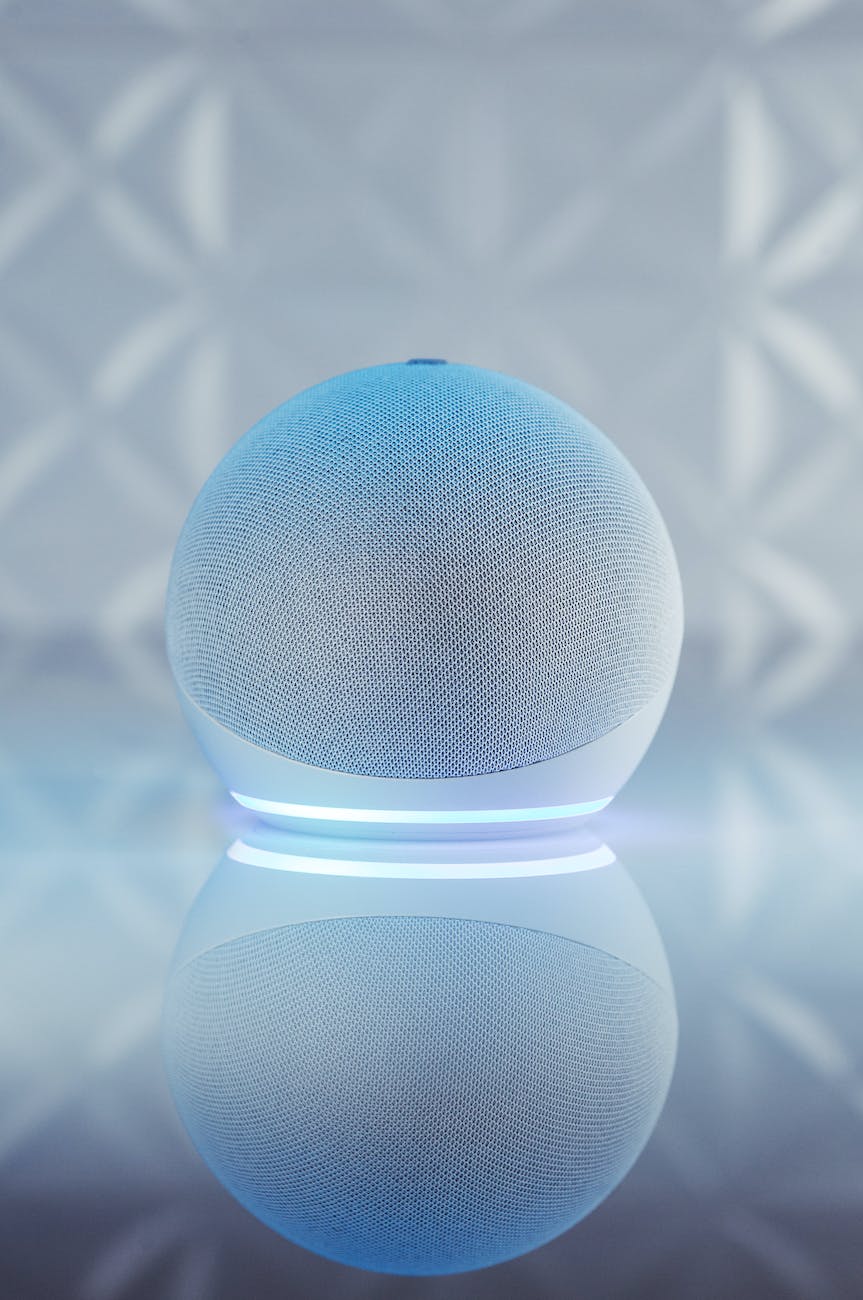
Smart speakers, such as Google Home and Amazon Alexa, are marketed as great tech gifts and the perfect addition to any home. A smart speaker is a speaker that can be controlled with your voice using a “virtual assistant”. It can answer questions for you, perform various automated tasks and control other compatible smart devices by simply activating its “wake word.”

According to Amazon.com, in order for a device to start recording, the user has to awaken the device by saying the default word, “Alexa.” The website states, “You’ll always know when Alexa is recording and sending your request to Amazon’s secure cloud because a blue light indicator will appear or an audio tone will sound on your Echo device.” Unless the wake word is used, the device does not listen to any other part of your conversations as a result of built-in technology called “keyword spotting”, according to Amazon.

Similarly, Google states, “Google Assistant is designed to wait in standby mode until it detects an activation, like when it hears ‘Hey Google.’ The status indicator on your device will let you know when Google Assistant is activated. When in standby mode, it won’t send what you’re saying to Google servers or anyone else.” 

Consumers consent to being recorded when they willingly enter a contract with these smart devices by clicking “I agree to the terms and conditions.” However, most people assume this refers only when implicating the “wake word.” Despite assurances from tech giants that these devices do not record without being prompted, there have been many reports that suggest otherwise. And recent in years, these smart devices have garnered attention as they have been called as the star witness in murder investigations.  

In October 2022, someone fatally shot two researchers before setting fire to the apartment they were found in. According to the report, Kansas police believe the killer was inside the apartment with the duo for several hours, including before and after their deaths. Investigators found an Amazon Alexa device inside the apartment and filed a search warrant for access to the device’s cloud storage, hoping it may have recorded clues as to who is responsible for the murders. If the police obtain relevant information, they may be able to use it in court, depending on how this evidence is classified.

Under the Federal Rules of Evidence, all relevant evidence is admissible unless another rule specifies otherwise. Specifically, statements that are considered hearsay are not admissible unless an exception applies. Hearsay is any statement made outside the presence of court by a person for the purpose of offering it to prove the truth of the matter asserted. Although these devices technically do produce statements, courts have held that a statement is something uttered by a  person, not a machine. However, there is an important distinction between machines that have computer stored and computer generated data. Computer stored data that was entered by a human has the potential to be hearsay, while computer generated data without the assistance or input of a person is not considered hearsay.  The question of how these statements will be classified and whether they will be permitted in court is up to the judge. 

As such, this isn’t the first time police have requested data from a smart speaker during a murder investigation. In 2019, Florida police obtained search warrants for an Amazon Echo device believing it may have captured crucial information surrounding an alleged argument at a man’s home that ended in his girlfriend’s death. In 2017, a New Hampshire judge ordered Amazon to turn over two days of Amazon Echo recordings in a case where two women were murdered in their home. In these previous cases, the parties consented to handing over the data held on these devices without resistance. In 2015, however, Amazon pushed back when Arkansas authorities requested data over a case involving a dead man floating in a hot tub. Amazon explained that while it intends not to obstruct the investigation, it also seeks to protect its consumers First Amendment rights. 

According to the complaint, Amazon’s legal team wrote, “At the heart of that First Amendment protection is the right to browse and purchase expressive materials anonymously, without fear of government discovery,” later explaining that the protections for Amazon Alexa were twofold: “The responses may contain expressive material, such as a podcast, an audiobook, or music requested by the user. Second, the response itself constitutes Amazon’s First Amendment-protected speech.” Ultimately, the Arkansas court never decided on the issue as the implicated individual offered up the information himself.      

Thus, a question is still unanswered: Exactly how much privacy can we reasonably expect when installing a smart speaker? As previously mentioned, these smart speakers have been known to activate without the use of a “wake word”, potentially capturing damning conversations. Without a specified legal standard, there’s not much consumers can do to protect their private information from being shared as of now, fueling the worry that these devices can be used against them. Tech companies, like Amazon and Google, suggest going into the settings and turning off the microphone when you aren’t using it, but that requires trusting the company to actually honor those settings. Users also have the option to review and delete recordings, but again you have to trust the company to honor this. The only sure way to protect yourself from these devices is by simply not purchasing them. If you can’t bring yourself to do that, be sure to unplug the devices when you’re not using them. Otherwise, it’s possible these smart speakers may be used as evidence against you in court.

Copyright Law (Taylor’s Version)

By: Melissa Torres

Are you ready for it? Taylor Swift is reportedly set to kick off 2023 with the release of a new album, Speak Now (Taylor’s Version). Despite just releasing the fastest-selling album of 2022, Midnights, fans have been speculating about which one of her early albums she’ll rerecord next for quite awhile. Reports state, “Taylor has quietly been in the studio working on remaking both Speak Now and 1989. All details are still being ironed out but Speak Now (Taylor’s Version) should be out within the next couple of months, before she kicks off her Eras world tour.” 

But why is Taylor Swift rerecording old albums?  

While it may seem obvious to the general public that the writer, composer, and performer of a song would then own the recording of the song, the music industry functions on a different set of rules formed by contracts and copyrights. When a new artist signs with a record label, they form a contract which specifies the intellectual property rights of the works created. 

Copyright is a type of intellectual property that protects original works of authorship as soon as an author fixes the work in a tangible form of expression. Common types of work include photographs, illustrations, books, and music. These works are fixed when they are captured in a “sufficiently permanent medium such that the work can be perceived, reproduced, or communicated for more than a short time.” U.S. copyright law provides copyright owners with a list of exclusive rights and also provides owners of copyright the right to authorize others to exercise these exclusive rights, subject to certain statutory limitations. 

Typically, in the music industry, copyrights are divided between the musical composition of a song and its sound recording. The musical composition refers to the lyrics of a song, the music itself, or both. The sound recording, also known as the master, is the recorded performance of the song. As a result, more often than not, an artist’s record label owns the master of a song.  

In Swift’s case, she signed with record label Big Machine Records in 2005 and formed a contract in which one of the stipulations was that Big Machine would own the rights to the sound records in perpetuity. After the deal ended in 2018, Swift moved on and signed to a different label. Her recordings made over the 13 years stayed with Big Machine, and the label sold the rights to them for $300 million to Scooter Bruan in 2019. Swift alleges she was never given the opportunity to purchase these rights. Despite writing and performing over 82 songs, she has no rights to those records and receives no payment anytime they are played. Therefore, the singer embarked on a mission to rerecord her first six records in order to own both the musical composition and master of the new recordings. 

Because Swift has written every single song released in those six albums and therefore owns the musical composition copyright, she retains the “sync rights” of her music. A synchronization license is needed for a song to be reproduced onto a television program, film, video, commercial, radio, or even a phone message. Permission from the owner of the master use license, typically the record company, also needs to be obtained if a specific recorded version of a composition is used for such a purpose. As a result, everytime these songs are used for commercial purposes, the owner of the masters earns a profit. 

By rerecording versions of her old hits, Swift will now hold the master and composition rights of these songs. To be clear, the original masters of these songs still exist, but by encouraging fans to stream the newer recorded version, Swift is able to reclaim any income that may have gone toward songs previously owned by her former label. 

What can we learn from Swift?

Swift’s case provides several important lessons to creators about the importance of intellectual property rights. Situations such as these, while not usually on the same scale, are relatively common in the entertainment industry. Prince, Kesha, and The Beatles are just some of the many artists who have fought for ownership rights of their music.  Artists need to be careful when entering contracts in order to protect their intellectual property rights. Intellectual property is valuable, and it is crucial artists recognize the significance of protecting their rights. Without intellectual property protection, artists would not be fully compensated for their creations. As a result, artists’ desire to produce new work would decline and cultural innovation would suffer. Moreover, creators should never rush to sign a contract before consulting a legal professional and fully understanding the future implications of each clause, as they can have enormous ramifications. The document that Swift signed in 2005 is still affecting not only her life, but the music industry today. Despite the legal hurdles Swift has dealt with, she is ultimately able to survive and profit off recreating her old music. Swift’s strong fan base has rallied behind her by promoting her rerecorded music and has helped her continue a career as one of the most successful female artists of the decade.