Tough to Watch: Assumption of Risk in the NFL

By: Kelton McLeod

On January 2nd, 2023, during a primetime Monday Night Football matchup between the Buffalo Bills at the Cincinnati Bengals, Bills’ safety Damar Hamlin collapsed after being struck in the chest during a routine tackle.  Bills’ medical staff rushed to the field, where assistant athletic director Denny Kellington performed CPR for nine minutes after it was discovered that Hamlin had no pulse. Kellington’s actions likely saved Hamlin’s life, as Hamlin had suffered from a severe cardiac arrest. National Football League (NFL) officials responded in the immediate aftermath of the episode by suspending play in the still ongoing football game (Hamlin’s collapse happened with less than six minutes left in the first quarter), before outright canceling the match on Thursday January 5th. The reasons cited for not replaying the match at a later date were all related to a lack of a large impact on who would be playing in the upcoming NFL Playoffs and were unrelated to Hamlin’s current medical status.

In the days that have followed, Hamlin has continued to receive intensive treatment, but his recovery is looking more hopeful by the day. In fact, doctors report that after regaining consciousness one of Hamlin’s first questions was wondering who had won the much-hyped matchup. The NFL, and the larger professional sports world, have banded together around Hamlin, and it has been an incredibly touching display community in the face of potential tragedy. But the episode also draws attention to the larger issue of liability for injuries in professional sports. 

While an on-the-job injury at a more “normal” job with a low risk of injury, and almost no risk of death, would likely lead to a suit seeking to recover damages for the injury and its consequences, Football remains different. The kind of injuries like the one Hamlin suffered remain an “inherent risk” to the sport, and players take on an assumption of that risk in choosing to play football. In Morgan v. Kent State Univ. (2016), the risks inherent in an activity are those that are “foreseeable, common, and customary” to an activity. Certain risks “are so inherent in some activities that they cannot be eliminated, and therefore a person participating in such activities tacitly consents to the risks involved.”  It is foreseeable, common, and customary to be tackled or to tackle another in professional football, and as anyone who watched the replay might be able to see, the tackle is nothing out of the ordinary. Hamlin, therefore, would be hard-pressed to assign any potential injury liability to the NFL, the Bengals, the Bills, or Tee Higgins (the player who he was tackling), because Hamlin assumed the risk that he might be injured throughout the normal course of the game. This is further exemplified by Avila v. Citrus Community College Dist. (2006), where the court stated that “the football player who steps onto the gridiron consents to his opponents hard tackle.” Hamlin, by playing Football, consented to being hit in the chest during a tackle. While the result of said tackle was unlikely and harrowing to say the least, the risk of that outcome was assumed. Leagues like the NFL try to strike a balance between encouraging players to go out and give their all in any given match, and remain safe while doing so, and the balance always appears to be lopsided to giving it their all. 

Hamlin’s injury occurred during a routine tackle; it was an example of the medical phenomenon commotio cordis, where blunt force trauma hitting the chest at just the wrong moment can cause an irregular and dangerous rhythm. This was an unlikely outcome to a standard play, but it was not an impossible outcome. Hamlin’s cardiac arrest is nowhere near the first injury that has grasped the attention of the public, and it is likely not going to be the last. The NFL itself has had a history with high profile catastrophic injuries, and deaths that have resulted in part due to trauma related to playing professional football. And these injuries extend far beyond Hamilin (or the high-profile concussion settlement of the 2010s). The National Center for Catastrophic Sports Injury Research keeps records of football fatalities and catastrophic injuries going back decades, related to professional and amateur football. Between 2016-2021, 140 catastrophic injuries to football players were reported across experience levels, while in 2021, 20 football related deaths were reported

Players are aware of the potential risks of football, but that does not stop the Monday Night Football incident from being a wakeup call. Tennessee Titans linebacker Dylan Cole after the incident said that “[he] always said [he] signed on the dotted line, so [he] understands what [they]’re getting into” but that does not stop the hit from being “tough to watch” and a “reminder to the world of how precious life is and how absorbed we can get into things that really, truly don’t matter.” 

While this incident ends in a fairytale fashion, with the world surrounding Hamlin in love and support, and Hamlin offering words of support to his fellow Bills players, there’s no guarantee that the next public injury ends the same way. And when it comes, because it will come, it is the player, and not the league, who remains on the hook for the injury.
Glorified Gambling: Moral and Legal Issues Within the Gacha Gaming Industry

By: Kiara Hildeman

What are gacha games?

Gacha games were first developed and received popularity in the early 2010s with the release of the first notable gacha game which shifted Japanese gaming culture forever. Gacha games are video games that revolve around a “gacha” (toy vending machine) mechanic. This mechanic functions through virtual in-game currency that is traded for a randomized item to be used in the video game. Items include anything from characters to weapons and each fall on a spectrum of rarity and utility. Therefore, players are known to “roll” for the rarest items multiple times during the window of availability. 

In the United States, gacha games have been in the forefront of gaming in recent years with the release of hits like Genshin Impact. Games like these are free to download but include in-game purchases that often raise more revenue than would purchases for the game itself if it were sold for a one-time retail price. Popular games nowadays are sold for upwards of $60 and are anticipated to increase in price through the upcoming year. Since its release in September 2020, Genshin Impact has accumulated over 127 million downloads, and since then, the game has generated $3.7 billion in revenue.

How is gacha gaming harmful?

In-game currency is much like gambling chips as they are both purchased with real money. Also like gambling, gacha games are highly addictive. The chance-based mechanics of the games render them predatory and exploitative of their users. Addicts of gacha games are known to spend thousands of dollars on in-game currency, desperate for the best characters, gear, and skins. However, the difference between gacha games and gambling is that the prizes in gacha games have little real-world relevance. Gamblers and casinos have the opportunity to win a jackpot prize of real money for real purchases while gacha gamers are betting for virtual prizes that are later superseded by new items with each update to the game.

While gacha games are free to download, they are incredibly hard to succeed in if a player chooses to be “free-to-play”. Obviously, a free-to-play player will struggle when up against a “whale” who has invested a ton of money to possess the best items. The competitive atmosphere of these games influences their players to use their real money to acquire in-game items that will boost their stats. With new content being released on a weekly, monthly, or quarterly basis, a cycle is created wherein players must continue to gamble their money to maintain their status or ranking in the game.

What are the legal issues of gacha gaming?

Fundamentally, gacha games and gambling are almost identical. An alarming difference is that age restrictions for gacha games are lenient and hard to enforce. In casinos and with online gambling, the minimum age of eighteen is regularly enforced. Under Washington law, penalties for underage gambling include fines (up to $125), up to four hours of community service, court costs, and forfeiture of any winnings. Meanwhile, most gacha games have a minimum age of twelve. Genshin Impact is rated twelve and over and suggests having parental or guardian consent upon purchasing in-game currency. Still, there is no age verification process in the game, and there is no way to monitor whether a child has received parental consent. Compared to gambling, the innocent mask of a virtual game makes parents less likely to monitor the use of gacha games, increasing the likelihood that children are spending hours on these games unsupervised. There are sure to be ill effects with exposure to gambling at such a young age, including strained relationships, delinquency, and depression. If the gambling industry deems age restrictions necessary, then why should gacha games be open and accessible to teenagers and children?

A number of countries have enacted legislation that limits and restricts gacha gaming. In 2012, Japan’s Consumer Affairs Agency declared complete gacha to be a violation of the law. Complete gacha is a particular model of gacha wherein players are required to collect a series of items in order to claim a grand prize. Japan’s Consumer Affairs Agency felt that complete gacha was too similar to gambling, and the decision was a reaction to two cases where one middle schooler spent $5,000 in a month and another student spent $1,500 in three days on complete gacha rewards. China has also implemented restrictive gacha law that discloses the drop rate of items and loot boxes and a system of “pity” where a player is guaranteed an item after a certain number of purchases. The UK Gambling Commission has stated that video game loot boxes are a reason behind the rise in underage gambling and more children being classified as “problem gamblers”. Currently, only a handful of countries have active gacha regulations, and these games are fully banned in Belgium and the Netherlands.

In the United States, the circuit courts are split over whether gacha games constitute gambling. For one, judges cannot decide what the intrinsic value of virtual currency should be. Second, the nature of gacha games results in injuries that are often intangible and not addressable through the current court system and statutory framework. For example, if gacha games are not considered gambling, then plaintiffs cannot reasonably bring their claims under their state’s anti-gambling statutes. However, this has not stopped claims against these video games. In Taylor v. Apple, Inc., plaintiffs sought to hold Apple liable for having games on their app store with “features legally equivalent to slot machines.” A plaintiff’s minor son felt that he had been “induced” to make “in-game” purchases on loot boxes while playing Brawl Stars. The California federal district court dismissed the complaint and suggested seeking legislative remedies as loot boxes are not plainly prohibited by statute. In recent years, several states including Washington have introduced bills to regulate loot boxes in games (though all have failed). In 2019, the Protecting Children From Abusive Games Act was introduced in the Senate with intentions to regulate pay-to-win microtransactions and loot boxes in minor-oriented games. All these unanswered questions are understandable when it comes to the new realm of gacha gaming, but the United States will have to make a decision sooner or later as young and unsuspecting Americans continue to download these games and fall victim to their tactics. 

3D Printing in Intellectual Property

By: Yixin Bao

Starting in the 1980s, 3D printing or additive manufacturing arose and began to develop. Although the standard limitations that exist in current Intellectual Property (“IP”) law can be applied to 3D printing, there are still gaps in the legal profession that the courts need to address.

What is 3D printing? 

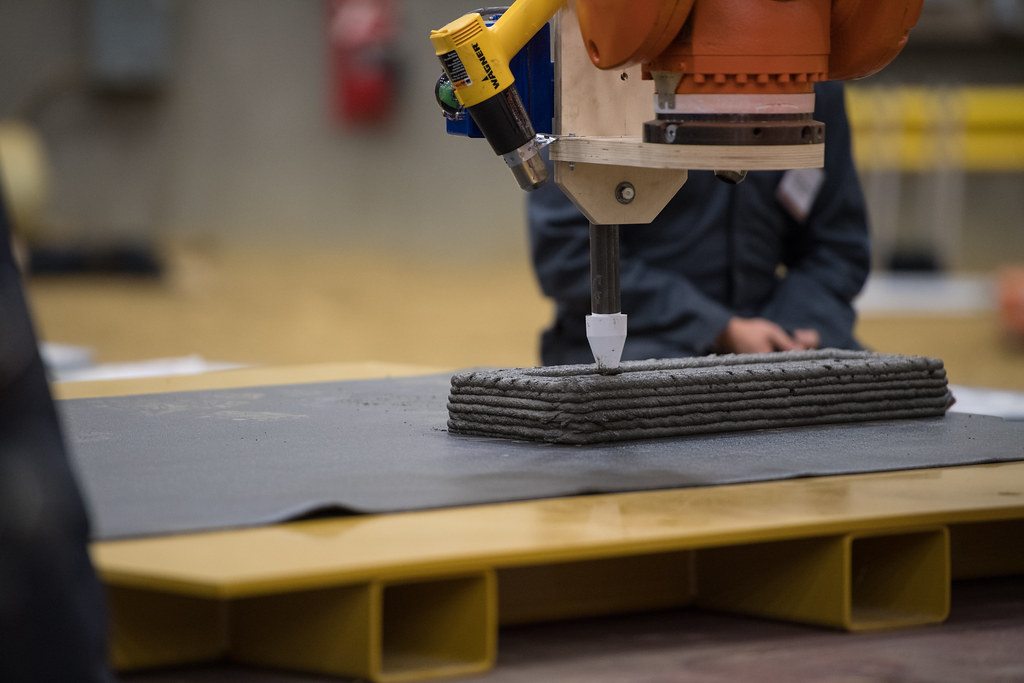
3D printing produces 3-dimensional physical objects from digital templates through a variety of processes. This is normally done under computer control, with materials added together, such as plastic, metal, and others, typically layer by layer. As of 2020, after around 40 years of its initial development, 3D printing has become a more mature technique. 3D printers are now more affordable allowing the public to use 3D printing techniques in normal life. Consumers can easily find a low-cost 3D printer as cheap as a few hundred dollars. 

3D Printing and IP Law

Today, there are more prosecutions and litigation over the use of intellectual property protection measures in the context of 3D printing. For example, Patent and Litigation Trends for 3D Printing Technologies published on IPLytics Platform found that the patent applications related to 3D printing continue to rise in the passing years, from around 2,000 in 2007 to over 20,000 in 2019. The good news is that the standard limitations that exist in current IP law can also be applied to 3D printing. 

Patent protection, for example, plays a significant role. In the U.S., patents are a government-granted monopoly towards the inventor for a limited period of 20 years. As WIPO’s 2015 World Intellectual Property Report on Breakthrough Innovation and Economic Growth has shown, 3D printing companies are enforcing patents heavily. These include not only specialist 3D printing companies but also major manufacturing companies, such as GE and Siemens. One of the reasons why patent protection is an important strategy over 3D printing is that such protection covers a wide variety of objects, including printers, the components of such printers, the manufacturing processes, and the products. In addition, the industrial 3D printing sector does not solely rely on patent law in its protection strategy. Trade secrets, copyright, and trademark protections also play a role.

However, there are also questions that courts need to address when it comes to the 3D printing technique. Compared to the industrial sector where the protection is similar to the other manufacturing industries, 3D printing for non-commercial purposes seems to face several new challenges. One question raised by Elsa Malaty and Guilda Rostama published in World Intellectual Property Organization (“WIPO”) Magazine is who would own an object when it is conceived by one individual, digitally modeled by another, and printed by a third individual. 

Why does it matter?  

With the quality of 3D printing continuing to rise and the price continuing to drop, 3D printing is now more advanced and accessible, so it can be foreseen that 3D printing-related legal protections and disputes will only increase in the future. The challenges and opportunities will come after the earliest patents start to expire. The original owners would need to develop new patentable technologies to maintain those protections. The expiration will also present an opportunity for the Open Source Community.

IP law contributes enormously to national economies. Dozens of industries, including 3D printing, rely on the adequate enforcement of IP. On the other hand, consumers benefit from IP to ensure the quality of the products, such as 3D printers. This is especially important because the availability of low-cost, high-performance 3D printers has put the technology within reach of consumers. 

At the same time, IP-related issues are only one legal aspect that 3D printing raises. During the use and application of this technique, other aspects of law will undoubtedly be implicated and will need to be resolved eventually.

“Mob” Mentality: The Push for Unionization of Anime Voice Actors

By: Nicholas Neathamer

Whether you’re just hearing about it or are already a raving fan, the popularity of anime continues to skyrocket. Anime is a style of Japanese film and television animation that has garnered worldwide fans for decades, but the emergence of streaming platforms and their willingness to embrace the medium has given rise to booming demand for anime content in recent years. The market size of the anime industry has steadily risen over time and is expected to generate revenue of over $47 billion by 2028. Despite the overwhelming success of the industry, one often overlooked factor of an anime’s popularity is its cast of voice actors, who bring animated characters to life through dialogue. Existing in further obscurity are the voice actors who “dub” shows and movies, providing voiceover work in various languages to attract viewers around the world. These ‘dubbing’ voice actors often provide services for streaming platforms such as Netflix, Hulu, and anime-exclusive platform Crunchyroll. One of Crunchyroll’s most popular shows is currently Mob Psycho 100, and the platform recently began airing the anime’s third and final season. 

Despite Mob Psycho 100’s popularity, one of the most incendiary issues in the anime world recently has been Crunchyroll’s recasting of the show’s English voice for the protagonist. Kyle McCarley, the original English dubbing voice actor for the titular Shigeo “Mob” Kageyama, was informed by Crunchyroll that he would not be returning as the English voice of Mob. According to McCarley, the fallout was due to the actor’s request that after this final season of Mob Psycho 100, Crunchyroll would meet with union representatives to negotiate a potential contract for future productions. McCarley is part of the Screen Actors Guild – American Federation of Television and Radio Artists (SAG-AFTRA), an American labor union representing actors, voiceover artists, journalists, singers, radio personalities, and other media professionals. Crunchyroll currently chooses to not work with any SAG-AFTRA contracts, and McCarley’s proposal for a future union contract was allegedly enough for the streaming platform to look for a new lead voice for Mob Psycho 100. 

It’s no mystery as to why a company like Crunchyroll wouldn’t want to work with unionized voice actors. Unions like SAG-AFTRA are often able to secure more favorable terms for union members through the use of collective bargaining and standard contracts, such as SAG-AFTRA’s Dubbing Agreement. Entering into union contracts would bind Crunchyroll to pay voice actors at scheduled minimum payment rates, contribute to pension and health plans, and follow additional rules set forth by the union. Unionized labor forces are also able to more effectively go on strike against employers to push for higher compensation or new terms to their contracts. In particular, SAG-AFTRA voice actors went on strike against large video game publishers in 2016, arguing for residuals, transparency in roles, higher safety precautions, and better safety assurances for actors while on set. Rather than submit itself to such terms and the increased possibility of a strike, Crunchyroll has eschewed even the possibility of utilizing SAG-AFTRA talent. Instead, Crunchyroll hired non-union Ernesto Jason Liebrecht to voice the character of Mob.  

Some fans of Mob Psycho 100 have wondered whether McCarley can seek legal recourse after the recasting, including whether McCarley may have copyright protections over his portrayal of Mob. However, this is almost certainly not the case. In Garcia v. Google, Inc., a case from 2015, the United States Court of Appeals for the Ninth Circuit examined whether an individual actor or actress may claim copyright in his or her performance in a motion picture. The court looked to the Copyright Act, which states that “[c]opyright protection subsists…in original works of authorship fixed in any tangible medium of expression…[including] motion pictures.” 17 U.S.C. § 102(a). The Act also states that such a fixation must be done “by or under the authority of the author.” 17 U.S.C. § 101. The court ultimately agreed with the Copyright Office, who explained that its “longstanding practices do not allow a copyright claim by an individual actor or actress in his or her performance contained within a motion picture” and that for copyright registration purposes, “a motion picture is a single integrated work” and an acting performance cannot be registered apart from the motion picture. Therefore, McCarley, also solely an actor, would not be able to claim copyright over his role.

Another question posed is whether Liebrecht’s portrayal of Mob violates McCarley’s rights under California’s statutory scheme or common law (as the company operates primarily out of that state), including whether Liebrecht is able to imitate McCarley’s voice for Mob. California Civil Code section 3344 provides that anyone who knowingly and without prior consent uses another’s voice or likeness in any manner, on or in products or goods, shall be liable for any damages sustained by those injured. However, this statute only explicitly covers the actual voice and not vocal sound-alikes. Meanwhile, under California’s common law, imitating another person’s voice can violate that person’s right of publicity, as seen in the decision of the United States Court of Appeals for the Ninth Circuit in Midler v. Ford Motor Co. In that case, the court alluded to protections against imitations of a performer’s voice. The court held that “when a distinctive voice of a professional singer is widely known and deliberately imitated in order to sell a product, the sellers have appropriated what is not theirs” and have therefore committed a tort under California law. That said, such a narrow holding is unlikely to be applied to a performer such as McCarley, whose voice is not nearly as “widely known.” There also remains the issue that many may claim Liebrecht’s performance, while similar, is not an imitation of McCarley’s portrayal of Mob. 

While McCarley likely has no options to pursue legal recourse against Crunchyroll in this situation, there remains a silver lining for those who wish to see their favorite English dub actors be able to unionize more effectively. In 2019, Netflix reached out to SAG-AFTRA to negotiate a direct union agreement, leading to a 2019 agreement that included a Netflix-specific Dubbing Agreement. And on August 31, 2022, SAG-AFTRA members voted to ratify the successor contract, the 2022 SAG-AFTRA Netflix Agreement. This has further solidified the relationship between the streaming platform and union for dubbing contracts going forward, and has bolstered voice actors who work on dubs to continue a push for unionization. Looking down the road, the goodwill acquired by Netflix and push towards increased unionization may lead to a lack of dubbing talent—and a need to change policies—at Crunchyroll. 


Fair Use at the U.S. Supreme Court? The Andy Warhol Case

By: Lauren Liu

In our modern society where information is exchanged at lightspeed and entertainment choices are abundant, copyright infringement has become a more widespread issue than ever. The 1976 Copyright Act harmonized copyright law with free-expression principles, and for the first time, incorporated the concept of “fair use.” If the use of a copyrighted work is “fair use,” then it does not infringe on the original author’s copyright. However, the Fair Use Doctrine, and even copyright as a whole, can seem very conflicting in terms of its purposes. On one hand, copyright offers exclusive rights to copyright owners to protect their work and profitability. On the other hand, the exception of fair use allows others to use and alter the original work without permission from the copyright owner. In 2022, the case alleging the Andy Warhol Foundation of copyright infringement was the center of copyright law. The case raises questions surrounding copyright law and the Fair Use Doctrine. How are we supposed to define the line between fair use and copyright infringement? How can we protect copyright without jeopardizing freedom of expression?

The Copyright Act of 1976 provides that “the fair use of a copyrighted work is not an infringement of copyright.” 17 U.S.C.A. § 107. To determine whether an allegedly infringing use is “fair use,” courts need to consider four factors: (1) the purpose and character of the use, including whether such use is of a commercial or for nonprofit educational purposes; (2) the nature of the copyrighted work; (3) the amount and substantiality of the portion used; and (4) the effect of the use upon the potential market for or value of the copyrighted work. The case of Andy Warhol Foundation for the Visual Arts, INC., v. Lynn Goldsmith involves the commercial licensing of a silkscreen image that Andy Warhol had created based on respondent Lynn Goldsmith’s copyrighted photograph. The Supreme Court of the United States recently granted this case certiorari. The question mainly focuses on the first element of fair use, and examines whether or not the petitioner, Andy Warhol Foundation (the Foundation), has established that its licensing of the silkscreen image was a “transformative” use, and that this factor should weigh in its favor. The Court will likely look closely at whether or not the transformative use can be established simply by showing that the image conveys a meaning or message different from that of respondent’s original photograph.

The Appellate Court’s decision focused on the first and most important statutory factor: the purpose and character of the use. The purpose of this factor is to distinguish the original creator’s use and the second author’s use of the original work. Although some copying of the original will often be necessary or at least useful in making the second author’s expression clearer and more effective, the second author has to demonstrate that the second work is unlikely to supersede the original. In this case, the Supreme Court will possibly find that the Foundation’s allegedly infringing use served the same purpose—depicting Prince in an article published by a popular magazine—for which Goldsmith’s photographs have frequently been used. Furthermore, although the Foundation argued that the Prince Series was intended for communicating a message about celebrity, the Foundation has not attempted to establish that it needed to reproduce the creative elements of the Goldsmith Photograph in order to communicate that message. The Supreme Court might find that when examining this factor and all other factors, the Foundation’s use of the original work does not meet the requirements for “fair use”, and will likely rule in favor of Goldsmith.

As the legal and artistic worlds wait for a final judgment from the Supreme Court, it is worth noting that the Appellate Court’s ruling and many other “fair use” cases have already created a balance between protecting copyrighted works and allowing other creative expressions. As one of the most popular and well-regarded modern artists, Andy Warhol’s works not only bring aesthetic values to the art world, but also inspire so much creativity. However, it is obvious that many of his works contain elements drawn from public figures and other existing works. Thus, his works can become quite controversial in terms of copyright law. More broadly speaking, in the artistic world, permitting secondary users to copy protected works to a certain degree will facilitate new and creative artistic expressions. However, when such copying becomes unnecessary for the secondary user’s work, the use risks jeopardizing the original author’s rights over the original art. Such unnecessary copying also risks diminishing artists’ incentive to create future original works. Although the fair use of copyrighted works has to be determined on a case-by-case basis, the doctrine helps avoid extreme exclusions or permissions in copyright infringement cases. Creative endeavors should not be deterred by a system that categorically precludes all unauthorized uses of copyrighted works, nor should they be protected by allowing indiscriminate copying.