Shelving the dream of an online library? Hachette v. Internet Archive goes to the Second Circuit

Photo by Perfecto Capucine on Pexels.com

By: Zachary Blinkinsop

The opening chapter: COVID-19 and the National Emergency Library.

With the COVID-19 lockdowns of early 2020 slamming library doors shut, students and researchers found themselves struggling to access critical educational materials. Libraries, like many institutions, scrambled to adapt to the unprecedented challenges posed by the pandemic. Many librarians responded by espousing the use of copyrighted materials in remote education and research. They cited the doctrine of fair use which protects certain unlicensed uses of copyrighted materials without permission from the rightsholder. Fair use can protect the use of copyrighted materials in a range of contexts, including in research, education, news reporting, and criticism.

The main character in today’s story, an online library, may have pushed the limits of fair use too far. Even before the pandemic, the Internet Archive ran a digital library in compliance with the principles of controlled digital lending. Controlled digital lending (CDL) is a novel legal framework that would permit libraries to digitize their physical books and to lend those digital copies in a manner analogous to traditional lending practices. Under the CDL framework, a library needs to maintain an “owned to loaned” ratio, lending only as many digital copies of an item as it legally owns. The legal theory of CDL had been largely untested, and legal scholars held a wide range of opinions about whether courts would broadly hold CDL to comport with fair use.

In March of 2020, the Internet Archive launched its National Emergency Library to support “emergency remote teaching, research activities, independent scholarship, and intellectual stimulation” while schools and libraries were closed due to the pandemic. It temporarily allowed multiple users to check out the same digital copy simultaneously, disregarding the “owned to loaned” ratio prescribed by the CDL framework. This sparked controversy.

The plot thickens: a lawsuit filed.

Publishers had already been taking aim at controlled digital lending programs. The Authors Guild argued that “copyright law does not support the practice of even true, traditional libraries offering unauthorized scans of books to its users on an e-lending basis…” The National Emergency Library’s flouting of CDL’s permissive framework crossed an implicit redline for publishers. In June of 2020, Hachette, HarperCollins, Wiley, and Penguin Random House sued the Internet Archive in the Southern District of New York for “willful mass copyright infringement.” In their complaint, publishers eviscerated the underpinnings of CDL, “the rules of which”, they wrote, “have been concocted from wholecloth and continue to get worse.”

In its response, the Internet Archive insisted that the National Emergency Library qualified under fair use as it offered a noncommercial, educational service to the public during a national emergency. It further maintained that a digital library should be treated like a traditional library: “Contrary to the publishers’ accusations, the Internet Archive and the hundreds of libraries and archives that support it are not pirates or thieves. They are librarians, striving to serve their patrons online just as they have done for centuries in the brick-and-mortar world.”

The future of controlled digital lending and the viability of online libraries was at stake in the case.

How does fair use apply to controlled digital lending?

Section 107 of the Copyright Act directs courts to consider four factors when evaluating a fair use defense to a claim of copyright infringement. A court must balance (1) the purpose of and character of the use, including whether it innovates in any way and whether it is for a commercial or non-profit purpose; (2) the nature of the copyrighted work; (3) the amount of the portion used in relation to the copyrighted work as a whole; and (4) the effect of the use upon the market value of the copyrighted work. Courts adjudicate fair use claims on a case-by-case basis; an activity that qualifies as fair use in one set of circumstances may not qualify under a different set of facts.

Capitol Records v. ReDigi, a case decided in 2013, foreshadowed the outcome of Hachette v. Internet Archive. ReDigi was a service that facilitated the resale of digital files originally purchased from the iTunes store. In that case, the court held that ReDigi’s resale of digital music files fell “well outside the fair use defense.” Running through the four-step test, the court found that (1) uploading and distributing digital files for sale does not add anything new to a copyrighted work; (2) copyright protections are intended to protect musical recordings; (3) transmitting a work in its entirety usually negates a fair use defense; and (4) ReDigi’s sales obviously undercut Capitol Records’ profits.

Although ReDigi’s marketplace was commercial in nature, an obvious difference from the nonprofit intent of the National Emergency Library, the other facts broadly aligned. The National Emergency Library arguably did not innovate the use of copyrighted books. Copyright protections clearly protect rightsholders’ interests in published books. The books offered through the National Emergency Library were transmitted in whole, and this arguably undercut the publishers’ profits from ebook sales.

An open-and-shut case? The Second Circuit enters the plot.

Judge John G. Koeltl held that the Internet Archive’s National Emergency Library failed all four factors of the fair use test. He wrote in his opinion that “IA’s fair use defense rests on the notion that lawfully acquiring a copyrighted print book entitles the recipient to make an unauthorized copy and distribute it in place of the print book, so long as it does not simultaneously lend the print book. But no case or legal principle supports that notion. Every authority points the other direction.” The opinion was a resounding victory for publishers.

The Internet Archive promised to continue fighting. The founder of the Internet Archive, Brewster Kahle, framed the case as a battle for free access to information within a wider war for global democracy: “Libraries are more than the customer service departments for corporate database products. For democracy to thrive at global scale, libraries must be able to sustain their historic role in society—owning, preserving, and lending books.”

On December 15, 2023, the Internet Archive filed its opening brief to the U.S. Court of Appeals for the Second Circuit. In the brief, the Internet Archive asks the Court to reverse the lower court’s decision and to hold that its controlled digital lending is fair use. The Internet Archive is arguing that the lower court erred in applying the four-factor test because the court “failed to grasp the key feature of controlled digital lending: the digital copy is available only to the one person entitled to borrow it at a time, just like lending a print book.” The Internet Archive says that the court’s misunderstanding particularly tainted its analysis of the first and fourth factors. For example, it argues that the court’s analysis of the fourth factor did not take into account expert testimony indicating that “lending is not a substitute for Publishers’ ebooks and has no effect on Publishers’ markets.”

The Second Circuit’s decision in this case will shape the future of controlled digital lending and the ongoing debate surrounding fair use and access to information in the digital era. Librarians, publishers, and legal scholars will be watching closely, waiting for the next major development in the application of free use to a rapidly evolving digital world.

Stay tuned for the next chapter in this story.
Gene Editing and IP Battles: The Fight for CRISPR/Cas-9 Patent Rights

By: Bethany Butler

Gene editing technologies have the potential to greatly influence medicine and impact future therapies to treat debilitating conditions. Gene editing research seeks to “modify genes of living organisms to improve our understanding of gene function and develop ways to use it to treat genetic or acquired diseases.” One gene editing tool is the CRISPR/Cas-9 system, which allows for precision genome editing by cutting DNA in targeted locations for replacement. The first gene editing therapy utilizing CRISPR/Cas-9, called Casgevy, was approved by the Food and Drug Administration (FDA) in December of 2023. Casgevy is a treatment for patients with sickle cell disease, an inherited blood disorder that may cause painful symptoms and require lifelong interventions.

The emergence of CRISPR/Cas-9 Technology

The history of the CRISPR/Cas-9 system’s discovery and application largely involves two prominent research teams battling for its intellectual property rights. One team (“the Broad Institute”) hails from molecular biologist Feng Zhang of the Broad Institute, Harvard University, and the Massachusetts Institute of Technology; the other (“Charpentier and Doudna”) represents researcher Emmanuelle Charpentier of the Max Planck Institute for Infection Biology, Jennifer Doudna of the University of California, Berkeley, and the University of Vienna. Both teams have found success with their CRISPR/Cas-9 systems. In 2020, Emmanuelle Charpentier and Jennifer Doudna won the Nobel Prize in chemistry for the team’s 2012 discovery of the Cas-9 enzyme’s role in the CRISPR process. 

The two groups have not existed in harmony though, as patent battles between them stem from each groups’ 2012 US Patent and Trademark Office (“USPTO”) filings. Both teams filed applications to protect their respective gene editing tools, and unless the teams claimed distinct inventions regarding the use of the CRISPR/Cas-9 technology in human genomes, the USPTO would not allow patent protection to extend to both. 

Patent Protections of Gene Editing Technology

There are three types of patents that an inventor may file with the USPTO: utility, design, and plant. Gene editing technologies, like the CRISPR/Cas-9 system, often fall under the utility patent category. Utility patents are useful, new, and non-obvious. The non-obvious requirement refers to if a person of ordinary skill in the art would likely predict the invention by combining prior art references. CRISPR/Cas-9 patent rights come with limited monopolies, the potential for patent royalties, access to license the technology for future therapies in human cells, like the newly approved sickle cell therapy. 

Charpentier and Doudna’s May 2012 patent application demonstrated the use of this technology but did not go so far as to claim its use in eukaryotic cells (i.e. CRISPR/Cas-9 gene editing in human cells). Conversely, the Broad Institute demonstrated the use of this technology specifically in eukaryotic cells in their December 2012 patent application. The Broad Institute’s patent application was approved on April 15, 2014, and the team received the first patent for a method of altering eukaryotic cells using the technology. 

The CRISPR/Cas-9 Patent Fight

The Broad Institute, led by molecular biologist Feng Zhang, prevailed over Doudna and Charpentier regarding patent rights related to the CRISPR/Cas-9 technology. The main issue over these rights is which team developed the use of the CRISPR/Cas-9 gene editing in the modification of eukaryotic genomes.

Over the last 10 years, the two research teams have appealed various patent decisions, with the Patent Trials and Appeals Board (PTAB) and the Federal Circuit continually ruling in favor of the Broad Institute. For example, in a 2017 appeal, the Federal Circuit confirmed the PTAB’s finding that the Broad Institute’s claims were non-obvious regarding “the extent to which the art provided instructions for applying the CRISPRCas9 technology in a new environment”. The latest decision was on February 28, 2022, confirming the Broad Institute’s team was the first to invent the technology for modifying genomes in human cells. The decision stemmed from earlier interference claims holding that the Broad Institute’s patents claimed distinct subject matter compared to Doudna and Charpentier’s claims. Currently, the Broad Institute and Zhang’s team has prevailed in the patent space for the rights to CRISPR/Cas-9 gene editing technology in eukaryotic cells and now are able to license this technology for therapeutic applications. 

The CRISPR/Cas-9 Technology In Action Today

The Broad Institute licensed its technology to Editas Medicine in 2014. Vertex Pharmaceuticals, the pharmaceutical company that developed the sickle cell therapy, Casgevy, reached a licensing deal with Editas Medicine in December 2023. This deal pertains to the use of the CRISPR/Cas-9 technology in the Casgevy treatment and other sickle cell therapies. Individuals with sickle cell disease inherit genes that encode for abnormal hemoglobin production resulting in abnormal red blood cells. The Casgevy treatment uses the CRISPR/Cas-9 technology to edit patients’ blood stem cells to increase the production of fetal hemoglobin, which is not affected by the sickle cell mutation, thereby diluting the affected sickled blood cells. The edited cells are then infused back into the patient and have the potential to treat the disease. For the use of this technology, Vertex Pharmaceuticals agreed to pay Editas Medicine $50 million dollars upfront and licensing fees through 2034 ranging from $10 million to $40 million dollars annually. 

The far reaches of gene editing technologies have the potential to transform medicine and better the lives of many. CRISPR/Cas-9 editing technology is a vital therapeutic tool in this space and the fight for its patent rights continues. With the rollout of novel therapies, U.S. patent law is the key to lucrative licensing deals for the victors in these CRISPR/Cas-9 patent wars.

Plot Twist: Understanding the Authors Guild v. OpenAI Inc Complaint

By: Stella Haynes Kiehn

While George R.R. Martin remains hard at work on the final installments in the critically acclaimed A Song of Ice and Fire series; in July 2023, one tenacious fan used ChatGPT to finish the series in a fraction of the time. For fans who don’t feel the urge to read speculations, ChatGPT can also write entirely new stories set in the style and world of any author whose work exists on the internet. These AI-generated novels are only part of a growing issue about the use of copyrighted works to train Large Language Models (LLM) such as ChatGPT. Now, the authors are looking to reverse the narrative. In a complaint filed on Sept. 19, 2023, in the Southern District of New York, the Author’s Guild, the nation’s oldest and largest organization of writers, is suing Open.AI, the maker of ChatGPT, in a class action lawsuit.

The complaint alleges that OpenAI used the authors’ voices, characters, stories, etc. to train ChatGPT, which in turn allowed users to create unauthorized sequels and derivatives of their copyrighted works. Plaintiffs argue that OpenAI should have first obtained a licensing agreement to use their copyrighted works. Plaintiffs also seek a permanent injunction against OpenAI to prevent the alleged harms from reoccurring. All authors seek damages for the lost opportunity to license their works, and for the “market usurpation defendants have enabled by making Plaintiffs unwilling accomplices in their own replacement.” The named plaintiffs include David Baldacci, Mary Bly, Michael Connelly, Sylvia Day, Jonathan Franzen, John Grisham, Elin Hilderbrand, Christina Baker Kline, Maya Shanbhag Lang, Victor LaValle, George R.R. Martin, Jodi Picoult, Douglas Preston, Roxana Robinson, George Saunders, Scott Turow, and Rachel Vail.

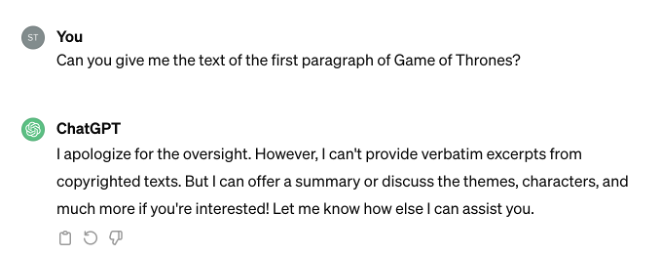
At issue legally is Title 17 of the United States Code. The complaint brings claims under 17 U.S.C. §501 for direct, vicarious, and contributory copyright infringement. 17 U.S.C. §501 allows for copyright owners to sue for enforcement of their exclusive rights and 17 U.S.C. §106 sets forth a list of exclusive rights for copyright owners. Different plaintiffs allege different infringements upon the §106 rights, but all plaintiffs commonly allege ChatGPT’s ability to provide derivative works infringed on their copyrighted materials. Under 17 U.S.C. §101, “a ‘derivative work’ is a work based upon one or more preexisting works, such as a translation, musical arrangement, dramatization, fictionalization, motion picture version, sound recording, art reproduction, abridgment, condensation, or any other form in which a work may be recast, transformed, or adapted.” For instance, Plaintiff Martin alleges that “when prompted, ChatGPT generated an infringing, unauthorized, and detailed outline for an alternate sequel to A Clash of Kings, one of the Martin Infringed Works, and titled the infringing and unauthorized derivative “A Dance With Shadows,” using the same characters from Martin’s existing books in the series A Song of Ice and Fire.” Under U.S. Copyright Law, only a copyright owner may prepare, or authorize someone else to prepare, a derivative work from the copyrighted material. All plaintiffs also commonly allege ChatGPT’s ability to recite verbatim passages from the copyrighted works. Under 17 U.S.C 106, only copyright owners can create, or license the ability to create, direct copies of their work. However, it should be noted that at the time the complaint was filed, ChatGPT will no longer provide direct excerpts from copyrighted works.

Screen capture of the blog author’s attempt to engage ChatGPT with copyrighted content.

Although it is certain that ChatGPT has produced infringing work, how do we know that OpenAI knowingly trained ChatGPT on copyrighted materials? The complaint provides multiple reasons. First, until very recently, “ChatGPT could be prompted to return quotations of text from copyrighted books with a good degree of accuracy, suggesting that the underlying LLM must have ingested these books in their entirety during its ‘training.’” Second, the presence of derivative works on the internet created by ChatGPT suggests that it had access to the source materials. For example, author Jane Friedman discovered “a cache of garbage books” written under her name for sale on Amazon that were created by ChatGPT. Third, it is likely that OpenAI trained ChatGPT on copyrighted items because, as one group of AI researchers have observed, books are essential for chatbot development; “[b]ooks are a rich source of both fine-grained information, how a character, an object or a scene evolve through a story.” Finally, OpenAI has essentially confirmed this to be true, stating that their  “training” data is “derived from existing publicly accessible ‘corpora’ … of data that include copyrighted works.”

Open AI maintains that its actions were lawful. In a blog post responding to the filing of The New York Times v. OpenAI, a suit about using New York Times copyrighted materials to train ChatGPT, OpenAI argues that “based on well-established precedent, the ingestion of copyrighted works to create large language models or other AI training databases generally is a fair use.” The Library Copyright Alliance (LCA) also supports a fair use argument, pointing to the history of courts applying the US Copyright Act to AI. Fair use is a legal doctrine that permits the unlicensed use of copyright-protected works in certain circumstances, such as for parody, comment, or criticism. The LCA focuses on “the precedent established in Authors Guild v. HathiTrust and upheld in Authors Guild v. Google.” Notably, in Authors Guild v. Google, the US Court of Appeals for the Second Circuit held that Google’s mass digitization of a large volume of in-copyright books to distill and reveal new information about them was a fair use. The LCA argues that “while these cases did not concern generative AI, they did involve machine learning” and the fair use precedents could summarily be applied.

Despite the plaintiff’s complaints about how AI is currently being used, the complaint specifically states that the “plaintiffs don’t object to the development of generative AI”.The complaint simply asserts that “defendants had no right to develop their AI technologies with unpermitted use of the authors’ copyrighted works. Defendants could have “‘trained’ their large language models on works in the public domain or paid a reasonable licensing fee to use copyrighted works.” In fact, the complaint specifically recognizes that OpenAI’s chief executive Sam Altman has told Congress that he shares Plaintiffs’ concerns. According to Altman, “Ensuring that the creator economy continues to be vibrant is an important priority for OpenAI. … OpenAI does not want to replace creators.”

Unfortunately for any curious Game of Thrones fans out there, the ChatGPT produced novels have been removed due to the pending lawsuit. However, as AI Chatbots grow more powerful, and users grow more adept, it is undoubtedly true that further lawsuits similar to this one will occur. Open AI amended the complaint in December 2023 to include Microsoft, an investor of OpenAI. The complaint now alleges that “OpenAI’s ‘training’ its LLMs could not have happened without Microsoft’s financial and technical support arising from OpenAI’s use of their copyrighted works to train ChatGPT.” The inclusion of Microsoft, a powerful defendant, against the Author’s Guild, a prominent litigant, creates the potential for this case to have far-reaching ramifications for both copyright holders and AI developers.

Fables: Free For All or Owned By One?

By: Drew Carlson

What does it take to release a copyrighted work into the public domain? On September 15, 2023, writer Bill Willingham decided to test just that, releasing his comic book series Fables into the public domain after years of fighting with his publisher, DC Comics (“DC”). Can an author release a work into the public domain before the copyright protection expires? If the author is the legal owner of the copyright, then he or she may do so, but this is often not the case. Willingham will need to prove he is the sole owner of the Fables copyright. 

Once Upon a Time

Willingham is the writer of the award winning comic book series Fables, published by DC Comics for their adult-oriented Vertigo imprint. The series is set in a universe where characters from fairy tales and folklore have taken refuge in modern day New York. They live in a secret community, hiding from both regular humans, and the Adversary who conquered their homelands.

According to Willingham, he signed a “creator-owned publishing contract” with DC, which made him the sole owner of the intellectual property but forbade him from “publish[ing] Fables comics” or licensing the property “through anyone but them.” The series’ copyrights were registered with the Copyright Office, each within two years of the work’s creation. It is not known which party submitted the registration. The copyrights list Willingham as author of the text, and DC as author of the art via work for hire.

The partnership between Willingham and DC did not live happily ever after, as disputes eventually arose. These disputes included DC failing to consult with Willingham when contractually required, underreporting his royalties, and trying to convince him to write future issues as “work for hire.” These slights culminated on September 15, 2023, when Willingham announced on his Substack that “the comic book property called Fables, including all related Fables spin-offs and characters, is now in the public domain.” His subsequent posts reiterated this point, saying, “As the sole owner and creator of the comic book property called Fables . . . I alone had the right . . . to do this.” He posted four blog posts in total discussing his decision. Willingham chose not to publish his full contract with DC for privacy reasons.

DC responded to Willingham’s declaration with its own, saying “The Fables comic books and graphic novels published by DC . . . are owned by DC . . . and are not in the public domain.

What is the Public Domain?

The public domain is a term for intellectual property that is owned by everyone. Under copyright law, owners hold many exclusive rights to their work, such as the right to publish, reproduce, or create derivative works. By contrast, public domain works, because they belong to everyone, have no limitations on their use.

Some public domain works were once copyrighted, their rights having expired, e.g. Pinnochio or Sherlock Holmes; others were always in the public domain, works such as Cinderella or Snow White that were never granted copyright protection for one reason or another. 

Does Willingham own Fables?

If Willingham’s contract says what he claims, he does own Fables. Under copyright law, the author of the work is the initial owner. However, if more than one individual contributes substantial elements to the work, while intending their contributions to join into one joint work, they are joint-authors. Joint-authors each own an equal and undivided share in the entire work. No joint owner can convey more than they own. For instance, none of them can make an exclusive license without the other owners’ written permission since that would violate the other owners’ rights. Comic books where one author writes the text and the other draws the art qualify as joint works. Works made by employees are “works for hire,” where, unless agreed otherwise, the employer is considered the author of the work. Copyrights can also be transferred or assigned. 

When a copyright is registered within five years of the work’s creation, the registration and the facts within are presumed valid, which may be rebutted if a party “offers some evidence” to dispute the registration’s validity.

The Copyright Office lists both Willingham and DC as the authors of Fables, Willingham for the text, and DC for the art. Since comic books are joint works, and the copyrights were registered within five years of creation, Willingham and DC comics are presumed joint-owners of Fables.

However, this presumption can be rebutted by showing disputing evidence, such as Willingham’s contract. If Willingham is correct that his contract gives him sole ownership of Fables, then it would prove that DC transferred any ownership it possessed as a joint-author to Willingham. Thus, Willingham would be the sole owner. 

It is unknown whether Willingham or DC registered Fables’ copyrights as joint-works. If Willingham did, then DC might try to argue that Willingham did not treat Fables as his. However, such an argument could be countered with the fact that DC themselves assigned their rights to Willingham. Willingham could also point out that he has followed his contract for over twenty years.

How does sole ownership versus joint ownership affect Willingham’s authority to release Fables into the public domain?

Can Willingham Place Fables into the Public Domain?

Willingham has the authority to release Fables into the public domain provided that he is the sole owner. While there is no express provision for abandonment in the Copyright Act, several court cases say that proprietors can abandon a copyright if they both intend to abandon the work and perform an overt act demonstrating that intent. However, an owner must be very clear about what they mean to abandon. Once, a man made several meditation videos and repeatedly said he neither cared about copyrights nor wanted to control his videos. These statements released one of his videos into the public domain, but were insufficient to release his later ones. On the other hand, in 2002 an architect provided designs for a competition, signing a document saying that he retained no copyrights to them. This admission released such designs into the public domain.

Willingham clearly intended to release his work; he said so multiple times. He also made not one, but four overt acts via his Substack posts, which repeatedly stated his intent to surrender all of Fables into the public domain. Therefore, if Willingham is indeed the sole owner, he may release Fables into the public domain.

If Willingham and DC are joint-owners, though, then Willingham cannot release Fables into the public domain. The rule regarding exclusive licenses stipulates that one owner cannot negate another’s right without written permission. Willingham did not have DC’s permission, meaning he cannot unilaterally terminate their share.

What happens next?

DC Comics publicly maintains that it owns Fables, but it has not filed any legal action. Since a lawsuit against Willingham or accused infringers risks a court declaring the entire series to be within the public domain, DC will likely avoid litigation whenever possible. Instead, it will use the undetermined nature of Fables’s ownership to deter would-be copiers through the threat of a potential lawsuit. Things will likely not stand at this stalemate for long though, as there will inevitably be those who take Willingham at his word and use Fables for their own creative works. DC will quickly have to decide how many alleged violations it can let slide before going to court.

Happily Ever After?

If Willingham is indeed the sole owner, per his claimed contract, then a court would likely find the series to be properly released into the public domain. If Willingham is not, then DC retains its exclusive right to publish the series. Ultimately, the answer to this question centers on contract law, specifically whether DC transferred its ownership. Without viewing Willingham’s contract, it is impossible to say for certain who will prevail. Should Willingham prevail, the threat of placing works into the public domain will hand creators a bargaining chip against unscrupulous publishers. Should DC emerge victorious in litigation, publishers will have a reinforced blueprint to compel creator compliance.Will Fables be freed into the public domain to live happily ever after or remain trapped within the walls of its wicked stepmother’s copyright control? We will just have to wait and see.

Can we go see Mickey? We have Mickey at home! Mickey… at home?

By: Kevin Vu

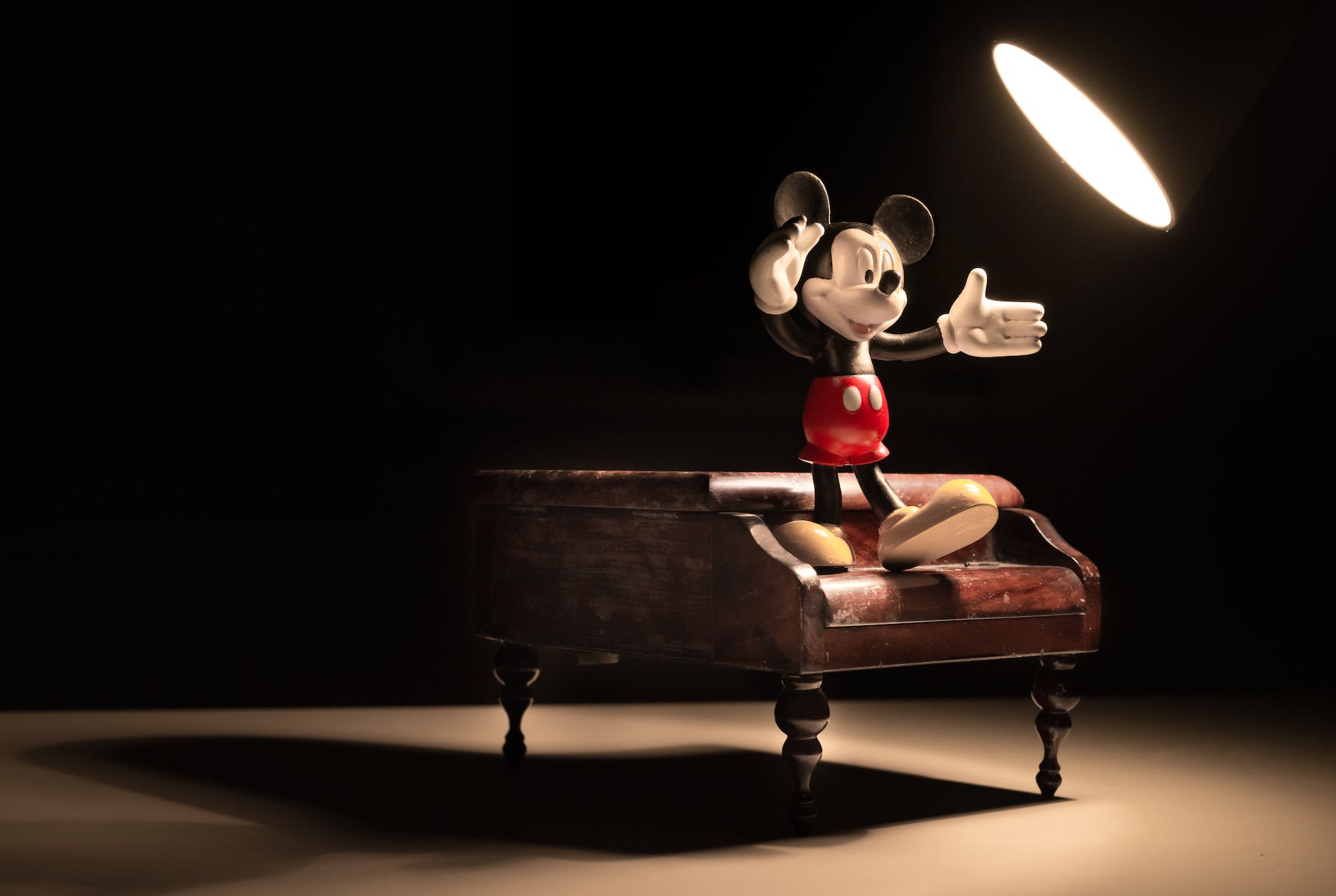
Nearly 100 years ago, Walt Disney released “Steamboat Willie,” showcasing Mickey Mouse’s first adventure. That mouse would kickstart what is now one of the world’s biggest companies, Disney. Today, Disney does a variety of things: it operates its own streaming services, runs a majority of the world’s most popular theme parks, and releases some of the world’s highest grossing movies. At the center of all that success is Mickey Mouse, who’s been dubbed “the world’s most famous cartoon character.” But Mickey is no longer just Disney’s to parade around, recently Mickey has become part of the public domain. What does being part of the public domain really mean though? This blog will explore and explain Mickey’s complicated history with copyright, what the public domain is, and what being in the public domain means for both Mickey’s future and others similarly situated to him. 

Copyright’s Origins

Copyright law originates from Article I, Section 8, Clause 8 of the United States Constitution which provides that Congress shall have the power “To promote the Progress of Science and useful Arts, by securing for limited Times to Authors and Inventors the exclusive Right to their respective Writings and Discoveries.” Copyright is a set of protections from the federal government for originally created works. Copyright disallows others from using the work without the author’s permission, and as was alluded to earlier, protection generally lasts for the author’s lifetime plus 70 years after the author’s death. In 1790, Congress used that power to pass the first Copyright Act which extended protection of works to 14 years, with a renewal period of another 14 years. 

Then, in 1909, a new Copyright Act doubled the length of protection for works from 28 years to 56 years, along with adding protections for motion pictures. “Steamboat Willie” was then released in 1928, and fast-forwarding some years and some minor changes to the Copyright Act, Disney entered the copyright arena in 1998. By that time, Mickey’s copyright was set to expire in 2003. Disney, worried about its copyright for Mickey, successfully lobbied Congress to protect him for 20 more years—extending his copyright expiration date to 2024. But that was the final extension for the mouse, as he is now part of the “public domain,” no longer just the sole property of Disney. 

What’s the Public Domain?

In contrast to copyrighted works, the public domain consists of “creative materials that are not protected by intellectual property laws such as copyright, trademark, or patent laws.” That means that items which were not originally subject to intellectual property protections, like laws for example, are part of the public domain and freely usable by individuals. Creative materials, like Mickey, which were previously protected under laws like copyright may also become part of the public domain once their copyright has expired.

Once something is in the public domain, it is fair game for any one to use. As the United States Supreme Court articulated in Dastar Corp. v. Twentieth Century Fox Film Corp., uncopyrighted materials are not protected under federal law. Further, because Article I, Section 8, Clause 8 vests the power to protect creative endeavors in Congress, states are precluded from passing copyright laws under the Supremacy Clause of the U.S. Constitution. This means that anyone can use works in the public domain without obtaining permission or giving credit to the original author, and no one can ever own that work.

Mickey… at home?

One can immediately see why Mickey’s move to the public domain is problematic for Disney. 20 years ago, it was estimated that Mickey Mouse had made over $5.8 billion for Disney. This explains why Disney was adamant about lobbying Congress for copyright protection extensions, as Mickey going to the public domain could affect his worth. 

Fast-forwarding to today, Mickey has entered the public domain, with one company has already announced that they plan on making a Mickey Mouse horror movie, following in the footsteps of “Winnie-the-Pooh: Blood and Honey,” a Winnie the Pooh slasher movie created when Pooh Bear entered the public domain in 2023. Ultimately, it remains to be seen what else individuals will do with Mickey.

But luckily for Disney, Mickey’s presence in the public domain does not spell the end of their rights to the iconic character. Copyright law makes distinctions between versions of characters meaning only the “Steamboat Willie” version of Mickey is in the public domain and usable by anyone. The red shorts, big-boots, and high-pitched voice of the current Mickey Mouse remains Disney’s property, and is therefore subject to copyright protection. Another thing to note is that Disney’s use of Mickey as a brand or symbol is protected under trademark law. So, while “Steamboat Willie” Mickey is freely usable, individuals should be careful not to confuse that character with his newer versions, and avoid making it seem like Disney endorses their new creative work. As some commentators have noted, Disney is actively seeking to protect its brand and anyone seeking to use Mickey should seek out legal counsel.  

Ultimately, it remains to be seen whether Mickey’s introduction into the public domain will create new, expansive creative works, or if Disney will continue to aggressively fight for the mouse. Whatever the case, Mickey’s move into the public domain is a historic event, and its effects remain untested.