
Your Face Says It All: the FTC Sends a Warning and Rite Aid Settles Down

By: Caroline Dolan

If someone were to glance at your face, they wouldn’t necessarily know if you won big in Vegas or if you’re silently battling a gambling addiction. When you stroll down the street, your face can conceal many a secret, even such a lucrative side hustle. While facial recognition (“FR”) software is not a new innovation, deep pockets are investing a staggeringly large amount of money into the FR market. Last year, the market was globally valued at $5.98 billion and is projected to grow at a compound annual growth rate of 14.9% into 2030. This rapid and bold deployment of facial recognition technology may therefore make our faces more revealing than ever, transforming them into our most valuable—yet vulnerable—asset.

A Technical Summary for Non-Techies

Facial recognition uses software to assess similarities between faces and provide determinations. Facial characterization further classifies a face based on individual characteristics like gender, facial expression, and age. Through deep learning AI, artificial neural networks mimic how our brains process data. The neural network consists of various layers of algorithms which process and learn from training data, like images or text, and eventually develop the ability to identify features and make comparisons.

However, when the dataset used to train the FR model is unrepresentative of different genders and races, a biased algorithm is created. Training data that is biased toward certain features creates a critical weak spot in a model’s capabilities and can result in “overfitting” wherein the machine learning model performs well on the training data but poorly on data that is different from which it was trained. For example, a model that is trained on data that is biased towards images of men with Western features will likely struggle to make accurate determinations on images of East Asian females.

Data collection and curation poses its own set of challenges, but selection bias is a constant risk whether training data is collected from a proprietary large language model (“LLM”), which requires customers to purchase a license with restrictions, or from an open-source LLM, which is freely available and provides flexibility. Ensuring that training data represents a variety of demographics requires AI ethic awareness, intentionality, and potentially federal regulation.

The FTC Cracks Down

In December of 2023, Rite Aid settled with the FTC following the agency’s complaint alleging that the company’s deployment of FR software was reckless and lacked reasonable safeguards, resulting in false identifications and foreseeable harm. Between 2012 and 2020, Rite Aid employed an AI FR program to monitor shoppers without their knowledge and flag “persons of interest.” Those whose faces were deemed a match to one in the company’s “watchlist database” were confronted by employees, searched, and often publicly humiliated before being expelled from the store. 

The agency’s complaint under section 5 of the FTC Act asserted that Rite Aid recklessly overlooked the risk that its FR software would misidentify people based on gender, race, or other demographics. The FTC stated that “Rite Aid’s facial recognition technology was more likely to generate false positives in stores located in predominantly Black and Asian neighborhoods than in predominantly white communities, where 80% of Rite Aid stores are located.” This also violated Rite Aid’s 2010 Security Order which required the company to oversee its third-party software providers.  

The recent settlement prohibits Rite Aid from implementing AI FR technology for five years. It also requires the company to destroy all data that the system has collected. The FTC’s stipulated Order imposes various comprehensive safeguards on “facial recognition or analysis systems,” defined as “an Automated Biometric Security or Surveillance System that analyzes . . . images, descriptions, recordings . . . of or related to an individual’s face to generate an Output.” If Rite Aid later seeks to implement an Automated Biometric Security or Surveillance System, the company must adhere to numerous forms of monitoring, public notices, and data deletion requirements based on the “volume and sensitivity” of the data. Given that Rite Aid filed Chapter 11 bankruptcy in October of 2023, the settlement is pending approval by the bankruptcy court while the FTC’s proposed consent Order goes through public notice and comment.

Facing the FutureGoing forward, it is expected that the FTC will remain “vigilant in protecting the public from unfair biometric surveillance and unfair data security practices.” Meanwhile, companies may be incentivized to embrace AI ethics as a new component of “Environmental, Social, and Corporate Governance” while legislators wrestle with how to ensure that automated decision-making technologies evolve responsibly and do not perpetuate discrimination and harm.

2023, A Roller Coaster Towards Unionization for Game Developers?

By: Kevin Vu

No doubt, 2023 has been a “blockbuster year for video games.” From the Game Awards breaking viewership records, the long-anticipated Baldur’s Gate 3 winning several awards, including the “Game of the Year,” and the redemption of Cyberpunk 2077, it’s evident that 2023 will be celebrated for its many great releases. But, one little-told story of gaming in 2023 is the massive amount of layoffs that have emerged among many developers. Perhaps layoffs were inevitable, given the enormous costs that the top video games incur, and how some notable games only generated half as much revenue as they had anticipated.  

But there may be an even more fundamental reason for this rollercoaster of a year in gaming. Tech, the umbrella industry for gaming, has historically been resistant to unionization. As layoffs continue in the tech industry, the call to unionization has grown louder and louder. With the gaming industry celebrating one of its most consequential years, it’s time to ask whether unionization would ultimately benefit the industry.

Reasons to Unionize

Traditional reasons for unionization often include higher wages, creating a safer workplace, job stabilization, and collective bargaining. Traditionally, both tech developers and game developers have made six-figure salaries, eliminating the high wage factor. However, the remaining factors seem to point out that the gaming industry should unionize. Riot Games, Activision-Blizzard, and other companies within the video game space are notorious for workplace harassment. Having a union can help advocate for those workers, lead to greater enforcement of workplace harassment and discrimination laws, and ultimately, help create and facilitate a culture where workplace harassment is no longer the norm. And, with gaming companies being notorious for their long hours (dubbed as “crunch” times), negotiating for better conditions through unions seems obvious. But perhaps the most obvious reason would be the widespread layoffs that happened in 2023, as unions can help secure better severance pay as employees transition to other endeavors.  

Reasons Not to Unionize

However, various reasons have emerged against unionization in gaming, including the rapid development of technology, blurred lines between management and workers, and stifling the creative process. Ultimately though, many of those reasons seem strained. One of the popular emerging technologies, virtual reality, has a lot of its roots in video game development. That technology has now had various successes in helping doctors, patients, incarcerated individuals, and many others. Now, the rapid development of technology seems to threaten game developers. Companies are beginning to use generative AI for their video games, whether it is voice acting, or promotional art. Indeed, some developers are now promising to use artificial intelligence to develop games, too. Using the advancement of technology as a reason to stymie the workers who helped create that technology seems backhanded at best.  

On an even more fundamental level, shifting over to generative technology to develop video games seems to be counterintuitive, given that video games are a creative product. What creativity exists with AI? This year in games should be telling companies that developers are needed and should be treasured. Baldur’s Gate 3, 2023’s Game of the Year, spent nearly three years in early access, where developers continued to work on the game as the public played the game before its official release. Zelda: Tears of the Kingdom, a runner-up for that same award, was finished for nearly a year, with one year being spent on polishing the game. Cyberpunk 2077, a game with a tumultuous start, won 2023’s Best Ongoing Game Award because the developers ultimately believed in their product. In an industry where some of the biggest games are passion projects made by small teams, trying to justify anti-unionization sentiment by citing creativity, but in turn, using technology that stifles such creativity is disingenuous.  

What Now?

It seems evident that video game developers should seriously consider unionization. Despite a big year in gaming releases, the industry is still threatened by layoffs, and crunch work conditions persist. Video game unionization is not a new thing either. The first multi-department video game union emerged in 2023, which included developers. Quality assurance workers, individuals who help test games to a more polished product, have also begun unionizing. Other creatives in the video game space, like voice actors, have taken collective action as well. Unions have been effective in these creative spaces, and in addressing technology. For example, the Writers Guild of America’s strike ended in favorable terms for screenwriters, including limiting the use of AI. Ultimately, video game developers should look at their industry and ask whether the current climate is sustainable.

Skepticism:  Should “The Nine Greatest Experts on the Internet” be taking more social media cases?

By: Kevin Vu

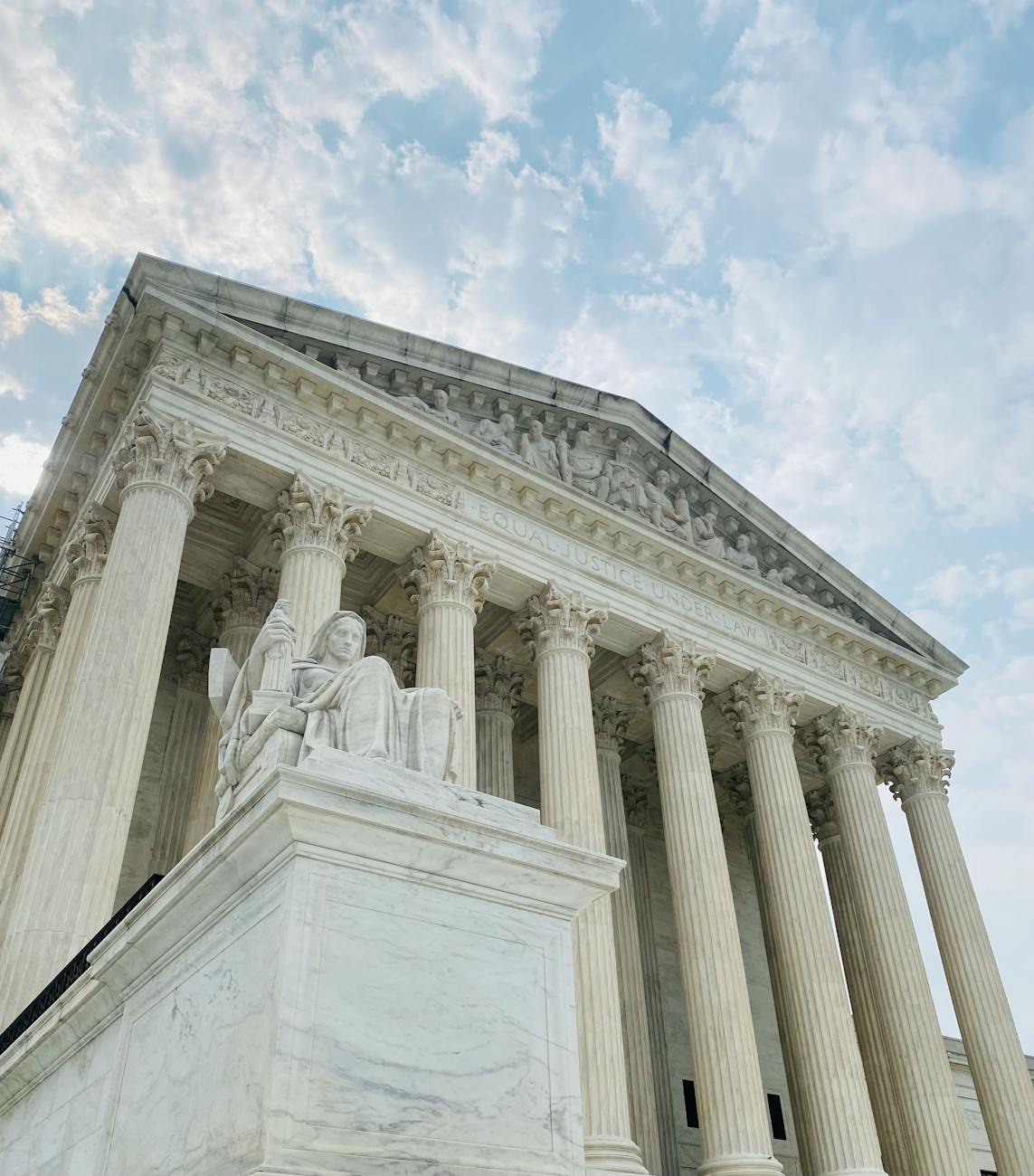
Last year, in one of the oral arguments for cases about Section 230 of the Communications Decency Act (Section 230), Justice Kagan opined that the United States Supreme Court is not comprised of “the nine greatest experts on the internet.”  Despite that observation, and eventually siding with the government in those Section 230 cases, the Court granted certiorari to four cases this year that again concern the regulation of social media.  Two of those cases, Moody, et al. v. NetChoice, LLC, et al. and NetChoice, LLC et al. v. Paxton, are concerning newly passed state laws in Florida and Texas that purport to regulate social media companies.  Additionally, the court recently heard oral arguments on two other cases, O’Connor Ratcliff v. Garnier and Lindke v. Freede, concerning whether elected officials can block members of the public on social media.  These cases—and Justice Kagan’s observations—beg the question of why the Court would be inclined to answer questions about the internet and social media companies, despite being self-admitted non-experts. 

  1. The current cases.

To provide some background, the Court is considering four cases this term.  The NetChoice cases concern whether Florida and Texas laws can prohibit social media companies from censoring individuals, or refusing to give a platform to political candidates.  But both laws are slightly different; the Florida law would require social media platforms to provide a rationale for removing content or censoring individuals on their platforms.  In contrast, the Texas law would bar large platforms, like Facebook, from engaging in “viewpoint discrimination.”  The Court is considering whether those state laws violate a company’s First Amendment rights.  

The other two cases, O’Connor Ratcliffe and Lindke, concern whether an elected official blocking users on social media would amount to a First Amendment violation of the user’s rights.  The elected officials cases have been presented to the Court before.  During the 2020 presidential election, then-President Trump blocked users on his Twitter account, but the Court dismissed Trump’s case as moot when President Trump lost the election.  

  1. Possible reasons the Court is considering social media cases.

Several reasons could explain the Court’s consideration of the NetChoice and elected officials’ cases.  First, unlike the Section 230 cases, the cases in this term implicate First Amendment rights.  The Section 230 cases concerned whether the plaintiffs could hold social media companies liable for content users posted on their websites, and did not present any such First Amendment issues.  As noted above, the NetChoice and elected officials cases present First Amendment concerns, and the Section 230 cases in contrast did not present those questions.  Because First Amendment questions have well-established case law and principles to answer the question presented, the Court may be more interested in wading into how its precedent affects these giant social media companies, especially as other branches of government have failed to address those companies.  

As social media websites continue to be leveraged to spread misinformation, and distrust in those platforms grows, the Court could be seeing an opportunity to weigh in on questions the other branches of the federal government have failed to address.  Despite bipartisan efforts to introduce bills regulating social media, those efforts have languished especially as uncertainty looms over whether government shutdowns are imminent.  But Congress’s inaction is not the only sign that the Court seems to want to consider cases regarding social media companies and the Internet.  This past month, the Court lifted a lower court’s restriction on President Biden’s administration.  Biden had attempted to alert social media companies to content that violated the company’s policies, and several state Attorneys General and social media users sued the Biden administration.  Those parties argued that Biden suppressed disfavored political speech, such as claims of election fraud, and information about the COVID-19 pandemic.  In allowing the Biden administration to contact social media companies in that way, the Court could be signaling its interest in cases involving social media companies.  

Finally, the Court’s public rationale for granting review weighs in favor of taking these social media cases.   The Court ordinarily only grants review to cases that could have “national significance, might harmonize conflicting decisions in the federal Circuit courts,” or if the case “could have precedential value.”  These social media cases generally meet all three of the criteria.  First, these are the kinds of cases that have national significance:  Can states regulate the speech of giant social media companies?  If states can regulate these national and international companies, what would happen if separate states impose different restrictions or requirements on those companies?  And, can elected officials restrict a user’s access to their social media accounts?  Those issues will have a profound impact on how social media companies regulate their multi-million user platforms.  

Second, with regards to the NetChoice cases, there are two conflicting decisions in the federal courts.  The Florida law was struck down by the Eleventh Circuit, while the Texas law was upheld by the Fifth Circuit.  Because those laws are similar enough in nature, the Court ultimately needs to resolve the NetChoice cases to determine whether a state can instruct social media companies on how to regulate, or not regulate, their content and users.  

And third, these cases are likely to have a profound effect on state policy and legislative decisions that have national effect.  For example, last year the Court held that California could forbid the sale of pork produced in a cruel manner.  That pork case has similar implications as the NetChoice cases; whether a state can essentially regulate an entire industry.  All of these cases will also provide precedential value:  the Court has been presented with questions of first impression as to how the First Amendment applies in various social media contexts.  The Court’s decisions will have a profound effect on how social media companies are run. 

Ultimately, these are the kinds of cases and questions that the Court must answer for prudential reasons.  As the public grows skeptical of social media companies, decisive action needs to be taken.  The lack of action from the other branches of federal government, along with the actions taken by the state governments in some of these cases, presents the following question: what branch of government should be taking action?

From Gladiators to Swifties: Regulating Ticket Resales

By: Harley Salter

Back when Shakespeare was putting on plays at his newly constructed Globe, there were affordable tickets for everyday people, commonly referred to as “groundlings” because the cheapest tickets were for the ground level. Even two thousand years ago, when the Colosseum opened its doors, everyone in Rome, including women, peasants, and enslaved Romans, was invited for free to watch the gladiator battles. Despite the much larger entertainment industry of the modern day, many people cannot afford tickets, if they can even access them. 

On November 15, 2022, Taylor Swift propelled the difficulty and cost of buying tickets into the spotlight when the release of her Eras Tour tickets led to Ticketmaster crashing. The drama did not end there. Scalpers, who had purchased large numbers of tickets, listed them on resale sites for thousands of dollars. According to Business Insider, the average ticket price for a secondary ticket was $3,801, a 1,402% increase from their original listed price of $253.56. Taylor Swift is unique with her massive and adoring fan base, but she is not alone with extreme price increases on secondary tickets. 

Why have prices increased? 

Many factors have contributed to the increase in ticket prices. For example, Ticketmaster has a monopoly on ticket sales, which gives it the power to increase prices. Additionally, ticket brokers have been using exclusive dealing arrangements with venues and artists, which further their ability to raise prices because they have no competition. Finally, it was fewer than twenty years ago that the music industry began shifting to live music as a substantial source of revenue to replace the income lost to streaming. Bots have also played a large role in recent years. For a long time, scalpers, or “ticket sharks,” have bought tickets in bulk to events for cheap and resold them, usually day of and in front of the venue, for a substantial profit. With the emergence of online ticket sales, scalping became easier and more people started participating. Online ticketing benefited consumers, as those who could no longer make it to the show could resell their tickets. Although this smaller scale reselling impacted resale ticket prices, bots completely changed the game. Bots are used by individuals and companies to buy tickets in bulk with more ease and at a faster rate. This drastically changed the scale at which tickets were marked up and resold, thereby driving up the cost of tickets. 

What can be done? 

Companies often try to combat bots with software to block them and formal agreements prohibiting their use. This is not always sufficient; bots are constantly improved upon to go undetected and break past barriers. Although bots can be hard to block, regulations, as well as actions by ticket brokers, could substantially lessen their impact on resale ticket prices.

While a blanket ban on ticket resales could be implemented, it would likely have substantial adverse effects. A more nuanced approach would be more effective. If ticket resales are banned, consumers who bought tickets with the intention of going but were unable to attend would be unable to recoup their losses. This harm to consumers could be mitigated by requiring ticket brokers to accept returns. However, unlike other products, tickets are only sold for a limited time. If ticket brokers were required to accept returns, they would likely sustain large losses because they often wouldn’t have the time to sell the ticket again. This could deter competition and lead to increased prices. 

In Washington State, Representative Kristine Reeves proposed the TSWIFT Consumer Protection Act, which would require professional ticket resellers to obtain a ticket sales license for Washington’s Department of Licensing. The bill would also cap the price at 110% of the original sales price and expand Washington’s current prohibitions on using bots or software to purchase tickets. In Texas, Governor Greg Abbott signed a similar bill, “Save our Swifties,” into law that banned the use of bots to purchase concert tickets. Other states have enacted laws that require transparency with ticket prices and fees. 

Halfway around the world, when visitors could no longer access affordable tickets to see the Colosseum, Italy’s culture ministry stepped in. Following the pandemic, many sights in Europe began offering or requiring online ticket sales. Third parties like TripAdvisor began buying up tickets to major attractions as they became available then selling them at extreme markups, resulting in many tourists leaving without being able to get into places they came to see. The ministry took this seriously; it launched an investigation last summer and implemented a new ticket sales system in October. Under this new system, tickets have visitors’ names on them, entry requires a valid ID, and tickets are reserved to be sold in person again. 

What is the issue if people are willing to pay? 

Attending large gatherings may be a privilege, but it is deeply ingrained in our history and an important part of society. Although some are able and willing to pay large sums of money, the current market for tickets does not reflect common notions of supply and demand. Concert-goers no longer compete against each other for the limited supply; rather, scalpers and bots come in and artificially lower the supply, driving up the price. Ticketmaster acts as the initial ticket reseller, buying tickets from venues and performers. It then resells tickets to the public. Unlike the secondary ticket sellers one step further down the chain, the original brokers supply value by making the process easier and more efficient. Secondary ticket sellers however simply resell the exact same product, often on the same platform they bought the tickets from, adding no additional value to consumers. Bots allow them to do this on such a large scale that it artificially drives up prices to sometimes astronomical levels. 

While online sales originally increased access to events, bot-driven scalping has widened the economic gap for access to shows. Bots have transformed ticket resales from a risky business to a game-changing profit maker. Although regulations on bots may be difficult to enforce currently, the people and companies controlling the bots can and should be regulated. Limiting the price of resale tickets and prohibiting the use of bots could drastically curb the soaring price of tickets and give a wider range of consumers access to live entertainment. Public access to entertainment should not price out the average fan. Common sense regulation can swing the pendulum in the other direction, though gladiator battles free to the public are likely not coming back any time soon.

Am I redundant? The Impact of Generative AI on Legal Hiring

By: Patrick Paulsen

In the ever-evolving world of law, the advent of generative artificial intelligence (AI) is reshaping traditional practices and methodologies, as well as raising concerns about its prejudices, lack of ethics and regulations, and abilities to make certain person-provided services automated or redundant. Perhaps closest to home for many law students, however, is how the implementation of AI in legal services will change or eliminate the professional roles they hope to occupy post-graduation. To prepare and grapple with the shifts coming to the industry, it is important for aspiring attorneys to understand the size of disruption AI will create who it will impact, and what skills can be prioritized to succeed in the legal workplace of tomorrow.

Large Scale Disruption in Legal Services

While many firms are still in “wait and see” mode regarding generative AI (As of April only 3% of firms had adopted generative AI), experts expect the impact of generative on the legal services industry to be gigantic, and it is not hard to imagine why. With a global market worth around $700 billion, it is no wonder that the legal services industry is ripe for massive gains to be realized through increased efficiency. This opportunity has spurred legal software companies such as Lexis to deliver “hallucination free” legal citations, briefing, and document drafting. Westlaw is not far behind after Thomson Reuters’s (Westlaw’s parent company) recent $650 million acquisition of legal technology company Casetext, Inc.

While players in the legal industry scramble to implement generative AI and outcompete each other, the extent and full impacts of generative AI are currently unknown. A recent Goldman Sachs economics report estimated that 44% of tasks in the legal industry can be automated through generative AI. AI’s potentially high impact on the industry has led to an array of predictions for the near future. Some reports predict record levels of profitability for firms as AI can perform tasks with much higher productivity and accuracy than legal professionals.

On the other hand, consultant reports and industry experts warn that the integration of AI could spell doom on the economic models of law firms. Validatum, a legal pricing consultancy group, notes that accessing and implementing AI technology entails high upfront costs for firms. While the investment in AI will enable firms to process legal work much more effectively and competitively, such gains in productivity eliminate the functionality of the primary source of legal revenue, the billable hour. As stated by Mark McCreary, co-chair of Fox Rothschild’s privacy and data security practice “a lot of risk for the firm—you spend $1 million on a product to take [away] $3 million worth of hours.” Most of the work that is easily automated is currently in the domain of paralegals and younger associates, such as administrative tasks, document review, and contract drafting. This has led industry insiders such as McCreary to express concern about the practice itself, noting that associates may develop fewer skills and that there will likely be a significant reduction in the workforce.

 Young Associate, Paralegal, and In-House Work is Most Vulnerable

One of the areas significantly affected is the hiring process for first-year associates in law firms. With first-year firm hirings already down in 2023, the prospect of automation eliminating jobs is a harsh reality for many aspiring attorneys. With automation already being cited as a reason for firm layoffs, it seems that the opportunities to break into the legal industry may be much sparser. In fact, Deloitte predicts 100,000 legal industry jobs could likely be automated in the next twenty years

In addition to new associates, in-house and corporate counsel work is also likely to be greatly impacted by the integration of generative AI with their workplace. Unlike firms, in-house counsel does not have an incentive to maximize hours, and common tasks such as contract analysis and document review are ripe for automation through AI.

Perhaps the most at risk of disruption in their roles are paralegals. There are over 300,000 paralegal jobs in the United States and the anxiety over future job stability is already mounting. Similar to first-year associates, paralegals are designated tasks such as document review and clerical work which are most at risk of being automated away or transformed through AI integration.

With so much at stake for the professionals who currently fill these roles or plan to in the future, many are asking whether they will be replaced, and if not, what can be done to stay ahead of the curve.

Silver Linings and Skills for the Future

Luckily not everyone believes that shifts will lead to large-scale displacement. Some consultants and managing partners believe that firm structures will not shift radically from pyramids to diamonds and that the transformative power of AI could lead to more high-level or client-facing work for associates earlier in their careers. However, like any new technology, the rise of AI integration in the legal profession means that workers will have to adjust their skillsets.

Zach Warren, Thomson Reuters head of technology and innovation states that due to AI’s ability to create first drafts, “[a]ll the writing you learn in law school will become editing.” The rise of AI in the legal workplaces of course will mean that any aspiring legal professional will have to understand and be able to productively make use of the newly integrated technologies. One such skill that is already being recruited for is that of “prompt engineering.” Because generative AI is dependent upon input and direction from a user, understanding how best to instruct the AI is a key component in putting AI to constructive use. For this reason, bridging the gap between prompt engineering and legal expertise is a must-have skill for legal professionals going forward.

In conclusion, there is no doubt that AI will impact the legal industry immensely, far beyond previous technological advances such as printers and copying machines. However, only the future will reveal whether AI integration will lead to an increase in opportunities in legal services or make many roles redundant. Either way, those aspiring to be attorneys or work in the legal services industry must be proactive and diligent in honing not only traditional legal skills but also in integrating generative AI tools into their practice.