Rights of the Dead: Human Remains and Museum Collections

By: Sarah Fassio

There are 255 human brains in the Smithsonian’s Natural History Museum storage facility in Maryland. In Pennsylvania, the Penn Museum housed over 900 human skulls as recently as 2021. The American Museum of Natural History in New York hosts some 12,000 human remains. These collections, amassed throughout the nineteenth and twentieth centuries, represent the non-consensually acquired human remains of historically exploited groups—particularly Indigenous populations and people of color—and are a tangible legacy of white-supremacy pseudoscience in the United States.  

It is an almost cliché tableau: to think of a museum of natural history, anthropology, or medical science is to envision carefully curated exhibits of skeletons, cuts of brains, and jars of preserved organs. Such displays often disquietingly blur the distinction between an impartial, academic teaching tool and the actual body of a real person. They also raise questions about who is being displayed. How did these human remains come to be displayed or acquired by museums and academic institutions?  

There are, of course, those who donated their body to science—a practice that is still around today. The University of Washington has the Willed Body Program, a whole-body donation opportunity for individuals from Washington State. Dozens of universities across the country have similar programs. However, whole-body donation in the twenty-first century is a process laden with paperwork and legal boundaries. The Mayo Clinic, for example, requires the prospective donor themselves sign an Anatomical Bequest Consent Form. Signatures from an individual’s medical power of attorney or guardian are insufficient for this process—and if a next of kin opposes the donation, it will not occur. 

Historically, such formalized donation schematics did not underpin some of the grander museum collections of human remains nor was their inception so necessarily scientific.  Viewed today as discredited pseudoscience, many collections of human remains were predicated on proving the principles of white supremacy and anatomical racism: the belief that white superiority was due to structural differences between races. White scientists robbed graves, exploited those too poor to afford proper burials, or outright stole bodies from Black and Indigenous communities. Many immediate family members were unaware their loved ones’ bodies were held by museums. Many are still unaware.

Faced with such a horrifying past, what can be done to move forward? Are there currently legal structures aimed at encouraging museums to properly confront their human inventories?  

The law is not entirely silent on the issue of misplaced human remains. One avenue for recourse for some Indigenous communities is the Native American Graves Protection and Repatriation Act of 1990 (NAGPRA). NAGPRA is concerned with items of Indigenous cultural significance, covering things like human remains and funerary or sacred items. It provides a process for federal agencies and museums to repatriate or transfer those pieces back to their rightful homes.

But the more unfortunate truth is that there are not comprehensive laws aimed at ameliorating the ugly collection processes of yesterday’s anatomical racism. The Smithsonian, for instance, requires those with a personal interest or legal right to the remains to submit a formal request. But doing so remains difficult, if not impossible, since many living relatives are unaware these collections even exist—much less that their lineage is an unwilling part of it. The American Museum of Natural History, for instance, holds records naming the individuals to whom the human remains once belonged, but declined as recently as this month to release a list.

Ultimately, change and repatriation seems largely left up to the museum institutions themselves, often motivated by public pressure and activism. The Penn Museum’s recent treatment of the Morton Cranial Collection—900 human skulls obtained by early-nineteenth-century scientist Dr. Samuel Morton for the purpose of articulating racial differences—is one encouraging example of visible change.

Beginning in 2020, the Penn Museum formed an evaluation committee, published a report on contributions to the Morton Collection by Black Philadelphians, and recommended burial and commemorative actions. Among the recommendations were an interfaith memorial service, the erection of a permanent remembrance marker on the University of Pennsylvania’s campus, and participation in a community-led transparency forum. 

In February 2023, the Philadelphia Orphans’ Court granted the museum’s request to respectfully bury the cranial remains of twenty individuals in a historic African American cemetery. For those, at last, a final rest.
So You Think You Can Dance? TikTok and the Appropriation of Viral Choreography

By: Sofia Ellington

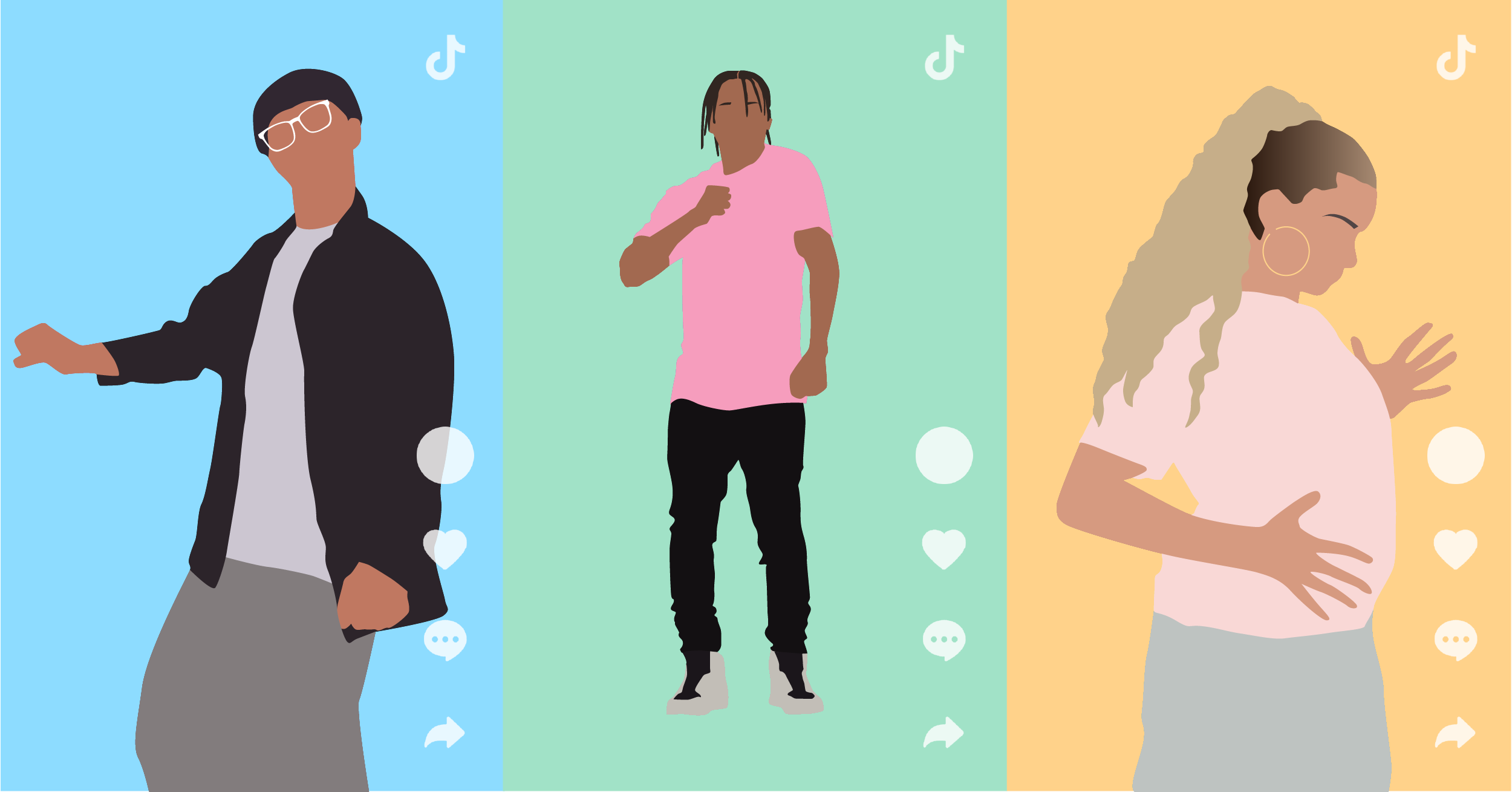
Since 2020, viral TikTok dances have helped promote some of the biggest hit songs in the music industry. Artists and record labels have made millions on increased streams of those hit songs. TikTok itself is valued at around 65 billion dollars. However, most dance creators on the platform retain no rights in their choreography, meaning that they do not profit directly off the licensing or use of their dances that help make both the music and TikTok popular. Black, Indigenous, People of Color (BIPOC) artists are behind some of the most popular viral dances and are particularly affected by social media platforms that make it difficult to receive recognition and publicity for their work. However, the crux in extending protection to TikTok dances through a Western Intellectual Property (IP) regime is that videos are meant to go viral through large scale replicating and copying, not just through users merely viewing them. Registering those dances could restrict and change the nature of interactive sharing on the platform, which suggests that copyright may not currently be suited to the demands of modern social media platforms. Artists will want to look to alternative regimes, such as Indigenous IP, as inspiration for how to protect their dances while leaving non-commercial sharing unrestricted.

TikTok has an Accreditation Problem 

BIPOC artists are behind some of the most popular viral dances to songs such as “Savage” and “WAP,” but TikTok’s algorithm, which shows undated videos in an endless stream detached from chronology, makes it almost impossible to uncover the original choreographer. Due to this accreditation difficulty, many dances go viral once a famous, oftentimes White, creator on the app posts a video of themselves doing the dance. The publicity for the dance then focuses on the already famous creator instead of the choreographer who originally created the dance. 

It was not until months after rapper K Camp song’s “Lottery” inspired the viral dance “Renegade, ” that the original creator, 14 year-old Jalaiah Harmon, was correctly credited in an article by The New York Times. Originally, the dance was accredited to two White TikTok creators, Addison Rae and Charlie D’Amelio. Before the New York Times Article was published, Rae was invited on The Tonight Show to perform some of the dances that made her famous, including “Renegade.” She failed to shout out any of the original creators of the dances, leading to backlash. The hashtag “BlackTikTokStrike” trended in 2021 to draw attention to the centrality of Black artists to the platform as well as rampant appropriation and lack of credit. 

The Hegelian personhood theory of property ownership posits that our autonomy and personality is intrinsically tied to what we own and the outputs of our creative expression. Lack of protection for these BIPOC artists, whose work is appropriated and uncredited on TikTok, is harmful, not just to their bottom line, but to the sense of control over their autonomy and personhood. Even though the unfairness of her uncredited dance was not lost on Harmon, she told the New York Times that she has continued to choreograph because ultimately, “it makes me happy to dance.” 

Can Copyright Protect TikTok Dances?

Whether Copyright can protect viral dances is more complicated than a simple yes or no. Copyright protection is available for original works of authorship that are fixed in a tangible medium and fall into a list of non-exhaustive categories in the Copyright Act of 1976.

The fourth category includes choreographic works, which are defined by the Copyright Office as, “the composition and arrangement of a related series of dance movements and patterns organized into a coherent whole.” Most TikTok dances easily meet this definition, but copyright requires that choreographic works amount to more than social dance steps or simple routines, an additional hurdle for TikTok dances to clear. 

The prohibition on copyrighting social dances or simple routines is well settled and informed by the utilitarian goal of copyright in the Copyright Clause of the U.S. Constitution, which states that Congress has the power to secure copyrights “to promote the progress of science and the useful arts.” Copyright tries to balance creating incentives for creation without preventing the free flow of ideas. It would be antithetical to the goals of copyright to allow one person to lock up simple steps or the building blocks of dance and prevent future artists from using those ideas to progress expression of the art form. 

While most complex TikTok dances will rise above the level of a mere social dance and be eligible for protection by meeting the statutory elements of choreography, found in the United States Copyright Office’s Circular 52, copyright must balance incentivizing new work without chilling the ability of other creators to build upon that work if TikTok is to remain an interactive platform. TikTok relies not just on viewership, unlike past song and dance media platforms such as MTV, but on participation in the content which presupposes copying and replication. This built-in assumption is obvious through the apps tooling which permits a user to “Duet” or “Stitch” other creators’ videos to their own. 

Shayné Abram and Zhané Miller went viral in 2020 for their choreography to the Remix of Megan Thee Stallion’s song “Savage,” and are in the process of applying for copyright protection for their moves. Their concern is protecting themselves against commercial exploitation, not dance challenges on TikTok. If protecting against the commercial use, and not the social use, of dances is the goal, alternative IP regimes may offer inspiration for a system of protection without the potential downside of chilling creative expression.  

Indigenous IP 

The 2004 broadcast of the Grammys featured a performance by OutKast’s Andre “3000” singing “Hey Ya!” Outcast was joined onstage by dancers wearing Indigenous “symbols usually reserved for ceremonial purposes, like feathers and war paint.” Additionally, the introduction to the performance appropriated a sacred Navajo/Diné  “Beauty Way” prayer which is used for sacred ceremonies and considered improper for use in entertainment. The incident left many questioning if federal laws could effectively prevent offensive appropriations of non-tangible sacred property. 

Congress has passed statutes such as The Native American Graves Protection Act and the Indian Arts and Crafts Act to protect Indigenous tangible cultural property. However, Western IP laws are often too narrow to protect intangible Indigenous property, such as song and dance. Instead, those forms of property are a continual collaboration and conversation in the community, not the work of a single author— one of many reasons that they are ineligible for copyright. 

Many Indigenous nations have utilized their sovereignty to create tribal laws that reflect a wider conception of property ownership that protects sharing sacred customs among the tribe while prohibiting improper and exploitative uses. While these laws are not binding on courts outside of the reservations’ jurisdictions, using tribal laws outside of the tribal context can influence courts to respect alternative means of recognizing property. A wider conception of property that is recognized in Indigenous IP could be an inspiration for how the current copyright system can evolve to protect against commercial appropriation while still allowing for the social and communal sharing of dance. 

Toward a Better Platform 

For creators on TikTok, there are huge monetary and personal incentives for receiving credit for choreography. An increasing desire to gain copyright over these dances is important for BIPOC creators in order to reap the economic benefits of their labor. However, fear of enforcement for copying and sharing these dances could lead to a chilling of expression on the platforms that made them popular. Creating a space for communal sharing and participation in the expression of these dances makes TikTok a powerful platform. Social media companies should feel incentivized to create a more rigorous system for accrediting and certifying original creators to prevent copyright enforcement mechanisms from dampening participation and engagement. There is value in looking outside of the traditional IP system, whether to Indigenous IP or to alternative licensing schemes, to work together to create platforms that encourage community sharing but prevent the appropriation and exploitation of individual users’ content. 

Plugging-in Your EV? More Like Plugging-in Your Data.

By: Caroline Dolan

As global warming and ecological degradation progress, sustainable technology and infrastructure is being implemented to remediate and prevent aggravation. However, electric vehicles (EVs), which are an effective way to curb carbon emissions and boost green efforts, pose a unique set of privacy risks every time we plug-in.

The data transaction: Plugging-in

EVs are dependent on EV chargers and for the majority who do not have the capacity to charge at home, public chargers are a necessity. Public EV chargers are essentially an Internet of Things (IoT) device that facilitate the transaction of data for kilowatts. Information involving pricing, session date, time, duration, and power patterns is collected and sent to the operator’s network. Furthermore, most chargers are affiliated with a mobile-app or use a radio-frequency identification card (RFID) implicating your phone as another data source sharing payment information, names, emails, IP addresses, and internet history. In order for an app to make the consumer experience more convenient and recommend the nearest charger, location identification is necessary. However, Certified Information Privacy Professionals have reported how this data can be used to pinpoint your location and predict your typical driving route. 

Sharing and collecting this information can make life a lot more convenient and does not seem to pose any imminent risks of harm. However, every public charger is connected to a grid and whether it is a closed or open network, there is always a risk of ransomware attacks, ID fraud, and grid damage. The Cybersecurity and Infrastructure Security Agency defines ransomware as “a form of malware designed to encrypt files on a device, rendering any files and the systems that rely on them unusable. Malicious actors then demand ransom in exchange for decryption.” As described by privacy professionals, closed networks relate to a certain set of manufacturers who have discretion and unrestricted authority to use the data and create profiles; open networks tether multiple manufacturers which decreases each manufacturer’s control but gives more stakeholders access increasing your data’s vulnerability. In other words, while there is not an imminent risk of harm, there is a perpetual risk.

An EV economy

As the Wall Street Journal reported, “Modern vehicles are effectively connected computers on wheels. They’re able to collect a wealth of information via built in apps, sensors, and cameras, which can monitor people both inside and near the vehicle.”

Whether the data originates from the user’s personal device connected to the EV or solely through the charging equipment, the data is ripe for hackers, car manufacturers, insurance companies, and emergency service providers. While such data can help urban planners determine the optimal areas for development and economic profit, it can also inform insurance companies on how to set rates based on driving risk and behavior. More importantly, the Wall Street Journal has recognized that if data brokers obtain and sell the data, even with personal information redacted, movements and habits are individualistic and may provide insight into one’s identity.

Well-intentioned green policy may be getting ahead of itself

President Biden’s goal of boosting U.S. EV production is being achieved through his Made-in-America EV charging network initiative which is supported by the Department of Transportation’s National Electric Vehicle Infrastructure (NEVI) program. NEVI is distributing $5 billion into various EV programs to create a coast-to-coast network of EV chargers and electrify the highway system. However, these good intentions may be putting the cart before the horse since privacy risks of EVs have yet to be adequately and uniformly regulated.

Notably, the Federal Highway Administration (FHWA) has imposed a set of requirements on NEVI fund recipients stated in its “final rule.” The final rule consists of network connectivity requirements that ensure secure payment processing and minimize the amount of personal information that companies may retain. While these efforts seek to safeguard data and promote transparency, the final rule essentially requires merely “appropriate” data protection and gives states the discretion to determine the means. 

California is one state that is addressing the privacy concerns raised by the EV boom. California’s newly approved Electric Vehicle Infrastructure Deployment Plan cites the state’s Senate Bill 327 which requires a manufacturer of a “connected device” to equip the device with reasonable security features based on the nature and function of the device. From a legal perspective, the reference to SB-327 indicates that EV chargers may constitute a “connected device” and therefore warrant reasonable and appropriate security features and protection. 

However, state regulations are not an adequate shield from the broad destruction of a cyberattack. Therefore, some EV charger companies like ChargePoint have adopted internal regulations and earned certifications from the International Organization for Standardization (ISO) based on its comprehensive  information security and cyber-risk management. ChargePoint is a predominant U.S. company that supplies EV charging stations across North America as well as Europe and is therefore subject to Europe’s General Data Protection Regulation (GDPR). The GDPR controls the collection, use, and storage of personal data as well as the conduct of non-EU companies that possess the data of EU residents and citizens. While it seems unlikely that the U.S. will implement a federal law akin to the GDPR, California and ChargePoint may prompt other states and companies to implement regulations that supplement FHWA’s final rule.

Will supporting EVs come at the cost of our privacy?

While it is difficult to encourage people to undertake the risks posed by EVs, even for the sake of curbing carbon emissions; the Earth is a finite resource and without it our privacy is moot. Therefore, people should not be discouraged from purchasing an EV or plugging-into a public charger. Rather, the government and individuals should be compelled to hold corporations accountable for how data is stored and used so that we may plug-in without fear. As the effects of global warming become more apparent, embracing corporate accountability and privacy protection is critical in order to keep up with the EV boom and conserve the Earth.

Technology and the WGA Strike: How AI led the Guild to Picket

By: Karina Paup Byrnes

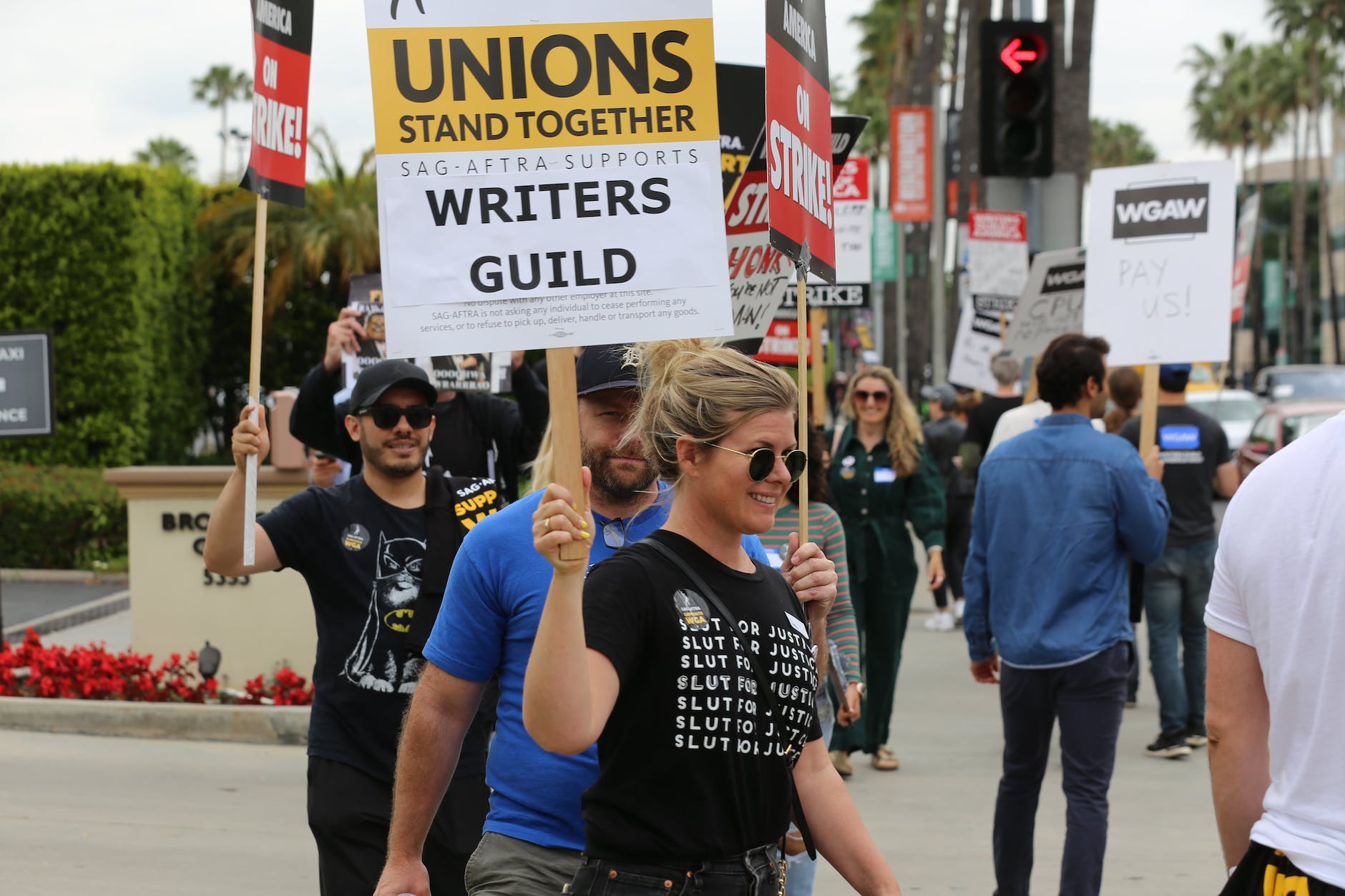
On October 9th, 2023, the Writers Guild of America (WGA) strike ended when the WGA successfully ratified a new three-year contract with the Alliance of Motion Picture and Television Producers (AMPTP). The AMPTP represents hundreds of studios and production companies, including Netflix, Universal Pictures, Disney, Paramount Pictures, and Warner Brothers. One of the issues at the heart of this contractual dispute were provisions pertaining to the use of artificial intelligence (AI) to generate scripts, therefore lessening the need for traditional writers. The WGA is acutely aware of how new technology can change scriptwriting: in recent history, studios have used the popularity of consuming media through streaming to decrease their writers’ pay. Instead of allowing studios to dictate how new technology is diffused into scriptwriting, the WGA demanded that writers had contractual protections against studios exploiting the use of AI in the writers’ room.

The potential effects of AI echoing the same negative consequences of streaming technology led the WGA to be proactive in asserting the need of regulating how AI would be implemented. The fact that the WGA wanted control over how AI would be used in writers’ rooms was an issue that the AMPTP did not want to compromise on. Ultimately, the strike successfully led studios to agree to limit the use of AI, along with other WGA provisions. The new contract signaled a major victory for collective labor movements because this was a highly publicized instance of restricting the use of AI in a particular employment sector. However, even with the WGA contract finalized, there are still unanswered questions about how technology incorporated into scriptwriting, specifically AI, will impact writers’ rooms legally.

In 2012, Netflix introduced a new way of consuming content called “streaming” which allowed users to watch television through an internet connection. Streaming changed the way viewers watched TV, creating a ripple effect that altered the way platforms produced scripted television. Prior to the streaming boom, networks hired writers to draft 20 or more episodes a show per season. Each time networks aired these episodes, writers received a royalty check for their writing credits. Once streaming became the most popular way to consume content, a season of TV often became shortened to about half as many episodes. With television shows now being watched on a streaming platform and no longer broadcasted, writers received fewer residuals for their projects. Suddenly, writers were getting hired for shorter projects and were receiving smaller paychecks.

As WGA members felt the effects of streaming over the previous decade, an additional disruption in TV technology loomed: the use of AI to create television scripts. The WGA is keenly aware of the potential consequences that AI can have for writers. Therefore, WGA members sought to define the limitations of AI during contract bargaining, establishing regulations of AI in scriptwriting before the tool would interfere with writers’ rooms like streaming did. This was a major point of contention between the WGA and the AMPTP during the negotiation process because in the past, major studios used the power of technology to increase financial gain and content production, often at the cost of their writers.

The new contract between the WGA and the AMPTP is a significant win for writers. The agreement stipulates that AI cannot be used to write or rewrite scripts and prevents AI-generated writing from being classified as source material. The contract specifies that all writing credits will be maintained by TV writers themselves, not AI programs. In addition, writers can independently decide to use AI should they choose to, but studios cannot mandate that writers use AI in their scripts. Finally, all AI-generated materials from studios that make it into the writers’ rooms must be labeled as such.

The step of outlining specific provisions pertaining to AI in the WGA contract demonstrates the members’ awareness of how technology can and will impact the future of their livelihood. Due to legal gaps in the regulation of AI-creation tools on both federal and state levels, collective bargaining groups and unions are incentivized to take their own measures in determining how AI will be regulated in the workplace.

This however does not mean that all problems related to AI in the TV industry are solved through the ratified contract. Beyond the concern that AI could replace the need for writer’s rooms, there are important unanswered legal questions regarding how television scripts written by AI would be regulated. If AI were to be used for a TV show, it is unknown how the AI technology would affect compensation for a drafted work product, let alone how to factor in the compensation for residuals of reruns of any episodes. Even more problematic is the fact that AI is unable to distinguish between copywritten material and material that is available to freely source. There have already been a growing number of copyright infringement suits brought by writers against AI companies for generating text from the writers’ works through the AI’s algorithm. The use of AI as a writing tool will create a new chapter of legal battles that have yet to be tested.  

The ratification of the WGA contract signals that there are real and concrete apprehensions of how technology can shape the way we create and consume media. With many unknowns regarding the legalities of AI, it is natural that artists and creators want to protect and preserve space for traditional scriptwriting. Only time will tell how the issue of AI will continue changing the TV industry. But for now, the WGA has sent the message that they will continue to fight for financial fairness in the writers’ room.

Oh Snap! Shutter Sound Regulations aren’t that Sound

By: Bharat Manwani and Naghulan Sudhaharan

Upskirt Photography: A Voyeuristic Parallel

Back in 2008, in the midst of the Inaugural Season of the Indian Premier League (“IPL”), renowned Indian actress Mandira Bedi vocally disapproved of cameras going up the skirts of cheerleaders. The IPL is infamous for sleazily recording women and invading their privacy, but this is not just about the world’s most famous cricketing league. It brings notice to the much broader problem of upskirt photography, often referred to as “Upskirting.” Upskirting usually involves capturing non-consensual photos or videos of the area inside the skirt from under the garment or even while it is being worn. Upskirt is a form of voyeurism, an offence defined under Section 354C of the Indian Penal Code as “any man who watches, or captures the image of a woman engaging in a private act in circumstances where she would usually have the expectation of not being observed.” The Criminal Law (Amendment) Act 2013 clarifies that an upskirt photographer can be punished under Section 354C of the Indian Penal Code. Section 66E of the Information Technology Act 2000 grants additional protection against capturing, publishing, or transmitting images of private areas.

The Evolution of Shutter Sound Regulations

The United States of America, however, antithetically differs upon the voyeuristic nature of upskirt photography. A Court in Washington, D.C. bizarrely upheld the right to take upskirt photographs. The D.C. Penal Code defines voyeurism to be unlawful under circumstances where an individual has a “reasonable expectation of privacy,” and since it was a public place where the defendant took upskirt photographs, the court held that the victim shall not expect privacy in such a circumstance. There were no charges pressed against him. This outlook was not restricted to Washington, D.C., as the Massachusetts Supreme Juridical Court and the Texas Court of Criminal Appeals took up similar perspectives. In the midst of these controversies, a New York representative introduced The Camera Phone Predator Alert Act, a legislation that attempted to curb upskirt photography which unfortunately died in Congress. The idea behind the bill was similar to most shutter sound regulations: it required mobile phones with cameras to make an audible sound within a reasonable radius of the phone so it would alert the others around the device if they were being snapped without their consent. The bill’s failure might have been a result of the country’s general reluctance to curb upskirt photography, as it infringes upon other’s civil liberties. Japan, on the other hand, is unbridled from such restraints and has codified shutter soundregulations. It all started with cell phone manufacturers voluntarily banning users from disabling the shutter sound in light of the rising upskirt photography incidents. Apple, which has always deferred from making region-specific modifications, had also joined the wave. Upskirt photography has formally been prohibited under the Anti-Nuisance Ordinance in Japan. Their courts continue to punish the perpetrators for offences committed more than 15 years ago. The legislation employs a comprehensive approach to safeguard only one particular aspect: the safety of women. Despite its broad language, the law unequivocally declares that the subject matter of the photograph is inconsequential. If the act of being photographed causes a woman to experience any discomfort or anxiety, the person behind the camera could be punished under the law. In fact, merely aiming a camera towards the victim, even without capturing an image, is sufficient grounds for arrest. With similar shutter sound regulations imposed across various jurisdictions, invites the question if they have been effective in curbing upskirt photography?

Skirting the Law

The regulations did not mark the end of upskirt photographs, as the photographs are still notoriously famous and reach a wide audience across the globe. Conceptually, the enactment meets the object of the legislation: the sound of the shutter would immediately alert individuals nearby that they are being photographed. But it is only the conceptual realm within which such a legislation is effective. The Anti-Nuisance Ordinance in Japan has not found any success. Contrarily, there has been a surge of over 4000 cases of upskirt photography in the country, as compared to the figure of 1700 such instances reported a decade ago. It is arguable that the introduction of a shutter sound has led to an increase in alertness of individuals and hence a higher reporting of such cases. However, similar trends across different parts of the world would indicate otherwise. The upward trend in instances of upskirt photography has raised doubts regarding the implementation of such legislation. The moot point being that it is simply not practical to enforce this mandate. Smartphones are not just limited to the units manufactured in Japan, and since these regulations are not in place for all countries that run the industry, the shutter sounds could only alert individuals if predators use units manufactured in Japan. While it makes no sense having a mandatory shutter sound for a unit made in Japan and not having such mandates for that same phone manufactured elsewhere, the Japanese units are additionally vulnerable to being overridden. Apple indeed joined the bandwagon with other phone manufacturers in banning users from disabling the shutter sound, yet years later it teaches users how to disable the shutter sound on its own support forum. It is shocking to see how the shutter sound mandates are being overridden. A report based in Osaka noted predators use third-party apps that mute the shutter sound, some of which were originally designed to take photos of babies while they are asleep. Social media giant Snapchat, which publicly detests upskirt photography, is hypocritically another third-party app that mutes the shutter sound on devices. In essence, shutter sound regulations apply to devices manufactured only in certain countries, yet even those devices have the ability evade these mandates which makes these legislations ineffective. An inefficacious framework ultimately takes a toll on women safety, making it easier to skirt these regulations and indulge in voyeuristic conduct.

The Way Forward

The current shutter sound regulations are being overridden, limiting their impact on curbing upskirt photography, and highlighting the need for more comprehensive and practical solutions to address these crimes. A mandatory shutter sound may not stop all crimes, but it would at the least alert nearby individuals. These regulations are theoretically infallible and the onus of imposing such mandates rests upon all cell phone manufacturers across the globe. In fact, it will not be the first time where all these firms within the industry have come together to agree upon imposing a manufacturing restraint. With no universal framework in force, the United States of America, following a vast majority of countries, has enacted legislation to disrupt SIM locking practices in 2014. Various nations united to offer greater consumer choice and made sure no telecom operator could bind devices to only one SIM provider. Women’s safety being a more pressing concern than consumer choices, cell phone manufacturers of the world would have no qualms to patch third-party loopholes, impose mandatory shutter sounds, and crackdown upskirt photography.