Careful! Big Brother is Watching (or rather Listening)

By: Enny Olaleye

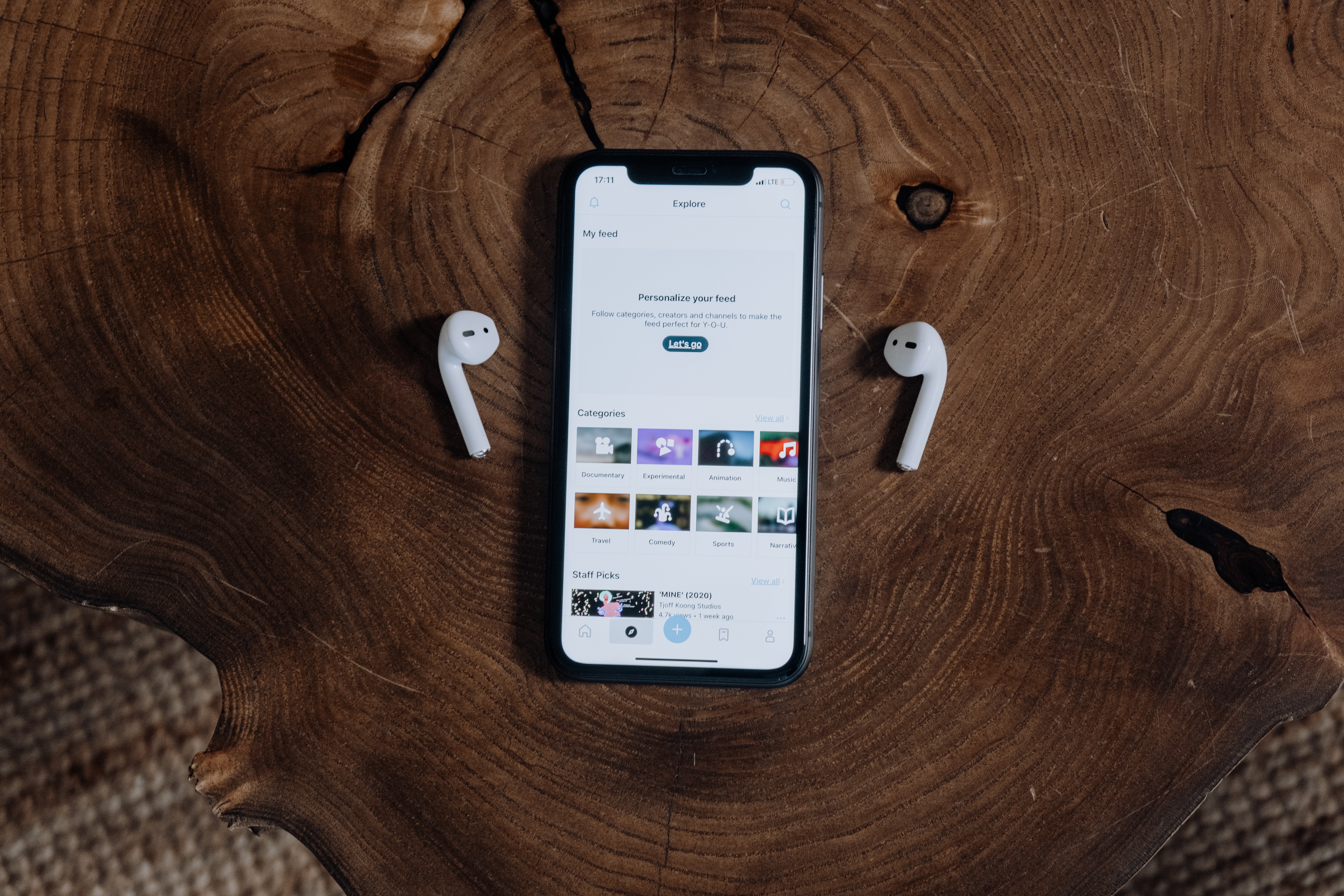
Earlier this year, social media users may have been surprised to see #LiveListen trending on websites such as Twitter and TikTok. This hashtag represented one of Apple’s newest innovations called Live Listen, an accessibility feature designed to help the hearing-impaired, by permitting users to use their AirPods to turn their electronic devices (iPhones, iPad, etc.,) into a microphone—which sends sound to their AirPods. However, what Apple intended to be a simple new feature for their products quickly transformed into a social media craze, where Apple users discovered that they could use this new function to eavesdrop on other people’s conversations. 

Activating the Live Listen feature is as easy as opening your iPhone’s settings application. Once activated, the Live Listen feature allows users to hear conversations more clearly, by tuning out any background noise present. With your AirPods in your ears and your iPhone near the person you are trying to hear, Live Listen will transmit the audio to your AirPods. While navigating this new feature, users soon found out that when their AirPods were connected, they were able to listen in on any conversations happening in the room the iPhone was placed in—even when they were in a different room from the device. Live Listen remains active until the AirPods are put back in their case or disconnected from their mobile device. This feature means that, even if the connected iPhone or iPad is hidden somewhere out of sight, it can still clearly pick up conversations within the same room. 

Social media users began to label this new advancement as a “game-changer,” publicly admitting the different ways as to how they planned to utilize this feature to eavesdrop on their friends, partners, and even their employers. 

Thus, the question arises: Are AirPods our newest security threat? 

When you think of the word “wiretapping,” or what is commonly referred to as “eavesdropping,” you may imagine a black-and-white scene with a bunch of men in suits huddled around a clunker of a machine wearing oversized headphones—looking intently into the distance. Well, thanks to Ring cameras, high-definition drones, and of course smartphones, wiretapping laws have greatly expanded from what they used to be back in the day of drama-filled, black-and-white criminal television shows. The Electronic Communications Privacy Act of 1986 (ECPA), made it a federal crime to engage in, possess, use or disclose information obtained through illegal wiretapping or electronic eavesdropping. This statute applies to any face-to-face conversations, emails, texts, phone calls, or “electronic communication,” that are reasonably expected to be private. 

“But—I don’t plan to record the conversation; I just want to listen in.” Still…no. 

Aside from the literal action of using AirPods as a wiretapping device, the ECPA also considers it a felony to intentionally intercept electronic communication—which translates to setting up your AirPods to listen into private conversations. Further, the ECPA also considers it a felony to attempt to intercept an electronic communication—which includes the mere action of attempting to set up the LiveListen feature for the purpose of listening into a reasonably private conversation. Regardless of whether you are recording or just listening in, the consequences of even attempting to wiretap or eavesdrop include imprisonment of up to five years (if criminal intent can be proven) and up to a $250,000 fine. 

With the advancement of technology not dwindling down any time soon, it brings up the matter that if your peers can so easily listen into your conversations, what does that mean for those with more resources and power? 

Electronic surveillance, whether through AirPods or government-funded access to encryption tools, is fundamentally at odds with personal privacy. Under the Fourth Amendment, government agencies must obtain a warrant, approved by the judge, before engaging in wiretapping or electronic surveillance. However, while government agencies are required to secure a warrant, their requests for wiretaps are almost never turned down by judges. Once authorized, both wiretapping and electronic eavesdropping enable the government to monitor and record conversations and activities without revealing the presence of government listening devices. 

Legislation concerning wiretapping and privacy rights continuously lag behind the fast-paced advancement of technology. Even so, products as simple as AirPods and iPhones will never be tagged as security threats due to the sheer awareness that they already exist everywhere. The old-time anecdote that “Big Brother is Watching You” is slowly coming into fruition as user privacy can be surpassed at our own fingertips. While the expansion of electronic surveillance was originally meant to reduce serious violent crimes after 9/11, it has only led to the heightened violations of privacy rights amongst those in the United States. 

“So now what?” 

Well, simply put—in most circumstances, listening in to conversations that are “reasonably expected” to be private, without the consent of those participating in the conversation, will most likely constitute a federal crime. Thus, activating LiveListen and utilizing it outside its designated role as an accessibility feature is not a good idea. With respect to protecting yourself and your information—that is a bit more difficult. Avoiding the entire “surveillance economy,” by not using Apple products or avoiding Google and Twitter is just very unlikely (I still haven’t been able to give up Amazon Prime). However, taking action can be as small as searching on secure networks only (with the little lock on the search bar), to as large as applying pressure to your state’s representatives to pass legislation centered on protecting our individual privacy rights is a step in the right direction. 

The bottom line is; without the assurance that our private communications are, indeed, private, privacy rights will continue to be glazed over and decisions based upon free will and personal choice will slowly be replaced by decisions centered in prudence and fear. 

No One Should Own Exclusively AI Generated Art

By: Jacob Alhadeff

On February 14, 2022, the Copyright Review Board (CRB) rejected Physicist Stephen Thaler’s claim for a copyright of his algorithm’s “authorship” because a “human being did not create the work.” On September 15, 2022, Kris Kashtanova received a copyright for their comic book Zarya of the Dawn, in which all of the art was AI generated, but Kris created the other aspects of the book. The difference in treatment is likely down to questions of originality, authorship, and simply that one work required human creativity while the other was effectively the work of a computer. Though these legal arguments are compelling in themselves, a necessary and implicit policy rationale seldom explicitly recognized by the law deserves highlighting — the relationship between work and incentives. Here, copyright incentivizes Kashtanova’s creative human work while reasonably denying that incentive to Thaler’s exclusively AI generated art. 

AI art, AKA generative art, uses machine learning (ML) algorithms that have been trained on billions of images frequently from licensed training sets and images publicly available on the internet. The images these algorithms use are frequently copyrighted or copyrightable. Users then type in a phrase, “carrot parrot,” for example, and a unique image is generated in seconds. Creating novel art can now be as simple as an image search on Google. This technology has been in the works for many years, but recently, platforms like DALL-E, Midjourney, and Stable Diffusion increased the volume of training data from millions to billions of parameters and the emergent result was an exponentially better output. In response, on October 17, 2022, Stable Diffusion announced the completion of a $101M seed round at a $1B valuation. Sequoia Capital then posted a blog suggesting that generative AI could create “trillions of dollars of economic value.” The future of Generative AI looms large, and at the very least promises to expose unexplored ambiguities in copyright. 

Functionally, in generative art there are two primary entities that may be incentivized through copyright — the programmer or the user. The programmer may have spent many hours writing and training the algorithm so that the algorithm may quickly create novel works of art. The user of the algorithm, on the other hand, is “the person who provides the necessary arrangements,” basically the person who prompts the program with a phrase. Providing either of these entities a copyright to exclusively generated art ineffectively balances incentives and ignores the purpose of copyright. 

Incentives and the Purpose of Copyright 

Copyright’s purpose is to “promote the progress of Science and useful Arts.” The Constitutional basis for copyright is therefore explicitly utilitarian. The Supreme Court has expanded on this language, suggesting that copyright’s purpose is to (1) “motivate the creative activity of authors and inventors by the provision of special reward” and (2) “to stimulate artistic creativity for the general public good.” Justice Ginsburg found that copyright’s dual purposes are mutually reinforcing because the public is served through copyright’s individual incentive. This mirrors James Madison’s claim regarding copyright, that “the public good fully coincides in both cases [copyright and patent] with the claims of individuals.” At its core, copyright is a monopoly-based incentive to create art to further public welfare. This incentive is at least implicitly predicated on the notion that creating valuable creative works is not easy, and therefore requires or deserves incentivizing. If improper law and policy are adopted, then Generative AI has the possibility to throw a wrench in this balancing of incentives.

The now rightfully defunct “sweat of the brow” copyright standard awarded a copyright partially because of the amount of work that went into the effort. One reason “sweat of the brow” was flawed was because it meant that facts themselves could be copyrighted if it took substantial work to attain those facts. The ability to copyright a fact “did not lend itself to support[ing] [] the public interest” and the standard was discarded. Though improper, the underlying concept was not entirely baseless. If the Constitutional purpose of copyright is to provide incentives to artists for public benefit, then copyright law must balance incentives, which implicitly balances work versus reward. 

Incentives are not absolute but are contextual and must at least tacitly recognize the difficulty of the act the incentive intends to induce. ‘Energy in’ must be somewhat commensurate with ‘value out’ — otherwise, the incentive structure is misaligned. This balancing of incentives is one of the reasons why a perpetual copyright is unconstitutional. If a copyright holder holds this monopoly right too long after its initial creation, they are rent-seeking, and the incentive that copyright provides far overshadows the public benefit. Rent-seeking is growing one’s wealth without “creating new wealth,” which has pernicious societal effects. For this reason, courts have determined that no amount of creativity, originality, or work merits an infinite monopoly on a creative work. 

Exclusively Generated Art Should Enter The Public Domain

Neither the user nor the programmer should receive a copyright for exclusively generated art, in part because doing so would misalign incentives. To be overly reductive, incentivizing someone to dedicate their life to an artistic craft requires a substantial incentive — a copyright for example. By contrast, if the effort required to create the art is effectively null (typing a prompt into generative AI), then the incentive required to promote the useful art is effectively null. As such, the law should not be reticent to reduce or eliminate the incentive for someone to type five words into a generative AI and provide a public benefit by creating exclusively generated art. Importantly, this reasoning excludes an artist’s creations that use generative AI as a tool or a component of their work – these artist’s works deserve copyright’s protection. Given that without any guarantee of copyright protection, over 1.5 million users are creating 2 million images a day using Dall-E, current evidence suggests that generative art users are not concerned about a monopoly on the economic returns for their creations. Lawmakers should not be concerned either. 

The owners of the generative AI algorithm should not receive a copyright for every work generated by their algorithm. Some in intellectual property suggest that AI generated art should be copyrightable because without protection, there will be a “chilling effect on investment in automated systems.” The argument is basically that if the owner of a generative art algorithm cannot hold a monopoly on the generated art, then there will be insufficient incentive to continue investing in automated systems. This ignores the concept of Software as a Service and the present reality that machine learning algorithms are currently effectively contributing to lucrative business models without guarantees of copyright protection. Relevantly, Stable Diffusion is valued at $1B.  

Further, a world where the algorithm’s owners automatically have a valid copyright claim could completely undermine the market for art. Similar to how no amount of work can justify a perpetual copyright, no amount of work could justify a handful of entities with machine learning algorithms copyrighting a substantial proportion of modern artistic creation. While generative art may simply become another tool for artistry, it is conceivable that someday the world’s human artists would not compare to the volume of work accomplished by ML algorithms. Lawmakers should not reduce artistic markets to whoever can create or purchase the most effective machine-learning algorithms.

Battle of the Bike Trainers: Following the Patent War Within the Cycling Community 

By: Zach Finn

The move to integrate physical activity with rapidly changing technology is not a new endeavor. In the last ten years, gadgets such as smartwatches and smart mirrors, and companies  like Peloton have advanced the ways we exercise and  track our personal fitness. With this emerging field combining technology and exercise, a new market space has opened, causing companies to quickly create innovative equipment or fall behind to more inventive competitors. With the downfall of Peloton starting in March of 2021, the cycling industry has seen an uproar of technological innovation ranging from E-bikes to online virtual reality racing and exercising. With all the excitement and novelty that this brings, comes a battle for market dominance in this developing smart biking space. This has produced an exhilarating and dramatic patent war.

Wahoo Fitness (“Wahoo”) is a fitness technology company based in Atlanta, Georgia. In April 2022, the hardware developer acquired RGT Cycling, a virtual cycling platform, thus acquiring new software to help develop an indoor cycling and gaming program through a subscription service known as Wahoo X. Using Wahoo’s KICKR and KICKR CORE trainers, hardware that one attaches to the rear of a cycling bike making it stationary while connecting it to virtual software, Wahoo transformed its company to produce smart bike trainers that deliver a “realistic, accurate, and quiet indoor cycling experience.” Wahoo acquired patents for their hardware.

Zwift, a software company, owns and operates a multiplayer online cycling and running physical training program, enabling users to interact, train, and compete in a virtual world. In an effort to capitalize on the booming indoor cycling frenzy, Zwift partnered with JetBlack, a hardware developer, to develop its own bike trainer. This trainer, known as the Zwift Hub, became available in the United Kingdom and the United States on Oct. 3rd, 2022, and on that same day, Wahoo filed suit against both Zwift and JetBlack for patent infringement.

35 U.S. Code § 271, “Infringement of a Patent”, states that “whoever without authority makes, uses, offers to sell, or sells any patented invention, within the United States or imports into the United States any patented invention during the term of the patent therefor, infringes the patent.” The U.S. Patent system is founded on protection which incentivizes businesses and people to continue to innovate and develop new products and ideas, with less threat from copycats. Wahoo alleges that Zwift has rebranded the JetBlack Volt Trainer, which they believe, in layman’s terms, is a rip-off of their KICKR CORE trainer. Wahoo has filed three patent infringement claims.

United States Patent No. 10.046.222, entitled “System and Method for Controlling a Bicycle Trainer” was issued by the United States Patent and Trademark Office on August 14, 2018. United States Patent No. 10.933.290, entitled “Bicycle Trainer” was issued on March 2, 2021. United States Patent No. 11.090.542, entitled “System and Method for Controlling a Bicycle Trainer”, was issued on August 17, 2021. Wahoo owns all rights and interests for each patent, including the sole and exclusive right to prosecute and enforce the patent against infringers. They have the right to collect damages against those who have infringed upon the patents. The KICKR and KICKR CORE practice the invention claimed by all three patents. Pursuant to 35 U.S.C § 287, Wahoo gives notice of the patent by listing them on its website.

Should the court find that Zwift has infringed upon Wahoo’s patent, Wahoo is seeking injunctive relief. This means Wahoo is pushing the courts to forbid Zwift from releasing the Hub in the United States retail space. Wahoo is also seeking compensatory damages for any harm the company endured from the release. Winter v NRDL (2008) is the leading case for requirements for preliminary injunctive relief. To obtain a preliminary injunction as Wahoo is currently seeking, the company will need to show 1) the likelihood of success of a permanent injunction based on the merits of the claim, 2) irreparable harm caused by Zwift, 3) a balance of equities (what would be fair), and 4) what is in the interest of the public. We should expect to see how the court rules on a temporary injunction very soon, and a permanent injunction down the line. It seems plausible for Wahoo to get a preliminary injunction against Zwift, if they establish the requisite likelihood of success on the merits, demonstrate an irreparable harm like monetary loss caused by Zwift, articulate the dangers of patent infringement, and portray how an injunction is to the betterment of public interest.

To thicken the patent war drama even more, in June 2015, Wahoo was sued for patent infringement over the very same stationary trainer that the company is suing Zwift and JetBlack for using. Powerbahn, another hardware company, sued Wahoo for patent infringement, seeking at least $1 million in lost royalties. Powerbahn licensed its patented hardware to a company called Nautilus Inc. In Powerbahn’s filed claim, Nautilus Inc.’s executive took the technology when he left the company to join another. The company he joined then licensed the patent to none other than Wahoo. The case was dismissed in April 2021, but it illustrates the theatrical and dramatic timeline of the trainer patent.

In summary, it is an exciting time at the intersection of the technological, cycling, and legal communities. As this new development in the patent war over biker trainers ensues, one must wonder the means and reasons for patent litigation today. In my opinion, as an avid cyclist enthusiast and law student, I question the motives behind Wahoo’s patent infringement claims against Zwift. If the JetBlack Volt Trainer, the hardware Wahoo believes Zwift developed and used for their Hub, was released in 2020, why did Wahoo wait until Zwift partnered with JetBlack, acquired the hardware, produced, and released it to the public? My thought is that Wahoo wanted to strategically undercut one of its biggest rivals, hoping that this patent infringement will lead to an injunction, which would severely destabilize Zwift’s success in the technological exercise market space. If this is the case, those who have interest in antitrust might also want to follow this development. Until then, we can only sit back and watch as this patent war unfolds like a soap opera, as Zwift had until October 24, 2022, to respond to Wahoo’s complaint.