Legend of Zelda Mod Drives Nintendo IP Lawyers Wild

By: Nick Neathamer

Has video game fandom gone too far? Despite developing some of the biggest games on the market, Nintendo seems to think it has (at least in a legal sense). The company has recently claimed copyright infringement on multiple YouTube videos that show the use of fan-made modifications (“mods”) for the game Legend of Zelda: Breath of the Wild. 

Breath of the Wild is one of the most popular open-world video games in recent memory. Created by Nintendo, the game was deemed Game of the Year in 2017 at The Game Awards. However, one notable element the game is lacking is any multiplayer capability. YouTuber Eric Morino, better known by his channel name PointCrow, aspired to change that. In November 2021, he tweeted out a request for anyone to create a multiplayer mod for the game, offering up $10,000 to whoever could send a functional version. Two members of the modding community were able to create a mod that runs on a Wii U emulator (software which enables Wii U console games to be played on a PC), allowing multiple players to travel throughout the game’s fantastical setting of Hyrule together. On April 4, 2023, PointCrow released the mod to the public through his Discord (however, it has since been removed). 

After the release, Nintendo claimed copyright infringement on PointCrow’s videos that feature any use of the mod, prompting YouTube to take down those videos. Due to Nintendo’s reputation for being a highly litigious company, the copyright claims against PointCrow’s videos are not a huge surprise. However, PointCrow has argued and appealed the copyright strikes, saying that he has “significantly transform[ed]” Nintendo’s work and that his videos constitute fair use. 

Copyright ownership grants the holder several exclusive rights in regard to their copyrighted work, as laid out in §106 of the Copyright Act of 1976. One of these rights is the right to create subsequent works derived from the original copyrighted work. If someone other than the copyright owner creates such a derivative work, they would infringe the copyright in the original work. Unfortunately for the Breath of the Wild modders, present-day mods have been considered derivative works since the 9th Circuit Court of Appeals’ ruling in Micro Star v. Formgen. While many game developers seldom pursue legal recourse against the majority of modders, and some have even started to embrace the modding community, this derivative work status bars modders from having any copyright of their own in the mods they create. Additionally, if Nintendo does choose to sue for copyright infringement in relation to the multiplayer mod itself, PointCrow and the other creators are likely to be held liable. 

Next comes the question of whether PointCrow’s videos about the mod qualify as fair use. Fair use analysis involves considering four factors in a balancing test. Set out in §107 of the Copyright Act, these factors are (1) the purpose and character of the use, including whether the use is commercial; (2) the nature of the copyrighted work; (3) the amount and substantiality of the portion used in relation to the copyrighted work as a whole; and (4) the effect of the use upon the potential market for or value of the copyrighted work. While courts must consider all four factors, the first and fourth factors are typically considered the most important in deciding whether an allegedly infringing work is a fair use. The first factor is more likely to weigh against fair use when the allegedly infringing work is commercial. However, commerciality may be overcome and the first factor may weigh towards fair use when the work in question has transformed the original, providing it with a new expression, purpose, or meaning. Here, PointCrow intends to monetize his videos on YouTube, making his use commercial. PointCrow’s claim that his videos have “significantly transform[ed]” Breath of the Wild indicate his belief that the videos are sufficiently transformative to warrant the first factor weighing in favor of fair use, despite their commerciality. One could certainly argue that by providing commentary and reactions to the gameplay, PointCrow has transformed Breath of the Wild by granting it a new expression. However, the entertaining purposes of both PointCrow’s videos and the game itself are very similar, despite the difference in watching a game versus playing it. For these reasons, it is difficult to predict whether a court would find this factor to weigh for or against fair use. 

The second factor most likely weighs against fair use. A use is less likely to be fair use when the original work is unpublished, because authors of unpublished works are expected to be able to decide how their work is originally used, or whether it may be released to the public at all. On the other hand, copying of a published work is more likely to be considered fair use. Even more relevant to the nature of the work is if the original work is creative, which tends to weigh against fair use in contrast to when the original work is primarily factual. Here, the second factor most likely weighs against fair use because the original game is a creative work, despite the game’s published status. Meanwhile, the third factor likely weighs in favor of fair use. PointCrow’s videos include actual gameplay, and therefore show large portions of the original game. However, displaying this large amount of the game is necessary to accomplish PointCrow’s intended purposes. Disregarding the legality of the mod itself, PointCrow needs to show gameplay in order to demonstrate differences between the original game and the modded version, as well as to show his unique experiences with Breath of the Wild that viewers want to see. Because of the need to use this large amount of gameplay for his intended purpose, a court is likely to find that the third factor weighs in favor of fair use. 

The fourth factor, effect of the use upon a potential market of the copyrighted work, weighs against fair use when an allegedly infringing work provides a substitute for the original. With this in mind, it is not entirely clear what role PointCrow’s videos play in the video game entertainment market. PointCrow would likely argue that his videos are essentially free advertising for Breath of the Wild and Nintendo, while Nintendo may argue that watching someone play the game essentially provides a substitute for playing the game itself and therefore has a negative effect on the market for the game. A court may also be persuaded by the argument that by promoting the multiplayer mod, which runs on an emulator instead of an actual Nintendo console, PointCrow’s videos are indirectly causing a substitution loss to Nintendo in console sales. This makes it more likely, although not certain, that the fourth factor would weigh against fair use. 

Despite their best intentions and love for the game, it appears that PointCrow and other fans of Legend of Zelda: Breath of the Wild are infringing Nintendo’s copyright by creating a multiplayer mod. Less clear is whether videos that promote the mod are infringing. A lack of existing litigation surrounding gaming videos only exacerbates this uncertainty. With the upcoming release of Legend of Zelda: Tears of the Kingdom, a direct sequel to Breath of the Wild, content creators are likely unsure how to make gameplay videos while complying with copyright laws. That said, Nintendo’s history of litigation has not stopped fans from making their passion projects thus far, and it certainly seems like fans will continue to create mods and videos going forward. But perhaps the takedown of PointCrow’s videos will finally send the message that despite Nintendo’s success at making games, the company is not playing around when it comes to their intellectual property. 

Are there double standards for women in collegiate and professional sports?

By: Aminat Sanusi

It is no secret that women in professional sports are paid significantly less than men in the same sports. For example, the average pay for a player in the NBA in 2022 was $5.3 million per year but the average pay for a player in the WNBA was $130,000 per year. Not only are there pay gaps between male and female athletes in professional basketball, but the same goes for professional softball players and other sports as well. In addition to receiving lower wages than their counterparts, women are also held to a double standard when it comes to the way they are expected to conduct themselves in the sports they play. Women are often seen as emotional when men are seen as passionate, or women are viewed as aggressive when men are just seen as playing the game.

          A couple of years ago Serena Williams, the greatest female tennis player of all time, received backlash for her actions during the US Open Tournament against Naomi Osaka. Serena accused the umpire of sexism and treating her more harshly than men. She ended up losing the tournament in part because she lost a point from destroying her tennis racket and calling the umpire a thief. Serena has even said herself that if she did some of the things male tennis players do on the court she would be in jail. She stated that she has heard men call the umpires worse names without being penalized for it. This shows that though Serena has won multiple championship titles, it does not change the fact that she was held to a double standard throughout her career as a tennis player. Although Serena is now retired, she continues to fight for women’s equality off the tennis court.

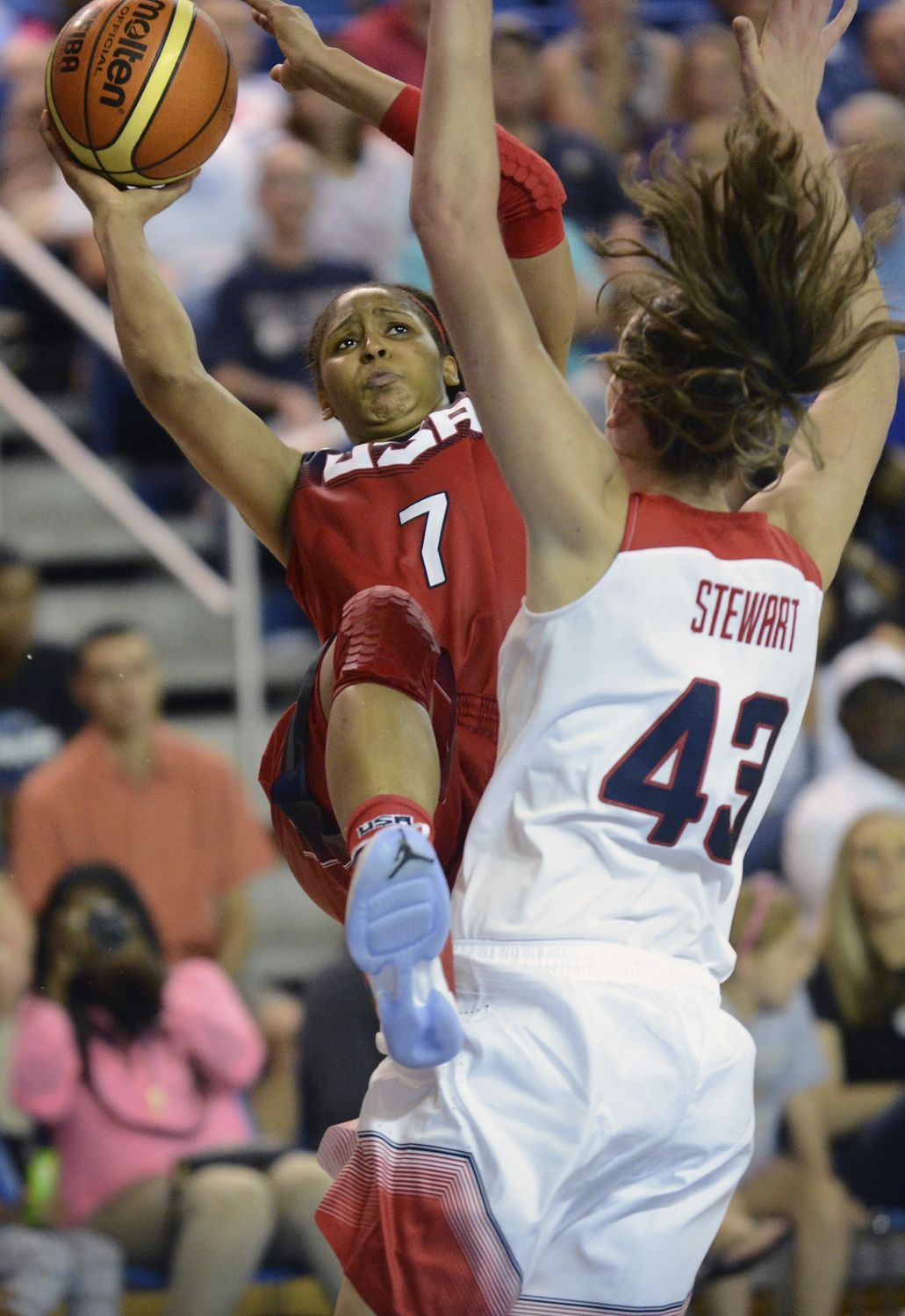
A recent example of double standards in women’s sports comes from the 2023 NCAA Women’s Basketball Championship. Louisiana State University (LSU) NCAA Women’s Basketball 2023 Most Outstanding Player Angel Reese received both praise and criticism for her response to First Lady Jill Biden’s invitation to have both LSU and the University of Iowa come to the White House for a visit. Angel called the First Lady’s invitation a joke because traditionally runner-ups never get invited to the White House, so the invitation to both teams diminished LSU’s historic win. When the First Lady’s press secretary walked back the statement, Angel stated in an interview that she did not accept her apology. Some viewers claimed that she should have accepted the First Lady’s apology and was being rude and disrespectful by not doing so. However, other viewers found it refreshing to see her stand up for what was right and not be afraid of what the naysayers may think of her. Throughout her season, Angel Reese was characterized as “ghetto”, “classless” and “disrespectful”. Many viewers that watched her play claimed she did not have respect for the game or good sportsmanship because of certain actions she would do on the court. Angel’s response was that she was always going to be her authentic self on and off the basketball court and they would not be calling her those names if she was a male basketball player. Many people took to social media post-championship game to show their support for Angel and call out her critics on their misogynistic and racist double standards.

Following the 2023 NCAA Women’s Basketball Championship game, United States Representatives Mikie Sherrill (NJ-11) and Maria Salazar (FL-27) introduced the Women in NCAA Sports (WINS) Act, a bipartisan bill that promotes and addresses fairness for NCAA women’s sports programming. The NCAA has made some corrections to the inequities between the men’s and women’s Division I Basketball Championships, but there are still inequalities that need to be fixed to ensure that women collegiate athletes have the full representation they deserve. The goal of the WINS Act is to achieve equity in women’s college sports. The Act will establish a sixteen-member congressional commission to comprehensively study inequality in the NCAA’s operation of tournaments and other programs where there are men’s and women’s divisions. The commission will include members appointed by House and Senate leadership with special consideration for individuals with expertise and experience in college sports. The commission will give its final report to Congress. The report must include three provisions. First, a comparison of how the NCAA operates men’s and women’s championship tournaments across all sports and other student-athlete programs with the respect to the treatment of the participating men’s and women’s teams. This includes evaluation of the equipment and venues provided for games and practices, lodging and transportation, media exposure and contracts, sponsors, and overall budgets. Second, would include studying the NCAA constitution, policies, and practices that affect gender equity between men’s and women’s college sports teams. Third, is an overview of federal government support for the NCAA and recommendations for improved federal oversight of the NCAA’s promotion of equality.

If the WINS Act is passed, it has the power to be very beneficial in changing the way people perceive women athletes’ behaviors. For example, collegiate women’s sports such as basketball, volleyball, and swimming would get the same amount of funding and media airtime as men’s collegiate sports. Also, there would be less pressure put on women college athletes like Angel Reese for playing the game how they want and being scrutinized for every little thing they do. It is important to note that the WINS Act would only apply to college-level sports and not professional athletes. Therefore, there is still more effort required and additional rules that need to be changed to be able to allow women professional athletes, like Serena Williams, to be able to play the games they love without being criticized or penalized for how they choose to play the game.

With this year’s NCAA Women’s Basketball Championship game being the most watched game in NCAA women’s basketball history, now is the perfect time to take advantage of the momentum and fight for a change in women’s sports.

The State of Sampling: The Landscape of Sampling and Copyright Law in 2023

By: Cooper Cuene

De La Soul’s 1989 album 3 Feet High and Rising is a classic and hugely influential record that Rolling Stone recently described as “a landmark of the genre” when ranking it as the 33rd best rap album of all time. Until recently, however, a listener eager to give the album a listen would have quickly realized that it is difficult to find: Despite its classic status, until just last month, 3 Feet High and Rising was not available on any streaming platforms. This is because the album is densely packed with chopped up samples of other artists’ music that until recently either had not been or could not be cleared. Alas, the mere fact that sampling has been around since the dawn of rap music has not meant that the legal structure of the practice has improved for artists today. In a recent high-profile case, the late rapper Juice WRLD was forced to pay Sting 85% of the royalties for his song Lucid Dreams which sampled Sting’s Shape of My Heart. While it remains difficult (and expensive) for artists to use samples of existing music in new tracks, the state of sampling in 2023 is ripe for change. Multiple academics are eager to propose new regimes to regulate the sampling of other artist’s tracks, especially in a day and age where digital tools make the use of samples easier than ever.

The origins of the severe restrictions on the ability of producers to sample music can be traced back to Grand Upright Music v. Warner Bros, Inc., a 1991 decision by the Southern District of New York. This case set early precedent in its full-throated prohibition on sampling in music. The decision invoked the ten commandments in reminding the defendants “thou shalt not steal,” without contemplating that sampling could be a legitimate use of a copyrighted work. At issue was a sample on Biz Markie’s album I Need a Haircut, and the ruling immediately stunted the use of sampling throughout the music industry. As Pitchfork noted in their retrospective review of Public Enemy’s Fear of a Black Planet, following Grand Upright Music it became “forbiddingly difficult and expensive to incorporate even a handful of samples” into a new work. Unfortunately, later developments in the case law would be no kinder to the practice of sampling.

Later significant decisions concerning sampling were handed down in the 2000s and continued to be  unambiguous in their prohibition of the practice. Bridgeport Music, Inc. v. Dimension Films is a prime example of the way that courts have approached sampling over the last few decades. In that 2005 case, the defendant released a movie with a soundtrack containing a track that sampled a short portion of a song called Get Off Your Ass and Jam. The film contained only a four second section of a guitar riff from the original song that had been slowed and stretched to extend to a sixteen-bar loop. Despite the defendant’s argument that the small amount of the original track used was de minimis, the Sixth Circuit still found for the plaintiffs. Their opinion was resounding, commanding artists to simply “[g]et a license or do not sample.” Despite the inflexibility of this standard, it remains valid law today.

Bridgeport’s standard and its rigidity has unsurprisingly sparked calls for reform from musicians and academics alike. A common thread among calls for reform is that a reformed legal regime governing licensing should aspire to more actively promote the Constitution’s grant of power to Congress to “promote the progress of . . . useful arts.” One leading alternative regime is the idea that works that make use of samples include a clear attribution to the original song in their title, much like songs do with featured artists already. John Ehrett is a prominent supporter of this alternative, arguing in his 2011 paper “Fair Use and an Attribution-Oriented Approach to Music Sampling” that the music industry should take up citation standards for samples akin to the specialized citation styles present in other industries. Under Ehrett’s proposal, songs that include samples would include an indication in their titles that they do so, such as “Song A (samp. Song B).” This would ensure that the original work gets the necessary recognition while also providing a smoother sampling process for the artist behind the new work. Others have proposed a sliding licensing scale that requires artists to pay less for a license the more they transform the work. In either case, it has become clear to many artists and academics that the current regulatory regime governing samples is untenable and should be reformed to better enable new artists to create with existing works.

The Importance of Artwork Authentication in the Digital Era

By: Lauren Liu

The digital era has gifted the art world with new mediums, increased access to audiences, and innovative platforms for art exhibitions and transactions. For artists, the internet has provided  greater  access to the art marketplace and modern tools for bolder digital creation. However, some may also consider these changes troublesome. One of the biggest concerns in the art world is the threat of forgery. Although forgeries existed long before the digital era, modern technology has given art forgers and those who sell their products more temptation and opportunities to create and sell their forged works.

Now, more than ever, emerging artists need to protect themselves from forgeries, making the authentication of artworks increasingly crucial.

One important aspect of authenticating artwork is also known as provenance, or the documentation that outlines a particular art piece’s creator and history. A signed certificate of authenticity is one of the most common forms of provenance. For such documentation to establish authenticity, it should include the work’s title, date it was made, mediums, dimensions, and appraisal value. For example, a provenance could list an individual as the owner of the particular work of art in question in a museum exhibit catalog. This would constitute valid provenance. Most of the time, only names of previous owners do not constitute valid provenance. For art purchasers, they should consider getting full names and contact information for the current and previous owners to ensure the authenticity of the artwork in question. A “good provenance” is often taken as an indication of authenticity, because the longer the chain of ownership, the more likely that the artwork is authentic. Prominent or well-attended exhibitions of a picture are also taken as not only indications of value but also some evidence of authenticity and ownership, the logic being that an artwork would not be frequently displayed if its authenticity was questionable or if there was a dispute as to ownership. Provenance, even if not usable in court as evidence of authenticity or ownership, may still be admissible to oppose a new claim of ownership on the legal doctrine of laches (prejudice caused by undue delay by a claimant in coming forth with a claim).

Another popular method of authentication is the examination of the artist’s signature. Technology now allows fairly easy investigation of artworks and signatures via computerized databases and photographs to gather large samples of an artist’s works and signature for comparison. When creating signatures, artists should consider using a hand signature that is different from their legal signatures and is legible. Such a signature can later be thought of as a brand logo that makes artwork recognizable, and handwriting it makes it harder for forgers to replicate. Furthermore, artists should consider signing all works upon completion, preferably before the paint dries. By doing this, the artist essentially embeds the signature into the work. Artists should also use the same medium as the art to prevent the suspicion that the signature is forged or added by another person later. 

Authenticating art is important and worthwhile, especially for any artist who wants to build a recognizable brand and protect their reputation and livelihood. Understandably, the prevalence of digital art theft, fakes, forgeries, art scams, fraudulent art sales, and falsified certificates of authenticity can be discouraging. However, methods of authentication can help prevent the likelihood of such violations. While art thieves, plagiarists, and scammers continue to evolve as quickly as technology does, artists can also protect themselves using their own creativity and following legal advice on authentication.

Duped or Duplicated? The Difference Between A Counterfeit And An Accessible Homage

By: HR Fitzmorris

Even non-legally versed consumers know that counterfeit or fraudulent products are illegal. In fact, some may have even experienced the euphoria of getting what they thought was a steal on a new designer product only to find out that it was a different type of ‘steal’ altogether. 

But what about “dupes”?

Unlike counterfeit products, which are copies of trademarked consumer goods meant to be passed off as the real thing, dupes (short for duplicate or duplication) are products that mimic other companies’ popular products without seeking to trick the consumer into thinking it’s the real deal. Dupes usually mimic high-end, in-demand goods and are sold at a much lower price-point—essentially the Gen Z version of a “knock-off.” Dupes have become extremely popular with the rise of social media advertising aimed at younger demographics. Teens that may not be able to afford a wildly trendy Cartier ring ($2,995) certainly may be able to scrounge up the change for the Amazon dupe ($12.99, with free next day shipping!).

The “Real” Fakes

To the everyday consumer the distinction between a counterfeit and a dupe may seem dubious, but in legal terms it’s significant. Counterfeiting is a concept used to “indicate an infringement of intellectual property rights, namely acts (use, manufacturing, or sale, for example) carried out without the consent of the intellectual property right holder.” “Counterfeiting” is the “act of making or selling fake products with the intent to deceive consumers. In the United States, it is illegal to produce, distribute, or sell counterfeit goods.” 

There are more issues with counterfeit goods outside of intellectual property infringement and their morally dubious nature. There are also possible health and safety issues with fake products that flout FDA or consumer protection standards.  There’s of course, the economic harm to legitimate businesses that lose money when their customers are lured away. The ever-present environmental harms associated with the flood of mass-produced, easily discarded items lurk behind the scenes. There’s even concern that counterfeit goods play a role in funding broader criminal enterprises.

Dupes: Duplication or Duplicity?

One of the important elements of counterfeiting is the “intent to deceive,” and this element is a significant piece of what separates dupes from counterfeits. Dupes do not claim to be the real-deal. In fact, part of their allure is that purchasers are getting the same or similar quality and functionality of the original without the original’s branding (and the associated price mark-up). As Claire Kane put it in her article for online publication MIC: 

While “fake” is a dirty word in fashion and “counterfeit” sounds unethical, the more neutral-sounding “dupe” suggests making savvy purchases and “somehow cheat[ing] the system” to get the look for less.

Companies hoping to crack down on dupes and knockoffs face an uphill battle in court. Without distinctive, trademarked branding that makes counterfeits fall within the reach of traditional trademark infringement, brands find little sympathy in the law. The current state of U.S. copyright law as it pertains to clothing and accessories has significant gaps. U.S. copyright law does not fully protect items defined as useful articles, which are “objects having an intrinsic utilitarian function” and “clothing” is the very first example of what counts. So, without the direct, obvious infringement on the branding, companies are unlikely to prevail.

Can You  Smell the Difference?

An especially interesting sector of dupes gaining popularity are designer fragrance dupes. Most dupes, like a certain handbag or shoe dupe, the knockoff brand doesn’t need (or want) to explicitly refer to the original product—it relies on the consumer to ‘get’ the reference. Not so with replica fragrance brands such as Oakcha, Dossier, or ALT Fragrances, which directly rely on references to their designer counterparts in their marketing. In fact, they often list the fragrance they were “inspired by” right on the bottle, or in the product description. So, what makes fragrance such a fertile ground for direct and blatant knockoffs without running afoul of trademark or copyright law? 

The answer is a combination of technology and law. First, new technological developments have made it extremely easy to reverse engineer specific fragrance formulations. Also, while the branding or packaging of a perfume may be eligible for copyright protection, a perfume’s scent is not because the scent serves as the “functional purpose of the product.” This makes it, under trademark law, ineligible for registration with the USPTO (functionality is a bar to registration). Perfumers can look to other avenues of protection such as obtaining a patent over the perfume formula, or trade secret protection, but these protections are difficult and costly to obtain and have drawbacks like disclosure. 

The legal landscape concerning dupes is unique and developing. It is inconsistent across products and complicated across industries. Whether you think dupes are simply knockoffs with a moral makeover or a legitimate industry that provides consumers with accessible choices, the law is unlikely to be the force that stems the tide.