Harvard Law School and Ravel Law Collaborate to Improve Access to the Common Law

printerBy Carlie Bacon

The technological age has transformed the once-useful volumes lining the walls of law firms and libraries into decorative dust-collectors. Just like this blog post, the information in those books can be accessed from anywhere that you can check your email. Law is widely regarded as a conservative profession, but even so, modern attorneys and law students conduct legal research online. Why turn page after page at a desk somewhere, when you can scroll through seamless documents from the comfort of, well, anywhere?

Companies like Westlaw and LexisNexis offer access to enormous electronic databases and handy research tools, but at a cost. Subscription fees can total millions of dollars annually for large firms. Like those shelves full of books, commercial databases’ days may be numbered too. Continue reading

Five Stars for the Recent Crackdown on Fake Reviews

fakeBy Alex Bullock

Think of the last time you were in the market for a product or to find a restaurant for dinner – did you search online for reviews of the product or the business? If you’re like me and many other modern consumers, the answer is likely, “Yes.” And again, if you’re like me, you may take for granted that those online reviews are objective and real. That is why it is encouraging to hear that a company like Amazon, as well as the Federal Trade Commission (FTC), are taking steps to ensure that consumers can trust those reviews.

In October, Amazon filed suit against more than 1,000 people who allegedly offered to write reviews of products they had not used in exchange for a fee. According to the company’s complaint in King County Superior Court, each of the individuals sued in this case used the website Fiverr, a global online marketplace for individuals offering tasks and services in order to offer to create fake reviews for a fee. The complaint outlines a typical encounter between an Amazon seller and a prospective fake reviewer. Continue reading

High Court Decides Whether to Change Standard for Treble Damages

Supreme.Court_.G-640x426By Vijay Kumar

The U.S. Supreme Court recently granted certiorari for two patent cases, Halo Electronics, Inc. v. Pulse Electronics, Inc. and Stryker Corp. v. Zimmer, to decide whether to relax the standard that determines if a district court can award treble damages to a patentee after a finding of infringement.

The legal authority for whether treble damages should be awarded is set forth in 35 § USC 284, which gives the district courts broad discretion to “increase the damages up to three times the amount found or assessed.” To clarify the rule, the Federal Circuit’s In re Seagate decision in 2007 set forth a two-part test, requiring the patentee to show that the infringer: (1) acted despite an objectively high risk of infringement, and (2) knew, or should have known, the risk of infringement. By granting cert, the Supreme Court will review this objective/subjective two-part test to determine its appropriateness. Continue reading

Happy Birthday to Everyone

happybdayBy Danielle Olero

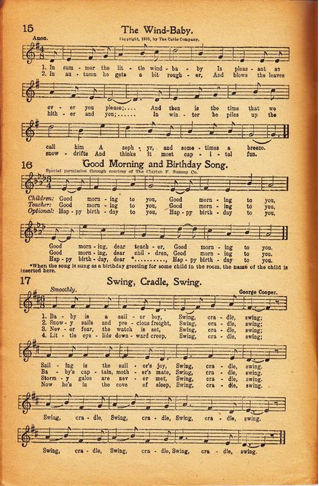
Cake, ice cream, presents, and a chorus of “Happy Birthday to You” has been a longstanding tradition for many to mark the passage of time in a person’s life. Although trivial to those who sing the song within their household, this eight note song has been the source of millions of dollars of revenue for the companies who have collected royalties from the song over the past eighty years.

In 2013 Jennifer Nelson, an independent filmmaker, intended to use the song in her documentary. She filed a putative class action against Warner/Chappell, who have claimed to hold the rights to the song since 1988. During the last two years, artists have been watching this case with great anticipation. Rights to the song could range from $1,500 to $5,000 or more for the use in films. Continue reading

Taking a Bite Out of the Big Apple: Law Enforcement and the Apple iPhone

iphoneBy Michael Huggins

On October 26, 2015, the United States government argued before a federal magistrate judge in New York that it should be able to force Apple to unlock an iPhone as part of a criminal investigation. The federal government filed a request for a court order to compel Apple to comply pursuant to the All Writs Act— an 18th Century law that allows federal courts to issue orders to effectuate otherwise valid court orders. The government argues that the federal courts can use the All Writs Act to force Apple to assist the government in investigating users of the software. Apple refuses to comply with the order.

Apple argues that the situation would not be any different than if the government used the All Writs Act to force a safe manufacturer to travel around the country, unlock safes, and give the contents of those safes to the government. Apple argues that the government wants Apple to do the investigative work for them. Judge James Orenstein, the federal magistrate judge in the United States District Court for the Eastern District of New York, agreed with Apple’s logic. Assistant U.S. Attorney Saritha Komatireddy believes that Apple’s refusal to unlock the phone represents a surprising reversal from Apple’s previous willingness to unlock phones for the government. When Judge Orenstein asked Apple why it did not challenge the previous search warrants, Apple’s attorney Marc Zwillinger replied that the company had only recently become more cognizant of the harms to high-profile data breaches and that the company has had a change of heart. But even if Apple was willing to unlock the phone, it cannot do so because each individual contains a very specific password/key to unlock the phone. Continue reading