Hash Register: Startup Sees Opportunity in Point of Sale Terminals for Legal Cannabis Retailers

Untitled1By Jeff Bess

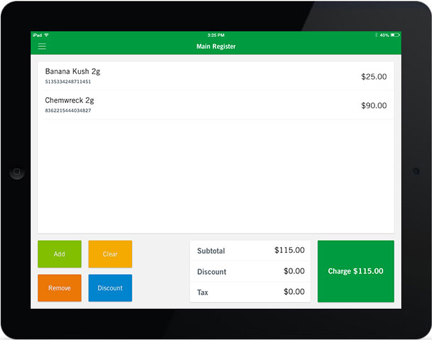
Legalization of recreational cannabis in four states and Washington, D.C.—and potentially another twelve states by the end of 2016—has brought a host of challenges and opportunities for those looking to capitalize on this newly legitimized industry. From a business perspective, the opportunities are clear: legal sales in Washington state alone netted the state $70 million in tax revenue and several times that amount in gross sales during the first year. What is often less easily appreciated, however, is the challenge cannabis retailers face in complying with complicated, sometimes onerous, state regulations. For example, Washington has instituted “seed to sale” tracking of all cannabis plants, which requires retailers to manage inventory and record sales of otherwise-identical products by plant number. Retailers must then submit all of this information to the state Liquor and Cannabis Board. Added to the obvious logistical challenge of tracking hundreds of thousands of individual plants are the severe consequences of non-compliance, which can result in revocation of a retailer’s license and forced closure.

So, what can the conscientious, law-abiding cannabis retailer do to ensure compliance–without resorting to tedious and error-prone manual recordation? Continue reading

U.S. Internet Giants (Probably) Hit Hard By European Safe Harbor Privacy Ruling

privacyBy Brooks Lindsay

The European Court of Justice ruled on October 6 to scuttle a 15-year data-transfer pact with the United States. This pact provided a “safe harbor” to over 4,000 transatlantic U.S. companies that claimed to satisfy “adequate” data-protection standards under European law. The “safe harbor” principles allowed U.S. companies operating in Europe, like Facebook and Google, to gather the private information of European citizens and transfer that data to U.S.-based servers, so long as those companies self-certified that they complied with the E.U.’s “adequacy” standards for privacy protection. The European court decided that these principles violated Europeans’ rights to privacy because they allowed American government authorities to gain easy access to Europeans’ online information through U.S.-located databases.

The Court’s ruling is in many ways a reaction to revelations over the past few years of U.S. government mass-surveillance programs, highlighted most poignantly by Edward Snowden’s leak in 2013. The Court’s ruling is based in large part on the premise that the U.S. government and U.S. companies can no longer credibly certify that they are protecting Europeans’ privacy and meeting Europe’s baseline data-protection standards. Continue reading

New StingRay Policies for both Washington State and the Department of Justice

news-police-stingrayBy Matthew McCoy

Both the State of Washington and the United States Department of Justice (DOJ) have recently issued new policies regarding law enforcement’s use of cell site simulators. Colloquially known as StingRays, cell site simulators spoof cell towers and trick mobile devices in close proximity to the simulator into connecting with it and unveiling their unique location information. While it is possible to initiate more sophisticated attacks, such as deception and logging of message contents, the DOJ asserts in its new policy that its Stingrays are not configured with such capabilities in accordance with the pen register and trap and trace definitions in 18 U.S.C. §3127(3).

Previous use of StingRays, unveiled by research by privacy advocates, show that both federal, state, and local law enforcement entities have been previously approved under traditional pen register/trap and trace orders. While the DOJ argues that obtaining authorization pursuant to the Pen Register Statute is appropriate for these devices, critics say pen registers, which record the numbers dialed to and from a phone, are different than cell site simulator technology, which record a phone’s location and manipulate how a phone connects with its cellular network. Continue reading

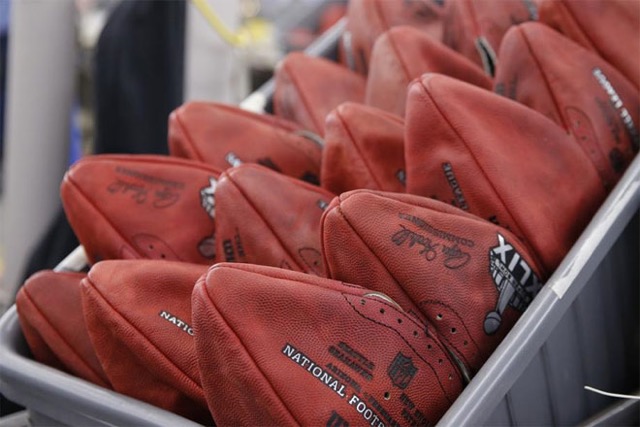
Negotiation, Arbitration, Deflation: Tom Brady’s Appeal Yet Another Fourth Quarter Comeback for Labor Unions

Deflategate PictureBy Grady Hepworth

What is there left to do for someone with four Super Bowl championships, two Super Bowl MVP awards, ten Pro Bowl selections, and who recently became the fourth NFL player in history to throw for over 400 touchdowns in a career? On September 3, 2015, Tom Brady added another accomplishment to his résumé: groundbreaking legal precedent.

In a controversial United States District Court decision, the Honorable Judge Richard Berman overturned a penalty imposed upon the New England Patriots’ quarterback, Tom Brady, through an arbitration mandated by the National Football League’s Collective Bargaining Agreement (CBA). Although the NFL has appealed the judgment (the Second Circuit Court of Appeals has coincidently scheduled the hearing for the week of Super Bowl 50), the district court’s decision has far-reaching implications. For Patriots fans, the decision likely provides hope that another championship title looms on the horizon. However, for the legal world, the district court’s decision may have significantly shifted the balance of power under the NFL CBA. Continue reading

A Big Dent to the Beetle

bugBy Denise Kim

Once often ranked among the most dependable car brands, Volkswagen is now struggling to stay competitive following the fallout from its most recent scandal that has already led to the resignation of Volkswagen’s CEO Martin Winterkorn.

On September 18, 2015, the Environmental Protection Agency (EPA) issued a notice of violation of the Clean Air Act to Volkswagen alleging that Volkswagen and Audi diesel cars from 2009-2015 contain software that circumvents EPA emissions standards for certain air pollutants. Additionally, California issued a separate In-Use Compliance letter through the California Air Resources Board (CARB) with similar allegations. The scandal has affected the following VW cars: Jetta, Golf, Beetle and Passat models. Additionally, reports indicate that Volkswagen subsidiaries Audi and Skoda also installed deceptive software. Continue reading